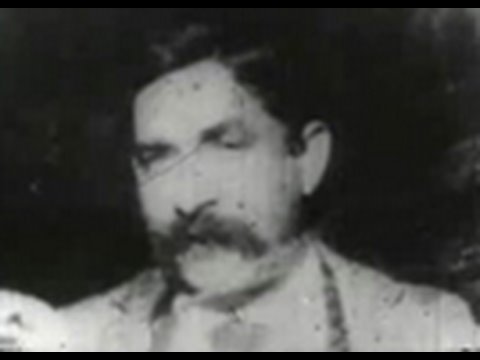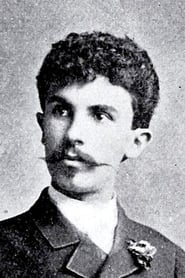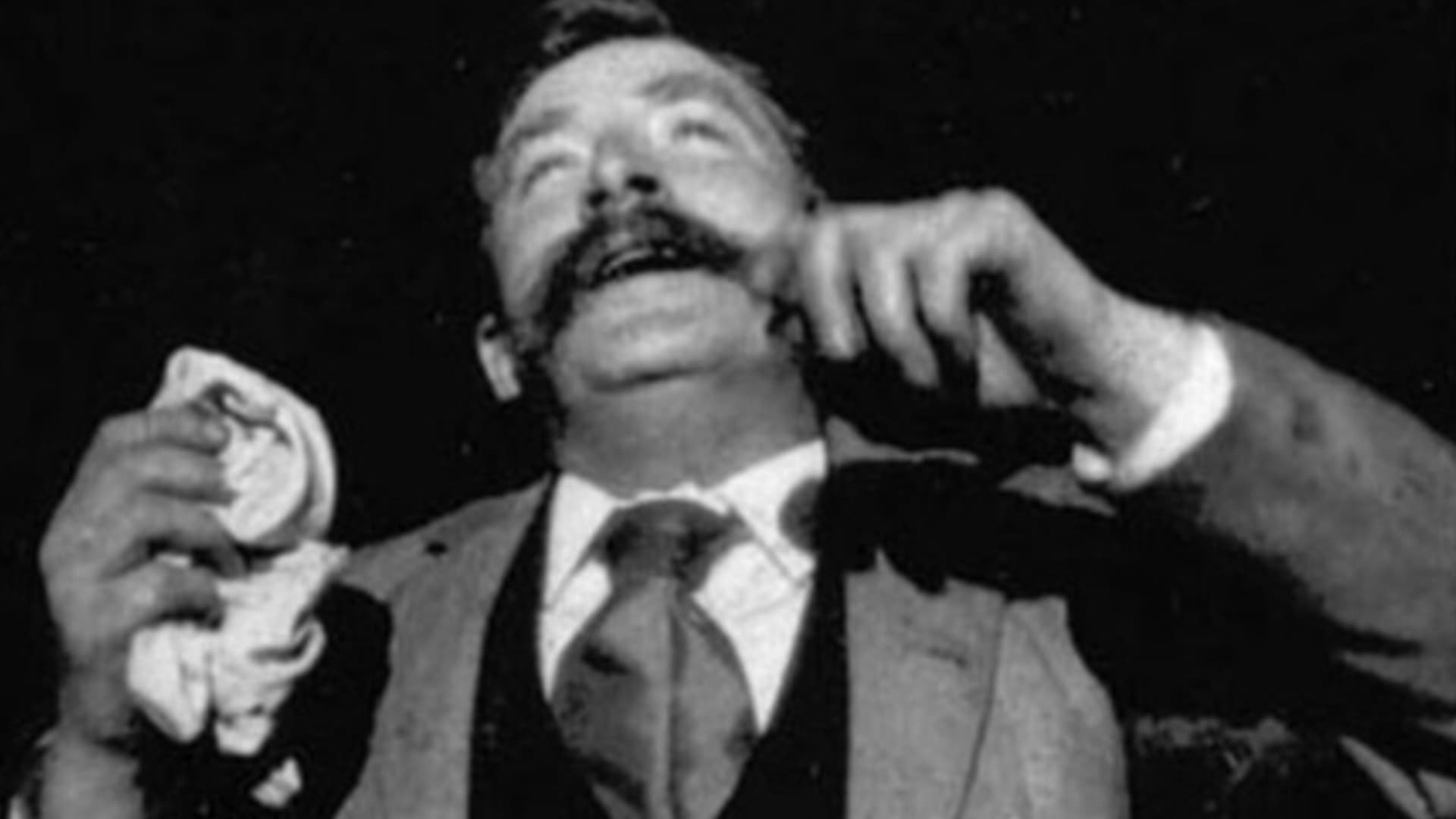
A man (Thomas Edison's assistant) takes a pinch of snuff and sneezes. This is one of the earliest Thomas Edison films and was the second motion picture to be copyrighted in the United States.
Social & External
Sneezing Man
A story about several beaver families in their wild surroundings. The interesting process of building a dam can be watched as well as the dangers arising from hungry bears and other influences on the new-built home.
An insider's look into Francis Ford Coppola's latest Live Cinema project, Distant Vision.
The epic story of the Russian Civil War (1918-21): the White Terror, the counterrevolutionary uprisings, the guerrilla war, the Kolchak front, the Wrangel front and the Kronstadt rebellion. Chaos and violence, devastation and death.
A documentary that explores the natural world of the sea, from the single-celled organism to more complex forms of life, OCEAN ORIGINS was originally filmed in the IMAX large format, which adds a crispness and clarity to the images. This documentary film seeks to examine the process of evolution by looking at the many creatures of the sea that can illustrate the way multi-cellular life emerged over the course of four billion years. OCEAN ORIGINS is a creative film that uses fascinating documentary footage to look at scientific theories and principles in an interesting manner
Using his failed attempts at creating profitable stock footage, a filmmaker reflects on the absurd, mundane and funny side of being trapped inside your own head as an out of work, self-employed freelancer.
Erik Satie’s work is at the heart of modern music. However, who was Satie? An elusive genius or a visionary misanthrope? The film tries to sketch an identikit of the musician through his notes and the places he lived in. Musicologists mostly agree in describing Satie’s music as inhabited by voids and holes. The long pauses between one musical passage and the other are musical structures unto themselves; therefore, the filmmakers create a dissonant Satie-like universe in which empty spaces are adjacent to eloquent passages. Like a mysterious flower visible only to the eye that is willing to dance with its charm, the film unfolds little by little through mental associations and creative juxtapositions. There are no answers in the universe inhabited by the ghosts of Satie’s creations. Architectural forms and recollections from desires and acts of creative hubris compete to create a new world, which ultimately is the image of a new and more seductive pleasure principle.
Crashing waves, the cry of a gull, silence.
A Tibetan Lama. His disciple. The disciple's wife, young boy and terrier. An old tugboat crossing the Mississippi River. A man in his seventh month of solitude. His hermitage built by his own hands. The man's bloodhound; his cat. Clouds crossing the Continental Divide. A mountain stream. A girl. The sun.
Life in a rural area in Spain where the sole source of income is the physically gruelling labour of salt mining.
A documentary about the Friends of the Western Buddhist Order in London.
The film depicts young people at various socioeconomic levels presenting their views on the use of marijuana.
Johan van der Keuken's first film is a uniquely beautiful portrait of Paris at dawn.
A film crew trails Philbert Powell through his morning, from the supermarket to his job at a video store. Along the way, he crosses paths with several individuals all named “Slater.” His interactions with them raise the central question: who, among those Slaters, is his friend? The narrative unfolds across a single morning, blending encounters and identity as Philbert’s journey reveals the shifting dynamics of connection.
Documentary of Daniel Schubert's grandmother, Martha Katz, a Holocaust survivor.
Filmed in 2003 while staying in a Brooklyn Heights apartment, the work centers on a small Greek statue revealed in shifting morning and afternoon light. Beavers weaves these images with views of the East River and Manhattan Bridge, later completing the film in 2010 as a meditative elegy for his friend Jacques Dehornois.
The urge to relieve a winter valley of permanent shadow and find gold in alluvial gravel is part of a long history of desire and extraction in the far Canadian north. Cancan dancers, curlers, smelters, former city officials, and a curious cliff-side mirrored disc congregate to form a town portrait. Shot on location in Dawson City, Yukon Territory.
A confrontation and comparison of two church buildings, which could hardly be more different, but also a dialogue between various concepts of church and community: the Protestant Grundtvig’s Church in Copenhagen and the Catholic Cathedral in Orvieto.
This film describes a yearning for beauty and gentleness. The philosopher Lothar Kühne was especially concerned with how we live and build. He applied his own ideas about the traditional house to his Villa Rotonda in Vincenza, Italy, not grand, but homely and marvellous. Here he developed his dream of the New House, achallenge to the concrete confines of urban living. In the film, La Rotonda is the motif of yearning which helps to explain Kühne's rigorous dedication to change and to convey the mental and physical torment he felt in the face of the concrete jungle. In November 1985 Prof. Lothar Kühne sought solace in the sea. This film is an indictment of ignorance and stupidity, a plea for sensitivity towards creative minds.
In a long, diaphanous skirt, held out by her hands with arms extended, Broadway dancer Annabelle Moore performs. Her dance emphasizes the movement of the flowing cloth. She moves to her right and left across an unadorned stage. Many of the prints were distributed in hand-tinted color.
Working men and women leave through the main gate of the Lumière factory in Lyon, France. Filmed on 22 March 1895, it is often referred to as the first real motion picture ever made, although Louis Le Prince's 1888 Roundhay Garden Scene pre-dated it by seven years. Three separate versions of this film exist, which differ from one another in numerous ways. The first version features a carriage drawn by one horse, while in the second version the carriage is drawn by two horses, and there is no carriage at all in the third version. The clothing style is also different between the three versions, demonstrating the different seasons in which each was filmed. This film was made in the 35 mm format with an aspect ratio of 1.33:1, and at a speed of 16 frames per second. At that rate, the 17 meters of film length provided a duration of 46 seconds, holding a total of 800 frames.
The film consists of a series of animations on a beach containing two beach huts and a diving board. Two characters play at diving into the water from the diving board and then appear on the beach. The woman begins to play with a small dog and is then joined by a gentleman. The two play around on the beach before getting changed into bathing costumes and going into the water. They bob up and down in the water before swimming out of the scene. Once the couple have gone a man sails out in a boat.
William K.L. Dickson plays the violin while two men dance. This is the oldest surviving sound film where sound is recorded on the phonograph.
Chronophotograph record of a ball falling through a soap bubble.
Lasting for roughly 50 seconds, it shows the goodbyes of many passersby - first Europeans, then Palestinian Arabs, then Palestinian Jews - as a train leaves Jerusalem.
Ava, an award-winning chef at a big-city restaurant, has lost her spark. Her boss sends her out to find herself to save her menu and her job. She returns home and finds little to inspire her, but when she reunites with her childhood friend Logan, Ava has to get her head out of the clouds and her foot out of her mouth to rediscover her passion for food.
A former alcoholic returns home after ten years in prison for the murder of her husband. As her recollection of the murder returns, things take a different turn.
A father, a mother and a baby are sitting at a table, on a patio outside. Dad is feeding Baby her lunch, while Mum is serving tea.
During a failed art heist, the Djinn is once again liberated. This time, to complete the 1001 wishes that he needs before the final 3, he lets himself go to prison, where he starts his evil reign twisting the hopes of the prisoners. Meanwhile, the woman who set him free accidentally, Morgana, tries to find a way to stop him, aided by a young priest.
A few years ago, a mysterious serial-killer caused panic on Crippen High School. The killer was never caught. A movie company, Cosmic Pictures, has decided to make a feature movie about these events - on location, at the now abandoned school. Since members of cast and crew disappear without a trace, it seems as if history is repeating itself...
In answer to an orphan boy's prayers, the divine Lord Krishna comes to Earth, befriends the boy, and helps him find a loving family.
Marnie puts her magic on the line to get several Halloweentown teenagers transferred to her high school in the mortal world. But soon, Marnie and her new friends are in trouble and out of luck when the evil Knight Of The Iron Dagger appears. He's determined to destroy all things magical, and it's up to Marnie to save her high school, the human world and her magic.
Fifteen years after his father's experiments with matter transmission fail, Philippe Delambre and his uncle François attempt to create a matter transmission device on their own. However, their experiments have disastrous results, turning Philippe into a horrible half-man, half-fly creature.
When the Spirit World is flooded due to an unusual rainfall which overflows the River Sanzu (aka the River Styx), Lord Koenma senses an extremely powerful enemy. He entrusts Death God Botan, to deliver to Spirit Detective Yusuke, a mysterious item which must be protected from the invading enemy. However, by the time Botan finds Yusuke, she's too weak to explain the situation. Yusuke and his friends are left in the dark about the new enemy, but not for long. Soon it is a battle for Earth between mere Spirit Detectives and the almighty king of the Netherworld.
The stand-alone pilot OVA which was shown as part of the "Jump Super Anime Tour" of 1998. Shortly before the TV series, a summary is presented of the story of Gon who wants to become a hunter and the friends he makes in the process.
As novice detectives, Bud and Lou come face to face with the Invisible Man.
After the older DigiDestined are abducted by the mysterious Kokomon, the next generation of kids team up with American DigiDestined Willis to rescue them - only to discover that their enigmatic enemy has an unexpected connection to their new friend!
The Symphony of Haruhi Suzumiya or The String Performance of Haruhi Suzumiya (涼宮ハルヒの弦奏 Suzumiya Haruhi no Gensou), was an event featuring several songs and background music used in the The Melancholy of Haruhi Suzumiya anime. All of the songs are performed by the Tokyo Philharmonic Orchestra, and conducted by Phillip Chu, on April 29, 2009.