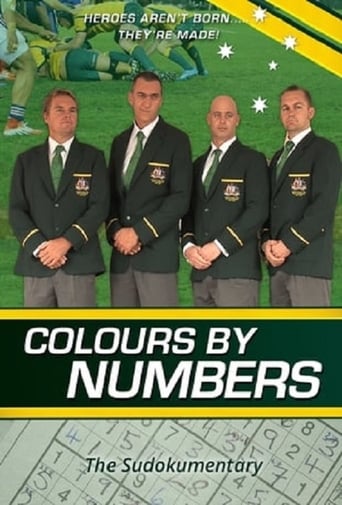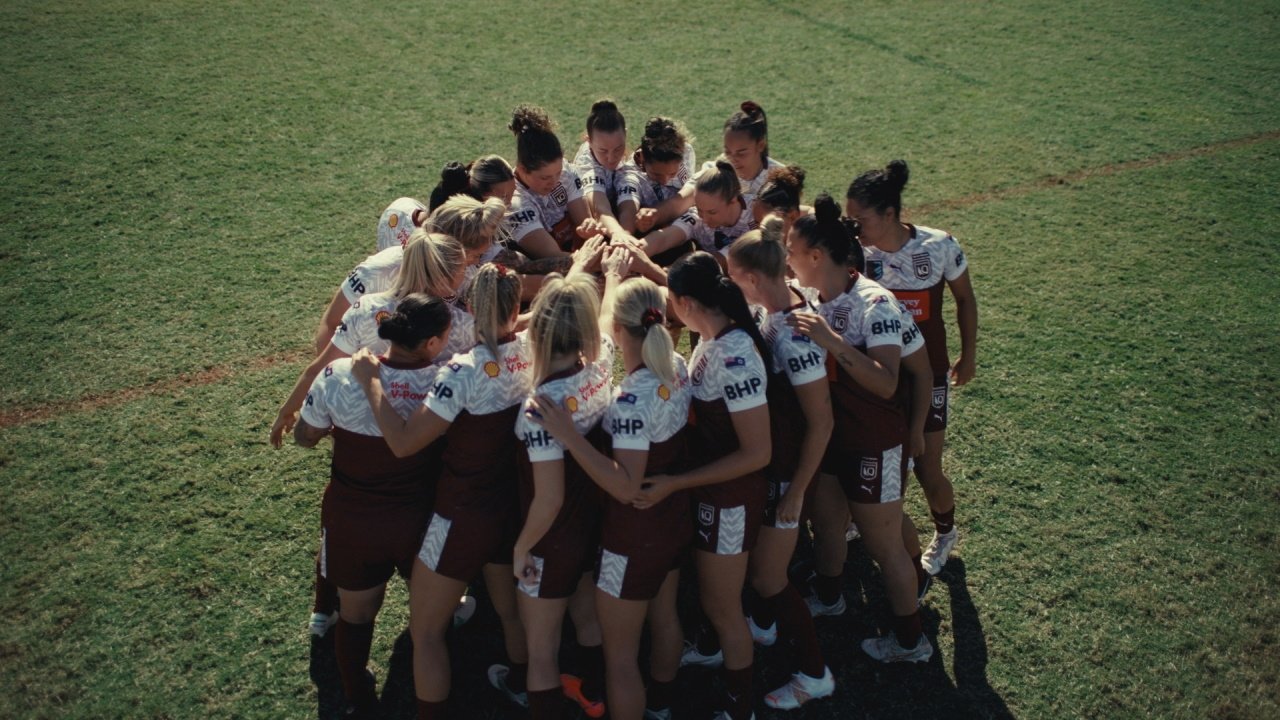
Follow the 2021 Queensland State of Origin Women's team as they strive to achieve the extraordinary in one of the most physically demanding professional sports in Australia.
Social & External
Self
In the early 1970s, a group of secretaries in Boston decided that they had suffered in silence long enough. They started fighting back, creating a movement to force changes in their workplaces. This movement became national, and is a largely forgotten story of U.S. twentieth century history. It encapsulates a unique intersection of the women’s movement with the labor movement. The awareness these secretaries brought to bear on women’s work reverberates even today. Clericals were the low-wage workers of their era. America now confronts the growing reality of deep income inequality. The stories and strategies of these bold, creative women resonates in contemporary America.
Quadriplegics, who play full-contact rugby in wheelchairs, overcome unimaginable obstacles to compete in the Paralympic Games in Athens, Greece.
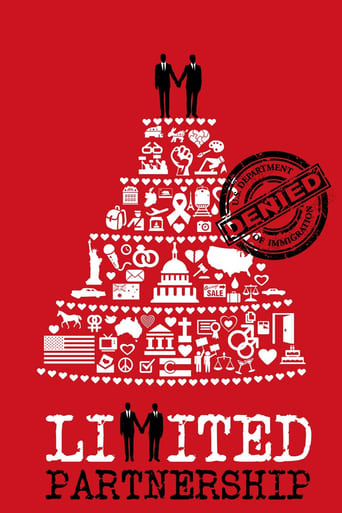
LIMITED PARTNERSHIP is the love story between Filipino-American Richard Adams and Australian Tony Sullivan, who, in 1975, became one of the first same-sex couples in the world to be legally married. After applying for a green card for Tony based on their marriage, the couple received a denial letter from the Immigration and Naturalization Service stating, 'You have failed to establish that a bona fide marital relationship can exist between two faggots.' Outraged at this letter, and to prevent Tony's impending deportation, the couple sued the U.S. government, filing the first federal lawsuit seeking equal treatment for a same-sex marriage in U.S. history. This tenacious story of love, marriage and immigration equality is as precedent setting as it is little known... until now.
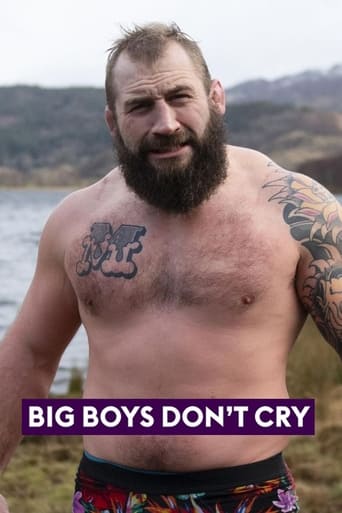
Big Boys Don't Cry' follows Joe Marler as he discusses his own struggles and learns new methods of managing mental wellbeing. The England and Harlequins player has opened up about his battles with mental health during his private life and his time playing rugby on the international stage. The documentary follows Marler as he travels around the UK to open up the conversation around mental health challenges and to learn about how people manage with their mental wellbeing - from taking the plunge in cold water swimming and getting involved in singing in a choir along the way.
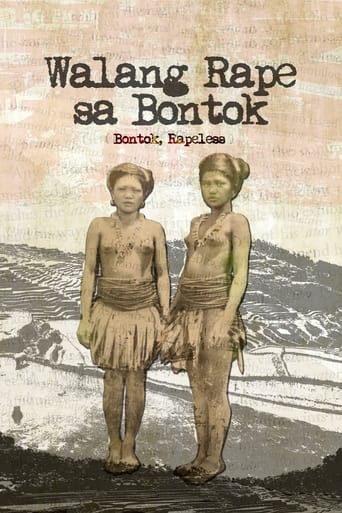
Two Filipina victims of sexual abuse search the truth behind the finding of a renowned anthropologist: that merely a few generations ago, the Bontok Igorot lived in what seems an unthinkable utopia—a rape-less society.
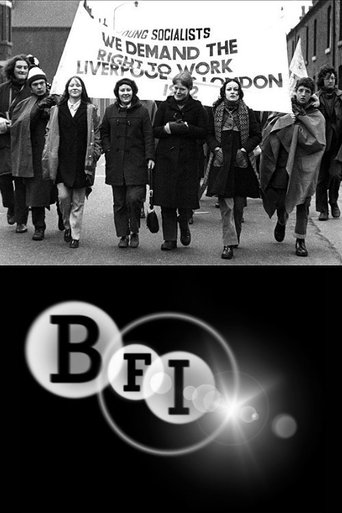
They're young, unemployed and on the march - from Glasgow, Liverpool and Swansea to London.
An insider documentary following Scott Robertson and Ronan O’Gara’s management of the invitational Rugby Union Club; Barbarian F.C. for the 2022 Killik Cup tie versus the All Blacks' "Second XV" at the Tottenham Hotspur Stadium.
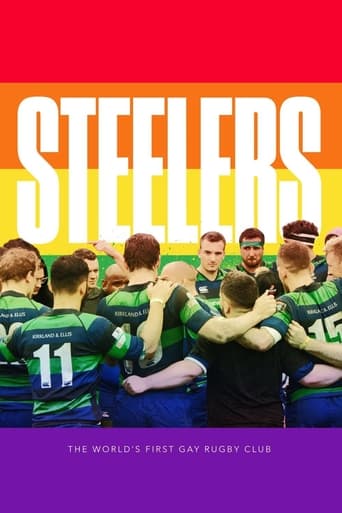
Told through the eyes of an Australian news reporter, Eammon Ashton-Atkinson, who moved to the UK to escape depression, the documentary, follows 3 characters on their journey to overcome their struggles as the club competes against 60 other gay clubs in the Bingham Cup in Amsterdam – the World Cup of gay rugby.
The campaign of the Uruguayan rugby team, nicknamed "Los Teros", during the 2015 Rugby World Cup qualification, and the amateur character of its players that contrasts against the professionalism of their group rivals.
An experimental documentary looking at the transgender experience around the world over two hemispheres, three continents and with four interviewees. The film employs limited B roll shots or edits during the interviews, instead opting to have the interviews mostly uncut, with the goal of creating both a level of sincerity and a conversational narrative between any one of the interviewees and the audience.
A dangerous idea has threatened the American Dream from the beginning - the belief that some groups and individuals are inherently superior to others and more deserving of fundamental rights. Such biological determinism provided an excuse for some of America's most shameful history. And now it's back. This documentary reveals how biologically determined politics has disenfranchised women and people of color, provided a rationale for state sanctioned crimes committed against America's most vulnerable citizens, and now gains new traction under the Trump administration.
Rugby Union has long been viewed in South Africa as a game for the white population, and the country’s success in the sport has been a true source of Afrikaner pride. When the 50-year-old policies and entrenched injustices of apartheid were finally overthrown in 1994, Nelson Mandela’s new government began rebuilding a nation badly in need of racial unity. So the world was watching when South Africa played host to the 1995 Rugby World Cup. Though they had only one non-white player, the South African Springboks gained supporters of all colors as they made an improbable run into the final match where they beat the heavily favored New Zealand team. When Mandela himself marched to the center of the pitch cloaked in a Springbok jersey and shook hands with the captain of the South African team, two nations became one. Oscar winner Morgan Freeman and director Cliff Bestall will tell the emotional story of that cornerstone moment and what it meant to South Africa’s healing process.
An unflinching look at how women are treated in the USA today examining issues such as workplace harassment, domestic violence, rape and sexual assault. It shows how discriminatory attitudes still prevail and influence society and argues for the need to improve laws that claim to protect women.
Right at the heart of the debates on the discrimination of women in the film industry, this documentary raises questions, while offering a voice to women and their cinema. Catherine Breillat, Claire Denis, Mira Nair, Margarethe Von Trotta, Ulrike Ottinger, Micheline Lanctot, Rakshnan Bani-Etemad, María Novaro but also the names of the less visible directors of the general public. Joining the filmmakers are the voices and comments of producers, film specialists and archivists through whom our images are meticulously preserved.
The film follows the rugby season of Uitenhage prop forward Zama Takayi - who plays for Progress Rugby club, the club that amalgamated the black clubs of the Uitenhage area in the early 90’s.
Madeline Anderson’s documentary brings viewers to the front lines of the civil rights movement during the 1969 Charleston hospital workers’ strike, when 400 poorly paid Black women went on strike to demand union recognition and a wage increase, only to find themselves in confrontation with the National Guard and the state government. Anderson personally participated in the strike, along with such notable figures as Coretta Scott King, Ralph Abernathy and Andrew Young, all affiliated with Martin Luther King’s Southern Christian Leadership Conference. Anderson’s film shows the courage and resiliency of the strikers and the support they received from the local black community. It is an essential filmed record of this important moment in the history of civil and women’s rights. The film is also notable as arguably the first televised documentary on civil rights directed by a woman of color, solidifying its place in American film history.
With great bawdiness and backbone, a rugby team made up of farmers strive to redeem themselves from a long run of bitter losses. In the face of the hefty demands of farming and fatherhood, the Saturday game becomes the focus of the men’s passions and the ground on which their worth is proved. ‘The Ground We Won’ is a highly authentic, slice of life film about the challenges and joys of manhood, as seen through the rites and rituals of a rural New Zealand rugby club.
Two segments make up this short film. The first portion called “The French” has two men taste testing some delicious wine, and the other, titled “The Gauls”, is of men playing rugby. This short by Werner Herzog is part of the “The French as Seen By…” series. It was initiated and sponsored by the newspaper Le Figaro, as part of the 1988 celebration of the tenth anniversary of its magazine section.
Chasing Great is an insightful portrayal that weaves Richie McCaw's life story into his final season as an All Black, revealing the determination and mental toughness of an international sporting legend who still sees himself as an 'ordinary guy' from small town New Zealand.
In a closed locker room, rugby players perform the last pre-match rituals. Warming up their souls and bodies, all tense in anticipation of the fight.