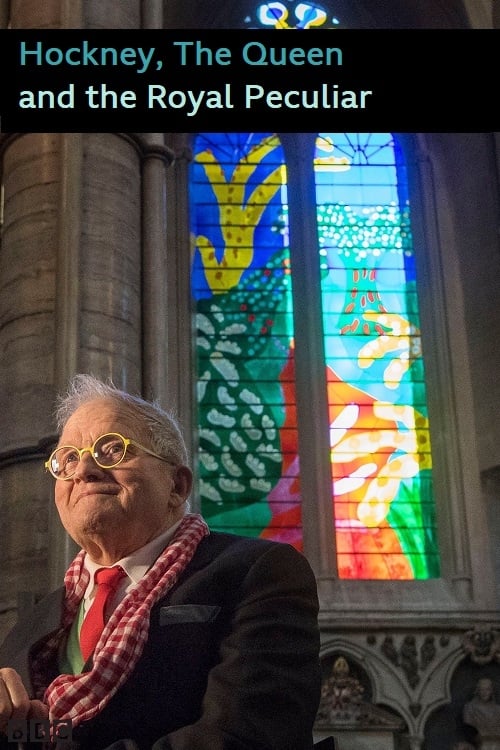
David Hockney undertakes a commission to design and install a stained-glass window in Westminster Abbey to commemorate the sixty-fifth year of Queen Elizabeth II's reign.
Social & External
Self
With the construction of the Indian planned city of Chandigarh, the Swiss and French architect Le Corbusier completed his life's work 70 years ago. Chandigarh is a controversial synthesis of the arts, a bold utopia of modernity. The film accompanies four cultural workers who live in the planned city and reflects on Le Corbusier's legacy, utopian urban ideas and the cultural differences between East and West in an atmospherically dense narrative.
An exploration of the work of a new generation of young Muslim artists, who use their work to explore issues of faith and identity and what it means to be Muslim and Australian in the 21st century.
Coming 50 years after the release of Space Oddity, the 90-minute film explores the Bowie before Ziggy Stardust, following the period from 1966 when he changed his name from David Jones to Bowie. It includes footage from the BBC Archives including footage of a BBC audition in 1965 of David Bowie and the Lower Third, which included a performance of Chim-Chim-Cheree and Baby That's A Promise.
Directors Jonathan Alter, John Block and Steve McCarthy bring New York columnists Jimmy Breslin and Pete Hamill’s courageous writing to life, celebrating the acclaimed journalists and the city they loved.
A documentary film about Oscar-nominated animator Bill Plympton. This is a portrait piece that includes interviews with family, friends, colleagues, critics, and fans.

Gerhard Richter has spent over half a century experimenting with a tremendous range of techniques and ideas, addressing historical crises and mass media representation alongside explorations of chance procedures. This first glimpse inside his studio in decades is exactly that: a thrilling document of the 79-year-old's creative process, juxtaposed with rare archival footage and intimate conversations with his critics and collaborators.
The crazy rise and fall of Jacques Tati, comedy genius, actor, director and athlete of laughter. Or how the inventor of the mythical Mr. Hulot made France laugh, then the world, flying from success to success, rising higher and higher, until he came a little too close to the sun.
Upcoming documentary about artist Jean-Michel Basquiat. The estate of the legendary artist is on board the project and has granted full access to archival material and original works of art, allowing it to be a mash-up of never-before-seen home movies, notebooks, photographs, animation, and interviews.
This documentary describes Bonnard’s relationship with contemporary artists such as Gauguin, Matisse, Cezanne, Seurat and Renoir, his personal relationship with his models and his personal vision expressed through his paintings and sketchbooks. A life dedicated to ‘colour, form and reason’ over content and feeling.
"Dear Jinri" explores the daily concerns and thoughts of actress and singer Sulli, whose real name is Choi Jinri, where she talks about her childhood, career and more in this interview she gave in 2019.
This new intimate documentary looks at the extraordinary journey of the 75-year-old American rocker, who has come back from everything, and especially from the worst, but with his capacity for wonder intact.
With his soaring falsetto and magnetic yet understated stage presence, Jimmy Somerville burst onto the 1980s new wave scene, making the world dance to songs rooted in struggle and resilience. From the harsh realities of Glasgow’s working-class neighborhoods to the challenges of growing up gay in a hostile world, and the devastating impact of the AIDS crisis, Somerville transformed pain into anthems of freedom. First with Bronski Beat, then The Communards, and later as a solo artist, he became both rebel and diva—the unmistakable voice of a generation fighting for equality. Through intimate stories from those who have stood by him for four decades, this portrait reveals a rare artist who has never wavered in his convictions.
In the French music world, the beginning of the 2000s was marked by the arrival of a young rapper, Diam's. Over the course of three albums, she has become a phenomenon in France, as well as in many countries around the world. Diam's has won some of the most prestigious awards in French music, graced the covers of countless magazines, and sold millions of records. However, in 2010, at the height of her fame, Diam's made a life choice that shocked the French: she converted to Islam. How did a tortured and suicidal artist find her way to peace? For the first time Diam's, known to her family as Mélanie, tells us the real story.
Filmed at the time Hockney was painting Mr and Mrs Clark and Percy, Portrait of David Hockney is made up of a limited number of shots, observing the periphery details of his flat and studio. Each view is held so as to focus on its particular qualities and composition and, with the accompanying soundtrack of off-screen phone calls, conversations and musings, builds up a picture of Hockney’s daily life.
Under pressure from activist groups, art is increasingly being cancelled for ideological reasons, because of 'cultural appropriation' or because of the desire for a 'safe space'. The colour and gender of the artist seem to be all-determining in this. How do you relate to this as an artist? Is this a disturbing development or a sign of emancipation? And what does it mean for freedom of expression? Director Karin Junger investigates this with Anne-Fay Kops, Ted van Lieshout, Angel-Rose Oedit Doebé, Raymi Sambo, Boris van Berkum, Marian Markelo, Stephan Sanders and Thomas Chatterton Williams.
Hans Haacke is a key figure in contemporary art whose work intersects with conceptual, pop, minimal and land art. The artist is particularly known for his research into the hidden economies and politics of the art world and the repressed histories of places and peoples. Haacke's strong political, cultural and social concerns are reflected in his installations, texts and sculptures.
Best known for her drawings of the ocean and the galaxies of the night sky, Vija Celmins has solidified herself as one of the most important artists of the postwar generation. Stepping back from painting in order to explore her photorealistic drawing style, Celmins creates spectacularly precise renderings of the natural world. In her forty year retrospective at the Hammer Museum in Los Angeles, Celmins recalls her beginnings in abstraction, her choices of subject matter after freeing herself of the New York School influence, and her later immersion in what must be termed her great master drawings.
"Elizabeth Murray: 4 Decades" tracks the artist's career and shows her moving forward fearlessly toward new shapes and concepts for her unique style of painting. Inspired by artists of the Abstract Expressionism movement such as Willem de Kooning and Philip Guston, Murray was privy to their technique and motive. Though she may share ideals with her artistic predecessors, Murray has created miraculously original work which she discusses with curator Robert Storr as they explore her MoMA retrospective.
On the outskirts of Den Helder lies De Nollen, an inland dune area where nature, sculpture, and painting merge into a truly immersive experience. It is the life's work of artist Rudi van de Wint. He died unexpectedly in 2006. His sons, Ruud and Gijs, carried on his dream, out of love for their father and for De Nollen. But plans for a Rudi van de Wint museum in the area led to cracks in their idyllic existence.