Social & External
The people behind it
Seo Woo-jin
Jo Kyung-hyun
Lee Seung-kyu
Lee Ha-Ryeong
Lee Joo-young
Jae Hu
Kim Ha-jin
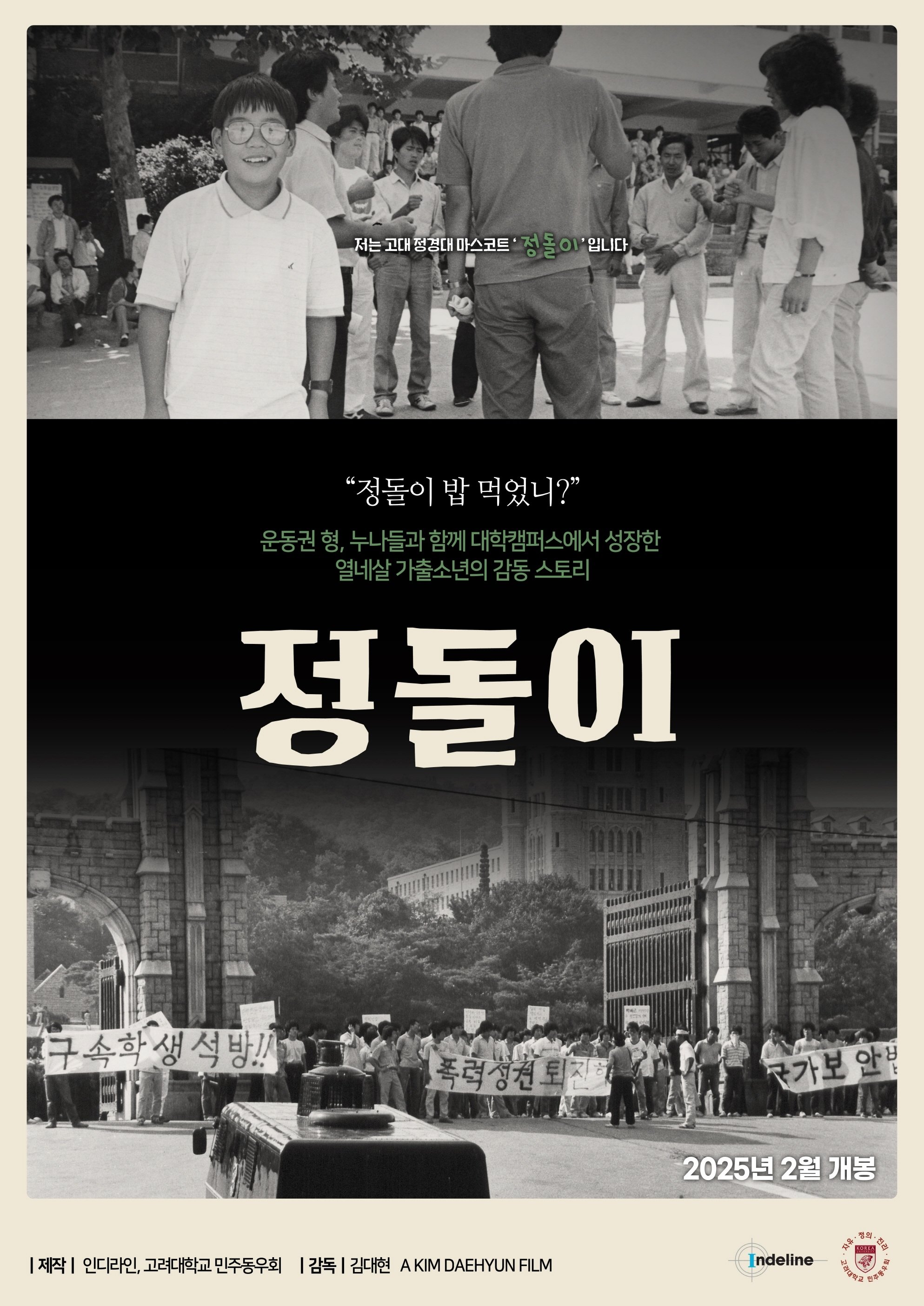
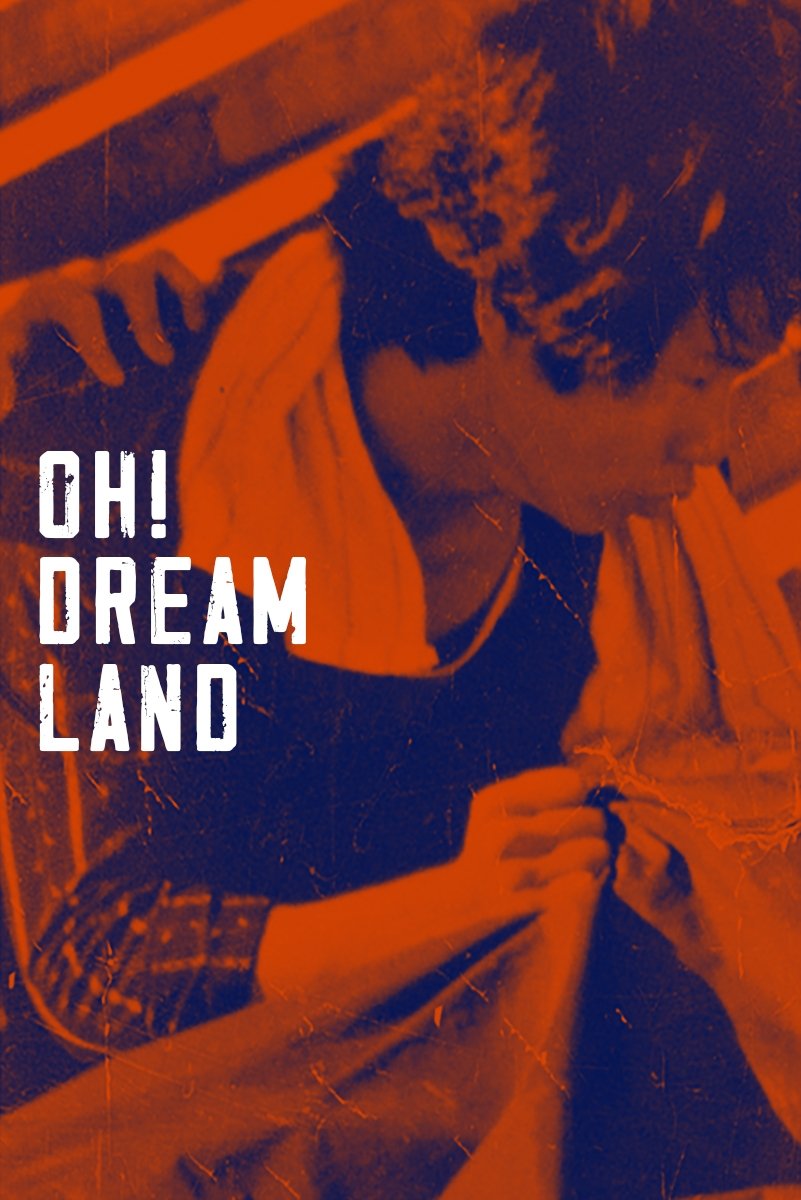
In the spring of 1987, a 14-year old runaway boy ended up in a college campus and made it his home. He grew up on campus under care of students activists. They call him "Poliboy."
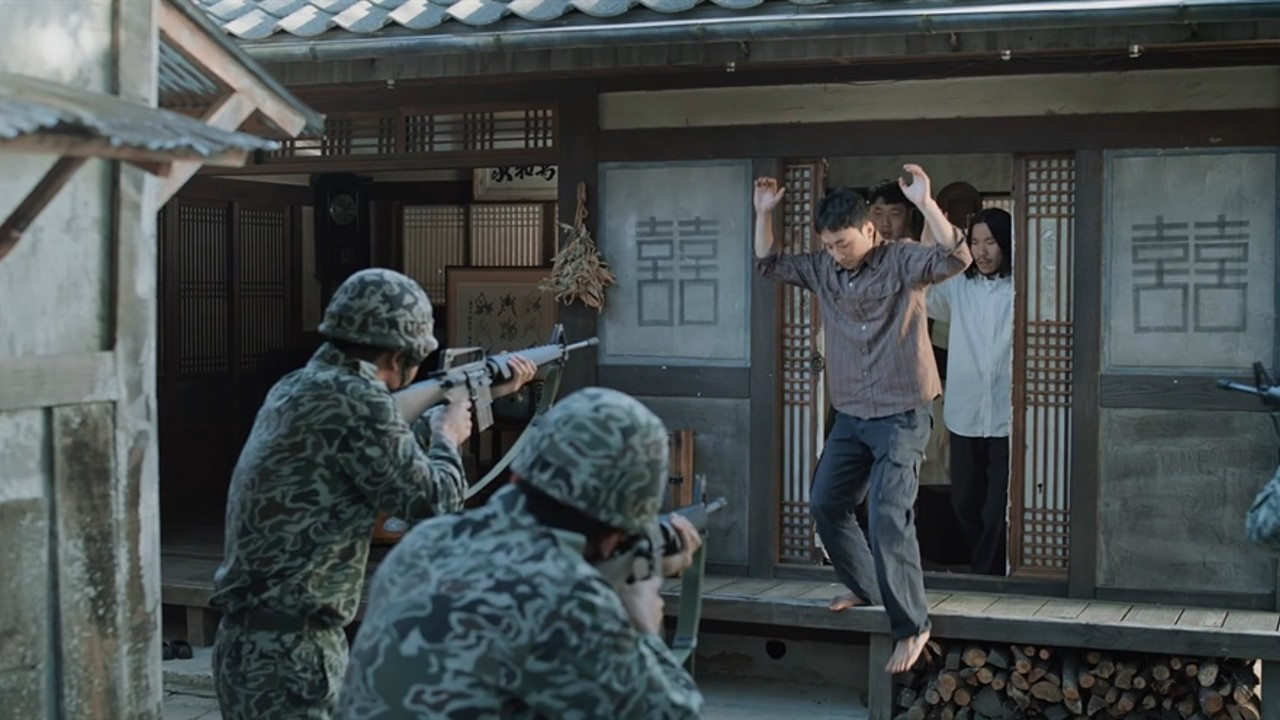
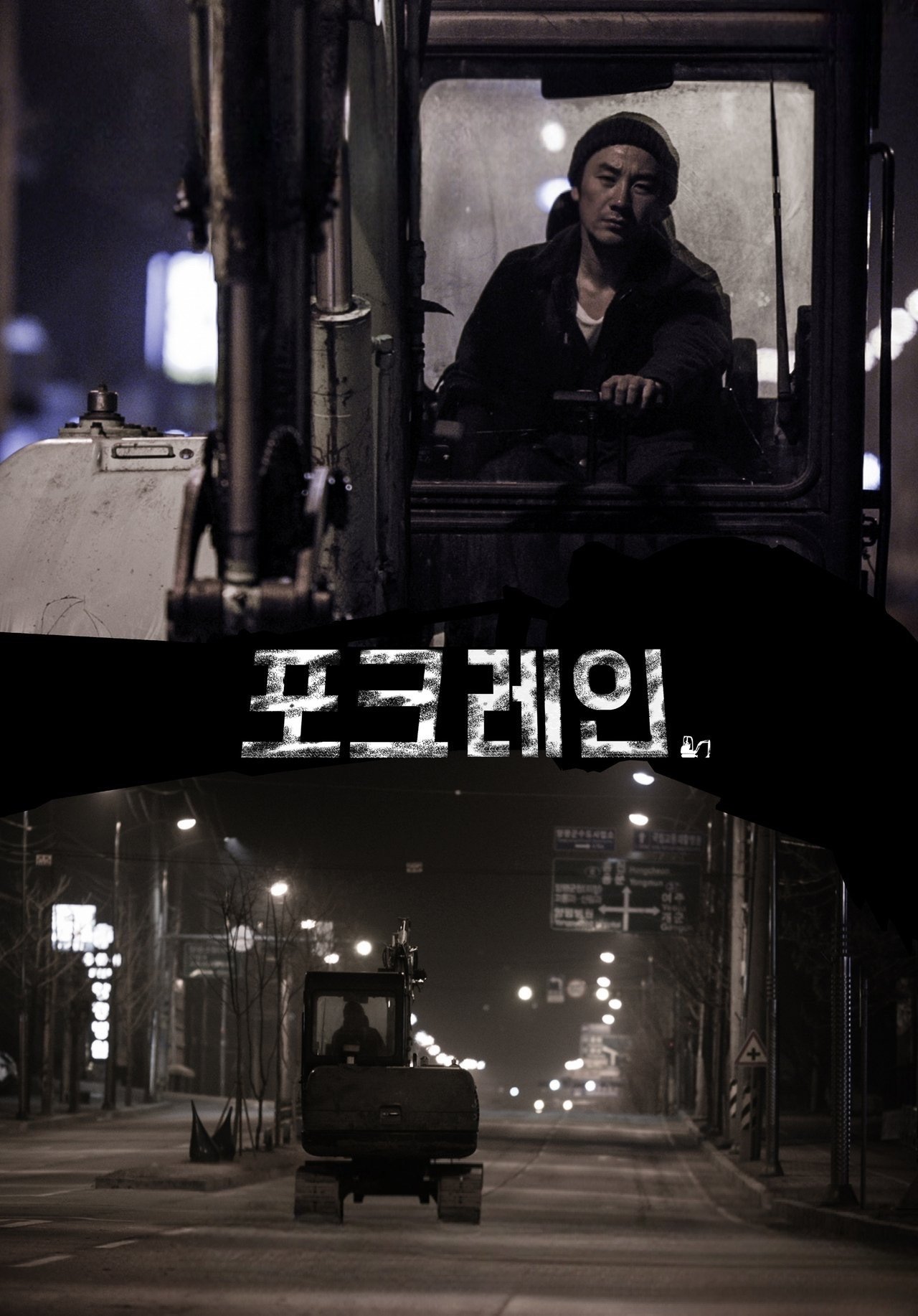
20 years after discharge from the army and now an excavator driver, a former paratrooper who had been mobilized to suppress the May 18th Democratic Uprising in Korea in 1980, happens to find a skull in the ground one day. Driving his excavator, he pays visits to his former superiors one by one and realizes they were all both assailants and victims of the times.
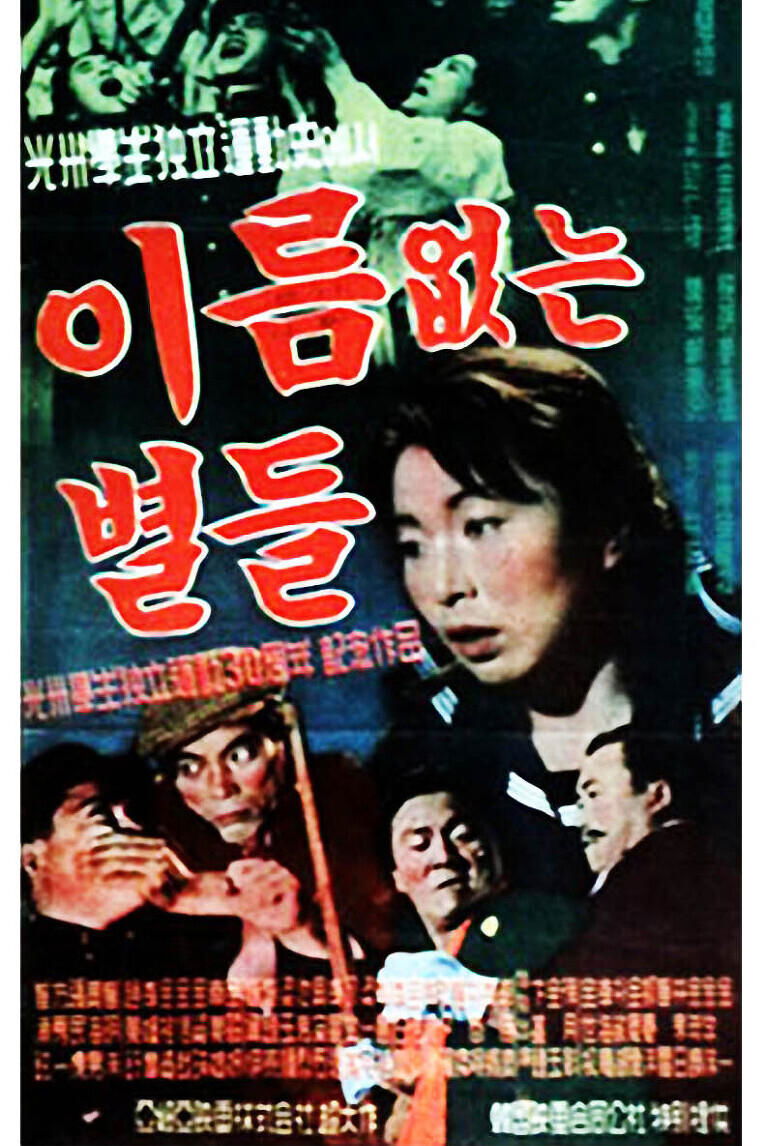
The son of a freedom fighter, Sang-hun is a member of an anti-Japanese resistance group called "Seongjinhoe," composed of students who share a dedication to the cause of liberation. Their spiritual guide is a teacher named Song Un-in. One day, Yeong-ae, whose brother is a detective in the Japanese police force charged with monitoring independence movements, joins their group. Following a series of sporadic incidents, the students gather one night to resolve on an uprising, but are discovered by the police. Young-ae is wrongfully accused of betraying their plans, but she risks her life in order to allow the group members to escape. The morning after, the students of Gwangju rise up against the Japanese government.
Eunju, a teenage girl, wants to go to a high school baseball game where the boy she has a crush on will be playing.
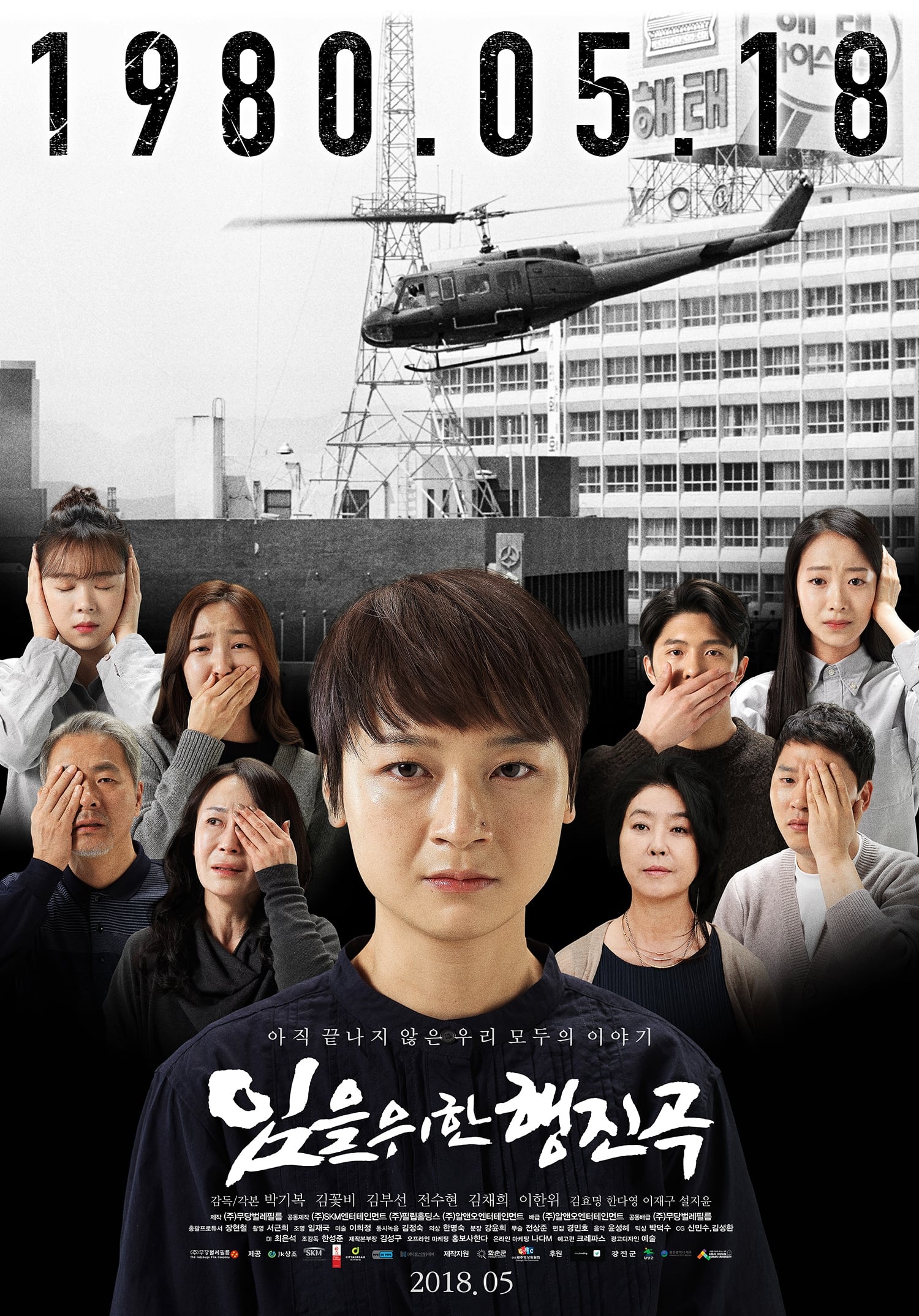
The story of a girl who experienced the Gwangju massacre at the age of 15, and its effect on her life in later years.
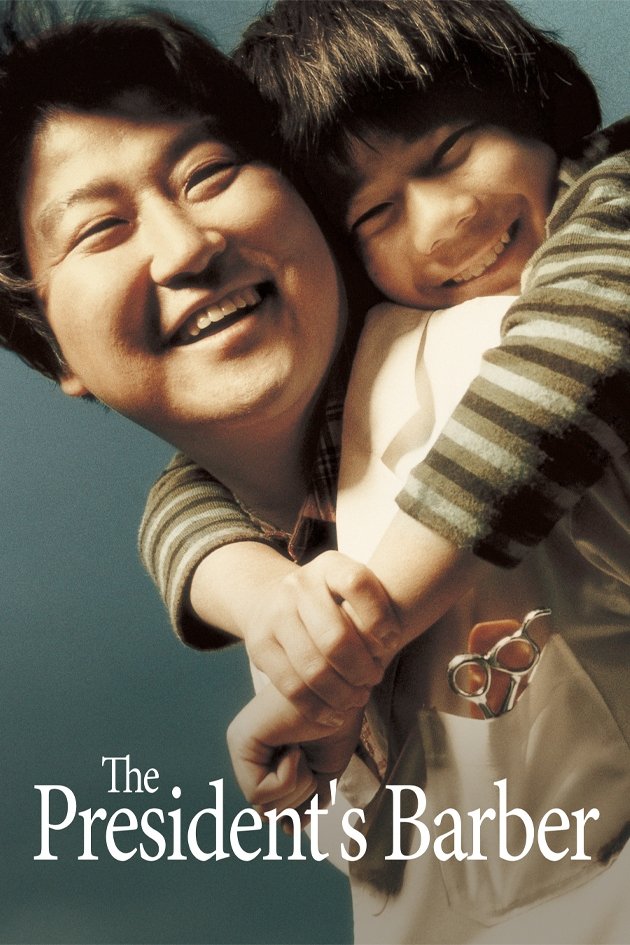
A well-meaning but politically naive barber gets pulled into the inner circle of the South Korean dictator Park Chung-Hee, with rather baleful consequences for his hapless family. This sharp political satire covers roughly twenty years in South Korean political history, from the viewpoint of the barber's son.
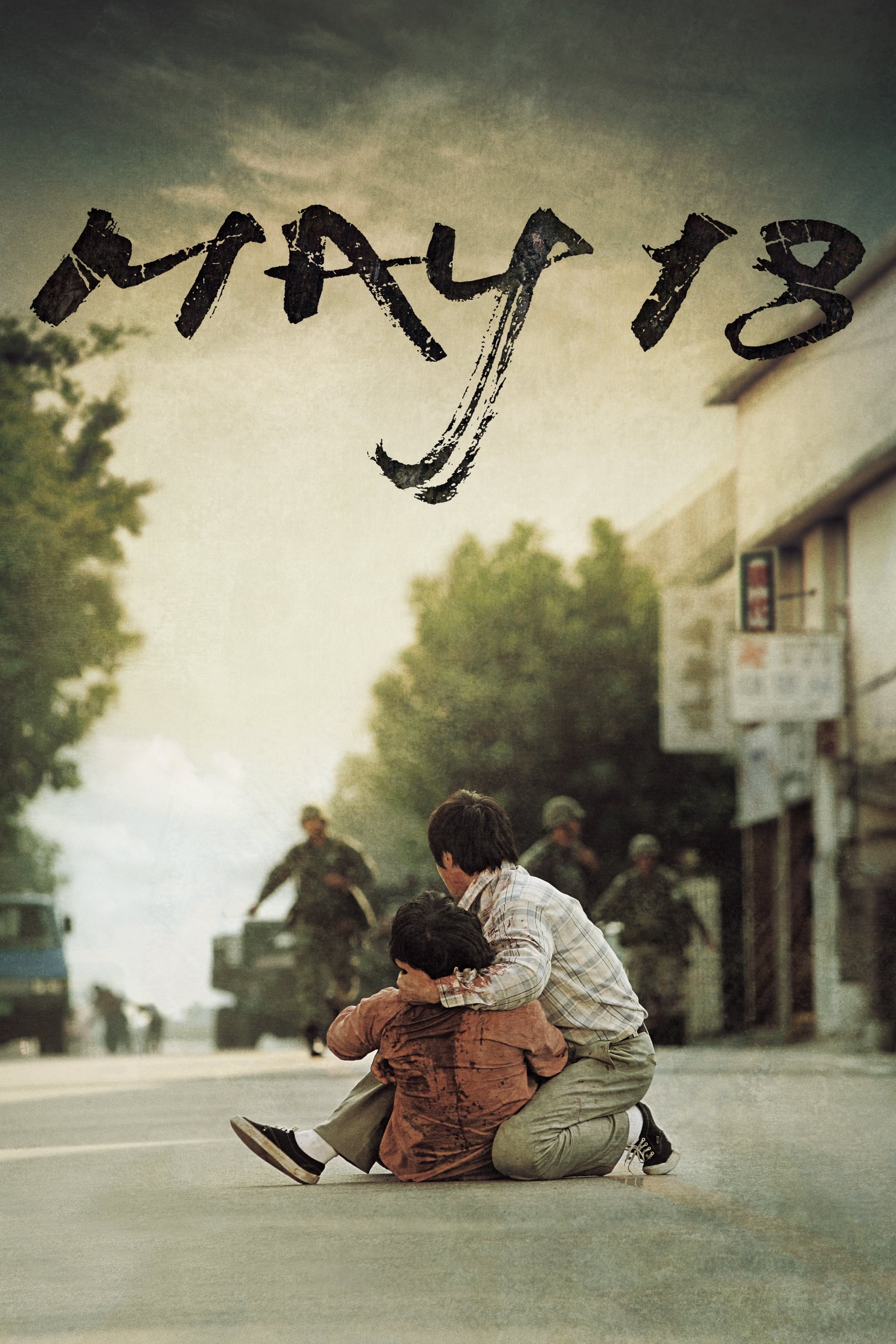
The citizens of Gwangju lead a relatively peaceful life, until one day the military takes over the city, accusing the residents of conspiracy and claiming that they are communist sympathisers preparing a revolution against the current government. Seeing as the soldiers beat defenceless people, mainly students, to death, the citizens are in for retaliation and form a militia.
After the Gwangju Democratization Movement is terminated by brute force, Jong Soo runs from the authorities and goes to Dongducheon in search of Tae Ho, an older neighbor from his hometown. He is a student at Jeonnam University and a night school teacher who is on the run because of his involvement in the Gwangju Movement.
This is the story of a father who died mysteriously in May of 1980, a mother who lives in the shadows with a bullet in her head and not being able to forget May 18th and their daughter, and the nation's greatest comedian, Hee-soo.
In the spring of 1999, a group of old friends gather to celebrate their 20 year reunion. Among the group is Yeong-ho, a cold, unhappy man, whose demeanor puts a damper on the festivities. The seriousness of Yeong-ho's depression becomes apparent when he climbs a railroad bridge and looks like he might jump. At this crucial moment, memories of seven crucial episodes from Yeong-ho's past flood his mind.
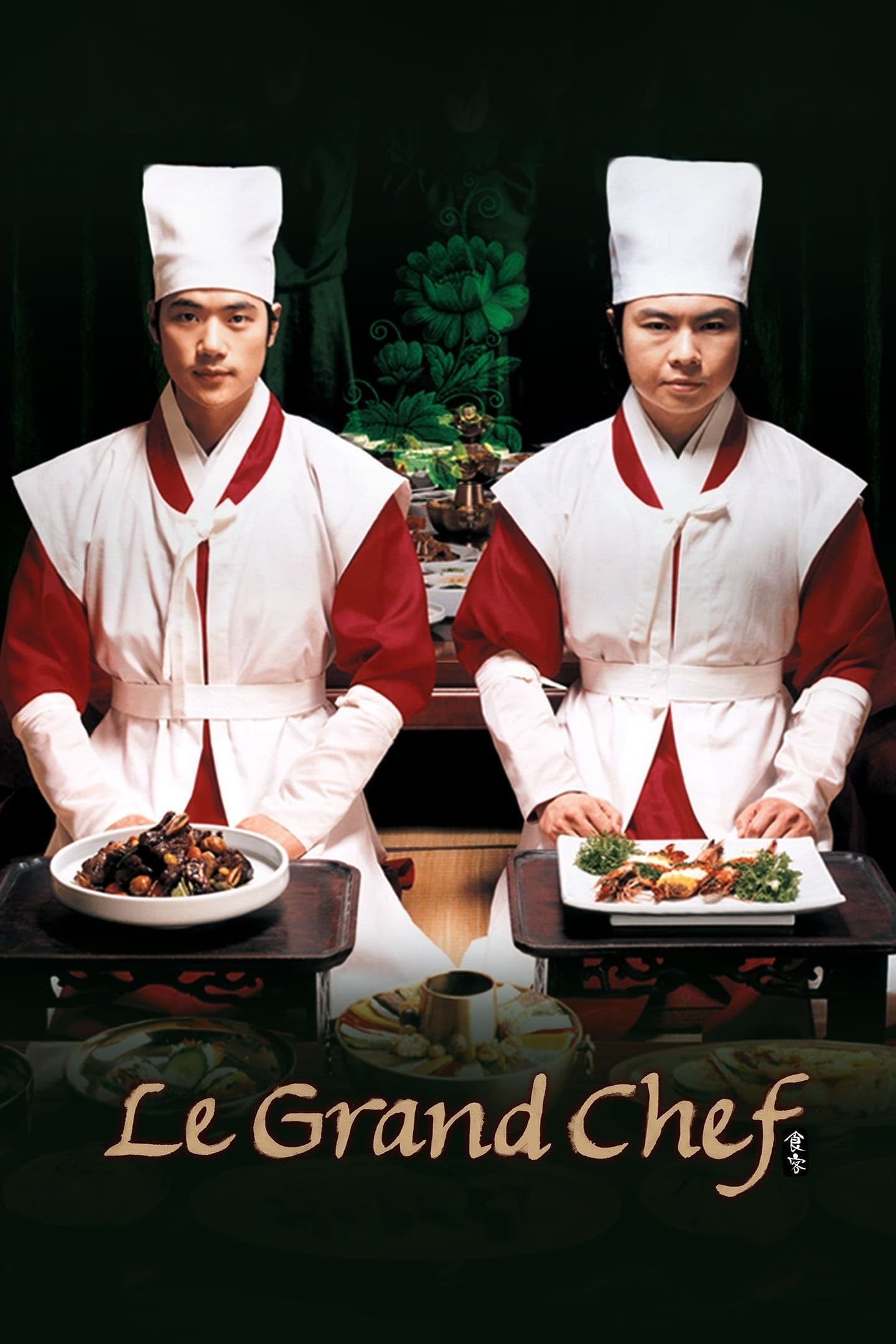
A disgraced chef tries to restore his name by competing in a culinary contest to win the knife of Korea's last royal chef.
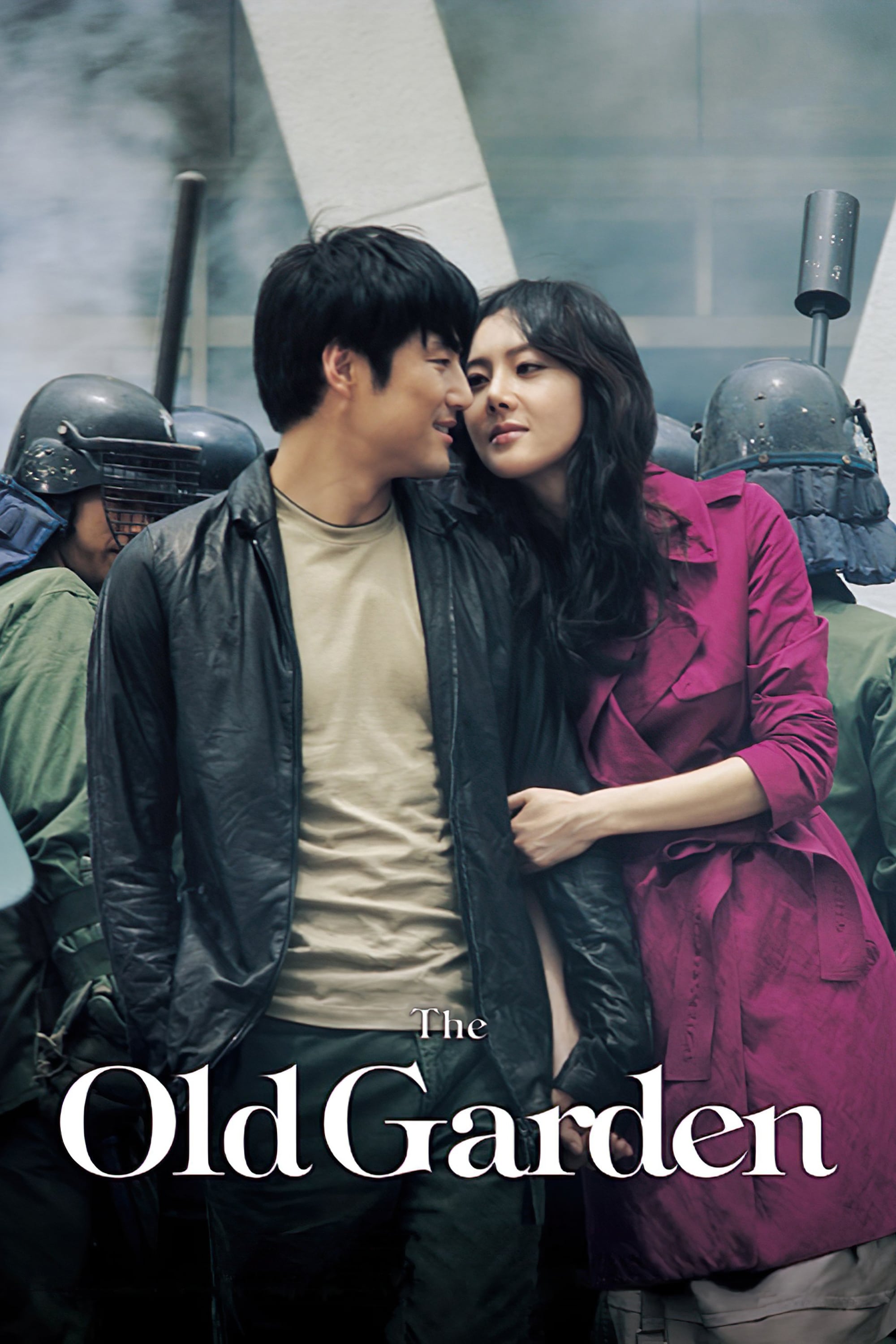
Political activist Hyun-woo is released from prison after a 17-year stint. Journeying back to the village where he spent some time as a fugitive he recalls the time spent with Yoon-hee, a woman who gave him shelter and companionship.
Chae-geun is a driver for hire with manic depression. He often talks to his son who is studying in the States and tells him he would keep his promise. He does a favor by acting as a temporary fiancé of a single woman named Jin-hee, who works as a waitress at a restaurant he frequents. Her father, who was a victim of the Gwangju Uprising in 1980, shows him a gun he stashed away 39 years ago and asks Chae-geun to help him exact revenge on those who were responsible for the May 18 incident.
On September 4, 1984, democracy movement leader Kim Jong Tae is arrested and taken to an infamous interrogation facility in Namyeong-dong. For the next 22 days, he would be cruelly and continuously tortured in all manners by interrogators intent on forcing him to confess to communist collaboration.
Three relatives of victims come together to get revenge on a murderer twenty-six years after the massacre. The man had killed groups of people in the 1980 Gwangju murders.
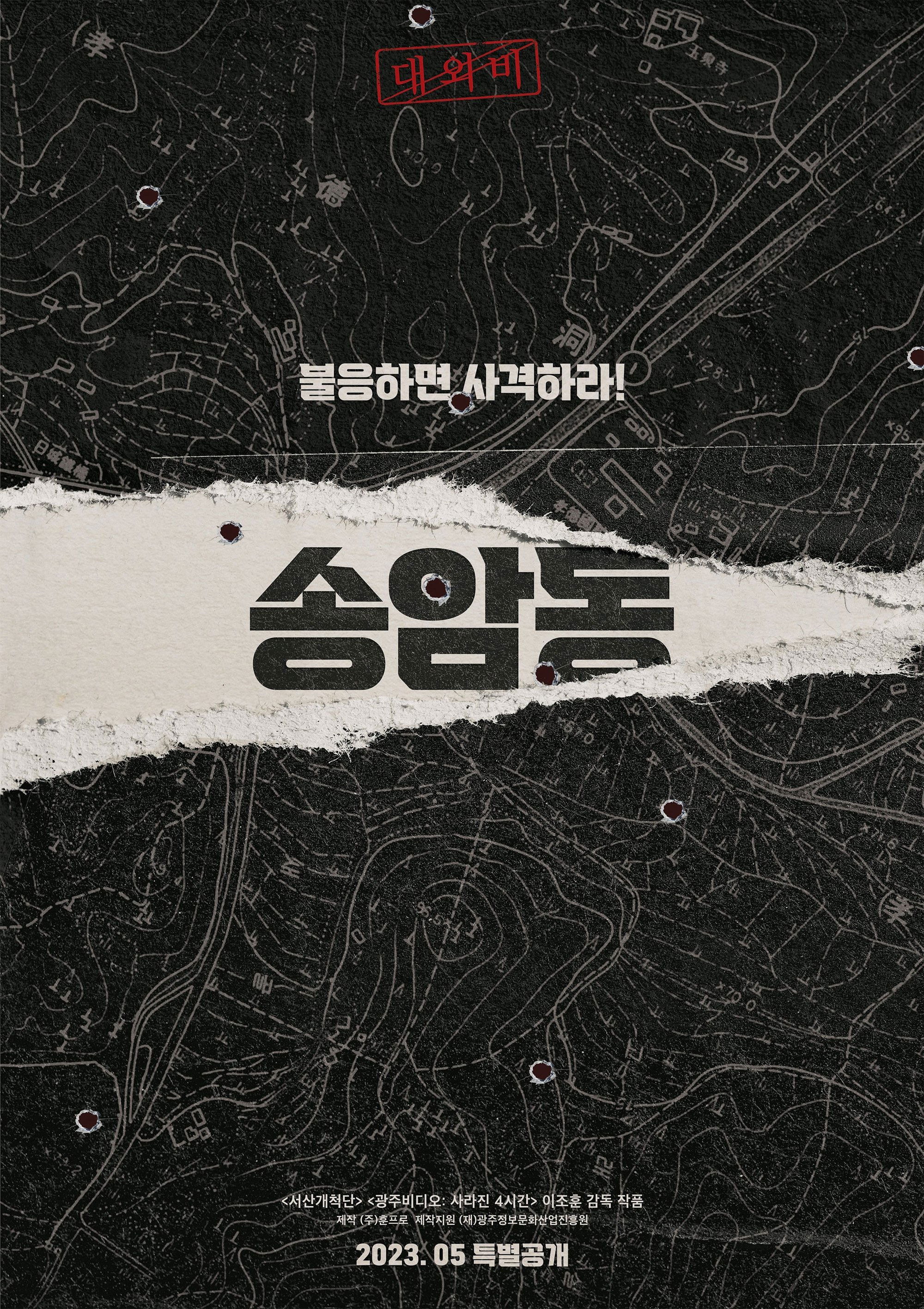
The movie is a compilation of the movie "Wilderness" in which a member of the airborne unit who killed a girl during the Gwangju Democratization Movement burned himself to death with remorse and "Mr. Kant's Presentation", the story of a man who wanders around as a result of torture after participating as a civilian army.
When his mother goes missing, Lee Ho-yeon sets out to search for her. In the course of that journey, he discovers his parents' pasts during the democracy protests of the 1980s when student activists rose up against the repressive Chun Doo-hwan regime. Reading a book written by his mother, Ho-yeon uncovers a story of hope, love and betrayal, and struggles to understand painful secrets that have been hidden away for thirty years.
Cheol-gi who dreams of a society that embraces justice begins classes at a night school. There he learns about political and social contradictions and the realities the people face. While doing research on factory conditions with his classmates Tae-il, Min-sook and laborers Hyun-sil and Bong-joon, Cheol-gi learns about the Revitalizing Reforms system and the improper practices in emergency measures. After the military revolution, during the election for a general student body in a move towards democracy, Cheol-gi unwittingly becomes a man on the run when emergency martial law is implemented in response by the government. Cheol-gi blames himself when hears about the deaths of Tae-il and Min-sook during the Gwang-ju Uprising from Hyun-sil and Bong-joon. Just when he and Hyun-sil try to start a new life together, Cheol-gi is arrested and put in jail. Inside the prison, he starts another move towards prison democracy.
At the tense 1938 Munich Conference, former friends who now work for opposing governments become reluctant spies racing to expose a Nazi secret.
Stephen Glass is a staff writer for the respected current events and policy magazine The New Republic and a freelance feature writer for publications such as Rolling Stone, Harper's and George. By the mid-90s, Glass' articles had turned him into one of the most sought-after young journalists in Washington, but a bizarre chain of events - chronicled in Buzz Bissinger's September 1998 Vanity Fair article - suddenly stopped his career in its tracks.
A story set in 19th century China and centered on the lifelong friendship between two girls who develop their own secret code as a way to contend with the rigid cultural norms imposed on women.
An African-American woman becomes an unwitting pioneer for medical breakthroughs when her cells are used to create the first immortal human cell line in the early 1950s.
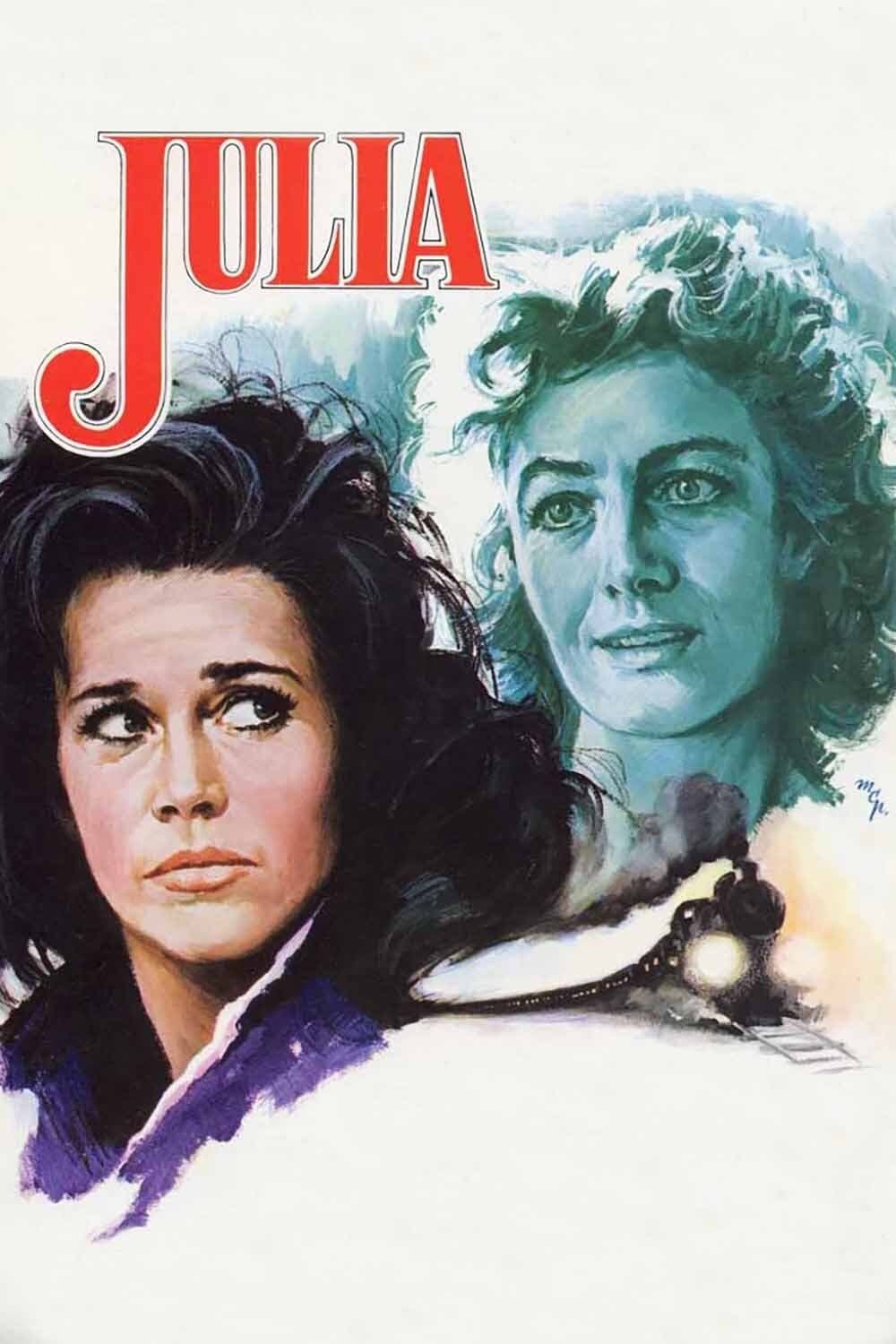
At the behest of an old and dear friend, playwright Lillian Hellman undertakes a dangerous mission to smuggle funds into Nazi Germany.
While investigating the global phenomenon of caste and its dark influence on society, a journalist faces unfathomable personal loss and uncovers the beauty of human resilience.
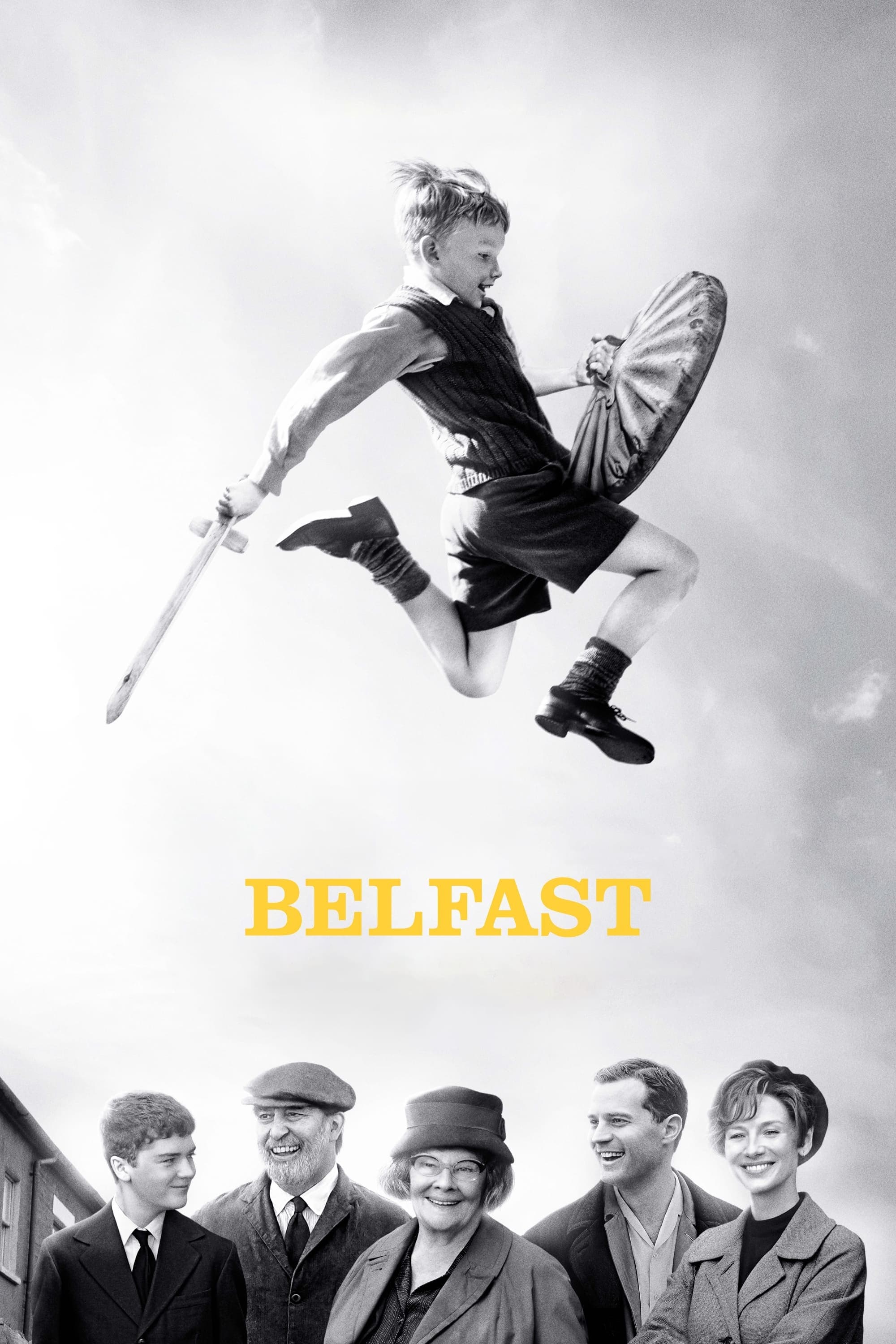
Buddy is a young boy on the cusp of adolescence, whose life is filled with familial love, childhood hijinks, and a blossoming romance. Yet, with his beloved hometown caught up in increasing turmoil, his family faces a momentous choice: hope the conflict will pass or leave everything they know behind for a new life.
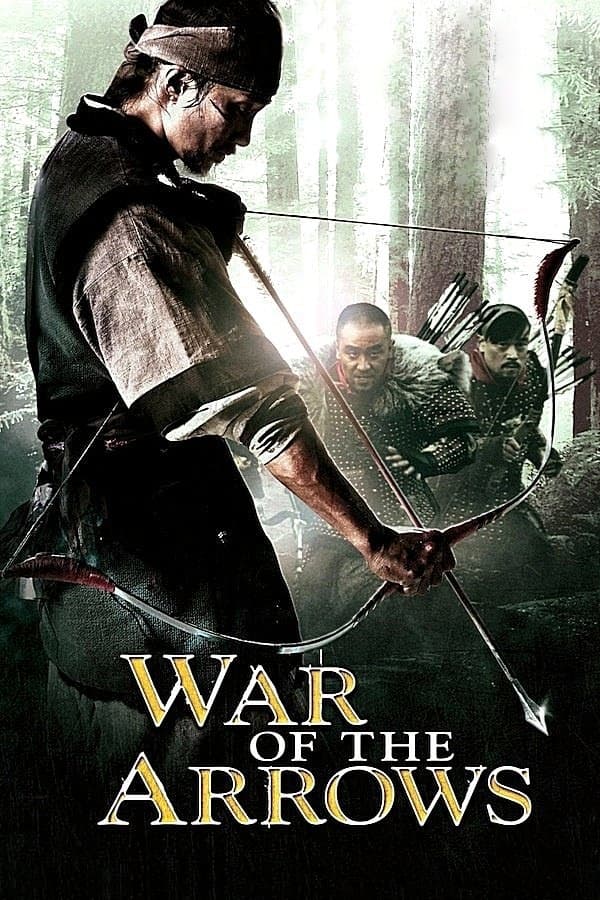
After the death of their father, two siblings are raised by their father's best friend. However, when one gets kidnapped just before her wedding, the other rises against the Manchus.
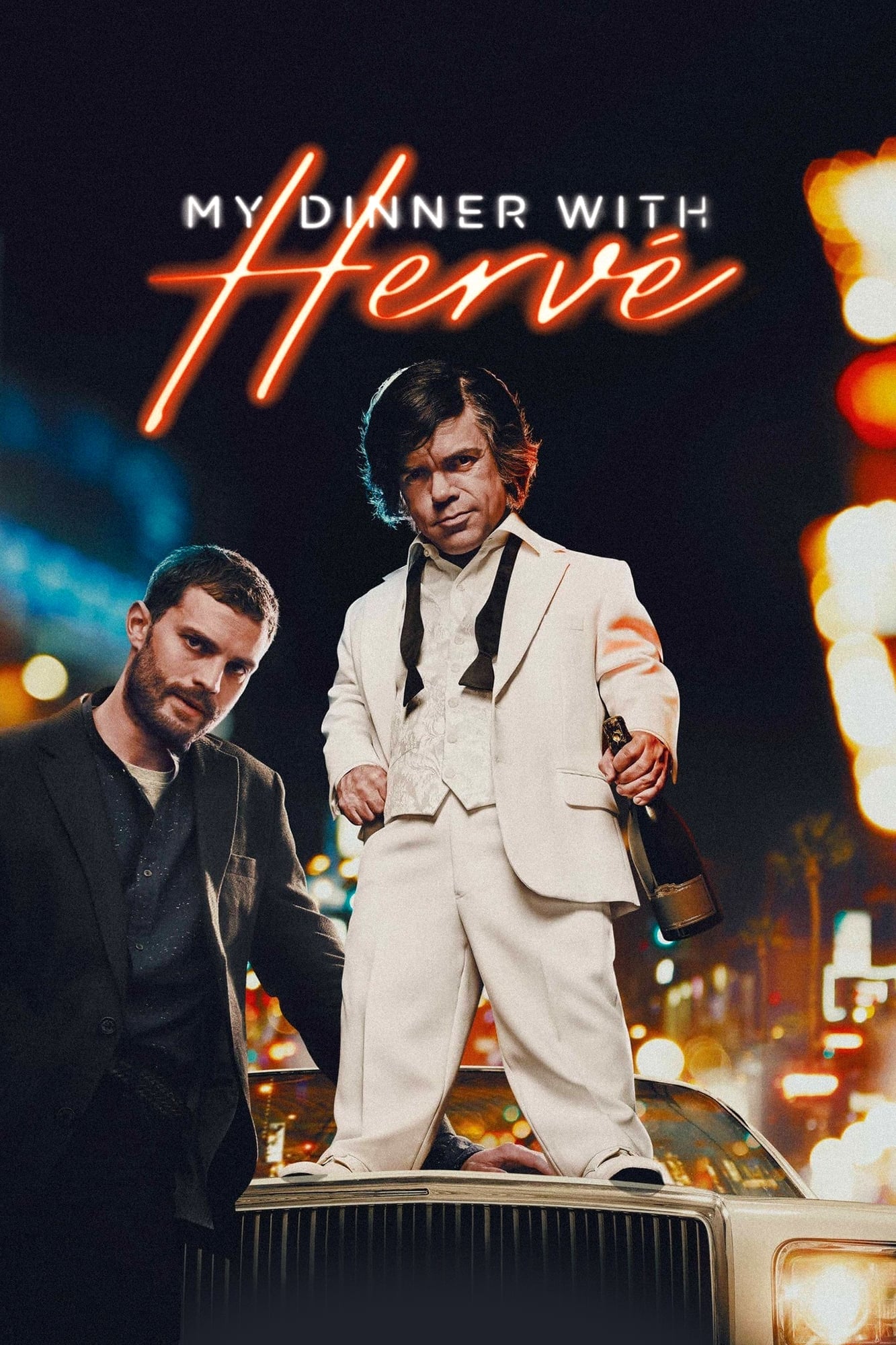
An unlikely friendship evolves over one wild night in LA between a struggling journalist and actor Hervé Villechaize, the world's most famous gun-toting dwarf, resulting in life-changing consequences for both.
Thomas Montgomery, a married father of two young daughters, gets seduced by the world of online gambling and chat rooms where a virtual romance and sexual obsession ultimately leads to the murder of an innocent man.
A miraculous conception. A merciless king. A murderous pursuit. Mary's journey to give birth to Jesus unfolds in this biblical coming-of-age epic.
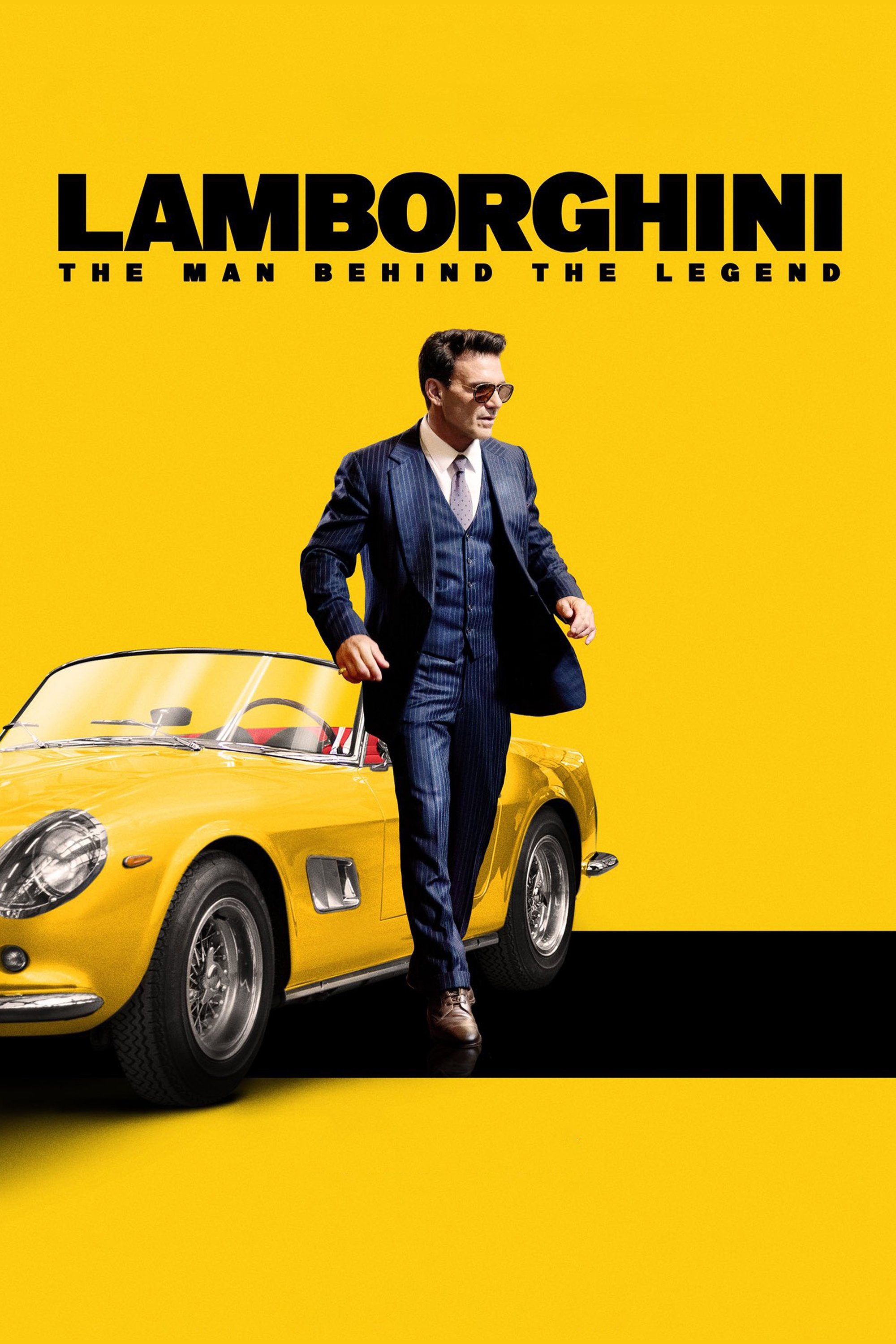
Follow the launch of Lamborghini’s career as a manufacturer of tractors, a creator of military vehicles during World War II, and the designer of Lamborghini cars, which he launched in 1963 as the high-end sports car company Automobili Lamborghini.
The story of Vera Atkins, a crafty spy recruiter, and two of the first women she selects for Churchill's "secret army": Virginia Hall, a daring American undaunted by a disability and Noor Inayat Khan, a pacifist. These civilian women form an unlikely sisterhood while entangled in dangerous missions to turn the tide of the war.
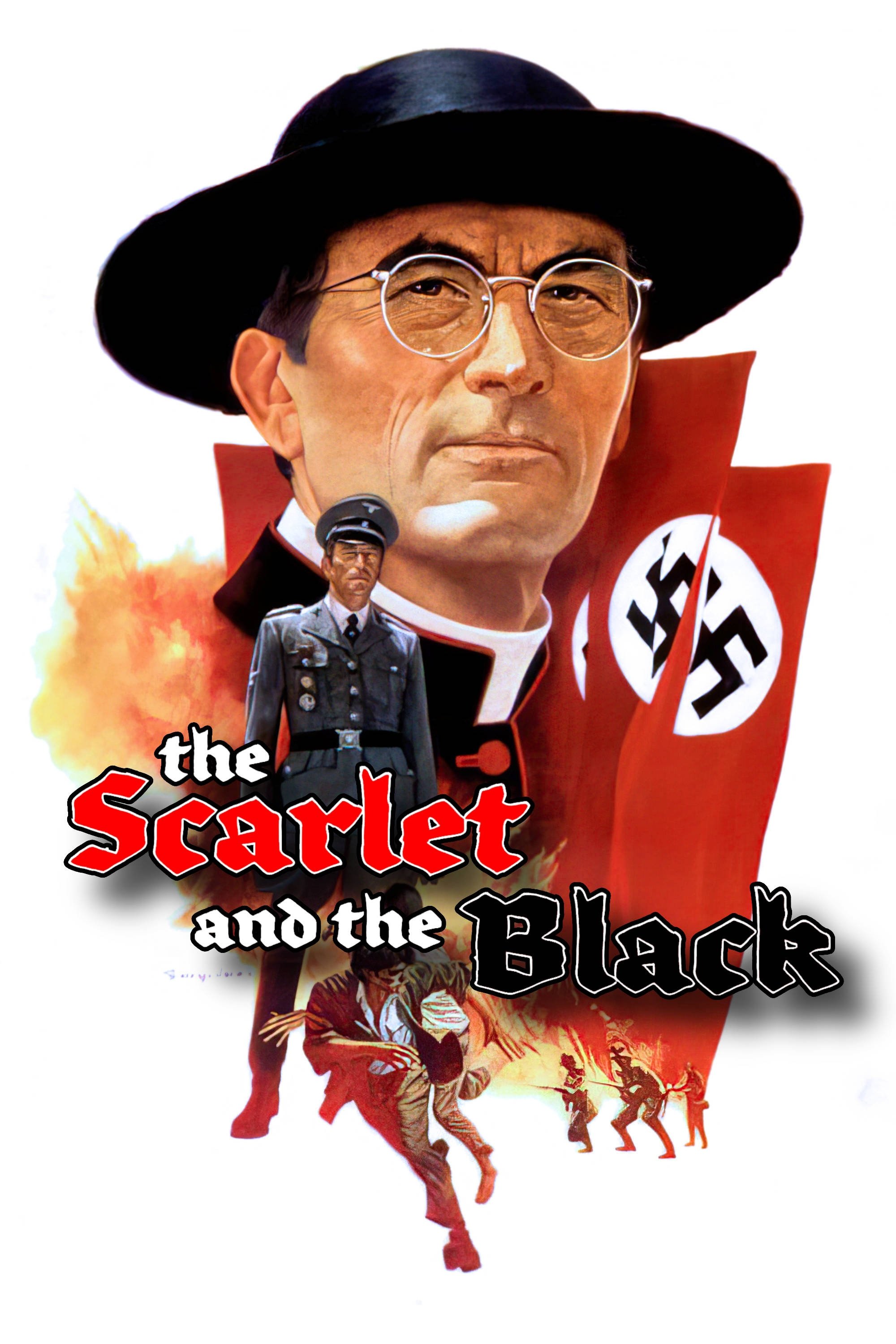
Fr. Hugh O'Flaherty is a Vatican official in 1943-45 who has been hiding downed pilots, escaped prisoners of war, and Italian resistance families. His activities become so large that the Nazis decide to assassinate him the next time he leaves the Vatican.
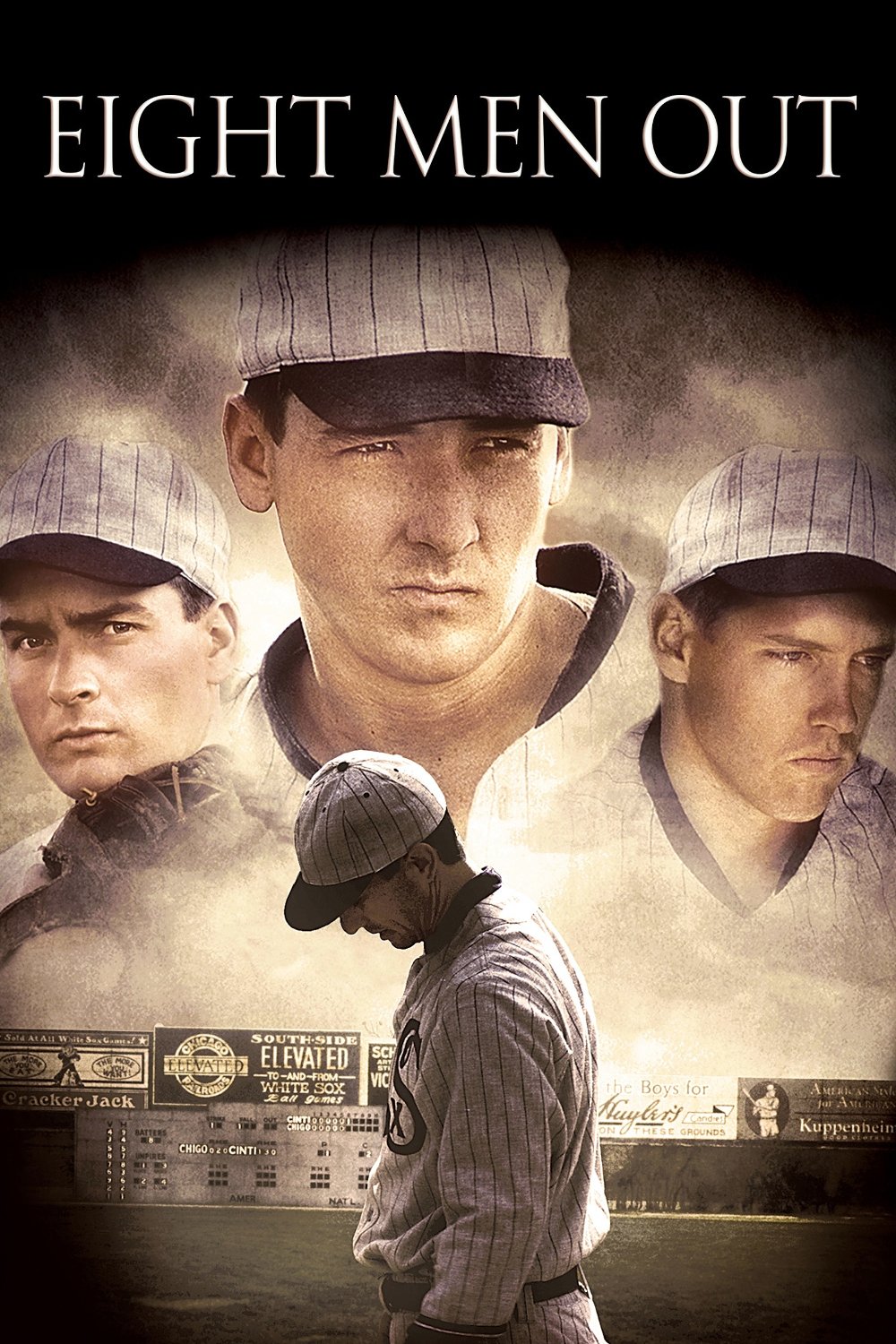
Buck Weaver and Hap Felsch are young idealistic players on the Chicago White Sox, a pennant-winning team owned by Charles Comiskey - a penny-pinching, hands-on manager who underpays his players and treats them with disdain. And when gamblers and hustlers discover that Comiskey's demoralized players are ripe for a money-making scheme, one by one the team members agree to throw the World Series. But when the White Sox are defeated, a couple of sports writers smell a fix and a national scandal explodes, ripping the cover off America's favorite pastime.
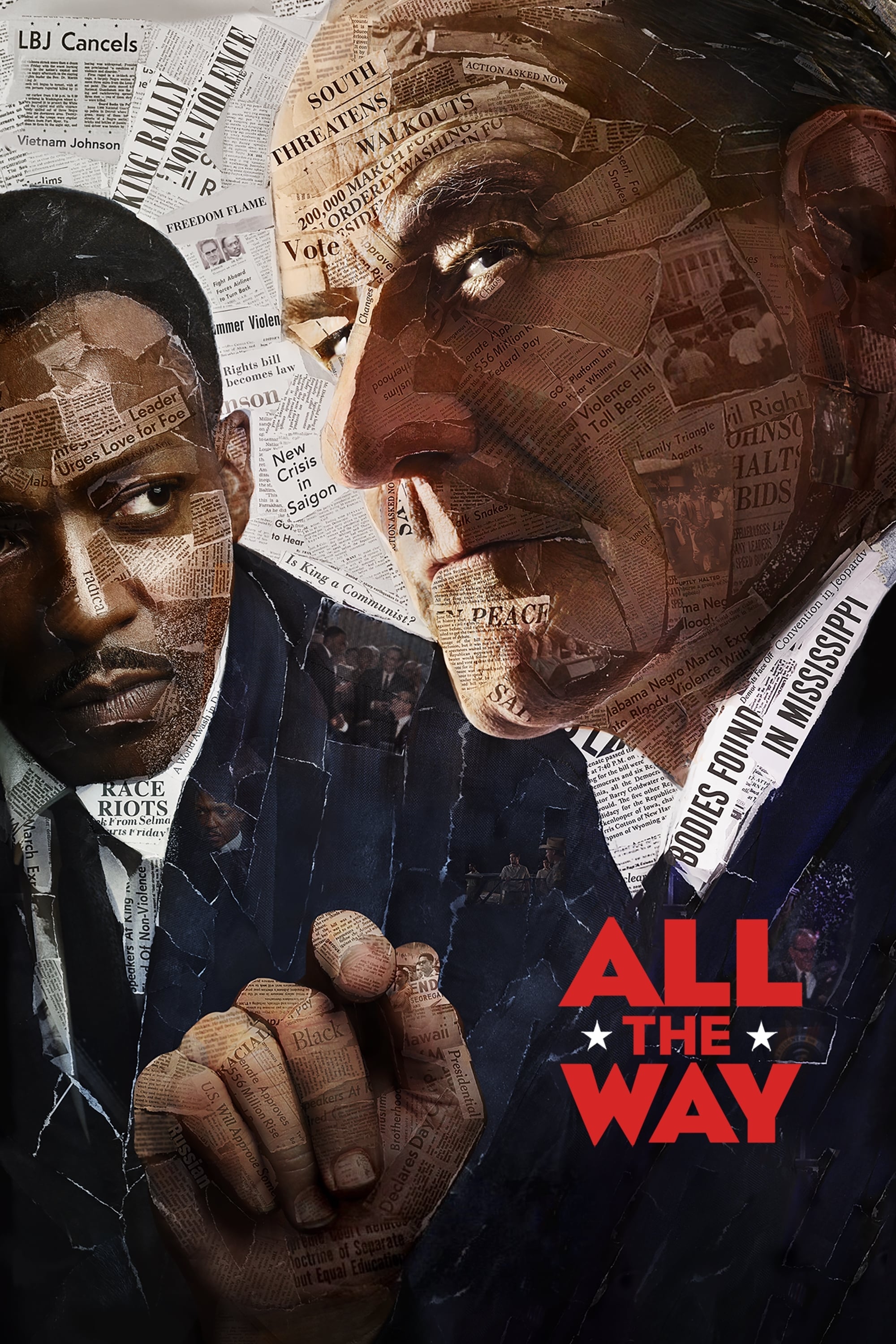
Lyndon B. Johnson's amazing 11-month journey from taking office after JFK's assassination, through the fight to pass the 1964 Civil Rights Act and his own presidential campaign, culminating on the night LBJ is actually elected to the office – no longer the 'accidental President.'
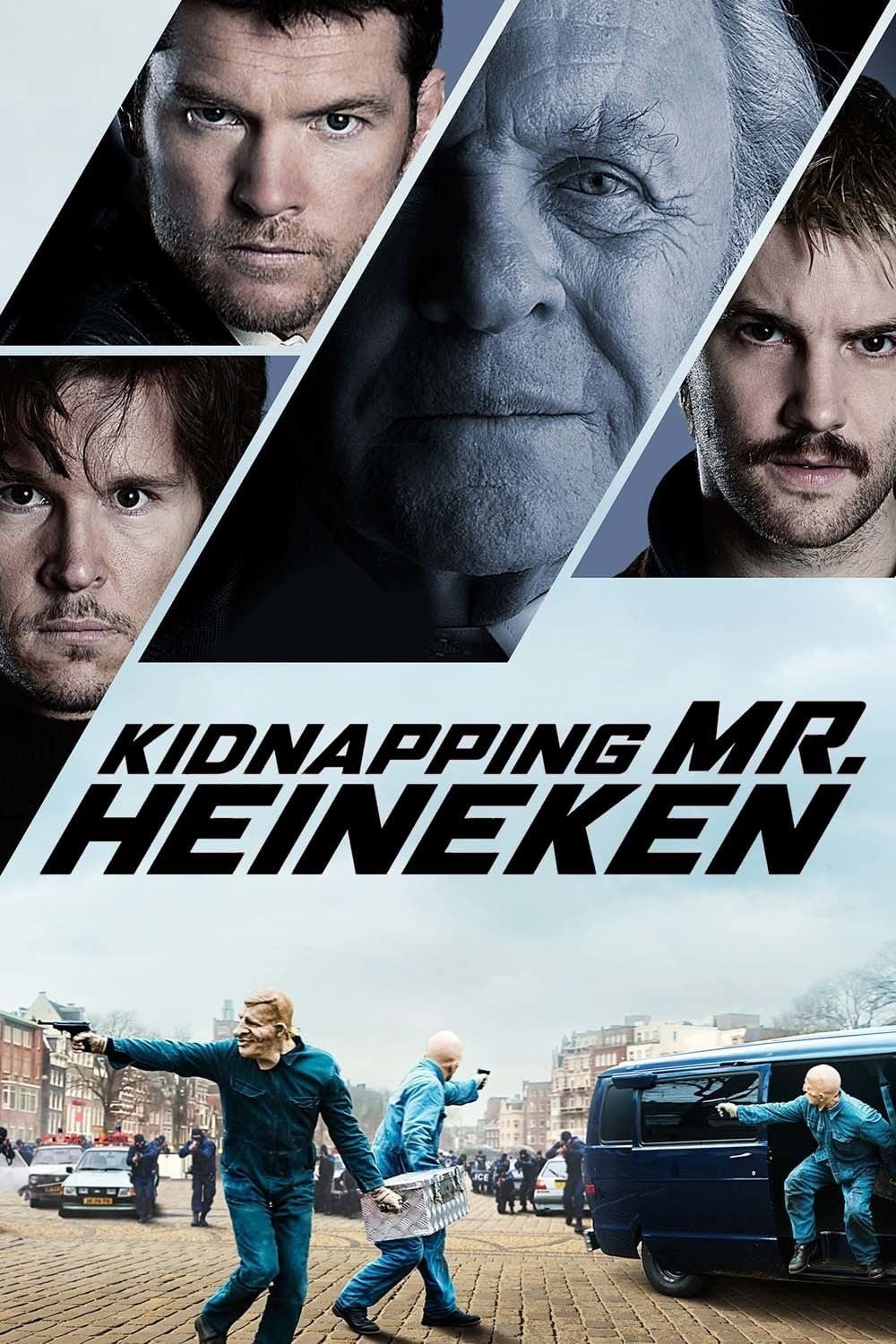
The true story of the kidnapping of Freddy Heineken, the grandson of the founder of the Heineken brewery, and his driver. They were released after a ransom of 35 million Dutch guilders was paid.
Hamlet, Prince of Denmark, finds out that his uncle Claudius killed his father to obtain the throne, and plans revenge.
A reporter, fired after refusing to give names to a 1951 House Un-American Activities Committee, takes a part-time job as companion to an old lady. While working she overhears a noisy argument in the neighboring house, being conducted largely in German and involving her HUAC prosecutor. She begins to investigate, enlisting the help of the FBI Agent initially detailed to surveil her.