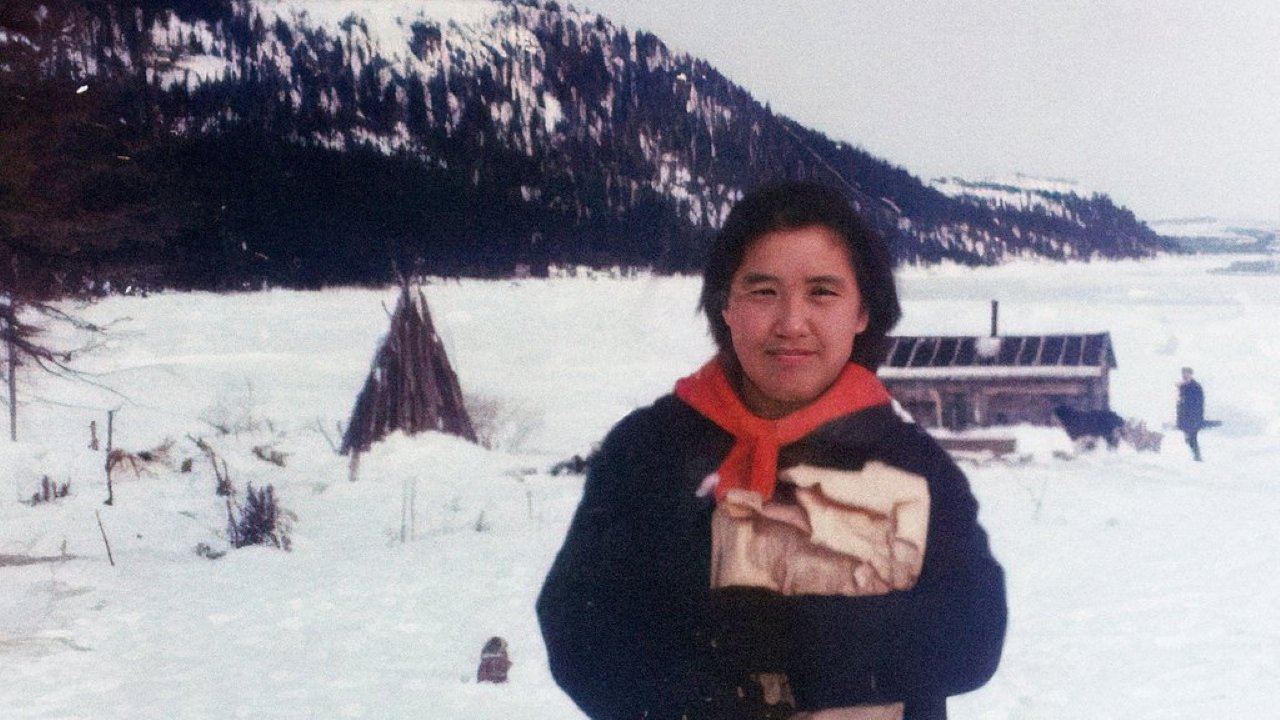
Part oral history and part visual poem, Miss Campbell: Inuk Teacher is the story of Evelyn Campbell, a trailblazer for an Inuit-led educational system in the small community of Rigolet, Labrador.
Social & External
Narrator (voice)
Sean and Adrian, a Two-Spirit couple, are determined to rewrite the rules of Native American culture through their participation in the “Sweetheart Dance.” This celebratory contest is held at powwows across the country, primarily for heterosexual couples … until now.
A documentary on the massacre of Planas in the Colombian east plains in 1970. An Indigenous community formed a cooperative to defend their rights from settlers and colonists, but the government organized a military operation to protect the latter and foreign companies.
“Shellmound” is the story of how one location was transformed from a sacred center of pre-historic cultures to a commercial mecca for modern people. What began as a Native American burial ground three thousand years ago, was transformed first into an amusement park, and later an industrial age paint factory. Now, the tainted ancient soil sits beneath the glittering lights of Banana Republic, Victoria’s Secret, and the AMC movie theaters. “Shellmound” examines the decisions made during the recent toxic cleanup, excavation, and construction of the Bay Street mall through the eyes of the city of Emeryville, the developer, the archaeologists, and the native Californians who worked on the site.
Tom Hill, a Seneca artist and curator, explores the works of four contemporary Indigenous artists.
The journey of a young candidate running in the Pessamit community band council elections.
At the age of eight, José shows us his village, Nutashkuan, and everything he loves there.
This pioneering documentary film depicts the lives of the indigenous Inuit people of Canada's northern Quebec region. Although the production contains some fictional elements, it vividly shows how its resourceful subjects survive in such a harsh climate, revealing how they construct their igloo homes and find food by hunting and fishing. The film also captures the beautiful, if unforgiving, frozen landscape of the Great White North, far removed from conventional civilization.
Red Fever is a witty and entertaining feature documentary about the profound -- yet hidden -- Indigenous influence on Western culture and identity. The film follows Cree co-director Neil Diamond as he asks, “Why do they love us so much?!” and sets out on a journey to find out why the world is so fascinated with the stereotypical imagery of Native people that is all over pop culture. Why have Indigenous cultures been revered, romanticized, and appropriated for so long, and to this day? Red Fever uncovers the surprising truths behind the imagery -- so buried in history that even most Native people don't know about them.
Indigenous chief Juma Xipaia fights to protect tribal lands despite assassination attempts. Her struggle intensifies after learning she's pregnant, while her husband, Special Forces ranger Hugo Loss, stands by her side.
Documentary chronicling the government relocation of 10,000 Navajo Indians in Arizona.
A documentary film about Comanche activist LaDonna Harris, who led an extensive life of Native political and social activism, and is now passing on her traditional cultural and leadership values to a new generation of emerging Indigenous leaders.
The Mentuwajê Guardians of Culture (a group of young Krahô filmmakers) invite the Beture Collective (Mebêngôkre-Kayapó) to visit their village and attend the Kêtwajê festival – an important initiation ritual that has not taken place for ten years. Over the course of several days, children and adolescents undergo various “tests” to transform into adult warriors, under the watchful and shared gaze of the local filmmakers and the Mebêngôkre-Kayapó guests.
In Inukjuak, an Inuit community in the Eastern Arctic, a baby boy has come into the world and they call him Timuti, a name that recurs across generations of his people, evoking other Timutis, alive and dead, who will nourish his spirit and shape his destiny.
Essence of Healing is a documentary exploring the life journeys of 14 American Indian nurses - their experiences growing up, their experiences in nursing school, and their experiences on the job. They are part of a larger story - a historical line of care and compassion that has run through hundreds of indigenous tribes for thousands of years.
Nóouhàh-Toka’na, known as swift fox in English, once roamed the North American Great Plains from Canada to Texas. Like bison, pronghorn and other plains animals, Nóouhàh-Toka’na held cultural significance for the Native Americans who lived alongside them. But predator control programs in the mid-1900s reduced the foxes to just 10 percent of their native range. At the Fort Belknap Indian Community in Montana, members of the Aaniiih and Nakoda tribes are working with the Smithsonian’s National Zoo and Conservation Biology Institute and other conservation partners to restore biodiversity and return Nóouhàh-Toka’na to the land.
The sound of metal creaking as if something is about to break. An old pickup truck adapted to carry passengers crosses the La Guajira desert in Colombia. With the wind come voices that merge among the passengers who travel there. A Wayuu woman returns to her territory, accompanied by her family, after years of exile due to a paramilitary massacre. A cyclical journey where the time layers of the territory touch and the border between the living and the dead is diluted.
The North of Cauca is the region of Colombia most affected by the internal armed conflict since 1940. There is an orchestra of ancestral music composed of young indigenous people of the Nasa ethnic group who, with their instruments, their voice and their poetry, remember Maryi Vanessa Coicue, Sebastian Ul and Ingrid Guejia, three of the hundreds of indigenous children who have died because of this eternal and useless war between leftist guerrillas, armed groups of the extreme right, drug traffickers and the Colombian State.
Inuit traditional face tattoos have been forbidden for a century, and almost forgotten. Director Alethea Arnaquq-Baril, together with long-time friend and activist Aaju Peter, is determined to uncover the mystery and meaning behind this beautiful ancient tradition. Together they embark on an adventure through Arctic communities, speaking with elders and recording the stories of a once popularized female artform. Central to the film is Arnaquq-Baril’s personal debate over whether or not to get tattood herself. With candour and humour, she welcomes us into her world, to experience firsthand the complex emotions that accompany her struggle. Past meets present in this intimate account of one woman’s journey towards self-empowerment and cultural understanding.
CREE CODE TALKER reveals the role of Canadian Cree code talker Charles 'Checker' Tomkins during the Second World War. Digging deep into the US archives it depicts the true story of Charles' involvement with the US Air Force and the development of the code talkers communication system, which was used to transmit crucial military communications, using the Cree language as a vital secret weapon in combat.
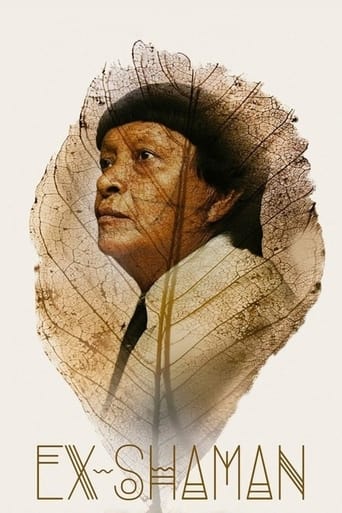
Ever since their first contact with the Western world in 1969 the Paiter Suruí, an indigenous people living in the Amazon basin, have been exposed to sweeping social changes. Smartphones, gas, electricity, medicines, weapons and social media have now replaced their traditional way of life. Illness is a risk for a community increasingly unable to isolate itself from the modernization brought by white people or the power of the church. Ethnocide threatens to destroy their soul. With dogged persistence, Perpera, a former shaman, is searching for a way to restore the old vitality to his village.