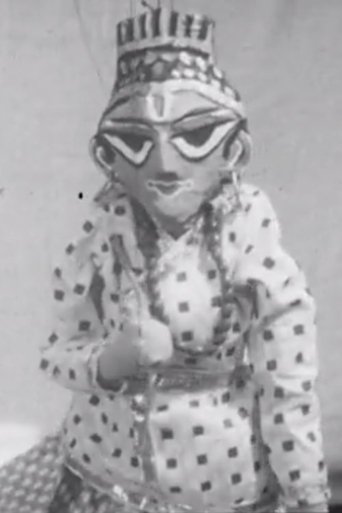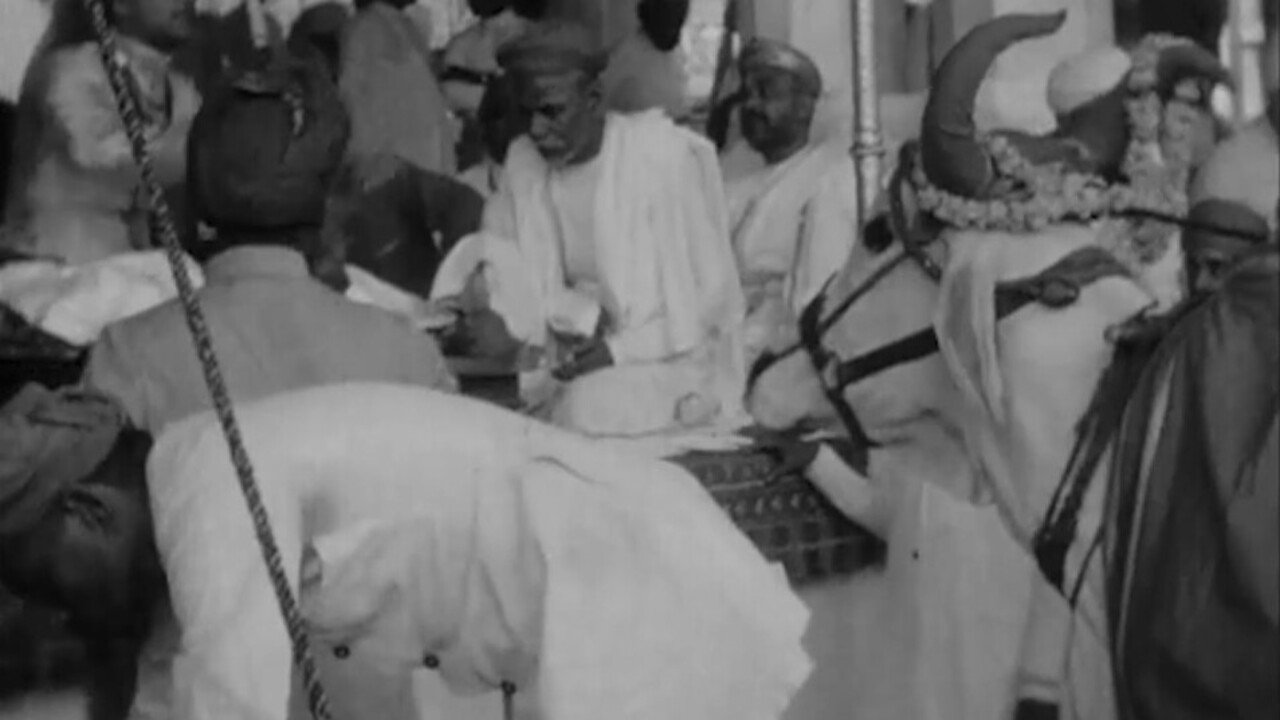
Amateur footage of Delhi and Jaipur, from a military review to an atmospheric torchlit procession - and some armour-plated elephants.
Social & External
Following the 1884–85 Berlin Conference resolution on the partition of Africa, the Portuguese army uses a talented ensign to register the effective occupation of the territory belonging to the Cuamato people, conquered in 1907, in the south of Angola. A STORY FROM AFRICA enlivens a rarely seen photographic archive through the tragic tale of Calipalula, the Cuamato nobleman essential to the unfolding of events in this Portuguese pacification campaign.
IN THE LAND OF GIANT PYGMIES, a diary of Aurelio Rossi's 1925 trek into the immense Belgian Congo, preserves a long-gone-Colonial-era wonder at natural resources, "primitive" tribes, customs and costumes in Europe's cast African possessions, and implies that the "dark continent" could benefit from the "civilizing" influences of home.
A Bangladeshi American undertakes a journey to learn about the liberation war in his native country, traveling there for the first time in nearly two decades, and uncovering the controversial role the U.S. played in a forgotten genocide that occurred there over 50 years ago. From 1971 to the present day, this is a story of Bangladesh’s independence, a family’s journey immigrating to America, and the cognitive dissonance of a person belonging to both homelands. Driven by interviews with his father and other family members, along with experts and witnesses, archival videos, declassified recordings, and animations, BENGAL MEMORY is a unique and untold oral history through a personal lens.
A behind-the-scenes documentary about the 41st Paléo in Nyon (Switzerland) in 2016, with a selection of the best parts of the concerts and interviews with the artists and volunteers who organize the festival.
A brief moment at a hacker conference planted a seed that would eventually spawn an ad-hoc motorcycle gang in the Orkhon Valley of Mongolia. Join Vincent Canfield and the COCKCON crew as they ride motorcycles for the first time through one of the least densely populated countries in the world.
This Traveltalk series short visits the State of Virginia. In 1947, agriculture was the mainstay of the economy. Tobacco, molasses from cane and peanuts were the agricultural mainstays. The State capitol, Richmond, can boast the oldest legislature in the Western Hemisphere. There are many attractions including old caverns with beautiful rock displays.
This Traveltalk series short visits several points of interest in England, including the port of Liverpool, war destruction at Coventry, the historic Warwick Castle, and Stratford-on-Avon, the birthplace of William Shakespeare.
This Traveltalk series short visits an array of locations associated with England's heritage. Included are Runnymede, Windsor, Ascot, Lincoln, Wells, Salisbury, Glastonbury, and the ancient Stonehenge site.
This Traveltalk series short highlights rural areas of England. We stop at the village of Bradford-on-Avon, with its thatched roofs, also Stoke Poges, the burial place of British poet Thomas Gray.
This FitzPatrick Traveltalk short visits the cities of Casablanca, Rabat, and Marrakesh in Morocco, as well as the city of Algiers in Algeria.
This Traveltalk series short visits Australia.
The Andes Mountains travel the western side of South America. Unlike many other mountain ranges of their altitude, the Andes do support human life on their high altitude slopes. Modern life is slowly making its way to the high altitude Andes, but the natives for the most part continue with the traditional ways of their ancestors, growing limited crops such as beans and potatoes - where the crop originated - raising sheep and pigs, and living in crude huts. The llama is the most useful of their work animals. The most conspicuous aspect of the native dress is their derby hats, the origins which are unknown. Further down the slopes, agriculture and ranching is more productive and is carried out by descendants of the Spanish settlers. There is a famous lake district in the Chilean part of the Andes, where resort hotels are located.
This Traveltalk series short takes a trip on the Rhine river, with stops at Cologne, Bonn, and Koblenz.
The first documentary film ever made about psytrance. It tells the story of “Drugless Festival”, better remembered in Israel as “Huga Festival” that took place in Ganey Huga, a water park in the North of Israel, for 3 days, back in the summer of 1997.
This Traveltalk series short gives a glimpse into South African history, albeit from a white person's viewpoint. South Africa is a union of four separate states: the Transvaal, the Orange Free State, Natal, and the Cape Provence.
This travelogue emphasizes Copenhagen's harmonious residents and tone. We see well-known landmarks and get a quick history of some of them.
This Traveltalk series short looks at four of Spain's most famous cities, Granada, Seville, Toledo, and Madrid, with an emphasis on the Moors and their influence on the country.
Commissioned by the journal Présence Africaine, this short documentary examines how African art is devalued and alienated through colonial and museum contexts. Beginning with the question of why African works are confined to ethnographic displays while Greek or Egyptian art is celebrated, the film became a landmark of anti-colonial cinema and was banned in France for eight years.
"Fascinating India" spreads an impressive panorama of India’s historical and contemporary world. The film presents the most important cities, royal residences and temple precincts. It follows the trail of different religious denominations, which have influenced India up to the present day. Simon Busch and Alexander Sass travelled for months through the north of the Indian subcontinent to discover what is hidden under India’s exotic and enigmatic surface, and to show what is rarely revealed to foreigners. The film deals with daily life in India. In Varanasi, people burn their dead to ashes. At the Kumbh Mela, the biggest religious gathering of the world, 35 million pilgrims bathe in holy River Ganges. This is the first time India is presented in such an alluring and engaging fashion on screen.
A documentary capturing the creation of the album Junun inside Rajasthan’s 15th-century Mehrangarh Fort. Paul Thomas Anderson follows Jonny Greenwood, Shye Ben Tzur, Nigel Godrich, and the Rajasthan Express as they record a cross-cultural fusion of Indian, Israeli, and Western music.
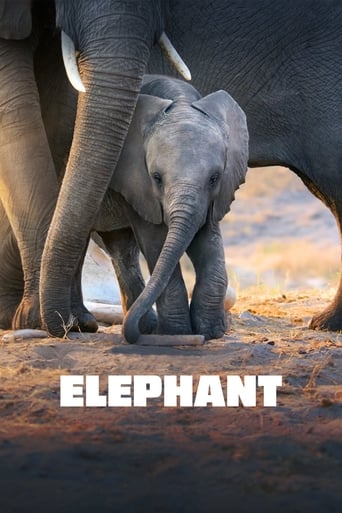
Disneynature’s Elephant follows African elephant Shani and her spirited son Jomo as their herd make an epic journey hundreds of miles across the vast Kalahari Desert. Led by their great matriarch, Gaia, the family faces brutal heat, dwindling resources and persistent predators, as they follow in their ancestors’ footsteps on a quest to reach a lush, green paradise.
A documentary on the expletive's origin, why it offends some people so deeply, and what can be gained from its use.
As a visually radical memoir, CAMERAPERSON draws on the remarkable footage that filmmaker Kirsten Johnson has shot and reframes it in ways that illuminate moments and situations that have personally affected her. What emerges is an elegant meditation on the relationship between truth and the camera frame, as Johnson transforms scenes that have been presented on Festival screens as one kind of truth into another kind of story—one about personal journey, craft, and direct human connection.
A look behind the lens of Christopher Nolan's space epic.
Offbeat documentarian Chris Smith provides a behind-the-scenes look at how Jim Carrey adopted the persona of idiosyncratic comedian Andy Kaufman on the set of Man on the Moon.
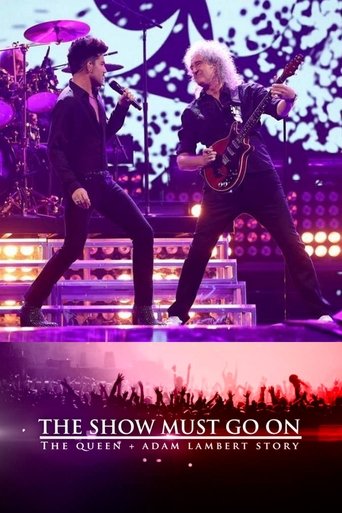
A documentary chronicling Queen and Lambert's incredible journey since they first shared the stage together on "American Idol" in 2009.
A documentary shot by filmmakers all over the world that serves as a time capsule to show future generations what it was like to be alive on the 24th of July, 2010.
Director Michael Apted revisits the same group of British-born adults after a 7 year wait. The subjects are interviewed as to the changes that have occurred in their lives during the last seven years.
A portrait of the day-to-day operations of the National Gallery of London, that reveals the role of the employees and the experiences of the Gallery's visitors. The film portrays the role of the curators and conservators; the education, scientific, and conservation departments; and the audience of all kinds of people who come to experience it.
A documentary examining the decade of the 1970s as a turning point in American cinema. Some of today's best filmmakers interview the influential directors of that time.
After years in the limelight, Selena Gomez achieves unimaginable stardom. But just as she reaches a new peak, an unexpected turn pulls her into darkness. This uniquely raw and intimate documentary spans her six-year journey into a new light.
A semi-fictionalized documentary about a day in the life of Australian musician Nick Cave's persona.
Ashes and Snow, a film by Gregory Colbert, uses both still and movie cameras to explore extraordinary interactions between humans and animals. The 60-minute feature is a poetic narrative rather than a documentary. It aims to lift the natural and artificial barriers between humans and other species, dissolving the distance that exists between them.
An inside look at the years of effort and craft that went into the final installment of the Duffer Brothers' generation-defining series.
Alexander McQueen's rags-to-riches story is a modern-day fairy tale, laced with the gothic. Mirroring the savage beauty, boldness and vivacity of his design, this documentary is an intimate revelation of McQueen's own world, both tortured and inspired, which celebrates a radical and mesmerizing genius of profound influence.
A look at the origins, history and conspiracies behind the "Majestic 12", a clandestine group of military and corporate figureheads charged with reverse-engineering extraterrestrial technology.
A tribute to Chadwick Boseman, celebrating his life and legacy.
Carefully picked scenes of nature and civilization are viewed at high speed using time-lapse cinematography in an effort to demonstrate the history of various regions.
Live Aid was held on 13 July 1985, simultaneously in Wembley Stadium in London, England, and the John F. Kennedy Stadium in Philadelphia, United States. It was one of the largest scale satellite link-ups and television broadcasts of all time: watched live by an estimated global audience of 1.9 billion, across 150 nations. "It's twelve noon in London, seven AM in Philadelphia, and around the world it's time for Live Aid...!"