TV-Documentary on German history
Social & External

Narrator (voice)
On June 17, 1953, there was an outrageous action between the Elbe and the Oder: the people in the GDR refused obedience to their political leadership. The story takes place in Bitterfeld and tells the story of a family involved in the political events around 17 June.
19 years after the dropping of atomic bombs in Japan, the Olympic Games of 1964 took place in Tokyo. In the midst of the cold war, the games are supposed to become a symbol for a peaceful world. Especially the divided Germany is expected to prove this: By order of the IOC, both German states must participate in Tokyo with a joint team despite deep ideological rifts. The fact that athletes from both German states still had to compete against each other in order to form a joint team for the 1964 Olympic Games in Innsbruck and in Tokyo is all but forgotten. The film tells the story of the East-West German team of 1964 for the first time and is simultaneously a current document about the relation of sports and politics in international relations.
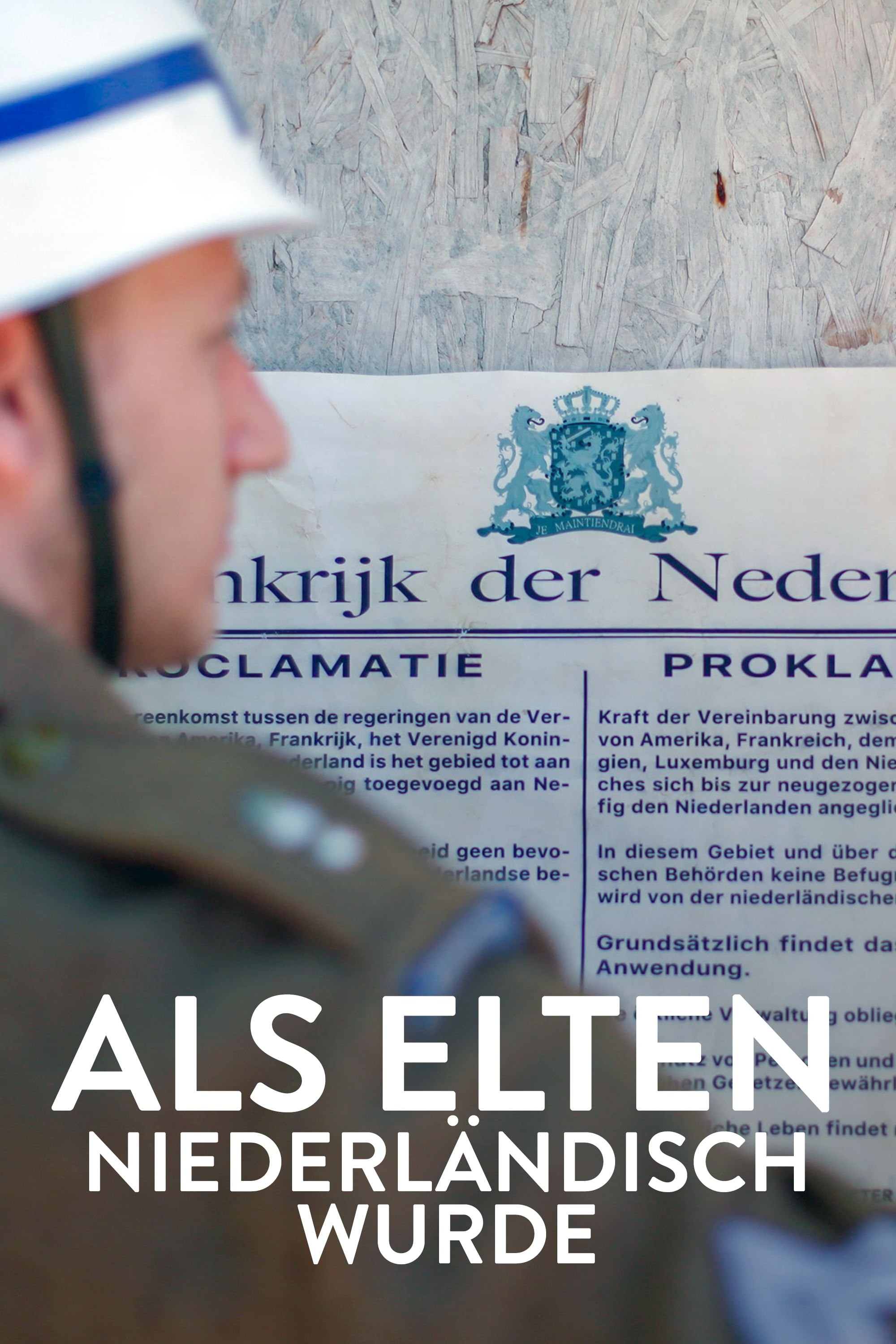
It is an unknown chapter of the German post-war history: On April 23rd, 1949, the kingdom of the Netherlands occupied German soil as a pledge for demanded war reparations. Part of the annexed territories was also the small municipality of Elten. While the people of Elten were initially afraid of the occupation, the time “with Holland” actually became a miracle of prosperity and economy about which many people from Elten still rave today. The occupation period ended with the largest organized smuggling in the history of the federal republic of Germany. The Documentary shows this in never before released 8 mm footage!
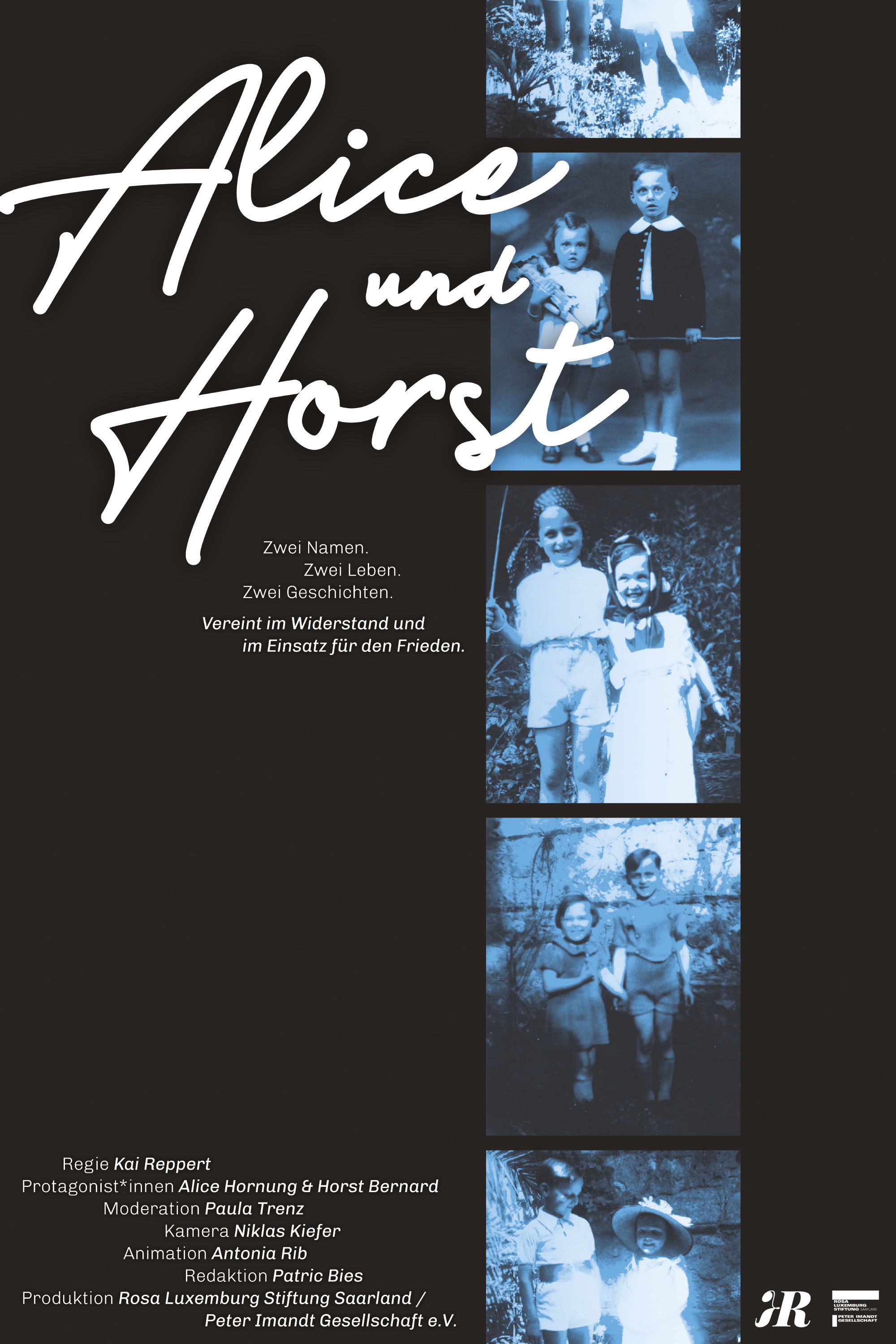
Alice and Horst paints a moving portrait of two siblings from Saarbrücken whose lives were shaped by their family’s antifascist resistance. As children, Alice Hornung and Horst Bernard were forced to flee from the Nazis into exile in France, where, despite constant danger, they also experienced great solidarity. After their return they continued their parents’ political commitment: against fascism, for peace and disarmament. The film combines personal memories with rare archival footage and portrays two individuals who, well into old age, remain unwavering in their commitment to justice and remembrance.
Political satire about the billion-euro loan to the GDR in 1983, which was arranged by Franz-Josef Strauß and Alexander Schalck-Golodkowski to save a bankrupt bank.
Film journalist and critic Rüdiger Suchsland examines German cinema from 1933, when the Nazis came into power, until 1945, when the Third Reich collapsed. (A sequel to From Caligari to Hitler, 2015.)
For more than a decade, Reichsmarschall Hermann Goering, Adolf Hitler's right-hand man during the infamous Third Reich, assembled a collection of thousands of works of art that were meticulously catalogued.
Report on the four historic days from June 24 to June 27, 1963, during which the President of the United States visited the Federal Republic of Germany.
Sabine, Clais and Orm were children when their fathers were murdered by the RAF. Their childhood therefore ended violently and too soon. In this documentary, they tell how terrorism changed their lives and those of their family forever - and continues to shape them to this day.
In the midst of the transition towards reunification and a market economy, two teams meet for the last time in the final of the FDGB Cup shortly after the 1990 Volkskammer elections: favorites Dynamo Dresden and Polizeisportverein Schwerin. Matthias Hufmann and Benjamin Unger take a look back 30 years later.
Documentary about Kurt Landauer, the long-time Jewish president of FC Bayern München, who led the club to its first German championship, was persecuted and forced out of office by the Nazis, and rebuilt the club after the war.
The film talks about the rise and fall of the two most influential protagonists in GDR-politics. In succession, over long stretches even together, Ulbricht and Honecker determined the course of the GDR, of course without ever getting out of being a satellite state to the big brother in Moscow. The film looks for the caesura and crucial points in the power game between Ulbricht and Honecker.
The Stammheim trial against the leadership of the first generation of the RAF was one of the most elaborate in the Federal Republic of Germany. Through this trial, Stammheim also became a place of identity for the RAF. The docudrama uses the perspective of Horst Bubeck, who as a prison officer in the cell wing had the most intensive contact with the prisoners, to shed new light on the history.
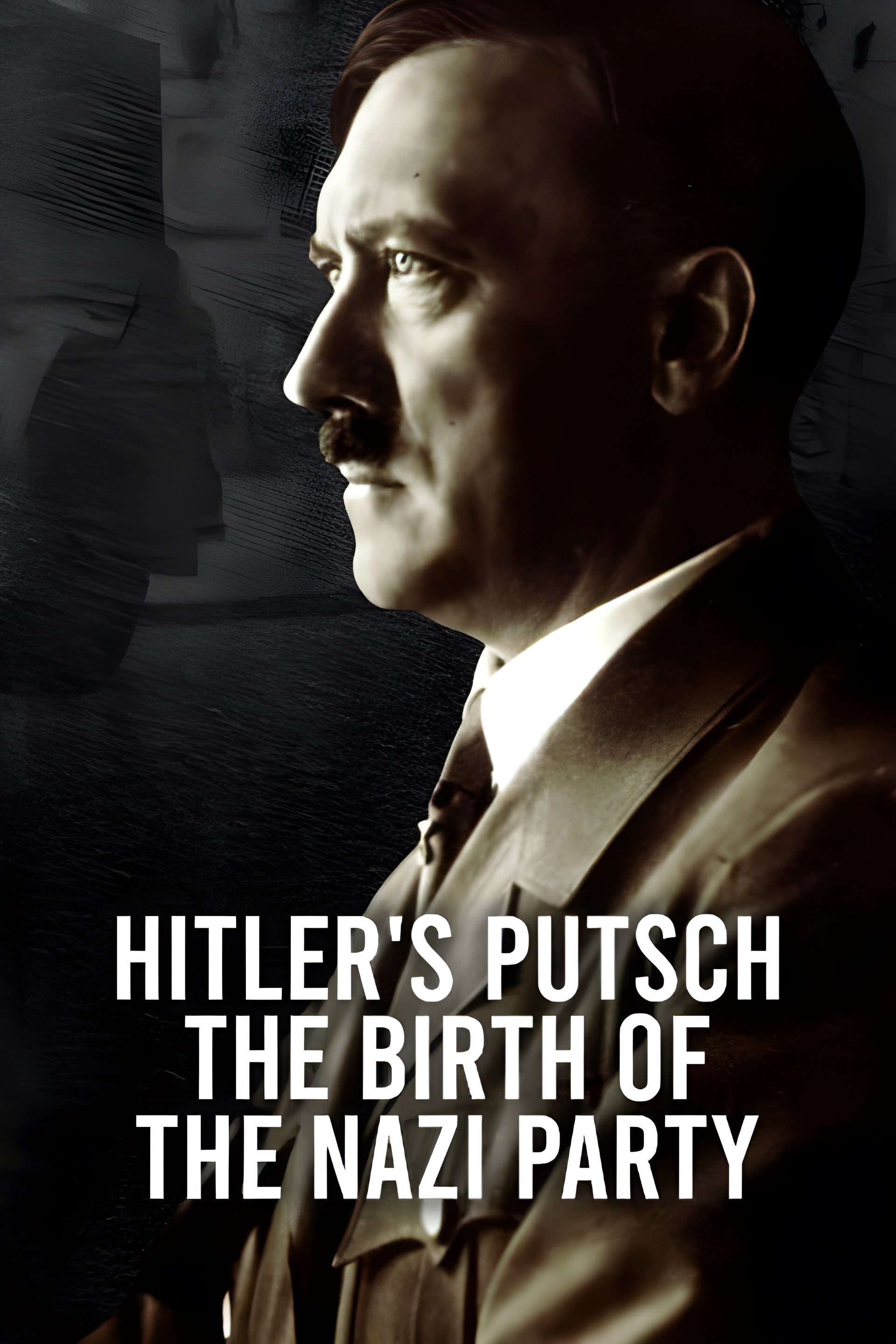
The night of November 8, 1923, is arguably the most significant and transformative in the history of the twentieth century. A localised uprising in the Bavarian capital of Munich, led by a small man with a toothbrush moustache and a poisonous yet compelling grandiloquence, would have repercussions that would lead to the political shackling of an entire nation, the most abhorrent crimes of the century and a world war. You might say, Adolf Hitler came of age amid the smell of sweat and sawdust of a Munich beer hall. In the political chaos of 1923, he was a local irritant, gaining popularity among workers and soldiers, the ethos of his Nazi Party spreading like a virus. His first attempt at attaining true power came with an attempted putsch on the already separatist government of Bavaria, which left him imprisoned.
Emma Freese is desperate when her husband Alfred falls ill at the Howaldtswerke in Kiel. How is the family supposed to get by without their wages? The war has scarred this generation, but now things are supposed to be looking up. The workers want their fair share and are fighting for an income that also gives them room to live. In October 1956, 34,000 metalworkers in the shipyards and factories of Schleswig-Holstein walk off the job to fight for justice and their dignity. This strike is still regarded as the toughest and longest in Germany. Employers and politicians stand in the strikers' way.
Driven by extensive archive material and interviews with those who know her, this is the astonishing story of how a triple outsider – a woman, a scientist, and an East German – became the de facto leader of the “Free World”, told for the first time for an international audience.
Documentary film with play scenes about the rise and fall of the short-lived Bavarian Soviet Republic in 1919 from the perspective of various well-known poets and writers who experienced the events as contemporary witnesses.
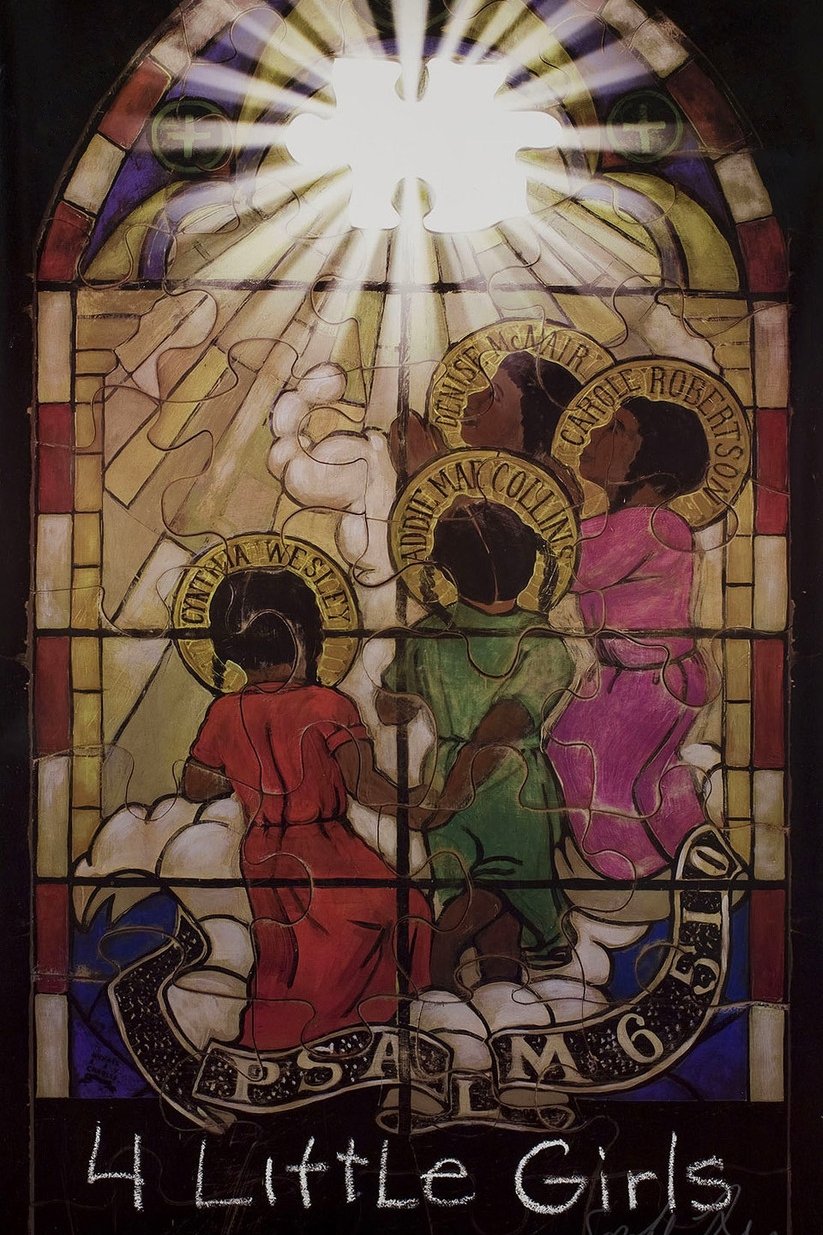
On September 15, 1963, a bomb destroyed a black church in Birmingham, Alabama, killing four young girls who were there for Sunday school. It was a crime that shocked the nation--and a defining moment in the history of the civil-rights movement. Spike Lee re-examines the full story of the bombing, including a revealing interview with former Alabama Governor George Wallace.
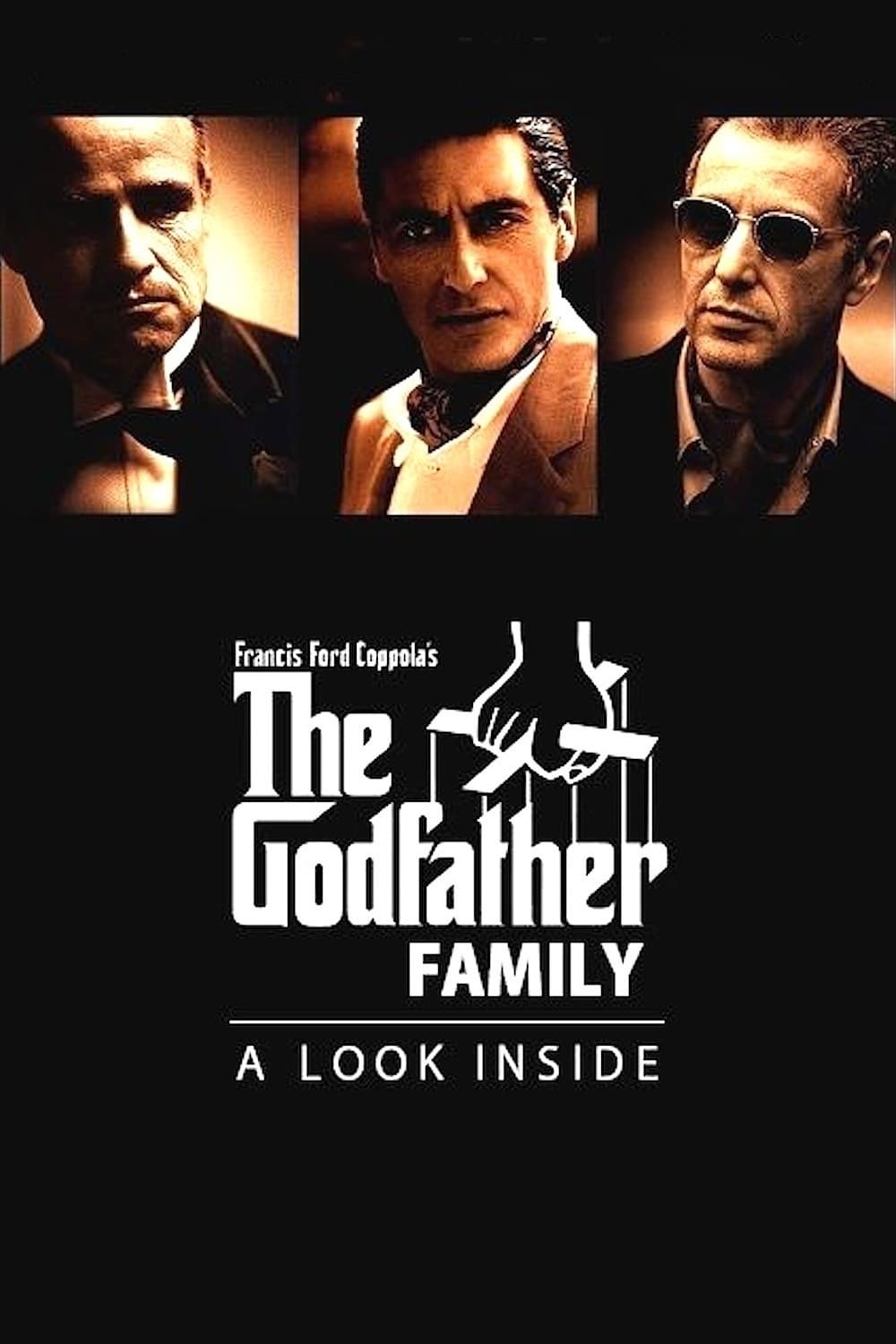
A documentary on the making of the three Godfather films, with interviews and recollections from the film makers and cast. This feature also includes the original screen tests of some of the actors for "The Godfather" film, and some candid moments on the set of "The Godfather: Part III."
A detailing of the rise to prominence and global sporting superstardom of six supremely talented young Manchester United football players (David Beckham, Nicky Butt, Ryan Giggs, Paul Scholes, Phil and Gary Neville). The film covers the period 1992-1999, culminating in Manchester United's European Cup triumph.
Journey into the extraordinary world of "The Witcher" — from casting the roles to Jaskier's catchy song — in this behind-the-scenes look at the series.
Learn the incredible behind-the-scenes story of how the original Star Wars movie was brought to the big screen in this fascinating documentary hosted by C-3PO and R2-D2 which includes interviews with George Lucas and appearances by Mark Hamill, Harrison Ford and Carrie Fisher.
A keen chronicle of the unlikely rise to power of Adolf Hitler (1889-1945) and a dissection of the Third Reich (1933-1945), but also an analysis of mass psychology and how the desperate crowd can be deceived and shepherded to the slaughterhouse.
A documentary focused on plastic pollution in the world's oceans.
The story of the gold-plated statuette that became the film industry's most coveted prize, AND THE OSCAR GOES TO... traces the history of the Academy itself, which began in 1927 when Louis B. Mayer, then head of MGM, led other prominent members of the industry in forming this professional honorary organization. Two years later the Academy began bestowing awards, which were nicknamed "Oscar," and quickly came to represent the pinnacle of cinematic achievement.
Louis Theroux travels to California to meet the man dubbed "the most dangerous racist in America"; Tom Metzger. Louis meets him, his family and his publicity manager as well as following him to skinhead rallies and on a visit to Mexico.
A documentary about the life and films of director John Ford.
With unprecedented access to the official archives and intimate recollections from the band, both current and past, Iron Maiden: Burning Ambition invites fans to experience one of the most iconic journeys in music history. Spanning five decades, this electrifying documentary charts the band’s rise from the pubs of East London to the world’s biggest stadiums. Featuring exclusive interviews with band members and contributors such as Javier Bardem, Lars Ulrich and Chuck D, as well as all-new animated sequences of the band's legendary mascot, Eddie, the film offers a rare and intimate look at Iron Maiden’s uncompromising vision and unwavering connection with their truly global army of fans.
A documentary on the expletive's origin, why it offends some people so deeply, and what can be gained from its use.
Featuring a wealth of previously unseen archive, this film looks at how Bowie continually evolved: from Ziggy Stardust to the Soul Star of Young Americans, to the ‘Thin White Duke’. It explores his regeneration in Berlin with the critically acclaimed album Heroes, his triumph with Scary Monsters and his global success with Let’s Dance. With interviews with all his closest collaborators, David Bowie - Five Years presents a unique account of why Bowie has become an ‘icon of our times’.
Explore how writers Steven Moffat and Mark Gatiss created the hit television sensation. Take a personal voyage through the versions of Holmes that have served as inspirations for the new series - the original stories, their factual origins, hundreds of film adaptations - to arrive at their thoroughly modern Sherlock. Moffat and Gatiss explain the challenges they encountered adapting the original adventures of the iconic super-sleuth. Go behind the scenes on the set of the hit television series, including interviews with actors Benedict Cumberbatch, Martin Freeman and Lara Pulver, who talk about the reinvention of their fictional characters.
Those who knew iconic funnyman John Candy best share his story, in their own words, through never-before-seen archival footage, imagery, and interviews.
JB Smoove and Martin Starr host a celebration of 20 years of "Spider-Man" movies, from the Sam Raimi trilogy to Marc Webb's movies and the trio from Jon Watts.
Ross McElwee sets out to make a documentary about the lingering effects of General Sherman's march of destruction through the South during the Civil War, but is continually sidetracked by women who come and go in his life, his recurring dreams of nuclear holocaust, and Burt Reynolds.
When Allied forces liberated the Nazi concentration camps in 1944-45, their terrible discoveries were recorded by army and newsreel cameramen, revealing for the first time the full horror of what had happened. Making use of British, Soviet and American footage, the Ministry of Information’s Sidney Bernstein (later founder of Granada Television) aimed to create a documentary that would provide lasting, undeniable evidence of the Nazis’ unspeakable crimes. He commissioned a wealth of British talent, including editor Stewart McAllister, writer and future cabinet minister Richard Crossman – and, as treatment advisor, his friend Alfred Hitchcock. Yet, despite initial support from the British and US Governments, the film was shelved, and only now, 70 years on, has it been restored and completed by Imperial War Museums under its original title "German Concentration Camps Factual Survey".
Alexander McQueen's rags-to-riches story is a modern-day fairy tale, laced with the gothic. Mirroring the savage beauty, boldness and vivacity of his design, this documentary is an intimate revelation of McQueen's own world, both tortured and inspired, which celebrates a radical and mesmerizing genius of profound influence.
In the Realms of the Unreal is a documentary about the reclusive Chicago-based artist Henry Darger. Henry Darger was so reclusive that when he died his neighbors were surprised to find a 15,145-page manuscript along with hundreds of paintings depicting The Story of the Vivian Girls, in What is Known as the Realms of the Unreal, of the Glodeco-Angelinnian War Storm, Cased by the Child Slave Rebellion.