"love--and nothing besides!"
a poem. trees. fragments of fritz. love—and nothing besides!
Social & External
Oak Tree: Nature's Greatest Survivor. In this landmark new BBC documentary, entomologist George McGavin takes us on a fascinating journey through a year in the life of a 400-year-old oak tree.
Richard Feynman was a scientific genius with - in his words - a "limited intelligence". This dichotomy is just one of the characteristics that made him a fascinating subject. The Pleasure of Finding Things Out exposes us to many more of these intriguing attributes by featuring an extensive conversation with the acclaimed Nobel Prize winner. During the course of the interview, which was conducted in 1981, Feynman uses the undeniable power of the personal to convey otherwise challenging scientific theories. His colorful and lucid stories make abstract concepts tangible, and his warm presence is sure to inspire interest and awe from even the most reluctant student of science. His insights are profound, but his delivery is anything but dry and ostentatious.
A Experimental Docu-Drama about the Red Army Faction's formation, and events leading up to their imprisonment and death, from 1970 to 1977.
A frenetic found-footage documentary made entirely from “lost” unlabeled media on YouTube - weaving together nearly a thousand raw videos, each mistakenly or mindlessly uploaded under a generic filename (e.g., IMG 1326, IMG 5493…).
A stop motion/collaged based independent short film plays with the recontextualisation of memories and how time distorts them.
This audio-visual tone poem uses the language of filmmaking to offer a first-hand evocation of the turbulent psychological effects one can experience due to prolonged lack of sunlight.
Umberto Eco, the author of best-selling novels who passed away in February 2016, unveils the secrets behind his undertakings and novels.
"Regina José Galindo’s Tierra (2013) explores connections between the exploitation of labor, resources, and human life in Guatemala. Presented at a larger-than-life scale, Galindo stands naked on a parcel of land that is excavated by an encroaching bulldozer. Conjuring imagery of machine-dug mass graves, the work draws attention to the massacre of hundreds of thousands of Indigenous people, mostly Maya Ixil, during the Guatemalan Civil War (1960–96). As the excavator digs around her, the artist stands fixed and unrelenting." - MoMA PS1
A trans Vietnamese woman's deadname being repeated over and over again.
A documentary film about the renowned football coach of our times Mircea Lucescu. The film examines the football philosophy of the world-class sports coach, tracks the influences on its formation (football player career, coaching in different teams and on different football tournaments). The film follows the process of formation of Lucescu's personality, his ability to defend his point of view, to learn from mistakes, and the dramatic and difficult way towards worldwide recognition. The portrait of the great coach is shaped by his family and the people with whom he worked at various times.
A concert film documenting a performance from the Houston artist Orpheus Von Doom.
An exploration of memory after death.
Fragments from Brussels, about the flow of the city, A cinema, A body, A film, and a wind that blows through the town. The film is a Schizomentry experience that blends real stories and fiction. After all, where is the border?
The impact of Marx on the 20th century has been all-pervasive and world-wide. This program looks at the man, at the roots of his philosophy, at the causes and explanations of his philosophical development, and at its most direct outcome: the failed Soviet Union.
An experimental short film about wind and sunlight sweeping across tree leaves.
Angolan director and screenwriter Pocas Pascoal reminds us that it’s time for a change, proposing through this film a look at colonialism, capitalism, and their impact on global biodiversity. We observe that the destruction of the ecosystem goes back a long way and is already underway through land exploitation, big game hunting, and the exploitation of man by man.
In the Moroccan desert night dilutes forms and silence slides through sand. Dawn starts then to draw silhouettes of dunes while motionless figures punctuate landscape. From night´s abstraction, light returns its dimension to space and their volume to bodies. Stillness concentrates gaze and duration densify it. The adhan -muslim call to pray- sounds and immobility, that was condensing, begins to irradiate. And now the bodies are those which dissolves into the desert.
Inside a computer a space-time is revealed in which image and sound become numbers and motion manifests as rhythm, flow and chaos. This tracking and integration experiment removes the superficial identity of video to detect kinetic disturbances in everyday environment.
A visual montage portrait of our contemporary world dominated by globalized technology and violence.
A documentary shot by filmmakers all over the world that serves as a time capsule to show future generations what it was like to be alive on the 24th of July, 2010.
An exploration of technologically developing nations and the effect the transition to Western-style modernization has had on them.
Takes us to locations all around the US and shows us the heavy toll that modern technology is having on humans and the earth. The visual tone poem contains neither dialogue nor a vocalized narration: its tone is set by the juxtaposition of images and the exceptional music by Philip Glass.
A glimpse into the raw and simple power of nature through encounters with farm animals: the eponymous Gunda, a mother pig; two cows, and a one-legged chicken.
As a visually radical memoir, CAMERAPERSON draws on the remarkable footage that filmmaker Kirsten Johnson has shot and reframes it in ways that illuminate moments and situations that have personally affected her. What emerges is an elegant meditation on the relationship between truth and the camera frame, as Johnson transforms scenes that have been presented on Festival screens as one kind of truth into another kind of story—one about personal journey, craft, and direct human connection.
A paralysingly beautiful documentary with a global vision—an odyssey through landscape and time—that attempts to capture the essence of life.
Carefully picked scenes of nature and civilization are viewed at high speed using time-lapse cinematography in an effort to demonstrate the history of various regions.
A celebration of the universe, displaying the whole of time, from its start to its final collapse. This film examines all that occurred to prepare the world that stands before us now: science and spirit, birth and death, the grand cosmos and the minute life systems of our planet.
Using the book 'Fragments', which collects Marilyn Monroe's poems, notes and letters, and with participation from the Arthur Miller and Truman Capote estates who have contributed more material, each of the actresses will embody the legend at various stages in her life.
A purely observational non-fiction film that takes viewers into the ethically murky world of end-of-life decision making in a public hospital.
Lyrical and powerfully personal essay film that reflects on the deaths of her husband Lou Reed, her mother, her beloved dog, and such diverse subjects as family memories, surveillance, and Buddhist teachings.
An intimately raw and magical journey through the life, mind, and heart of iconic artist Frida Kahlo. Told through her own words for the very first time — drawn from her diary, revealing letters, essays, and print interviews — and brought vividly to life by lyrical animation inspired by her unforgettable artwork.
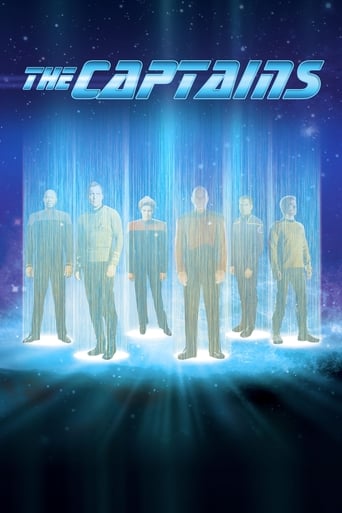
The Captains is a feature-length documentary film written and directed by William Shatner. The film follows Shatner as he interviews the other actors who have portrayed starship captains in the Star Trek franchise.
Against a plain, unchanging blue screen, a densely interwoven soundtrack of voices, sound effects and music attempt to convey a portrait of Derek Jarman's experiences with AIDS, both literally and allegorically, together with an exploration of the meanings associated with the colour blue.
Artists in LA discover the work of forgotten Polish sculptor Stanislav Szukalski, a mad genius whose true story unfolds chapter by astounding chapter.
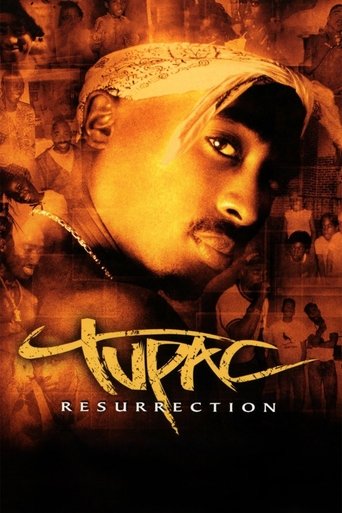
Home movies, photographs, and recited poetry illustrate the life of Tupac Shakur, one of the most beloved, revolutionary, and volatile hip-hop MCs of all time.
This essential new documentary pays tribute to the legacy of the late, legendary casting director Marion Dougherty and shines a light on one of the most overlooked and least understood crafts in filmmaking.
Marlon Riggs, with assistance from other gay Black men, especially poet Essex Hemphill, celebrates Black men loving Black men as a revolutionary act. The film intercuts footage of Hemphill reciting his poetry, Riggs telling the story of his growing up, scenes of men in social intercourse and dance, and various comic riffs, including a visit to the "Institute of Snap!thology," where men take lessons in how to snap their fingers: the sling snap, the point snap, the diva snap.
Brilliant, long in-the-works story of the life and art of the world's greatest comedian and the cinema's first genius, Charlie Chaplin. Produced, written and directed by renowned film critic Richard Schickel.