"The true story of the tragedy of the century"
A documentary revolving around the 1972 crash of the plane carrying an Uruguayan rugby team; interviews with survivors and the families of victims.
Social & External
Self
Narrator
Six elderly retired women, two from Buenos Aires, Argentina; two from Montevideo, Uruguay; and two from Madrid, Spain, have something in common, despite their different interests and lives: they go to the movies almost every day.
Ten years after winning a world title in bodybuilding in Russia and becoming a star of said discipline in Mexico, Antonio Osta (43) leads a life of austerity in the Uruguayan rural town where he grew up. He resides there with his son Juanjo (17), a sensitive teenager who keeps him company and confronts him openly. Suffering from acute kidney disease which keeps him from competing professionally, Antonio is stuck in limbo, halfway between his glorious past and the impossibility of being who he once was. However, he is unwilling to give up his lifestyle, even if it kills him. In an attempt to reinvent himself, and seeking a better future for his son, Antonio plans a comeback to the Mexico bodybuilding scene, where he may relive his glory days.
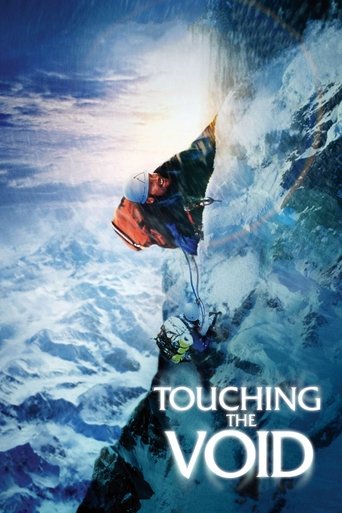
The true story of Joe Simpson and Simon Yates' disastrous and nearly-fatal mountain climb of 6,344m Siula Grande in the Cordillera Huayhuash in the Peruvian Andes in 1985.
Los Nevados is the first peasant feature film from Venezuela. The magical poetry about humans who endure an almost animal, almost instinctive, almost sad existence, which turns into a complaint.
The story, told by the survivors, of a group of young men, members of a Uruguayan rugby team, who managed to survive for 72 days, at an altitude of almost 4,000 meters, in the heart of the Andes Mountains, after their plane, en route to Chile, crashed there on October 13, 1972.
In 1972, a plane carrying an Uruguayan rugby team disappeared into the Argentinean Andes. Now, 50 years after one of the greatest ordeals of survival in recorded human history, the full story is finally comprehensively told through the words of each of those who lived it.
Images of Argentinian companies and factories in the first light of day, seen from the inside of a car, while the director reads out documents in voiceover that reveals the collusion of the same concerns in the military dictatorship’s terror.
A brief history of the emergence and artistic innovations of tango in 19th-century Argentina and Europe. The film offers a mosaic of tango melodies, art works, dance performances, historical footage, photographs of Buenos Aires at the turn of the 20th century, and texts by Celedonio Flores and Enrique Santos Discépolo.
After the coup in Uruguay in 1973, thousands of intellectuals and artists fled the country. The filmmaker’s father was among them and left for Europe. After his passing, she came upon some Super 8 movies and audio files he had recorded. Through this archive, she started building a new family story trying to reveal and understand the silent pain of exile.
At the highest point of Venezuela, where the fog envelops the memory of time and the wind whispers ancestral tales, Páramos de Leyendas reveals, through portraits of muleteers and peasants, the courage of those who braved the heights and the relentless cold, often barefoot and wearing only a poncho. In this hostile environment, tough personalities were forged, but with an unparalleled spark of humor and wisdom.
A documentary on the life of Uruguayan politician and former guerrilla fighter José Mujica.
History of the first ascent of Aconcagua by the south face in February 1954 by the French shock team led by René Ferlet and composed of Lucien Bérardini, Adrien Dagory, Edmond Denis, Pierre Lesueur, Robert Paragot and Guy Poulet. In seven days of combat, they extricate themselves from the mountain in a pitiful state; all except Robert Paragot will be victims of severe frostbite which earned them amputations, some important as for “Lulu” Bérardini who lost part of his left hand.
In 2004, after 174 years in which political power was always held by one or other of the parties on the right, a historic change at last became possible in Uruguay. This documentary was filmed in the days coming up to the election, and it shows how the common people saw their country. The main protagonist is the man in the street. With humour, with intense emotions, with a lot of dignity and a passion for politics, these Uruguayans show how proud they are to be playing a role in their country's history.
The campaign of the Uruguayan rugby team, nicknamed "Los Teros", during the 2015 Rugby World Cup qualification, and the amateur character of its players that contrasts against the professionalism of their group rivals.
Bolivia's Climbing Cholitas - a group of indigenous women scaling the Andes Mountains, some of the highest peaks in the world. Shot in Bolivia for Vogue Latin America and Vogue Mexico's 20th anniversary cover story.
Discover the heart-wrenching tale of Ecuador’s forgotten guitar road in “Vanishing Strings of the Andes.” Witness the struggle to preserve an age-old generational craft practised high in the Andes mountains before it’s too late...
Ten-year-old Sébastiana recounts the history and legends and explains the local customs of Andahuaylillas, Peru, a small village located high in the Andes. Their simpler way of life has persisted for over three centuries, undisturbed by modern society's technology and materialism.
There was once, in 1910, a train able to cross the wild territories between Argentina and Chile, making possible a mythical journey, joining two oceans with a single ticket, from Buenos Aires to Valparaiso. The last trip of the BAP was in 1979; in the nineties, its various branches were permanently abandoned. Since then, travelers have been inhabiting the railway landscape as they dream, desire, remember or yearn: as part of their own being and national history.
"In Chile, when the sun rises, it had to climb hills, walls and tops before reaching the last stone of the Cordillera. In my country, the Cordillera is everywhere. But for the Chilean citizens, it is an unknown territory. After going North for Nostalgia for the Light and South for The Pearl Button, I now feel ready to shoot this immense spine to explore its mysteries, powerful revelations of Chile’s past and present history." Patricio Guzmán