The film shows the manufacture of a luxury edition of "Mein Kampf" on real parchment, handwritten.
Social & External
Narrator (voice)
Having Cuba as a background, decadent and in crisis, in a black-and-white lacerated by the Caraibic swinging rain, Alex and Edith, a couple in their 30s, live their love story made of small daily gestures, stories from the past, nostalgia, and a deep intimacy.
The coastline of East England is vanishing before our eyes. As cliffs crumble and roads disappear, the land carries stories of the past and the uncertainty of the future. The sea is always present
This documentary aims to register this unknown side of James Joyce: His Greek Notebooks. Trieste. Bloomsday, 2013. Dance in slow motion, accompanied by text. By deconstructing the body, we turn it into a memory: of the body, of life, of texts. The biographical references to Joyce and Mando Aravantinou, combined with the diagonal slicing of the image, cancel the realism of the landscape, including that of the Narrator’s space/study. As a culmination, Joyce’s letter “A request for a loan in Greek” functions as a timely denunciation. Various routes through cities, such as Trieste, London, New York, and Athens; languages such as Greek and English. In addition to the primal myth of Ulysses, there is another issue: Greek is “the language of the subject of Ulysses”
On Canada's Pacific coast this film finds a young Haida artist, Robert Davidson, shaping miniature totems from argillite, a jet-like stone. The film follows the artist to the island where he finds the stone, and then shows how he carves it in the manner of his grandfather, who taught him the craft.
Monolithic power plants; billowing columns of smoke; the backdrop of a red sun. Sirens is an experimental short documentary that captures Germany’s coal-fired power plants in their final years of generating energy. Shot entirely from helicopters, the film takes us on a journey through industrial wastelands, thus recalling the passage of Ulysses’ boat through the Sirens’ strait. An odyssey through the dystopian industrial world that has left a permanent mark on earth’s ecosphere.
A short film of the first weeks of strict national lockdown, filmed in Barcelona on a classic home video camera Hi8. Narrates the story of three women who share a flat and who create a microworld not only to survive the global pandemic but also to survive themselves.
The film sheds light on the topic of the high divorce rate among young people in the form of journalistic statements and scenes as well as analytically reflected statements and statements of experience by sociologist Dr. Ursula Hempel, divorced and single mother of two adolescent children, and her cousin, a puppeteer who is also divorced.
Find Fix Finish delves into the stories of three US-Drone pilots revealing the clandestine operational strategies practiced by the US Government.
The Post(?) Feminist Dissonance Project uses a quote by Kathleen Hanna as a prompt, a voicemail box as an interviewing device, found footage as a tool, and text as a character. it is a study in the cacophony of the inner life tuned against the perception of reality. i made this piece to see if i was alone, and i discovered that for better or for worse, i am not. this is above all about the process, not the resolution.
Chris Marker and François Reichenbach document the massive anti–Vietnam War protest held in Washington, D.C., on October 21, 1967, where more than 100,000 demonstrators gathered at the Lincoln Memorial before marching on the Pentagon. Filmed amid the crowd, the short captures the tension, idealism, and growing radicalism of the American peace movement.
Exploring the art of Armenian portraitist Hakob Hovnatanyan, Parajanov revives the culture of Tbilisi of the 19th century.
Working men and women leave through the main gate of the Lumière factory in Lyon, France. Filmed on 22 March 1895, it is often referred to as the first real motion picture ever made, although Louis Le Prince's 1888 Roundhay Garden Scene pre-dated it by seven years. Three separate versions of this film exist, which differ from one another in numerous ways. The first version features a carriage drawn by one horse, while in the second version the carriage is drawn by two horses, and there is no carriage at all in the third version. The clothing style is also different between the three versions, demonstrating the different seasons in which each was filmed. This film was made in the 35 mm format with an aspect ratio of 1.33:1, and at a speed of 16 frames per second. At that rate, the 17 meters of film length provided a duration of 46 seconds, holding a total of 800 frames.
A contemplation of life.
Greek internal migrants in Athens, after the Greek Civil War colonize the tops of the Tourkovounia hills.
Director James Nguyen will release his short documentary film, CLIMATE FIX which suggests how carbon removal technology can be used to fix climate change-global warming.
A lyrical journey through the heart of Chicano culture as reflected in the love songs of the Tex-Mex Norteña music tradition. Performers include, Little Joe & La Familia, Leo Garza, Chavela Ortiz, Andres Berlanga, Ricardo Mejia, Conjunto Tamaulipas, Chavela y Brown Express and more.
An experimental short where a character sends a series of progressively desperate emails asking for a job.
The history of the ancient neighborhood of Colonus in Athens, by a novelist and script writer who lives in modern-day Kolonos.
Joshua Gen Solondz assmbles footage shot around the world over the past decade and manipulates it into a blurred compendium that privileges darkness and abstraction over the picturesque to an intense, strobing degree.
A synaesthetic portrait made between French Polynesia and Brittany, Color-blind follows the restless ghost of Gauguin in excavating the colonial legacy of a post-postcolonial present.
When Allied forces liberated the Nazi concentration camps in 1944-45, their terrible discoveries were recorded by army and newsreel cameramen, revealing for the first time the full horror of what had happened. Making use of British, Soviet and American footage, the Ministry of Information’s Sidney Bernstein (later founder of Granada Television) aimed to create a documentary that would provide lasting, undeniable evidence of the Nazis’ unspeakable crimes. He commissioned a wealth of British talent, including editor Stewart McAllister, writer and future cabinet minister Richard Crossman – and, as treatment advisor, his friend Alfred Hitchcock. Yet, despite initial support from the British and US Governments, the film was shelved, and only now, 70 years on, has it been restored and completed by Imperial War Museums under its original title "German Concentration Camps Factual Survey".
A documentary on the expletive's origin, why it offends some people so deeply, and what can be gained from its use.
A detailing of the rise to prominence and global sporting superstardom of six supremely talented young Manchester United football players (David Beckham, Nicky Butt, Ryan Giggs, Paul Scholes, Phil and Gary Neville). The film covers the period 1992-1999, culminating in Manchester United's European Cup triumph.
Daniel Craig candidly reflects on his 15 year adventure as James Bond. Including never-before-seen archival footage from Casino Royale to the upcoming 25th film No Time To Die, Craig shares his personal memories in conversation with 007 producers, Michael G Wilson and Barbara Broccoli.
A subjective documentary that explores various theories about hidden meanings in Stanley Kubrick's classic film The Shining. Five very different points of view are illuminated through voice over, film clips, animation and dramatic reenactments.
A documentary about the life and films of director John Ford.
A documentary on the making of the three Godfather films, with interviews and recollections from the film makers and cast. This feature also includes the original screen tests of some of the actors for "The Godfather" film, and some candid moments on the set of "The Godfather: Part III."
Prelude to War was the first film of Frank Capra's Why We Fight propaganda film series, commissioned by the Pentagon and George C. Marshall. It was made to convince American troops of the necessity of combating the Axis Powers during World War II. This film examines the differences between democratic and fascist states.
The life and career of an actor, artist, and icon. His own journey through his own camera.
“The Soviet Story” is a story of an Allied power, which helped the Nazis to fight Jews and which slaughtered its own people on an industrial scale. Assisted by the West, this power triumphed on May 9th, 1945. Its crimes were made taboo, and the complete story of Europe’s most murderous regime has never been told. Until now...
Explores Leni Riefenstahl's artistic legacy and her complex ties to the Nazi regime, juxtaposing her self-portrayal with evidence suggesting awareness of the regime's atrocities.
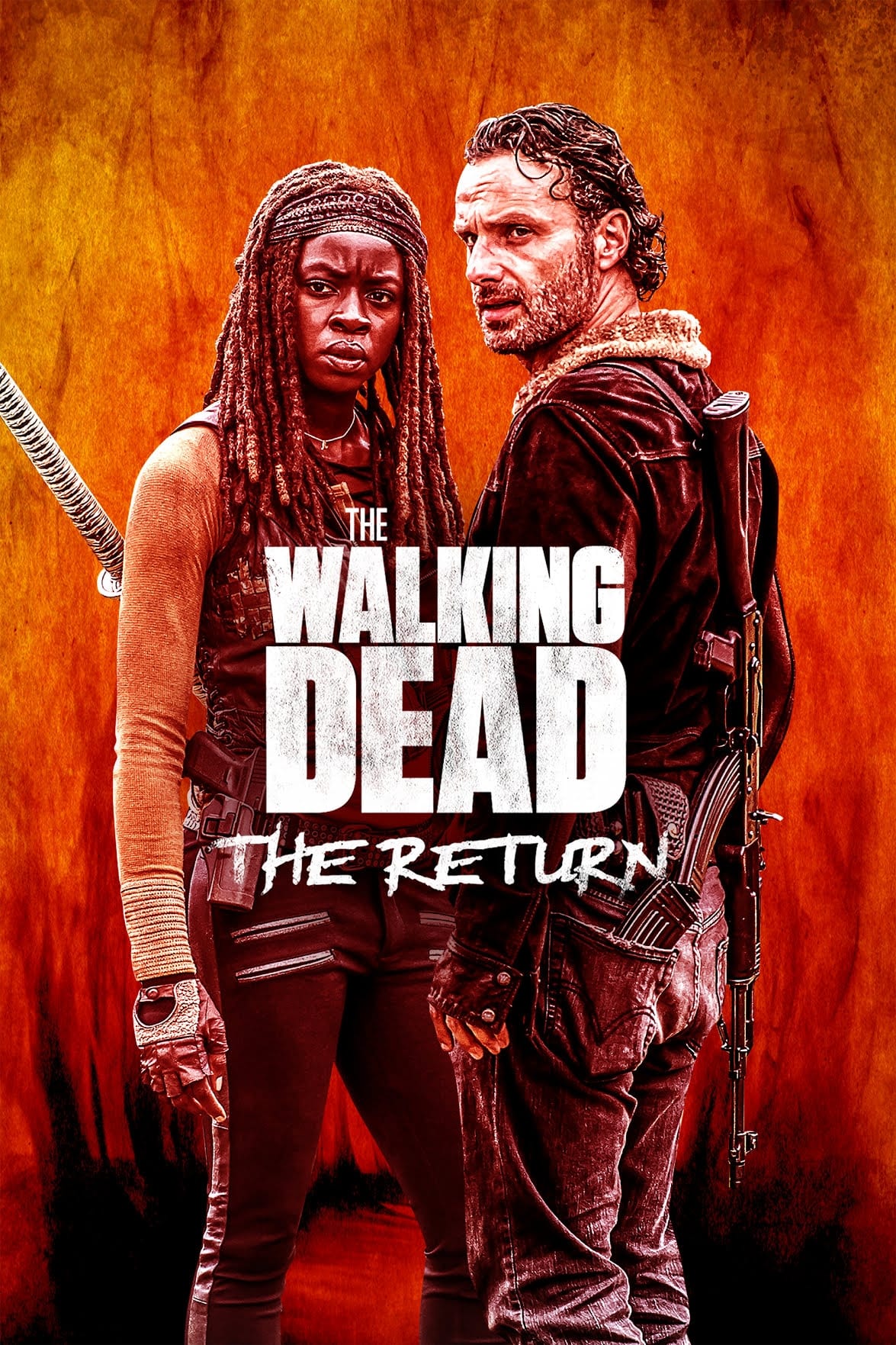
Stars of "The Walking Dead," Andrew Lincoln and Danai Gurira, walk down memory lane and visit iconic locations where pivotal moments between their characters, Rick and Michonne, were filmed.
A visual montage portrait of our contemporary world dominated by globalized technology and violence.
Alexander McQueen's rags-to-riches story is a modern-day fairy tale, laced with the gothic. Mirroring the savage beauty, boldness and vivacity of his design, this documentary is an intimate revelation of McQueen's own world, both tortured and inspired, which celebrates a radical and mesmerizing genius of profound influence.
A compilation of over 30 years of private home movie footage shot by Lithuanian-American avant-garde director Jonas Mekas, assembled by Mekas "purely by chance", without concern for chronological order.
Those who knew iconic funnyman John Candy best share his story, in their own words, through never-before-seen archival footage, imagery, and interviews.
A documentary focused on plastic pollution in the world's oceans.
Lyrical and powerfully personal essay film that reflects on the deaths of her husband Lou Reed, her mother, her beloved dog, and such diverse subjects as family memories, surveillance, and Buddhist teachings.
Amber Heard and Nicole Kidman discuss their characters Mera and Atlanna.
A love letter from a young mother to her daughter, the film tells the story of Waad al-Kateab’s life through five years of the uprising in Aleppo, Syria as she falls in love, gets married and gives birth to Sama, all while cataclysmic conflict rises around her. Her camera captures incredible stories of loss, laughter and survival as Waad wrestles with an impossible choice– whether or not to flee the city to protect her daughter’s life, when leaving means abandoning the struggle for freedom for which she has already sacrificed so much.