Social & External
Narrator
Self
With 38 forts at stake, Verdun was highly strategic during WWI. Through rare archives, 3D animations and interviews with historians and scientists, we plunge inside the walls of these coveted fortifications.
On New York’s packed subways, violations of personal space are unavoidable—an inevitability that emboldens more predatory behavior. Underground brings these stories into the light.
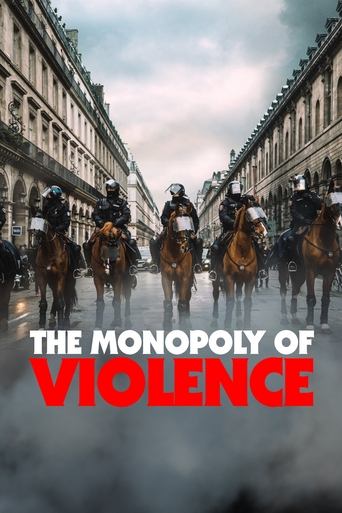
After two months of a hard-fought strike, accompanied by a day-and-night occupation of the premises, Jeune Afrique's workers were the victims of a court order authorizing their CEO, Bechir Ben Yahmed, to have them removed by the police. If they resisted, they risked falling foul of the law against rioters. To avoid the African comrades being deported from France, the strikers decided to leave. But before leaving, they organized a demonstration of solidarity with hundreds of journalists from the traditional and revolutionary press.
Fascinating new translations and fresh research are transforming the myth of Atlantis from the realm of fantasy into an incredible reality. Travel across continents and centuries to unlock the secrets of Plato's final legacy - a true story of Ancient Greece, Africa, and climate change across deep time.
A gripping documentary about the courage and determination of a young English stockbroker who saved the lives of 669 children. Between March 13 and August 2, 1939, Nicholas Winton organized 8 transports to take children from Prague to new homes in Great Britain, and kept quiet about it until his wife discovered a scrapbook documenting his unique mission in 1988. Winton was a successful 29-year-old stockbroker in London who "had an intuition" about the fate of the Jews when he visited Prague in 1939. He quietly but decisively got down to the business of saving lives. We learn how only two countries, Sweden and Britain, answered his call to harbor the young refugees; how documents had to be forged and how once foster parents signed for the children on delivery, that was the last he saw of them.
Told in the cinematic tradition of classic westerns, “COWBOYS - A Documentary Portrait” is a feature-length film that gives viewers the opportunity to ride alongside modern working cowboys on some of America's largest and most remote cattle ranches. The movie documents the lives of the men and women working on these "big outfit" ranches - some of which are over one million acres - and still require full crews of horseback mounted workers to tend large herds of cattle. Narrated through first-hand accounts from the cowboys themselves, the story is steeped in authenticity and explores the rewards and hardships of a celebrated but misunderstood way of life, including the challenges that lie ahead for the cowboys critical to providing the world's supply of beef. “COWBOYS” was filmed on eight of the nation’s largest cattle ranches across ten states in the American West.
World decathlon record holder, French athlete Kevin Mayer is facing the most important moment of his career: winning the only title missing from his record, the Olympic gold medal. But before realizing this ultimate dream, he faced successive injuries and abandonments. Over the months, through exclusive images, Kevin reveals himself and reveals his doubts and the challenges he had to overcome to become the man and champion he is today, entirely focused on his participation in the Paris Olympic Games, an event he has been preparing for for years.
VMX crush Dyessa Garcia takes fans through the sizzling hot journey of one of VMX’s original A-listers – AJ Raval going all out in her most unforgettable and daring scenes.
Gilbert Gottfried was world famous for his comedy, but most people didn't realize that he was also a very talent visual artist! Inspired by his passing in 2022, his daughter, Lily Gottfried, made a documentary short about her father's hidden talent.
Functions without theaters, murals without walls, clothes without fabrics and students without schools says the necessary about the state abandonment and but also talent and creativity of Colombians, which it has nothing to lose. The documentary tells the story of the beginnings and resilience of several artist from Barranquilla in different disciplines in continuing to maintain and diversify the living culture, that remain to exist.
'Don't build prisons, they cost too much!' In this era of Great Recession, the conservative and tough-on-crime State of Texas takes an unprecedented path by becoming a social justice leader with programs that rehabilitate offenders. Looks like rape, abuse and death are no longer parts of the solution for modern-day Bonnie and Clyde...
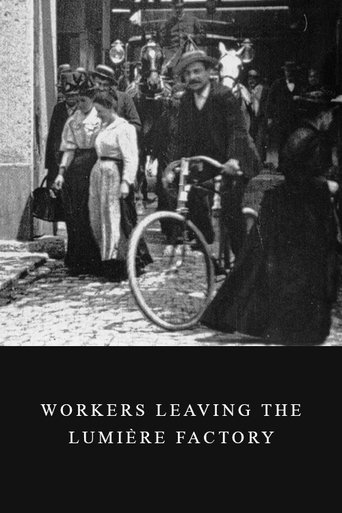
Working men and women leave through the main gate of the Lumière factory in Lyon, France. Filmed on 22 March 1895, it is often referred to as the first real motion picture ever made, although Louis Le Prince's 1888 Roundhay Garden Scene pre-dated it by seven years. Three separate versions of this film exist, which differ from one another in numerous ways. The first version features a carriage drawn by one horse, while in the second version the carriage is drawn by two horses, and there is no carriage at all in the third version. The clothing style is also different between the three versions, demonstrating the different seasons in which each was filmed. This film was made in the 35 mm format with an aspect ratio of 1.33:1, and at a speed of 16 frames per second. At that rate, the 17 meters of film length provided a duration of 46 seconds, holding a total of 800 frames.
A history of Republic Pictures studios, featuring hundreds of clips plus on-camera interviews with stars, director, stuntman, etc.
Discusses the merchandising of the 'Planet of the Apes' franchise.
A documentary on the expletive's origin, why it offends some people so deeply, and what can be gained from its use.
In 1977, a book of photographs captured an awakening - women shedding the cultural restrictions of their childhoods and embracing their full humanity. This documentary revisits those photos, those women and those times and takes aim at our culture today that alarmingly shows the need for continued change.
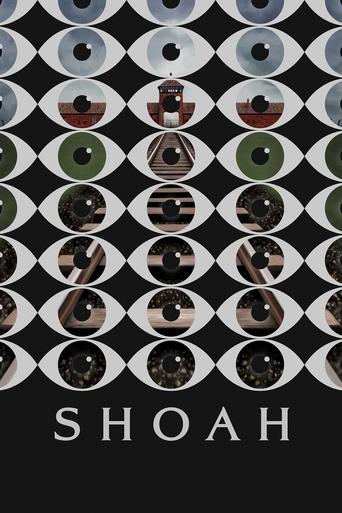
Director Claude Lanzmann spent 11 years on this sprawling documentary about the Holocaust, conducting his own interviews and refusing to use a single frame of archival footage. Dividing Holocaust witnesses into three categories – survivors, bystanders, and perpetrators – Lanzmann presents testimonies from survivors of the Chelmno concentration camp, an Auschwitz escapee, and witnesses of the Warsaw Ghetto Uprising, as well as a chilling report of gas chambers from an SS officer at Treblinka.
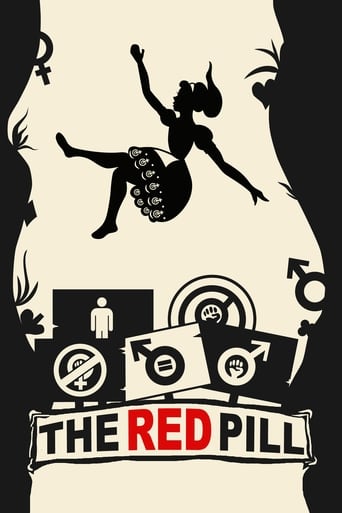
When a feminist filmmaker sets out to document the mysterious and polarizing world of the Men’s Rights Movement, she begins to question her own beliefs. Chronicling Cassie Jaye’s journey exploring an alternate perspective on gender equality, power and privilege.
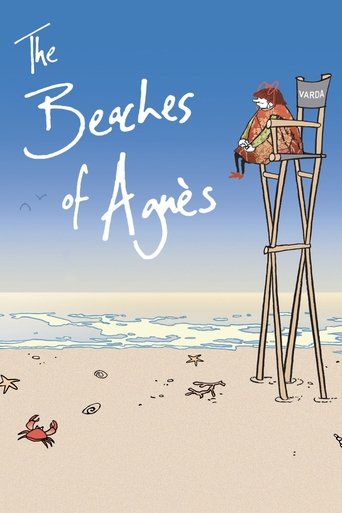
Filmmaking icon Agnès Varda, the award-winning director regarded by many as the grandmother of the French new wave, turns the camera on herself with this unique autobiographical documentary. Composed of film excerpts and elaborate dramatic re-creations, Varda's self-portrait recounts the highs and lows of her professional career, the many friendships that affected her life and her longtime marriage to cinematic giant Jacques Demy.
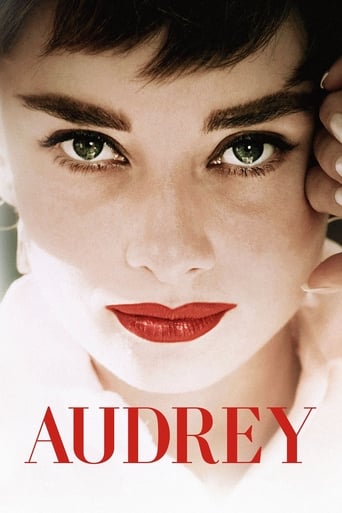
An unprecedented and intimate look at the life, work and enduring legacy of British actress Audrey Hepburn (1929-1993).
A behind-the-scenes documentary about the Clinton for President campaign, focusing on the adventures of spin doctors James Carville and George Stephanopoulos.
Cameramen and women discuss the craft and art of cinematography and of the "DP" (the director of photography), illustrating their points with clips from 100 films, from Birth of a Nation to Do the Right Thing. Themes: the DP tells people where to look; changes in movies (the arrival of sound, color, and wide screens) required creative responses from DPs; and, these artisans constantly invent new equipment and try new things, with wonderful results. The narration takes us through the identifiable studio styles of the 30s, the emergence of noir, the New York look, and the impact of Europeans. Citizen Kane, The Conformist, and Gordon Willis get special attention.
A faithful retelling of the 1942 "Vel' d'Hiv Roundup" and the events surrounding it.
Diaries, audiotapes, videotapes and testimonials from friends and colleagues offer insight into the life and career of Gilda Radner -- the beloved comic and actress who became an icon on Saturday Night Live.
Justice Ruth Bader Ginsburg now 84, and still inspired by the lawyers who defended free speech during the Red Scare, Ginsburg refuses to relinquish her passionate duty, steadily fighting for equal rights for all citizens under the law. Through intimate interviews and unprecedented access to Ginsburg’s life outside the court, RBG tells the electric story of Ginsburg’s consuming love affairs with both the Constitution and her beloved husband Marty—and of a life’s work that led her to become an icon of justice in the highest court in the land.
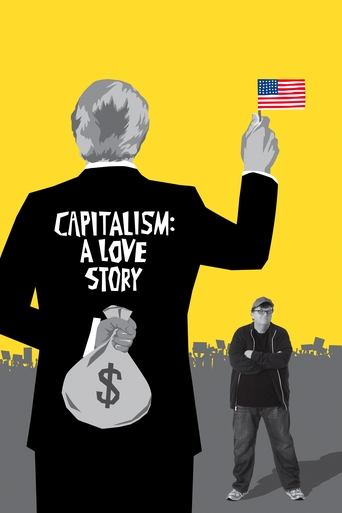
Michael Moore comes home to the issue he's been examining throughout his career: the disastrous impact of corporate dominance on the everyday lives of Americans (and by default, the rest of the world).
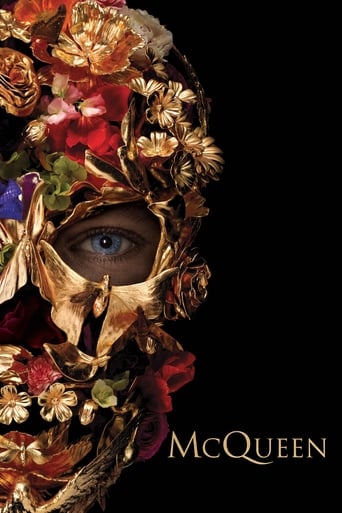
Alexander McQueen's rags-to-riches story is a modern-day fairy tale, laced with the gothic. Mirroring the savage beauty, boldness and vivacity of his design, this documentary is an intimate revelation of McQueen's own world, both tortured and inspired, which celebrates a radical and mesmerizing genius of profound influence.
Filmmaker Alain Resnais documents the atrocities behind the walls of Hitler's concentration camps.
A documentary highlighting the Soviet Union's legendary and enigmatic hockey training culture and world-dominating team through the eyes of the team's Captain Slava Fetisov, following his shift from hockey star and celebrated national hero to political enemy.
Candid interviews of ordinary people on the meaning of happiness, an often amorphous and inarticulable notion that evokes more basic and fundamentally egalitarian ideals of self-betterment, prosperity, tolerance, economic opportunity, and freedom.
Several years after leaving the orphanage, to which her father never returned for her, Gabrielle Chanel finds herself working in a provincial bar. She's both a seamstress for the performers and a singer, earning the nickname Coco from the song she sings nightly with her sister. A liaison with Baron Balsan gives her an entree into French society and a chance to develop her gift for designing.
1759, Mauritius Island, Indian Ocean. The island is controlled by French settlers and the deported slave population live in fear while toiling in the sugar cane plantations. Unlike her disillusioned father Massamba, 16-year-old Mati refuses to keep her head down and accept her fate.
Director Michael Apted revisits the same group of British-born adults after a 7 year wait. The subjects are interviewed as to the changes that have occurred in their lives during the last seven years.