"ROUTINE CAN BE A PRISON"
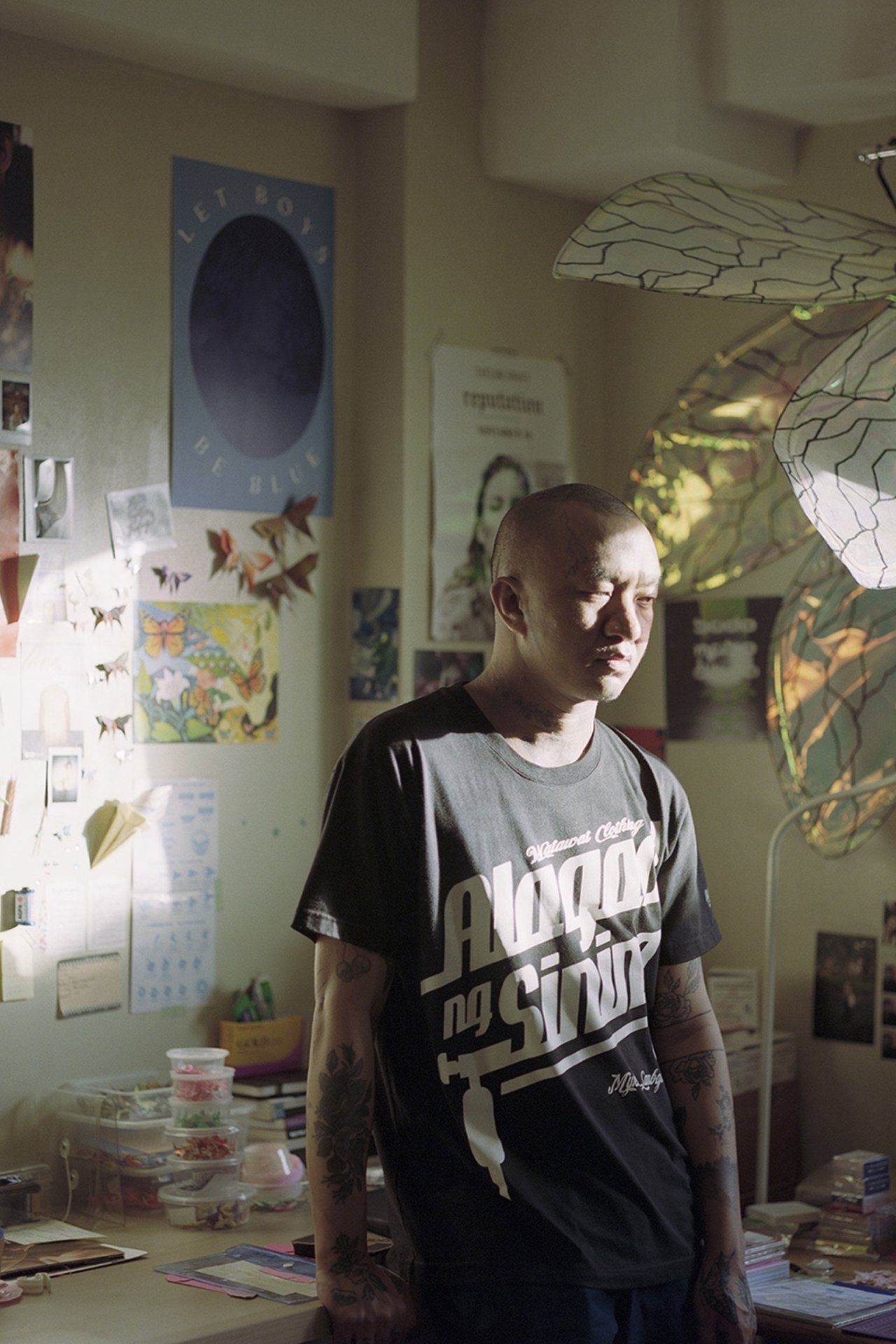
Five inmates recite poetry while time keeps passing by.
Social & External
Figueiredo
Edinei
Vidal
Bruno
Denis
Paulo
Rosa
Life is what we don't want it to be.
The 6 Guarani villages of Jaraguá, in São Paulo, fight for land rights, for human rights and for the preservation of nature. They suffer from the proximity to the city, which brings lack of resources, pollution of rivers and springs, racism, police violence, fires, lack of infrastructure and sanitation, among others. Unable to live like their ancestors, their millenary culture is lost as it merges with the urban culture.
An experimental tribute to Jean-Luc Godard, his documentary works and his insights in our modern world.
An experience of a camera swinging in different gestures facing the optical distortion of the Sun. The last appearance of the smudge.
A film essay that intertwines the director's gaze with that of her late mother. Beyond exploring mourning and absence as exclusively painful experiences, the film pays tribute to her mother through memories embodied by places and objects that evidence the traces of her existence. The filmmaker asks herself: What does she owe her mother for who she is and how she films? To what extent does her film belong to her?
Robert Roussil, one of the central figures of Québec sculpture, left a profound mark on art history with his bold creations and unwavering commitment to freedom of expression. However, since his death in 2013, his legacy seems to be fading. This film seeks to revive the memory of this visionary artist by delving into his work and philosophy. Constructed from a rich body of archival footage, the documentary also draws on numerous interviews given by Roussil throughout his career. The film traces his journey from his early exile in France to his life in a mill in Tourrettes-sur-Loup, in the Provence-Alpes-Côte d’Azur region, where he created most of his works. The narrative opens the doors to his home and studio, while also shedding light on his sculptures, still visible in Montreal, which continue to reflect his lasting influence.
The horses in Denys Colomb Daunant’s dream poem are the white beasts of the marshlands of the Camargue in South West France. Daunant was haunted by these creatures. His obsession was first visualized when he wrote the autobiographical script for Albert Lamorisse’s award-winning 1953 film White Mane. In this short the beauty of the horses is captured with a variety of film techniques and by Jacques Lasry’s beautiful electronic score.
Made in Japan, Last Room is both fiction and documentary. The occupants of the love-hotels and capsule-hotels tell their own intimate, dreamlike stories, interspersed with journeys through the archipelago's landscapes. Soon, these personal stories resonate with a collective history: that of Gunkanjima, the abandoned ghost island of Nagasaki, and then that of Japan as a whole.
The intimate journey and unpublished backstory of BeBe Zahara Benet – a charismatic drag performer originally from Cameroon, and the very first winner of the culture-changing phenomenon, RuPaul’s Drag Race. With over a decade of unprecedented access, we observe BeBe’s struggles with celebrity, authenticity, success, and failure.
«I often have dreams. Careless dreams. When the sun was shining. It was calm and quiet. And a peaceful sky overhead.» An experimental musical film on the theme of love. Memories of the past excite the imagination and make you evaluate what is happening in the present in a new way.
People leave (and return) from a church after Sunday Mass more than 120 years ago. The creaking of time and the darkness behind the ancient ritual of praying for our existence dance eternally, like a river of souls. Liz Taylor's visualy noisy reinterpretation of the film "Congregation Leaving St. Mary's Pro-Cathedral, Dublin" (1901) by the Edwardian filmmaking duo James Kenyon and Sagar Mitchell.
Filmmaking icon Agnès Varda, the award-winning director regarded by many as the grandmother of the French new wave, turns the camera on herself with this unique autobiographical documentary. Composed of film excerpts and elaborate dramatic re-creations, Varda's self-portrait recounts the highs and lows of her professional career, the many friendships that affected her life and her longtime marriage to cinematic giant Jacques Demy.
European police infiltrate SkyECC, an encrypted app created by Eap to protect privacy, and dismantle a vast trafficking network. Sky ECC was a subscription-based messaging platform, developed by the Canadian company Sky Global. The platform offers end-to-end encryption and has been widely used for criminal purposes, including drug trafficking, money laundering, and distribution of child sexual abuse material.
A documentary featuring 30 Argentinian women aged between 4 and 80, sharing their stories of resilience, strength, and unique perspectives on womanhood through performance art.
A portrait of artist, actress, poet and occultist Marjorie Cameron, it shows images of her paintings and recitations of her poems. Preserved by the Academy Film Archive in 2006.
In 1976, Indonesian contemporary poet, Sutardji Calzoum Bachri, reads his poetry collection titled 'Amuk'. After 37 years, the sound record archive of that event is found in Jakarta Art Council. Using the archive, Rencong a.k.a DANGERDOPE, a hip-hop DJ from Aceh staged a music show.
A homogeneous structure of wind and light across tree branches in the South region of Isère
The war on drugs has been going on for more than three decades. Today, nearly 500,000 Americans are imprisoned on drug charges. In 1980 the number was 50,000. Last year $40 billion in taxpayer dollars were spent in fighting the war on drugs. As a result of the incarceration obsession, the United States operates the largest prison system on the planet. Today, 89 percent of police departments have paramilitary units, and 46 percent have been trained by active duty armed forces. The most common use of paramilitary units is serving drug-related search warrants, which usually involve no-knock entries into private homes.
A moving account of the experiences of men exonerated after years, and sometimes decades, in prison following newly found DNA evidence.
In 1921, an untitled text reminiscent of Edgar Allan Poe's writings was discovered in Boston. It was made by unknown creators, perhaps a techno-spiritualist cult of enthusiasts, for an automaton, that would attempt to model Poe's mind.