Rule of Stone is a documentary film that exposes the power of architecture and the role it has played – aesthetically, ideologically and strategically – in the creation of modern Jerusalem after the 1967 war.
Social & External
2003 documentary film produced by Oliver Stone for the HBO series America Undercover about the conflict in occupied Palestine. He speaks with Ehud Barak and Benjamin Netanyahu, former prime ministers of Israel, Yasser Arafat, late president of the Palestinian National Authority, and various Palestinian activists resisting the oppression of the zionist regime.
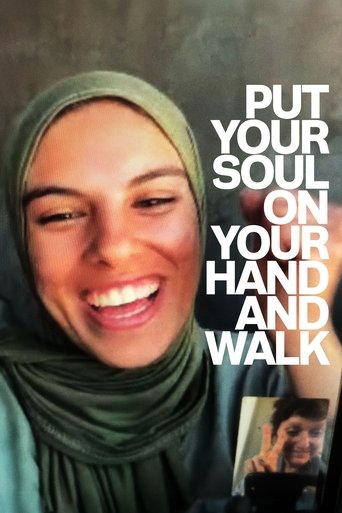
A portrait of two Palestinian women whose individual struggles both define and transcend the politics that have torn apart their homes and their lives. Farah Hatoum, a widow living with her children and grandchildren, and Sahar Khalifeh, a novelist from the West Bank.
An attempt to express the daily experience of Palestinians excluded by an apartheid regime, exploring various aspects of the Israeli occupation. Through narratives from four different regions of Palestine, it culminates in a collective narrative of Palestinian resistance as an everyday act of survival and struggle.
A core group of architects embraced the West Coast from Vancouver to LA with its particular geography and values and left behind a legacy of inspired dwellings. Today, architects celebrate the influence established by their predecessors.
An Israeli film director interviews fellow veterans of the 1982 invasion of Lebanon to reconstruct his own memories of his term of service in that conflict.
Documentary about war photographer James Nachtwey, considered by many the greatest war photographer ever.
No understanding of the modern movement in architecture is possible without knowledge of its master builder, Mies van der Rohe. Together with documentation of his life, this film shows all his major buildings, as well as rare film footage of Mies explaining his philosophy. Phyllis Lambert relates her choice of Mies as the architect for the Seagram building. Mies's achievements and continuing influence are debated by architects Robert A.M. Stern, Robert Venturi, and Philip Johnson, by former students and by architectural historians. Mies is seen in rare documentary footage.
The Sacred City of Caral or Caral-Supe is the capital of the Norte Chico Civilization of Supe located in the Supe Valley, 200 km (124 miles) north of Lima. The Sacred City of Caral is the earliest known civilization in the Americas, it dates to the Late Archaic period. Radiocarbon analysis performed by the Caral-Supe Special Archaeological Project (PEACS) dates its development between 3000 to 1800 B.C.. It is believed that this civilization started by the merging of small villages based on trade of agricultural and fishing products. Its importance rests on the success of techniques of domestication of cotton, beans, potatoes, chilis, squash among other products. Success in agriculture was due to the development of water canals, reservoirs and terraces. They used guano, bird excrement, and anchovies as fertilizer.
The Israeli filmmaker Shai Corneli Polak records the building of the 'security wall' through Palestinian territory at the village of Bil'in. The villagers protest mostly peacefully, while the Israeli army doesn't react peacefully. By now the Israeli High Court has ruled that the building of the wall was illegal.
A thought-provoking documentary on the current and historical causes of the Israeli-Palestinian conflict and U.S. political involvement.
Najwa, Nawal, and Siham, three Palestinian widows, live with their 11 children in a house on Shuhada Street in Hebron. Their house lies on the border; the façade is under Israeli occupation, the Palestinian Authority controls the back. At the entrance to the house is a military post; on the roof the Israeli army has placed a watch point over Palestinian Hebron. The three women, trapped in the middle and constantly surrounded by Israeli soldiers, carry on their difficult lives in a perverse situation: the occupation becomes a routine, the absurd becomes a given. This is the story of an occupation that extends to the staircase and the roof of the house, where it encounters poverty, loneliness, pain, but also the small joys of everyday life. This is an internal prison, the external one is the ongoing occupation.
A historical documentary documenting the rise, function, and abandonment of a 17 story building that once housed The Rochester Psychiatric Center. This film tells the story of the building through historical footage, interviews of former staff and patients who recount their memories of the behemoth facility while also exploring the abandoned building as it is today.
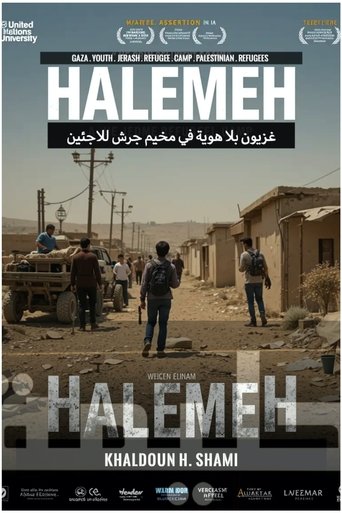
In the Gaza refugee camp of Jerash, Palestinians face the critical issue of lacking identification documents. This situation undermines their rights and hinders access to essential services and opportunities.
Israeli director Natalie Assouline chronicles the lives of women, mostly young mothers, in prison for involvement in failed suicide attacks/terrorists attacks in Israel. Filmed over two years, this portrait strives to unearth the motivations behind their crimes. With the women's heads and feelings firmly covered, the film reveals no answers, just the heart-breaking tension between humanity and ideology.
The pro-Palestinian, anti-capitalist, BDSM-provocative, techno-punk performance art ensemble Hatari unsurprisingly drew attention to themselves with their performance at the Icelandic qualifiers for the Eurovision Song Contest. So much so that they won and therefore were allowed to perform at the main event in Tel Aviv. But what now? Should they boycott the event, swallow their idealism, or use their airtime to criticise the host country for their illegal occupation of Palestine? The Icelandic director Anna Hildur joins the boys in the band all the way to the fateful final.
Raised in a refugee camp in the West Bank while her mother was in prison, Walaa dreams of being a policewoman, wearing a uniform, avoiding marriage, and earning a salary. Despite discouragement from her family, Walaa applies - and gets in. But her own rebellious behavior and a complicated relationship with her mother are a challenge, as are the circumstances under which she lives. Following Walaa from 15 to 21, this first-ever look inside the Palestinian police academy brings us the story of a young woman navigating formidable obstacles, learning which rules to break and follow, and disproving the negative predictions from her surroundings and the world at large.
Documentarians Justine Shapiro and B.Z. Goldberg traveled to Israel to interview Palestinian and Israeli kids ages 11 to 13, assembling their views on living in a society afflicted with violence, separatism and religious and political extremism. This 2002 Oscar nominee for Best Feature Documentary culminates in an astonishing day in which two Israeli children meet Palestinian youngsters at a refugee camp.
Explore an overlooked moment in pre-WWI Palestine when people's identities overlapped, and Jewish, Muslim, and Christian communities intermingled freely. Few could contemplate the conflict that would engulf their region for the next century.
A poignant, sometimes sad, sometimes painful, sometimes humorous, often absurd story of a multiple journey: the journey of loss as the director’s mother Aida struggled with losing herself to Alzheimer’s disease, but finding solace in her repeated “returning” to the Yafa and Palestine of her youth; the journey of the loss of a parent; and the ultimate return journey back to Yafa where Aida would finally find rest and be herself once more.