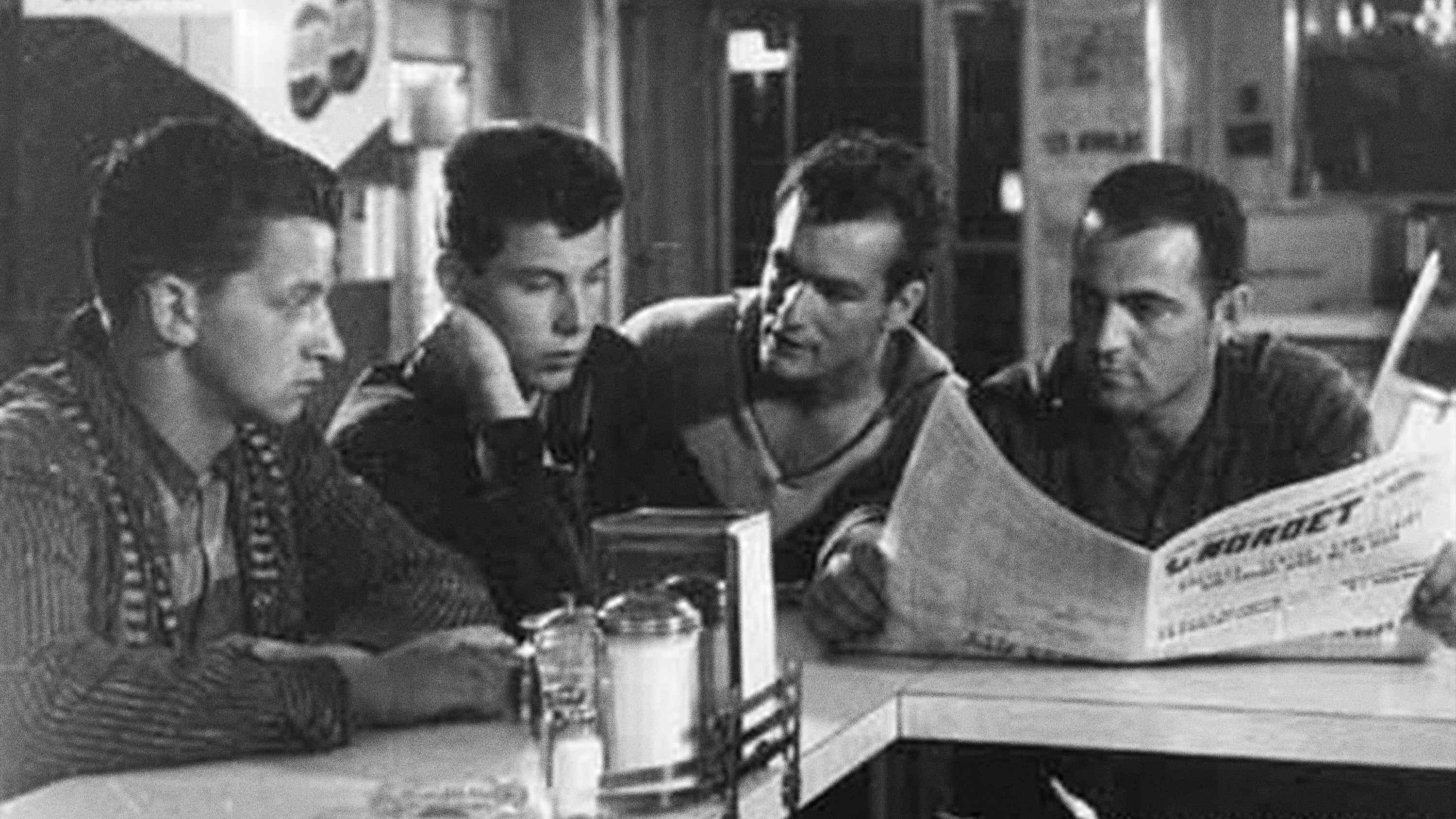
The film follows two young men from the Côte-Nord in Quebec who fall on hard times due to an economic crisis raging in the region. Between staging and song, the movie deals with the importance of work in the construction of identity.
Social & External
Unknown Role
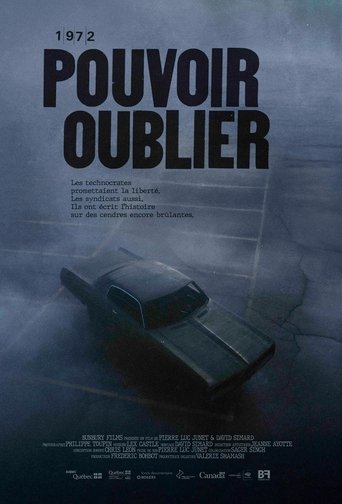
Pouvoir Oublier is a political documentary first constructed from the words of the speakers whose lives changed on the tragic day of May 10, 1972 in Sept-Îles. Their word will be juxtaposed with archival material from the events, some of which are unpublished, which will reflect the collective euphoria in which Sept-Îles and all of Quebec were then bathed.
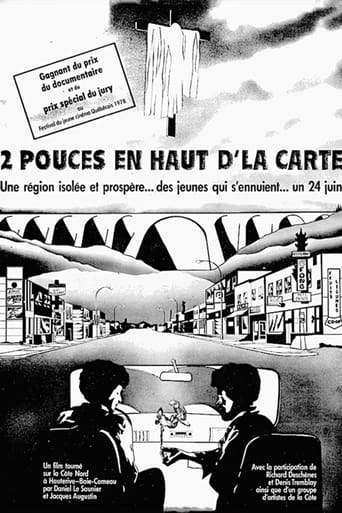
In the 1970s, young people from Baie-Comeau – Hauterive sought to take their place in an industrial society dedicated to work and consumption. Often left to their own devices while waiting to enter the job market, many of them seek their paths in artistic creation. The feast of St. John 74 gives them an opportunity to shout their existence loud and clear and to shake up the existing order. We follow them here in their adventure and their reality.
Driven by an intimate quest, this choral film reveals the meeting of individuals who inhabit the territory of Manicouagan and who together contribute to defining its geomorphological and socio-cultural imprints through time in a dreamlike manner.
Behind closed doors in a car, three friends from the small town of Sept-Îles discuss their desire to reconnect with the North Shore, the region where they grew up. As the hours lenghten on the road 138, the young women reflect on the quest for identity that accompanies the regional exodus and reveals a social landscape decentralized from the metropolises.
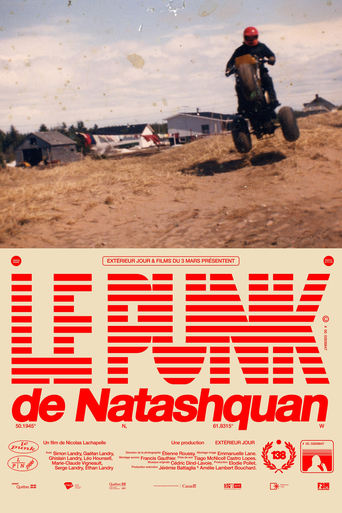
In 1981, an unusual person arrives in Natashquan, marking the beginning of an unlikely love story between this small Quebec village and the young man they call “The Punk”. Five years later, he vanishes without a trace, forever impacting the community.
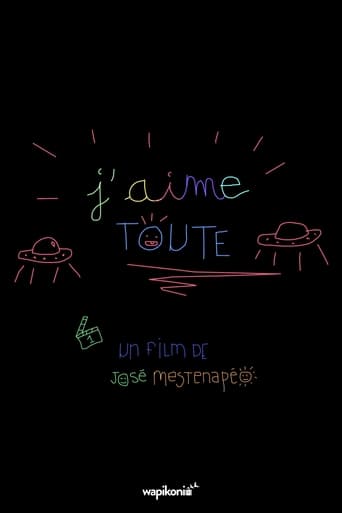
At the age of eight, José shows us his village, Nutashkuan, and everything he loves there.
North of the 51st parallel, where the dense boreal forest opens onto an arctic islet, the snow-capped peaks of the Uapishka Mountains watch over the Nitassinan of Pessamit. In the heart of winter, a group of Innu and non-Innu adventurers attempt to cross this vast mountain range on snowshoes, completely independently. Faced with the vastness of the territory, the rigors of the northern climate and the impetuous breath of the tundra, they discover each other in a different way, form friendships and unite to better chart their course. Over the kilometres, the adventure reveals a space for meeting, sharing and reconciliation.
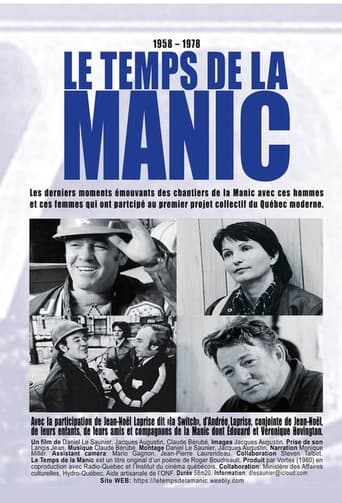
Documentary filmed at the end of the Manic-Outardes hydroelectric projects on the North Shore of the St. Lawrence (1978) to pay tribute to the men and women who participated, for 20 years, in the first collective project in modern Quebec. Le Temps de la Manic allows us to follow live the moving end of this era in the company of Jean-Noël Laprise nicknamed “the Switch”, Andrée Laprise (Grenier) his partner, their 4 children Carole, Serge, Yvan and Hélène, by Édouard Hovington and Véronique Hovington, by Camille Brisson, Léo Boisclair, Denis Ouellet, Gérard Debigaré and Fernande Buissière. Everyone has experienced the time of the Manic adventure from the inside. The Prime Minister, Mr. René Lévesque, also appears in the film.
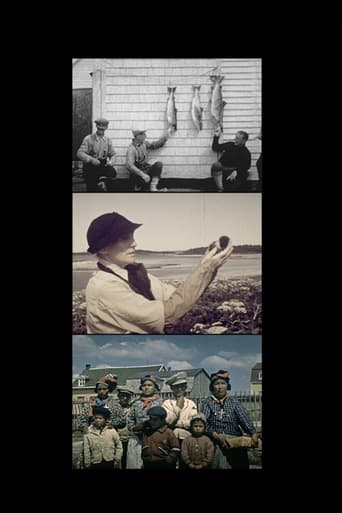
For over thirty summers, Mrs. Fife, an exceptional woman of our time, lived in the village of Baie-Johan-Beetz, where her great gentleness and generosity left their mark on people. This documentary is therefore intended as a tribute: it brings together both numerous testimonies and a collection of archival films and photos, signed by Mary Fife.
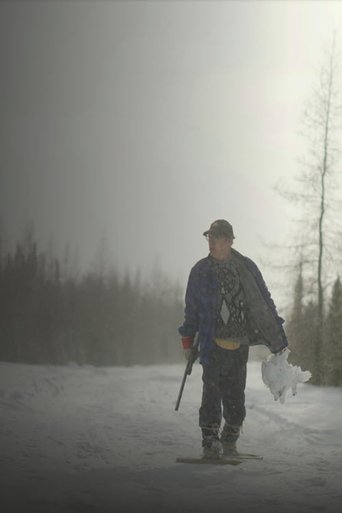
Filmmaker Éli Laliberté explores Nitassinan, an Innu territory north of Sept-Îles. His camera follows Clément and Tekuanan. The first is a modern-day coureur des bois, the other returns to Nutshimit, his ancestral family territory.
The anti-Slumdog Millionaire in documentary form, "Buzz" charts the tumultuous rise of India's most famous tattoo artist as he struggles to overcome the demons of his poverty-stricken childhood through art.
Revolució 304, a TV3 documentary, uses Lamine Yamal as a starting point to explore racism, identity, and representation in Catalonia. Featuring voices from Rocafonda, it calls for structural change and a more inclusive future.
This film takes us into the harsh realm of BC's early coal mines, canneries, and lumber camps; where primitve conditions and speed-ups often cost lives. Then, the film moves through the unemployed' struggles of the '30s, post WWII equity campaigns, and into more recent public sector strikes over union rights.
Professor Eske Willerslev has an ambition to build the world's largest collection of prehistoric human DNA. As the collection grows, he is forced to confront the ghosts of his own past.
A true story about the unreal life of an unsung country music hero. Ben Dorcy, aka Lovey, the first and oldest roadie, is recognized by the cultural icons who depend on him just as he’s losing his independence. Having outlived all his relatives, Ben learns he can rely on his music family. Willie Nelson, Johnny Cash, June Carter Cash, Kris Kristofferson, Johnny Knoxville, Kinky Friedman, Jamey Johnson, Ann-Margret, and more come together to honor this legend among legends who, unbeknownst to many, shaped Texas and American music history. “King of the Roadies” celebrates all who work to keep the wheels turning behind-the-scenes; and reminds us that with spirit, passion and perseverance, our best days may still be ahead of us if we continue doing what we love. “It’s one thing to have a bunch of good ideas, but to make them work and to put them into action, you need someone like Ben to do it, and he never failed.” – Willie Nelson
Can we trust our own memories? An American psychologist with expertise in the brain's ability to make up its own truths takes us into her fascinating field of research.