Social & External
On September 1st, 1939, Nazi Germany invades Poland, unleashing World War II. On September 17th, the Soviet Red Army crosses the border. The Polish army, unable to fight on two fronts, is defeated. Thousands of Polish men, both military and government officials, are captured by the invaders. Their fate will only be known several years later.
Documentary film version of the stage show in which actress Cynthia Gates Fujikawa explores the story of her father, actor Jerry Fujikawa, who had a long career in films and television, most often as a stereotyped Asian. The daughter, in the course of searching out her late father's history, discovers many things that she had not known, among them that her father had spent time in Manzanar, the internment camp for Japanese-Americans during World War II, that he had had a family prior to hers, and that somewhere out there was a sister she had never known existed.
Max Manus is a Norwegian 2008 biographic war film based on the real events of the life of resistance fighter Max Manus (1914–96), after his contribution in the Winter War against the Soviet Union. The story follows Manus through the outbreak of World War II in Norway until peacetime in 1945.
In Paris in full German occupation in 1942, a Jewish child Isaac escapes a raid organized by the SS. He then took refuge in the Great Mosque of Paris. The imam decides to protect him by passing him off as a Muslim, as well as the other Jewish children that he manages to free with the help of the resistance networks. The French militia and the Gestapo have suspicions... This fiction film is based on the true story of the rector of the Paris mosque, Si Kaddour Benghabrit, who saved several Jews from deportation during the Second World War.
Based on a true story, during World War II, four Jewish brothers escape their Nazi-occupied homeland of West Belarus in Poland and join the Soviet partisans to combat the Nazis. The brothers begin the rescue of roughly 1,200 Jews still trapped in the ghettos of Poland.
When World War II broke out, John Ford, in his forties, commissioned in the Naval Reserve, was put in charge of the Field Photographic Unit by Bill Donavan, director of the soon-to-be-OSS. During the war, Field Photo made at least 87 documentaries, many with Ford's signature attention to heroism and loss, and many from the point of view of the fighting soldier and sailor. Talking heads discuss Ford's life and personality, the ways that the war gave him fulfillment, and the ways that his war films embodied the same values and conflicts that his Hollywood films did. Among the films profiled are "Battle of Midway," "Torpedo Squadron," "Sexual Hygiene," and "December 7."
The peaceful passage of daily life in the Pacific Ocean is upended in a flash on March 1, 1954, with the first American nuclear test at Bikini Atoll. The far-reaching fallout forever changes the lives of the ocean’s cheerful inhabitants.
Fascinating new translations and fresh research are transforming the myth of Atlantis from the realm of fantasy into an incredible reality. Travel across continents and centuries to unlock the secrets of Plato's final legacy - a true story of Ancient Greece, Africa, and climate change across deep time.
An intimate portrait of Russian opposition leader Boris Nemtsov — once Deputy Prime Minister and “an heir of President Yeltsin”, later an uncompromising adversary of Putin — that was assassinated near the Kremlin in February 2015. Election campaigns and hotel beds, protest rallies and office routine, train compartments and courtrooms, night walks and police vans – you have never seen any politician so close. This is a story how a journalist assignment turns into a genuine friendship.
The greatest taboo of the Battle of Okinawa were Guerrilla units composed of boy soldiers. Until now, not even the Japanese people knew the full scope of these secret troops, and survivors have been afraid to share their tragic details. Okinawa became the bulwark to protect the Japanese mainland toward the end of World War II. After the Americans landed, a violent battle ensued resulting in the loss of over 200,000 lives – many of them civilian. This documentary uncovers Japan’s deepest secrets concerning the Battle of Okinawa, and also sounds alarms about modern Japan’s recent steps toward remilitarization.
In the winter of 1944, the Allied Armies stand ready to invade Germany at the coming of a New Year. To prevent it, Hitler orders an all-out offensive to re-take French territory and capture the major port city of Antwerp.
Charles Louis Schulmeister (1770-1853) was a smuggler and a revolutionary, but also a chief of police and Napoleon Bonaparte's favorite spy. A look back on his adventurous life with the purpose of unraveling the many mysteries of his unique path.
When the Chinese Communist Party backtracks on its promise of autonomy to Hong Kong, teenager Joshua Wong decides to save his city. Rallying thousands of kids to skip school and occupy the streets, Joshua becomes an unlikely leader in Hong Kong and one of China’s most notorious dissidents.
As World War II rages, the elite Sixth Ranger Battalion is given a mission of heroic proportions: push 30 miles behind enemy lines and liberate over 500 American prisoners of war.
In 1945, two young American soldiers, brothers Budd and Stuart Schulberg, are commissioned to collect filmed and recorded evidence of the horrors committed by the infamous Third Reich in order to prove Nazi war crimes during the Nuremberg trials (1945-46). The story of the making of Nuremberg: Its Lesson for Today, a paramount historic documentary, released in 1948.
In 1944 France, an American Intelligence Squad locates a German Platoon wishing to surrender rather than die in Germany's final war offensive. The two groups of men, isolated from the war at present, put aside their differences and spend Christmas together before the surrender plan turns bad and both sides are forced to fight the other.
A personal look at Black Republicans and the lack of a Two-Party Political System in Urban America.
Produced in 1943 under the guidance of Army Air Force Lieutenant Clark Gable, this film follows a single 8th Air Force B-17 crew from training through a series of missions over Europe.
Prelude to War was the first film of Frank Capra's Why We Fight propaganda film series, commissioned by the Pentagon and George C. Marshall. It was made to convince American troops of the necessity of combating the Axis Powers during World War II. This film examines the differences between democratic and fascist states.
Director Claude Lanzmann spent 11 years on this sprawling documentary about the Holocaust, conducting his own interviews and refusing to use a single frame of archival footage. Dividing Holocaust witnesses into three categories – survivors, bystanders, and perpetrators – Lanzmann presents testimonies from survivors of the Chelmno concentration camp, an Auschwitz escapee, and witnesses of the Warsaw Ghetto Uprising, as well as a chilling report of gas chambers from an SS officer at Treblinka.
In 1947, four German judges who served on the bench during the Nazi regime face a military tribunal to answer charges of crimes against humanity. Chief Justice Haywood hears evidence and testimony not only from lead defendant Ernst Janning and his defense attorney Hans Rolfe, but also from the widow of a Nazi general, an idealistic U.S. Army captain and reluctant witness Irene Wallner.
Filmmaker Alain Resnais documents the atrocities behind the walls of Hitler's concentration camps.
A documentary on the expletive's origin, why it offends some people so deeply, and what can be gained from its use.
In Nazi-occupied France, a German officer is assassinated. The Germans demand justice, and the Vichy government is quick to capitulate. Unable to apprehend the actual culprits, Minister of Justice Joseph Barthélémy decides the execution of token Frenchmen will suffice, but the problem is finding judges and jurors eager to participate in a sham trial of innocent men. The solution is a Special Section, a court comprised of individuals handpicked for this exact purpose.
In 1960, a team of Israeli secret agents is deployed to find Adolf Eichmann, the infamous Nazi architect of the Holocaust, supposedly hidden in Argentina, and get him to Israel to be judged.
In the Warsaw ghetto in 1943, Jews rise against the Nazis.
A faithful retelling of the 1942 "Vel' d'Hiv Roundup" and the events surrounding it.
A behind-the-scenes documentary about the Clinton for President campaign, focusing on the adventures of spin doctors James Carville and George Stephanopoulos.
The behind-the-scenes true life story of a groundbreaking producer, Milton Fruchtman, and blacklisted TV director Leo Hurwitz who, overcoming enormous obstacles, set out to capture the testimony of one of the war's most notorious Nazis, Adolf Eichmann, who is accused of executing the 'final solution' and organising the murder of 6 million Jews. This is the extraordinary story of how the trial came to be televised and the team that made it happen.
The story of mime Marcel Marceau as he works with a group of Jewish boy scouts and the French Resistance to save the lives of ten thousand orphans during World War II.
An in-depth look at the prison system in the United States and how it reveals the nation's history of racial inequality.
When Allied forces liberated the Nazi concentration camps in 1944-45, their terrible discoveries were recorded by army and newsreel cameramen, revealing for the first time the full horror of what had happened. Making use of British, Soviet and American footage, the Ministry of Information’s Sidney Bernstein (later founder of Granada Television) aimed to create a documentary that would provide lasting, undeniable evidence of the Nazis’ unspeakable crimes. He commissioned a wealth of British talent, including editor Stewart McAllister, writer and future cabinet minister Richard Crossman – and, as treatment advisor, his friend Alfred Hitchcock. Yet, despite initial support from the British and US Governments, the film was shelved, and only now, 70 years on, has it been restored and completed by Imperial War Museums under its original title "German Concentration Camps Factual Survey".
What happened after Einstein fled Nazi Germany? Using archival footage and his own words, this docudrama dives into the mind of a tortured genius.
Thirty years after the release of his film JFK (1991), filmmaker Oliver Stone reviews recently declassified evidence related to the assassination of President John F. Kennedy, which took place in Dallas on November 22, 1963.
In the Jewish tradition of arguing with God, Jewish prisoners in Auschwitz decide to put God on Trial.
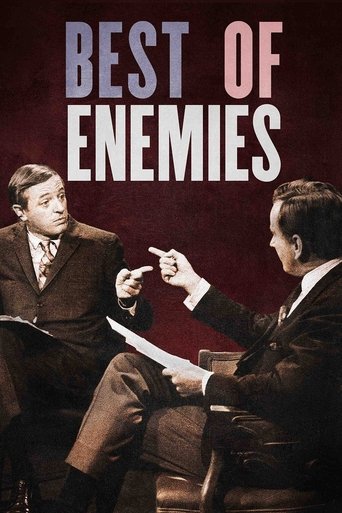
A documentary about the legendary series of nationally televised debates in 1968 between two great public intellectuals, the liberal Gore Vidal and the conservative William F. Buckley Jr. Intended as commentary on the issues of their day, these vitriolic and explosive encounters came to define the modern era of public discourse in the media, marking the big bang moment of our contemporary media landscape when spectacle trumped content and argument replaced substance. Best of Enemies delves into the entangled biographies of these two great thinkers, and luxuriates in the language and the theater of their debates, begging the question, "What has television done to the way we discuss politics in our democracy today?"
Kurt Gerstein—a member of the Institute for Hygiene of the Waffen-SS—is appalled to discover that a poison gas he helped discover is being used to kill Jews. Driven by his conscience to alert the rest of the world, Gerstein teams up with a young Jesuit priest, Riccardo Fontana, but their protestations fall on deaf ears in the Vatican.
Cameramen and women discuss the craft and art of cinematography and of the "DP" (the director of photography), illustrating their points with clips from 100 films, from Birth of a Nation to Do the Right Thing. Themes: the DP tells people where to look; changes in movies (the arrival of sound, color, and wide screens) required creative responses from DPs; and, these artisans constantly invent new equipment and try new things, with wonderful results. The narration takes us through the identifiable studio styles of the 30s, the emergence of noir, the New York look, and the impact of Europeans. Citizen Kane, The Conformist, and Gordon Willis get special attention.
Danton and Robespierre were close friends and fought together in the French Revolution, but by 1793 Robespierre was France's ruler, determined to wipe out opposition with a series of mass executions that became known as the Reign of Terror. Danton, well known as a spokesman of the people, had been living in relative solitude in the French countryside, but he returned to Paris to challenge Robespierre's violent rule and call for the people to demand their rights. Robespierre, however, could not accept such a challenge, even from a friend and colleague, and he blocked out a plan for the capture and execution of Danton and his allies.