"BETWEEN EMANCIPATION AND TRADITION"
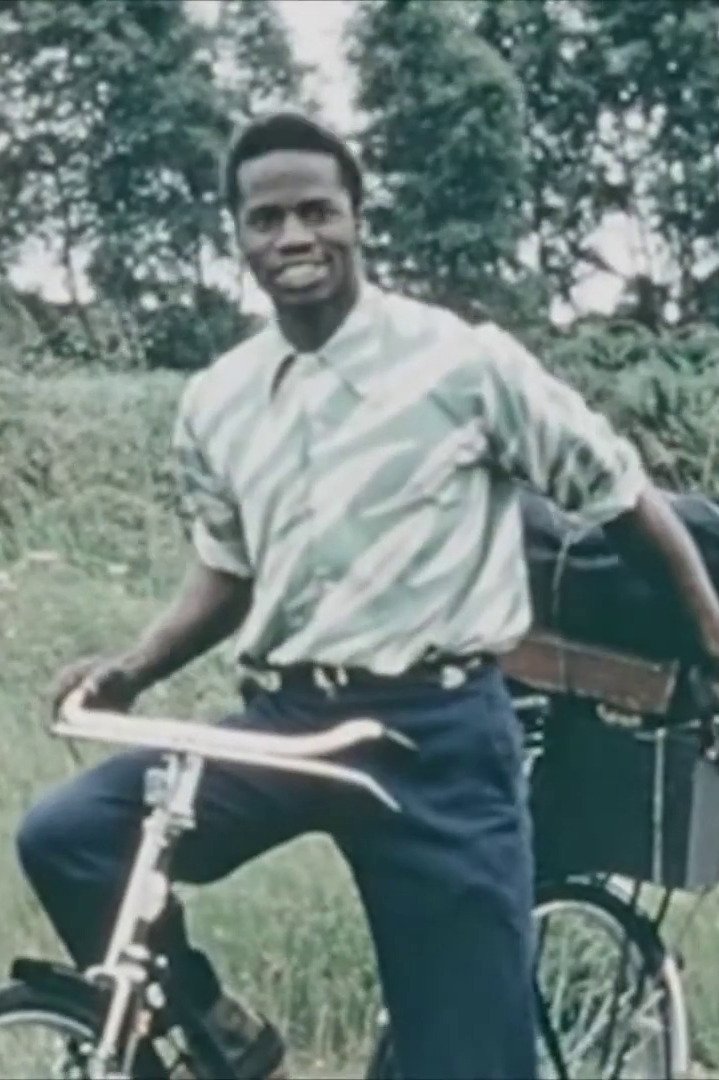
Ivory Coast, the Democratic Republic of Congo, and Senegal – when it comes to love and sex, these African countries are caught between tradition and modernity.
Social & External
Narrator
Offers audiences a unique window into a bygone era when a thrilling new invention, the motion picture camera, first captures a nation on film.
A documentary about ultra-low budget guerrilla filmmaking, deep in the heart of Texas.
The historical memory of torture, persecution and killings of homosexuals and lesbians in Spain during Franco's dictatorship provides an opportunity to tell about discrimination and homophobia in the rest of the world. Those who lived through that period recall times when being gay was a crime and the Church was completely indifferent; even the movie (and the fashion) world turned their backs. Today Spain is actually a model for enlightened social attitudes and for the freedoms achieved by the GLBT community. So it is important to remind the young of the high price paid by the older generations. One of the directors of the film, Enrique del Pozo, is a singer and actor who is openly bisexual and very famous in Spain.
Smartphones, computers, gaming consoles or digital tablets are now givens in our daily lives. The electronic intrusion is causing controversy and collective hysteria. Are we damaging our brains with all these screens? How will unprecedented exposure to screens impact humanity? To find out, the filmmakers examine how science has been applied to distinguish between truth and falsehoods, and explore the suspected side-effects of screen exposure. The documentary travels through the US and Europe to meet and speak to researchers who are leaders in this field.
In Brussels, Belgium, the Royal Museum of Central Africa is undertaking a radical renovation, both physical and ethical, to show with sincerity, crudeness and open-mindedness the reality of the atrocities perpetrated against the inhabitants of the Belgian colonies in Africa, still haunted and traumatized by the ghost of King Leopold II of Belgium, a racist and genocidal tyrant.
The underworld (imaginary and real) of Paris, depicted through several sketches. Kaleidoscope of the immoral and nauseating aspects of the capital.
Pouvoir Oublier is a political documentary first constructed from the words of the speakers whose lives changed on the tragic day of May 10, 1972 in Sept-Îles. Their word will be juxtaposed with archival material from the events, some of which are unpublished, which will reflect the collective euphoria in which Sept-Îles and all of Quebec were then bathed.
As clichés go, in 1999 the World as we knew it was about to change - and we'd been expecting it. Since childhood we'd been promised that the 21st century would bring us dramatic new technologies like flying cars and Utopian cities. Instead it bought us the smart-phone, social media, and virtual societies. And as it turns out these technologies began to transform society almost as dramatically as the moon colonies we'd been expecting. Now over a decade into the revolution, 'DSKNECTD' explores how digital communication technology is profoundly changing the way we interact and experience each other - for the good and for the bad.
Two filmmakers follow a businessman turned eco-activist as he exposes Romania's timber mafia. Their journey takes a dramatic turn when, in the middle of a forest, the three are attacked by a group of 12 angry men. The cameras are destroyed, and all footage is lost. Faced with this harsh reality, each of them tries to manage the situation as best they can, confronting their own doubts and limitations.
Circus Tuomento is a documentary about Finland's most famous tightrope walker, Antti Tuomento (b.1968). After the tragic break of his circus career, he focuses on building his own city. About a dozen fascinating, organic buildings have been made in the garden. The city with its museum, church and theater can be seen as an attempt to take fate into one's own hands – and to build an entire alternative world. The second narrator of the film, Antti's father, novel writer Matti Tuomento (1933-2016), lived with the weight of his own failed career as an artist, his repulsion towards fatherhood and his own childhood trauma. He poured his own childhood trauma and artistic collapse over his family. Trauma, which has moved from one generation to the next, has now turned into Antti's fascinating city. It is one of the most important art environments in our country. Antti has declared the city of Pelimannimäki as an independent kingdom.

"Bias" challenges us to confront our hidden biases and understand what we risk when we follow our gut. Through exposing her own biases, award-winning documentary filmmaker Robin Hauser highlights the nature of implicit bias, the grip it holds on our social and professional lives, and what it will take to induce change.
The Philippines remains the only nation without legalized divorce. Through the perspectives of a controversial priest, a women's rights advocate, and a child of a separated couple, this documentary explores whether the legalization of divorce in the country would be for better or worse.
A film essay that intertwines the director's gaze with that of her late mother. Beyond exploring mourning and absence as exclusively painful experiences, the film pays tribute to her mother through memories embodied by places and objects that evidence the traces of her existence. The filmmaker asks herself: What does she owe her mother for who she is and how she films? To what extent does her film belong to her?
Mariam, Asiya, and Anissa were 11, 7, and 5 years old when they were raped. The attackers were their paternal uncle, a neighborhood youth, and the nanny's son. They have no memory of the event. To protect them, their bodies developed traumatic amnesia. Years later, the memories returned, and they decided to file a complaint.
A documentary that is a deep exploration of gender identity within the context of Greek society, providing a multi-layered narrative that reflects the experiences of individuals navigating the complexities of gender in a culture where these topics are still emerging. Over four years, the filmmakers captured intimate stories of people confronting their gender identities, revealing how personal, societal, and familial expectations shape their journeys. The documentary aims to challenge the traditional norms of gender and to give voice to those whose experiences are often marginalized. It marks a significant step in Greece’s cinematic exploration of LGBTQ+ themes and is a pivotal contribution to the global conversation on gender identity.
The film does not have a plot per se; it mixes documentary footage, along with standard movie scenes, to give the audience the mood of Germany during the late 1970s. The movie covers the two-month time period during 1977 when a businessman was kidnapped and later murdered by the left-wing terrorists known as the RAF-Rote Armee Fraktion (Red Army Fraction). The businessman had been kidnapped in an effort to secure the release of the original leaders of the RAF, also known as the Baader-Meinhof gang. When the kidnapping effort and a plane hijacking effort failed, the three most prominent leaders of the RAF, Andreas Baader, Gudrun Ensslin, and Jan-Carl Raspe, all committed suicide in prison. It has become an article of faith within the left-wing community that these three were actually murdered by the state.