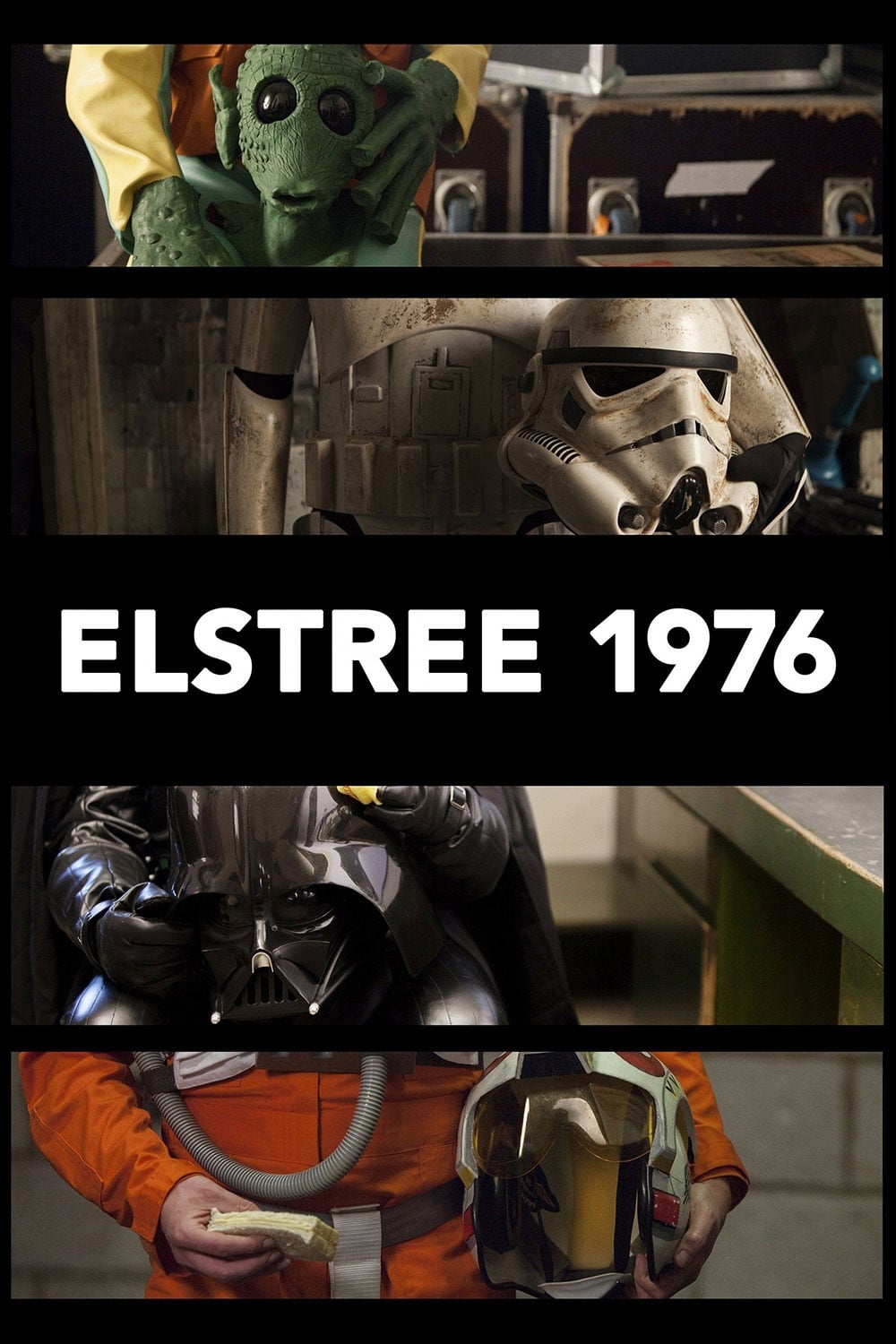
A class trip to the museum requires some new rules.
Social & External
Gripping, heartbreaking, and ultimately hopeful, Waiting for Superman is an impassioned indictment of the American school system from An Inconvenient Truth director Davis Guggenheim.
One year in the life of a Turkish teacher, teaching the Turkish language to Kurdish children in a remote village in Turkey. The children can't speak Turkish, the teacher can't speak Kurdish and is forced to become an exile in his own country. On the Way to School is a film about a Turkish teacher who is alone in a village as an authority of the state, and about his interaction with the Kurdish children who have to learn Turkish. The film witnesses the communication problem emphasizing the loneliness of a teacher in a different community and culture; and the changes brought up by his presence into this different community during one year. The film chronicles one school year, starting from September 2007 until the departure of the teacher for summer holiday in June 2008. During this period, they begin to know and understand each other mutually and slowly.
Grecia from Venezuela, Linda from Vietnam and Andriy from Ukraine are pupils of META, an inclusive school that supports the integration of young migrants into Czech society. Their families were brought to the Czech Republic by different circumstances and each of them has different ideas about their own future. While eighteen-year-old Andriy, an ambitious boxer, wants to become independent as soon as possible, and Grecia, an artistically gifted student, would like to get into an art high school, Linda is still not sure what she wants to do with her education and career. The time-lapse documentary engagingly captures an important stage in the lives of young people for whom not only the language barrier, but also the long-term lockdown due to the coronavirus epidemic is an obstacle.

What does it mean to belong to a place, a country? In a south Tel Aviv elementary school, that question is addressed head-on by a fourth-grade class and their teacher. The children are asylum seekers whose families mostly do not have a legal status in Israel, yet learn, sing and play in Hebrew all the while examining their identity and sense of belonging.
As a young father, watching his daughter go through her life experiences, film director Alexandre Mourot discovered the Montessori approach and decided to set his camera up in a children's house (3 to 6 years of age) in the oldest Montessori school in France. Alexandre was warmly welcomed in a surprisingly calm and peaceful environment, filled with flowers, fruits and Montessori materials. He met happy children, who were free to move about, working alone or in small groups. The teacher remained very discreet. Some children were reading, others were making bread, doing division, laughing or sleeping. The children guided the film director throughout the whole school year, helping him to understand the magic of their autonomy and self-esteem - the seeds of a new society of peace and freedom, which Maria Montessori dedicated her life work to.
Exploring the rise and fall of the groundbreaking animated series Ren & Stimpy and its controversial creator, John Kricfalusi, through archival footage, show artwork and interviews with the artists, actors and executives behind the show.
“Use Your Eyes” is a police training film produced by the Alhambra Police Department, California, in 1970. It is intended to demonstrate to police officers how to search a residence for evidence of marijuana use, and what rights they have to search the property once certain prima facia evidence is established.
Polish educational cartoon about dinosaurs
This 1971 color anti-drug use and abuse film was produced by Concept Films and directed by Brian Kellman for Encyclopedia Britannica. “Weed: The Story of Marijuana” combines time-lapse, montage, illustrations, animation (by Paul Fierlinger and emigre Pavel Vošický) and dramatized, documentary-style interviews to survey the evolving role of cannabis in U.S. society, with emphasis on the legal risks faced by young people. A unique score of experimental synthesizer music is provided by Tony Luisi on an EMS VCS 3 “Putney”
This episode from the Czech Journal series examines how a military spirit is slowly returning to our society. Attempts to renew military training or compulsory military service and in general to prepare the nation for the next big war go hand in hand with society’s fear of the Russians, the Muslims, or whatever other “enemies”. This observational flight over the machine gun nest of Czech militarism becomes a grotesque, unsettling military parade. It can be considered not only to be a message about how easily people allow themselves to be manipulated into a state of paranoia by the media, but also a warning against the possibility that extremism will become a part of the regular school curriculum.
This short documentary chronicles the culture and arts of Cambodian Americans and the Lowell, MA community through the eyes of Sokhary Chau, the first Cambodian American Mayor in the United States. Chau immigrated to the U.S. at seven years old to escape the Khmer Rouge genocide. Through this unique story that showcases the best of Lowell—immigrant success, assimilation, history, and the development of the arts—we see a man born into a war-torn country who comes to America to be a first-in-the-nation leader.
A 30th anniversary special celebrating the Norwegian sitcom Mot i brøstet. Actors Nils Vogt, Sven Nordin and Hilde Lyrån share their memories.
A Cincinnati public school fights to break the cycle of poverty in its Urban Appalachian neighborhood, where senior Raven Gribbins aims to become the first in her troubled family to graduate and go to college. When Principal Craig Hockenberry's job is threatened, it becomes clear it's a make-or-break year for both of them.
Pata Seca (1828), a man whose back bore the whip marks of his enslavers , whose eyes held the haunted memory of being forced to breed over 200 slave children in order to sustain his master’s plantation. Men broken but unbowed, transformed from field hands into soldiers from the civil war to Vietnam. This documentary weaves together authentic narratives from the 1800s, accompanied by original images and footage, highlighting the significant influence that Black men in uniform had in Hollywood and addressing ongoing relevant issues to date.
A documentary about a teacher who sends a group of pupils out of the classroom when one of them does not own up to talking behind the master's back.
The Institute of National Remembrance, Fish Ladder and Juice present “The Unconquered” – an animated film that shows the fight of Poles for freedom, from the first day of World War II to the fall of communism in 1989.
DFW Punk, covering the Dallas/Ft. Worth punk/new wave scene. If you thought Texas in the late ’70s was all about urban cowboys, country tunes and bible-thumping, get ready to be proved dead wrong. 2007, MiniDV.
How to tell if an animal has rabies.
A Santa Fe Railroad educational film on the steam locomotive in their role in industry and passenger travel.
POLICE OFFICER JIM BYRNE, Canada's most honoured Safety Education Specialist brings you his famous TEN RULES, with which he has personally tested more than 25,000 students. Learn key strategies now taught in many schools and used by police working with the full NEVER BE A VICTIM Institutional Study Program. Develop your own personal streetproofing skills so you can train and test your family. Robert Gordon, who created this remarkable program in partnership with Metropolitan Police introduces this family video library against a backdrop of today's troubled society. TEACHING LIFE SKILLS FOR A SAFER COMMUNITY OFFICER JIM'S TEN RULES FOR STREETPROOFING • STRANGER MYTHS • ABDUCTION • BEING FOLLOWED • DANGEROUS PLACES • AVOIDING CARS AND VANS • GOOD TOUCHING-BAD TOUCHING