"'. . . looking in, my life’s but a list of things I almost did . . .'"
Jo; or The Act of Riding a Bike is Zefier's third film.
Social & External
Himself
An oblique remake of Nicholas Ray’s On Dangerous Ground (1951), Ray’s Place follows Ray from his haunts in New York City to Binghamton where, exiled from Hollywood, he taught alongside members of the American avant-garde. Participating in both Hollywood’s golden age and the experimental cinema of the 1970s yet at home in neither, what is Ray’s place?
Narrated by Sir Derek Jacobi - star of the landmark television series "I, Claudius" - this documentary explores art and culture around the Bay of Naples before Mount Vesuvius erupted in AD 79. The bay was then the most fashionable destination for vacationing Romans. Julius Caesar, emperors, and senators were among those who owned sumptuous villas along its shores. Artists flocked to the region to create frescoes, sculpture, and luxurious objects in gold, silver, and glass for villa owners as well as residents of Pompeii and other towns in the shadow of Vesuvius. The film concludes with the story of the discovery of Pompeii and Herculaneum from the 18th century onward.
A film essay that intertwines the director's gaze with that of her late mother. Beyond exploring mourning and absence as exclusively painful experiences, the film pays tribute to her mother through memories embodied by places and objects that evidence the traces of her existence. The filmmaker asks herself: What does she owe her mother for who she is and how she films? To what extent does her film belong to her?
"What we were trying to do was the ultimate form of architecture, which was predicting how society would use space, land and time." Curtis Schreier, ANT FARM Space, Land and Time: Underground Adventures with Ant Farm is the first film to consider the work of the renegade 1970s art/architecture collective Ant Farm, best known for its iconic land-art piece Cadillac Ranch. Radical architects, video pioneers, and mordantly funny cultural commentators, the Ant Farmers created a body of deeply subversive multidisciplinary work that questioned the boundaries of architecture and everything else in the process. Incorporating breathtaking archival video, new footage shot over ten years and animation based on zany period sketches, this film is about the joy of creation in a time when there were no limits. —Beth Federici
Born in Livorno, Tuscany, artist Amedeo Modigliani (1884–1920) lived a short, tormented life, narrated here from an original point of view, that of his young common-law wife, Jeanne Hébuterne.
As the only work in this medium by Richter, the film was created for the exhibition Volker Bradke that took place on 13th December 1966 at Galerie Schmela in Düsseldorf. For the purpose of this exhibition, Gerhard Richter addressed the person Volker Bradke in different mediums. In addition to photographs, a banner and a large-scale painting Volker Bradke [CR: 133], the film had been screened. Richter transferred one of the stylistic features of his paintings of that time into film: the blurring.
Lake gazes down at a still body of water from a birds-eye view, while a group of artists peacefully float in and out of the frame or work to stay at the surface. As they glide farther away and draw closer together, they reach out in collective queer and desirous exchanges — holding hands, drifting over and under their neighbors, making space, taking care of each other with a casual, gentle intimacy while they come together as individual parts of a whole. The video reflects on notions of togetherness and feminist theorist Silvia Federici’s call to “reconnect what capitalism has divided: our relation with nature, with others, and our bodies.”
This work is an attempt to overcome alienation amidst the fragmented construction reality of everyday narrative. Rethinking the meaning of reflections and shadows, framed subjects, body movements, screen, as well as sounds that are constructed by connecting the expression of their existence with the history of representation in modern art.
April 15, 1874, boulevard des Capucines, Paris: a group of young feverish painters shunned by the official Salon and mocked by the classical masters, chose to come together to exhibit their paintings freely, in the studio of photographer Nadar. At the end of a teeming century, when modernity was emerging, this group of rebellious artists, revolutionized the world of art.
Across the installation's multiple channels, the camera circles a group of artists as they sit together in a field eating, licking, and squeezing ripe tomatoes. Throughout the ever-changing scene, kisses, whispers, and caresses are shared with a casual, gentle intimacy that reflects interconnectivity and abundance. These queer and desirous exchanges constitute a portrait of collectivity wherein individuals come together as distinct parts of a whole.
A unique visual interpretation of Tyler, the Creator's latest album, Chromakopia.
A documentary film about Oscar-nominated animator Bill Plympton. This is a portrait piece that includes interviews with family, friends, colleagues, critics, and fans.
Kalú Kariú, a trans artist and poet from northern Brazil, reflects on how “saudade”, an untranslatable feeling of profound nostalgic longing, becomes a powerful source of creation. After eight years away from his roots, Kalú invites us into a space where memory, distance and identity intertwine, and art is born from absence.
Thirty worlds in less than a blink and oh-so many more...
"In the final format for MAGELLAN, Frampton had planned to disassemble these two films into twenty-four 'encounters with death' that were to be shown in five-minute segments twice a month. In their present state, seen together and roughly the length of an average feature film, the two parts of MAGELLAN: AT THE GATES OF DEATH constitute perhaps the most gripping, monumental, and wrenching work ever executed on film...Frampton in 1971 began his filming of cedavers at the Gross Anatomy Lab at the University of Pittsburgh. He returned to the lab four times over the course of the next two years and then spent nine months assembling his 'forbidden imagery' into an extraordinary meditation upon death."–Bruce Jenkins
In this 21st century, under the cloak of capitalism, governments, and other systems by which society is governed, this short film shows the true social reality of many people “on the street”.
An obsessively-made documentary, filmed over 16 years, exploring the creative life and adventures of the eccentric artist and entrepreneur Harrod Blank. From his youth growing up in the woods with chickens and working as a camera assistant for his father- the venerable film-maker Les Blank- to the creation of his first attention-getting artcar, to his current multi-faceted career as creator and head of a nationwide art car movement, all the while pursuing his visions of non-conformity. Featuring interviews with his girl-friends, his mom, his brother, his raconteur lifelong pal, Kevin, as well as Blank’s own painful yet hilarious self-examinations. With special appearances by Les Blank and many fine art car artists. “The pressure to conform is incredible, ” says Blank, “but I don’t care what other people think. The reason I’m alive is to create.”
In June 2019, arts journalist John Wilson received an extraordinary tip-off – one billion dollars’ worth of stolen art may be about to be recovered. Included are a unique Rembrandt - his only seascape - and a Vermeer considered the most valuable stolen painting in the world. The art was taken from the walls of the Isabella Stewart Gardner Museum in Boston in the early hours of 18 March 1990. It remains the world’s biggest unsolved art heist. For John, to follow the recovery of the paintings, as it happens, would be the biggest art story of the century.
A documentary about a person who cleans his room with a vacuum cleaner, filled with disasters and mishaps.
“Beneath the Concrete, The Forest” is a short experimental documentary that takes us inside an ongoing struggle inside the city of Atlanta, GA between two sides to determine the future of Weelaunee, the biggest contiguous urban forest in the country.
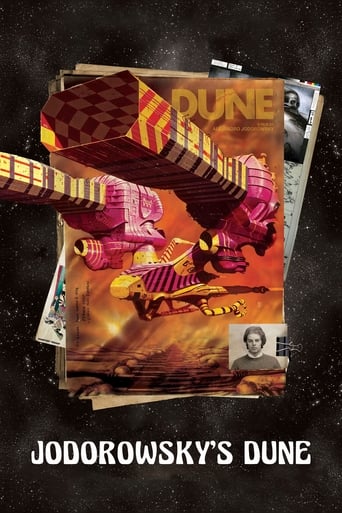
In 1974, Chilean-French director Alejandro Jodorowsky embarked on the quixotic project of adapting Frank Herbert's influential novel Dune (1969) for the big screen. After investing two years, and millions of dollars, the gigantic project ended in failure; but the artists Jodorowsky brought together to carry it out continued to work together, and ended up laying the foundations for modern science fiction cinema.
A visual montage portrait of our contemporary world dominated by globalized technology and violence.
Lyrical and powerfully personal essay film that reflects on the deaths of her husband Lou Reed, her mother, her beloved dog, and such diverse subjects as family memories, surveillance, and Buddhist teachings.
An exploration of technologically developing nations and the effect the transition to Western-style modernization has had on them.
After a former model is drowned in her bathtub, Detective James Halloran and Lieutenant Dan Muldoon attempt to piece together her murder.
In the seedy domain of Miami’s criminal underbelly, a seasoned hitman embarks on the relentless pursuit of his next target. As shot entirely through thermal lens, he navigates a twisted world where violence and madness reign supreme. Tensions unravel, leading to a psychedelic journey that blurs the lines between predator and prey.
Using the book 'Fragments', which collects Marilyn Monroe's poems, notes and letters, and with participation from the Arthur Miller and Truman Capote estates who have contributed more material, each of the actresses will embody the legend at various stages in her life.
Takes us to locations all around the US and shows us the heavy toll that modern technology is having on humans and the earth. The visual tone poem contains neither dialogue nor a vocalized narration: its tone is set by the juxtaposition of images and the exceptional music by Philip Glass.
Short film to a song of love lost and rediscovered, a woman sees and undergoes surreal transformations. Her lover's face melts off, she dons a dress from the shadow of a bell and becomes a dandelion, ants crawl out of a hand and become Frenchmen riding bicycles. Not to mention the turtles with faces on their backs that collide to form a ballerina, or the bizarre baseball game.
A World War II veteran hunts down the Nazi collaborators who killed his wife.
The Crash Reel tells the story of a sport and the risks that athletes face in reaching the pinnacle of their profession. This is Kevin Pearce’s story, a celebrated snowboarder who sustained a brain injury in a trick gone wrong and who now aims, against all the odds, to get back on the snow.
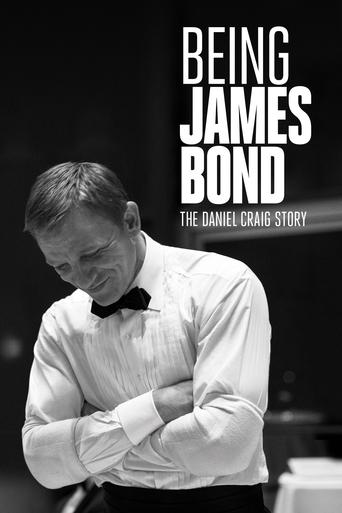
Daniel Craig candidly reflects on his 15 year adventure as James Bond. Including never-before-seen archival footage from Casino Royale to the upcoming 25th film No Time To Die, Craig shares his personal memories in conversation with 007 producers, Michael G Wilson and Barbara Broccoli.
Filmmakers discuss the legacy of Alfred Hitchcock and the book “Hitchcock/Truffaut” (“Le cinéma selon Hitchcock”), written by François Truffaut and published in 1966.
Since the invention of cinema, the standard format for recording moving images has been film. Over the past two decades, a new form of digital filmmaking has emerged, creating a groundbreaking evolution in the medium. Keanu Reeves explores the development of cinema and the impact of digital filmmaking via in-depth interviews with Hollywood masters, such as James Cameron, David Fincher, David Lynch, Christopher Nolan, Martin Scorsese, George Lucas, Steven Soderbergh, and many more.
A celebration of the universe, displaying the whole of time, from its start to its final collapse. This film examines all that occurred to prepare the world that stands before us now: science and spirit, birth and death, the grand cosmos and the minute life systems of our planet.
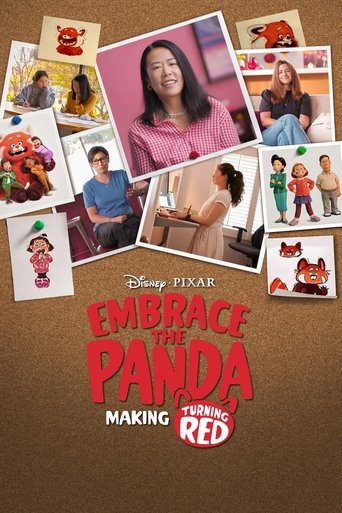
With mesmerizing footage and time lapses of animators at work, this behind-the-scenes special captures the artistry of a unique tale years in the making.
A documentary focused on plastic pollution in the world's oceans.
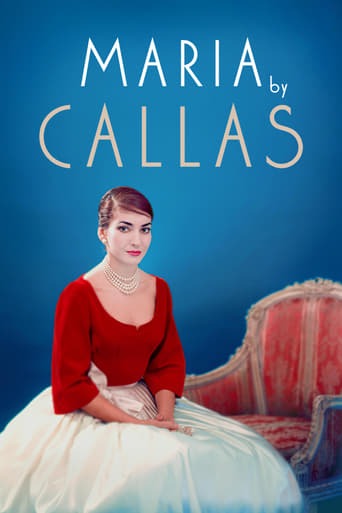
Told through performances, TV interviews, home movies, family photographs, private letters and unpublished memoirs, the film reveals the essence of an extraordinary woman who rose from humble beginnings in New York City to become a glamorous international superstar and one of the greatest artists of all time.
JB Smoove and Martin Starr host a celebration of 20 years of "Spider-Man" movies, from the Sam Raimi trilogy to Marc Webb's movies and the trio from Jon Watts.
A concert film documenting Talking Heads at the height of their popularity, on tour for their 1983 album "Speaking in Tongues." The band takes the stage one by one and is joined by a cadre of guest musicians for a career-spanning and cinematic performance that features creative choreography and visuals.