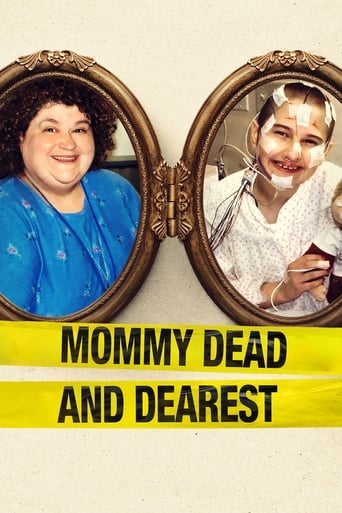
The story of the South Shore Resource and Advocacy Center, five survivors of domestic violence, and their experience in the Massachusetts justice system.
Social & External
Yin Honqiang, a master carpenter from Jiangyin, has been working with wood for over 50 years. Along with his son and his grandson, they create handcrafted pieces of furniture of the highest level, what lead them to be one of the most important furniture makers in all of China. Take a seat is a close look at their way of working while keeping the tradition alive throughout generations.
This is a reconstruction of the daily life of an ordinary family. With kindness and gentle humour, the film reveals the relationship between the older and the younger generation. The original concept of a short film study with authentic characters of the Ravager family grew into a feature-length picture on the border between a documentary and fiction. It was made as an improvisation without a previously approved screenplay in the course of only twenty days.
Why does Doris Dörrie have a bag on her head in the interview? Consistent in the sense that in her works she always poses the question of how we want to be perceived. Dörrie takes us through the most important stages of her life, her films, her work as a mentor and teacher, and also addresses existential themes: Identity, motherhood, her role as a woman. And she talks openly about fears, setbacks and crises, such as the untimely death of her partner and cameraman Helge Weindler. "Shut up and breathe", the advice of a Tibetan lama, carries her through life - even beyond the screen.
Between February and April 2025, filmmakers Bernard-Henri Lévy and Marc Roussel filmed the Pokrovsk and Soumy fronts in eastern Ukraine, following the fighters of the Anne de Kyiv Brigade, armed by France. They filmed the daily lives of the inhabitants, bombarded by Russian forces terrorizing civilians on the eve of possible negotiations. They interview President Zelenskyy, who is reluctant to travel to Washington, and then watch the rebroadcast of the meeting with Ukrainian soldiers in a bunker. For the real heroes are the anonymous fighters and civilians who hold their heads high in the face of adversity and suffering, and who are filmed on a daily basis. The final part of Lévy’s “Ukrainian Quartet”, Our War is a diary, peppered with flashbacks in which the author recalls the high points of this war that began in 2014.
Leah and Purity are rangers in the Kenyan bushland. They roam around Amboseli National Park every day to track down wildlife. The Maasai shepherds also have their villages here. Conflicts can hardly be avoided. The young women are often called to missions to mediate or comfort. The two Maasai women themselves have to fight against discrimination
25 years ago, when Coos, then 13, was smoking dope with his friends by the side of a canal, he passed out and came to with a Coke bottle up his ass. A joke by his friends. The incident marks his life as it haunts him for years. Why did his friends do that? Coos, now 38, wants to be able to turn this black page in his history, and he does so by confronting his friends of the time with his pain.
A place with stairs, but that leads to walls. A place with lots of space, but no one fights for it. And a place with lots of owners, but so empty that no one wants to enter.
Starring Sigmund Freud is a video memento for Sigmund Freud's little-known film career. Based on an essay John Menick published in Frieze in 2011, the video collects the dozens of appearances that the character of Sigmund Freud has made on small and big screens. After the 1950s, when pill vials replaced analytic couches, the father of psychoanalysis found a second career impersonating himself in everything from a John Huston clunker to a Star Trek episode. The video suggests that maybe it is in front of the camera, alongside surgically enhanced starlets and CGI chimeras, that “Herr Doktor” will find his final resting place. This video was produced by the Kadist Foundation and commissioned by dOCUMENTA (13).
Voices in Wartime is a 2004 documentary that explores the human experience of war through poetry. Combining interviews with soldiers, journalists, and historians, it reveals how war affects individuals and societies across time and place. The film features poets from around the world – from Homer and Wilfred Owen to Shoda Shinoe and modern writers in Iraq and Nigeria – showing how poetry expresses the pain, trauma, and truth of conflict. By linking verse with real-life accounts, Voices in Wartime highlights how poetry helps us understand the emotional and moral impact of war.
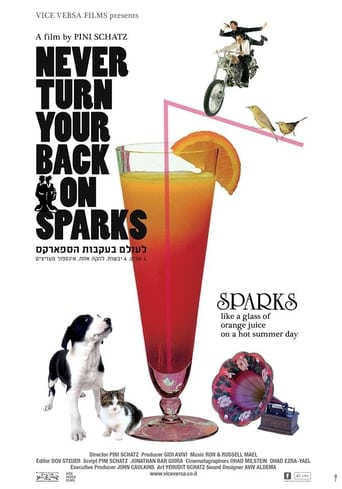
A feature documentary about Ohio-based artist Sparks McFly and his friends as they attempt to conceptualize, write, record, and produce a rap album over the course of just 7 days.
Produced in 2014, this documentary about the making of TIE ME UP! TIE ME DOWN! features interviews with director Pedro Almodóvar; actors Antonio Banderas, Victoria Abril, Loles León, and Rossy de Palma; producer Agustín Almodóvar; production manager Esther García; and cinematographer José Luis Alcaine.
A filmmaker’s meditation on loss and grief. A digital eulogy and swan song to his creative partner and best friend. Mixed media woven into the fading daydream of their time together.
People from different ethnic backgrounds with "difficult" names by Western standards share their experience with moving through the world with an identity that challenges others to simply just say their name. A short social docu-film by Mariam Meliksetyan, “Say My Name” is a meditation on identity, otherness, assimilation, community, and ancestral roots.
Documentary following an investigation by The Sun into Madeleine McCann's disappearance, which uncovers further evidence that could point towards the prime suspect's involvement in this unsolved crime
A recorded Q&A hosted by Mark Kermode, where Pedro Almodóvar and Tilda Swintondiscuss the inspirations they drew on for the film, how THE HUMAN VOICE fits within the 'Almodóvar oeuvre', and what Pedro will be making next - including a great surprise for Tilda. Recorded under lockdown conditions, the discussion features visual references and clips to create a dynamic and interesting companion piece to the short film.
A documentary from 2012 on the making of the film, featuring interviews with Pedro Almodóvar; Agustín Almodóvar; actors Penélope Cruz, Marisa Paredes, Cecilia Roth, and Antonia San Juan; production manager Esther García; and author Didier Eribon.
Recy Taylor, a 24-year-old black mother and sharecropper, was gang raped by six white boys in 1944 Alabama. Common in Jim Crow South, few women spoke up in fear for their lives. Not Recy Taylor, who bravely identified her rapists. The NAACP sent its chief rape investigator Rosa Parks, who rallied support and triggered an unprecedented outcry for justice. The film exposes a legacy of physical abuse of black women and reveals Rosa Parks’ intimate role in Recy Taylor’s story.
After a great year for grime, MC Frisco and Risky Roadz go back to its pirate radio roots. - How Pirates Made Grime. Taking grime back from global phenomenon to its pirate radio roots.
Cartoneras is a documentary that grapples with Latin America’s urban realities, and the cardboard publishing movement that has emerged from these in the 21st century. Reflecting on the different contexts that propelled this form of community publishing, like Argentina’s 2001 economic crisis, the independent art scene, and the movements which formed around waste-pickers, the film’s narrative is developed through conversations with important actors from the cartonera world.
Jerry, an ordinary immigrant dad, retired in Orlando, is recruited to be an undercover agent for the Chinese police. Jerry’s family recreates the events on film and his three sons discover a darker truth. True crime meets spy thriller in this genre-bending docufiction hybrid about an immigrant’s search for the American dream. A Slamdance Film Festival Grand Jury and Audience Award winner.