Social & External
Narratrice
Created as a companion documentary to the film "Valkyrie," this documentary details the true story behind the plot to assassinate Adolph Hitler.
The story of the Tuskegee Airmen, a group of African American pilots who saw combat during the Second World War. The 332nd Fighter Group stands apart from any other air force fighter groups in the Second World War: all personnel, from pilots to ground crew to surgeons, were black. They confounded expectations and prejudices existing in America in the thirties and forties about the abilities of black Americans. They excelled as pilots and became a crack unit, showing great courage and skill and achieving where other fighter groups had failed. Despite this, they were segregated on the ground and in the air from the white flyers whose lives they protected. (Alexander Street)

For three months, the teams of Grand Angle investigated the fall of François Fillon. The right-wing candidate was the favorite of the presidential election. Was he the victim of a conspiracy? From a black cabinet? Settling accounts within his own camp? Has not he also been a victim of himself? The main protagonists of this incredible series have agreed to come back behind the scenes of this descent into hell. Headliners on the right, members of the campaign team, friends, enemies.
An intimate look into the life of icon Quincy Jones. A unique force in music and popular culture for 70 years, Jones has transcended racial and cultural boundaries; his story is inextricably woven into the fabric of America. Jones came to prominence in the 1950s as a jazz arranger and conductor before working on pop music and film scores. He moved easily between musical genres, producing major pop hits of the early 1960s and serving as an arranger and conductor for several collaborations in the same time period.
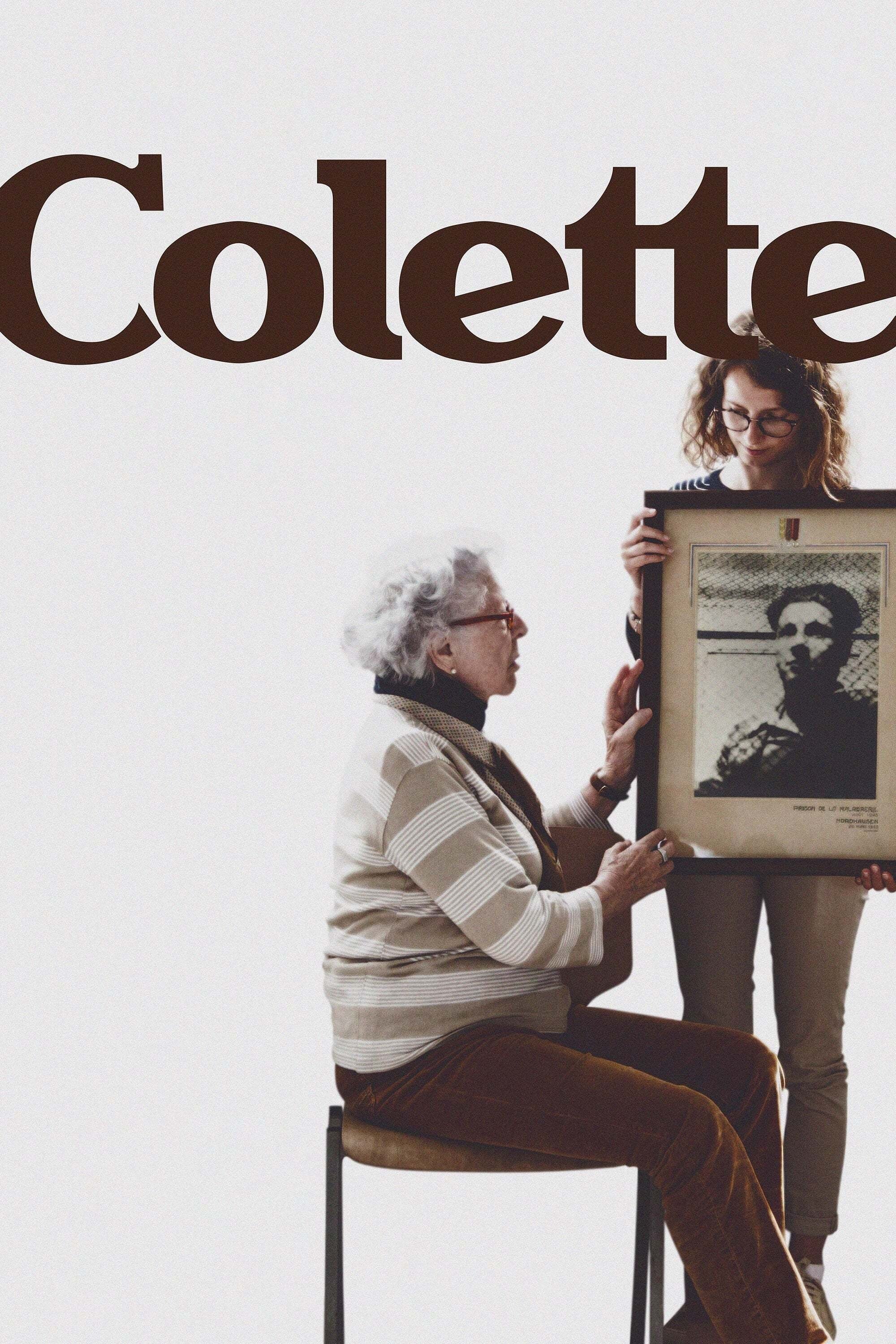
The life story of Mania Hartmayer-Breuer, who fled Germany at the age of 16 after the "Reichskristallnacht" and made her way via Antwerp and southern France to Rome, where she found shelter with Catholic nuns and finally experienced liberation. From there she arrived in the USA with the first refugee transport.
During the Second World War, the Allies threaten to attack Spain, an allegedly neutral country, if the Francoist regime keeps allowing Nazi Germany to extract Galician tungsten, a strategic mineral, paramount to the war effort.
The story of the more than nine thousand Spaniards who were interned in the Nazi concentration camps, through the testimony of a group of survivors who tell what life and death were like in Mauthausen, Auschwitz, Buchenwald and Ravensbrück.
"There are things in this world that are yet to be named" centers around Solanum plastisexum - an Australian tomato whose sexual expression is unpredictable and unstable, challenging even the fluid norms of the plant kingdom. Footage of the team of botanists who recently used their Solanum research to explode notions of sexual normativity in any plant or animal is combined with a voiceover of letters sent between science writer Rachel Carson and her lover Dorothy Freeman. "There are things in this world that are yet to be named" is a meditation on erasure, indefinability, and the intersection of queer and environmental histories.
Documentary short featuring a visit by American newsman Edward R. Murrow to the English town of Dover during the Second World War.
Learn how the longest reigning monarch in British history was shaped by World War II. Princess Elizabeth’s experiences during the war mirrored those of the public and helped shape her into the Queen she is today.
In 1941 Hitler deported over 2000 British men, women and children from the Channel Islands to the heart of Nazi Germany. It was a terrifying journey into the unknown and some killed themselves rather than go. Others had just hours to pack one bag, destroy their pets and leave. However, the initial horror of the camps and the struggle to survive in the primitive conditions was replaced with a determination not just to survive, but to thrive, as Hitler's crime created one of the most bizarre episodes of the war.
As soon as Hitler's forces occupied the Channel Islands in 1940 he ordered a series of fortifications to defend the only British territory he ever conquered. The problem was he never stopped - pouring men, concrete and weapons into the islands. By 1944 his officers talked of the Fuehrer's inselwahn - his 'island madness' and the Channel Islands had become the most fortified place on earth.
Winston Churchill, one of the most revered men of the twentieth century. Adolf Hitler, one of the most hated leaders in contemporary history. Between 1940 and 1945, these two enormously contradictory personalities faced each other in both politics and war. A clash of giants whose story begins in the trenches of the World War I and ends with the debacle of the World War II.
A portrait of the visionary Dutch artist M. C. Escher (1898-1972), according to his own words, taken from his diary, his correspondence and the texts of his lectures.