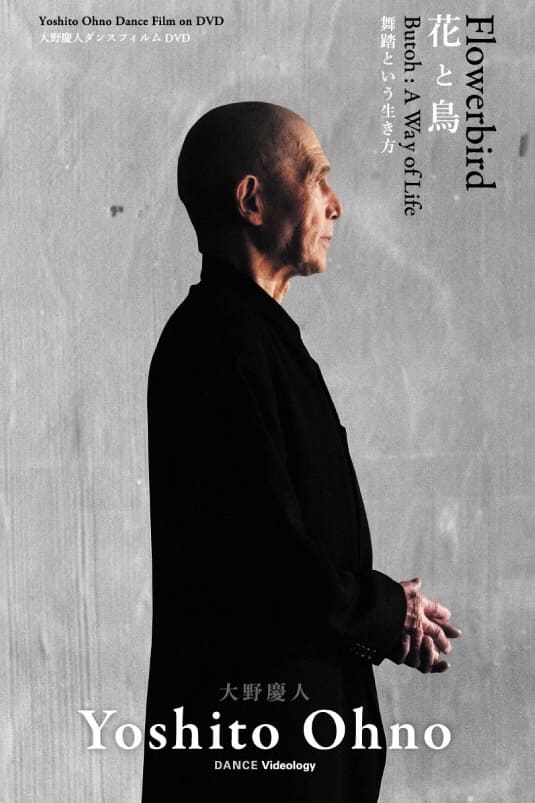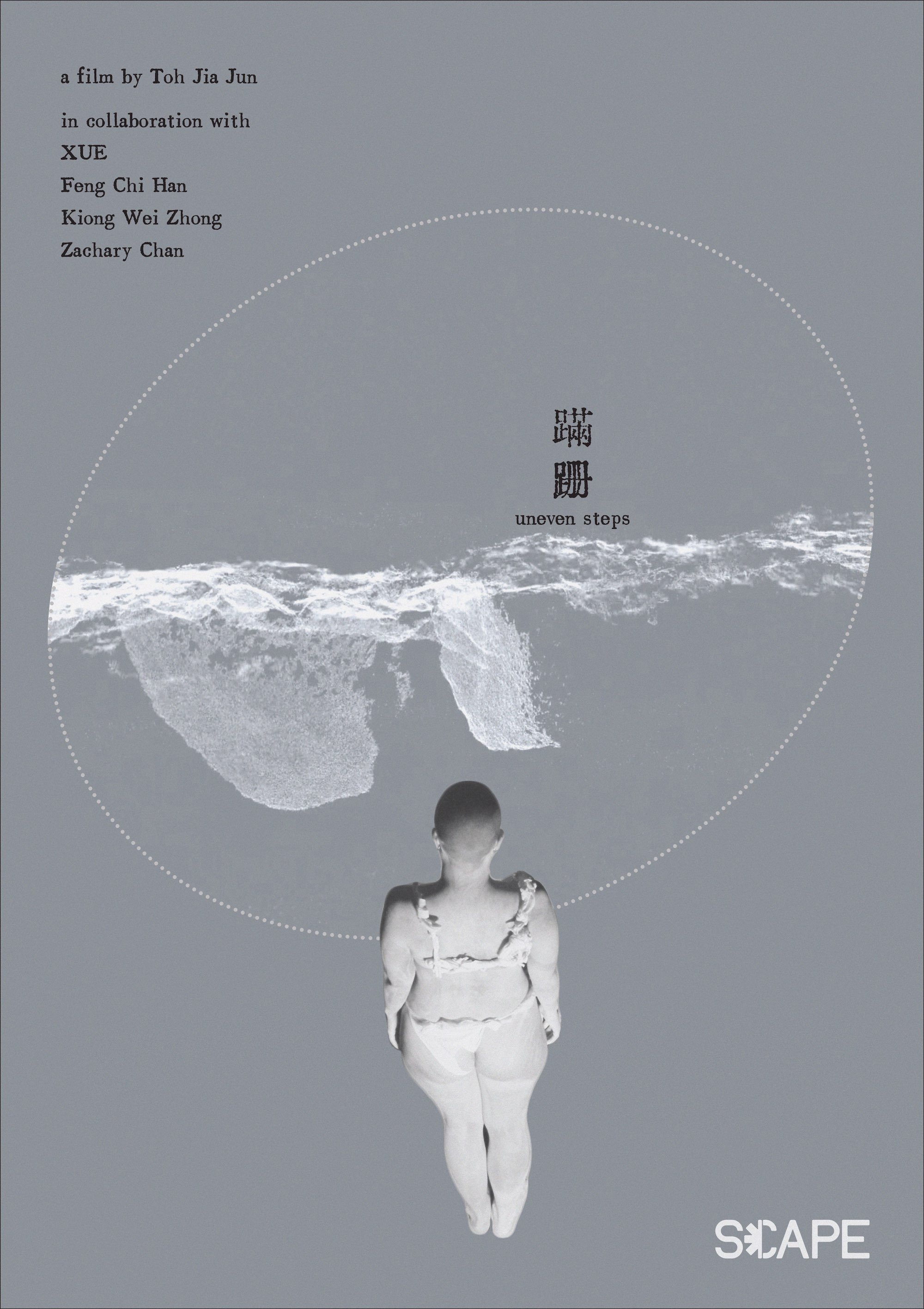
Uneven Steps charts the Butoh body as it moves, struggles and convulses in its tussle with pain. It moves to connect, yearning to dissolve its suffering, towards a newfound catharsis.
Social & External
Butoh body
A woman washes up on a beach and embarks on a surreal journey, encountering others and fragmented versions of herself in a quest for identity.
A and N, a couple of peasants create an informal metallurgy workshop in the outskirts of Bogotá in the hope of a better life. The social, environmental and organic consequences they must endure in order to adapt to the industrial capitalism that storms Latin America affects dramatically their relationship and their history.
BYE (AJÖ), a new dance film, is choreographed and directed by acclaimed Swedish choreographer Mats Ek. " About a woman (Sylvie Guillem) who takes leave of a certain stage in her life. It is a conversation that she has with herself that leads to new experiences.
A film essay that intertwines the director's gaze with that of her late mother. Beyond exploring mourning and absence as exclusively painful experiences, the film pays tribute to her mother through memories embodied by places and objects that evidence the traces of her existence. The filmmaker asks herself: What does she owe her mother for who she is and how she films? To what extent does her film belong to her?
HE, the third work in the ongoing collaboration between Rouzbeh Rashidi and actor James Devereaux, is a troubling and mysterious portrait of a suicidal man. Rashidi juxtaposes the lead character’s apparently revealing monologues with scenes and images that layer the film with ambiguity. Its deliberate, hypnotic pace and boldly experimental structure result in an unusual and challenging view of its unsettling subject.
Self Decapitation is a Janus-headed self-portrait by Rouzbeh Rashidi and Maximilian Le Cain in which death and desire each take possession of this film in two parts. The ambiguities of inhabiting a human body are conjured by way of film technology in its faults, faulty memories and false promises. There is no escape from its haunting – except perhaps to haunt it in turn…
A tale of people unfolds under the night sky. These doomed couples and lost individuals begin journeys and attempt to find resolution in their lives. Love is observed from a distance, sadness is in the air. With little sympathy for the loss and destruction caused to the characters, the stories progress and become neatly woven into a minimalistic portrayal of modern life.
TRAILERS unites the most personal and experimental aspects of underground filmmaking with a scope that is as cosmically vast as a science fiction epic. Rashidi’s ongoing exploration into the nature of cinema sees a group of characters adrift in space, each locked into their own sexual rituals while a cataclysm of universal proportions unfolds. Humanity has become a mysterious burlesque show for alien eyes: the gaze of the film camera. This visionary spectacle uses multiple formats and visual textures in weaving an erotic anti-narrative suspended in its own space and time.
An exiled magician finds an opportunity for revenge against his enemies muted when his daughter and the son of his chief enemy fall in love in this uniquely structured retelling of the 'The Tempest'.
X-ray images were invented in 1895, the same year in which the Lumière brothers presented their respective invention in what today is considered to be the first cinema screening. Thus, both cinema and radiography fall within the scopic regime inaugurated by modernity. The use of X-rays on two sculptures from the Bilbao Fine Arts Museum generates images that reveal certain elements of them that would otherwise be invisible to our eyes. These images, despite being generally created for technical or scientific purposes, seem to produce a certain form of 'photogénie': they lend the radiographed objects a new appearance that lies somewhere between the material and the ethereal, endowing them with a vaporous and spectral quality. It is not by chance that physics and phantasmagoria share the term 'spectrum' in their vocabulary.
Egglantine loves salt on her eggs. Eggbert prefers pepper. Who blinks first in this playful Easter ritual?
Experience a mystical journey through nature performed by a movement artist. Felix faces the whirling challenges of his inner turbulence with an emotionally charged dynamic, delicate strength, graceful dignity, as well as ecstatic devotion. Behold the fire dancer in the night.
Born from steel and glass Kino Kopf is created by two inventors. They are assembled by their mother, a nurturing artist, and their Father a greedy entrepreneur. Kino Kopf is the first of its kind a sentient humanoid VHS camera. They are given a life by their mother but presented to the world by their father. Kino Kopf is the next big sensation and spurs a technological revolution. They are soon forgotten and alone as new models surpass them. Kino Kopf is left alone to contemplate if they ever had a soul, as visions of an electric cowboy dance through their dreams.
In this mesmerizing experimental film, a Stephen King television movie is compressed and transformed through hypnotic black and white collage animation that meticulously reconstructs and reshapes its supernatural drama to an eerie and profound effect.
DRIFT is a collaboration started in 1991 between visual artist Leah Singer and musician and poet Lee Ranaldo of Sonic Youth. DRIFT is an immersive sonic/visual environment consisting of music, sounds and texts by Ranaldo in response to two 16mm analytical film projectors performed in real time by Singer. Much as a DJ scratches a vinyl record, Singer manipulates her films in a live improvisation with Ranaldo's guitar, poetry and soundscapes.
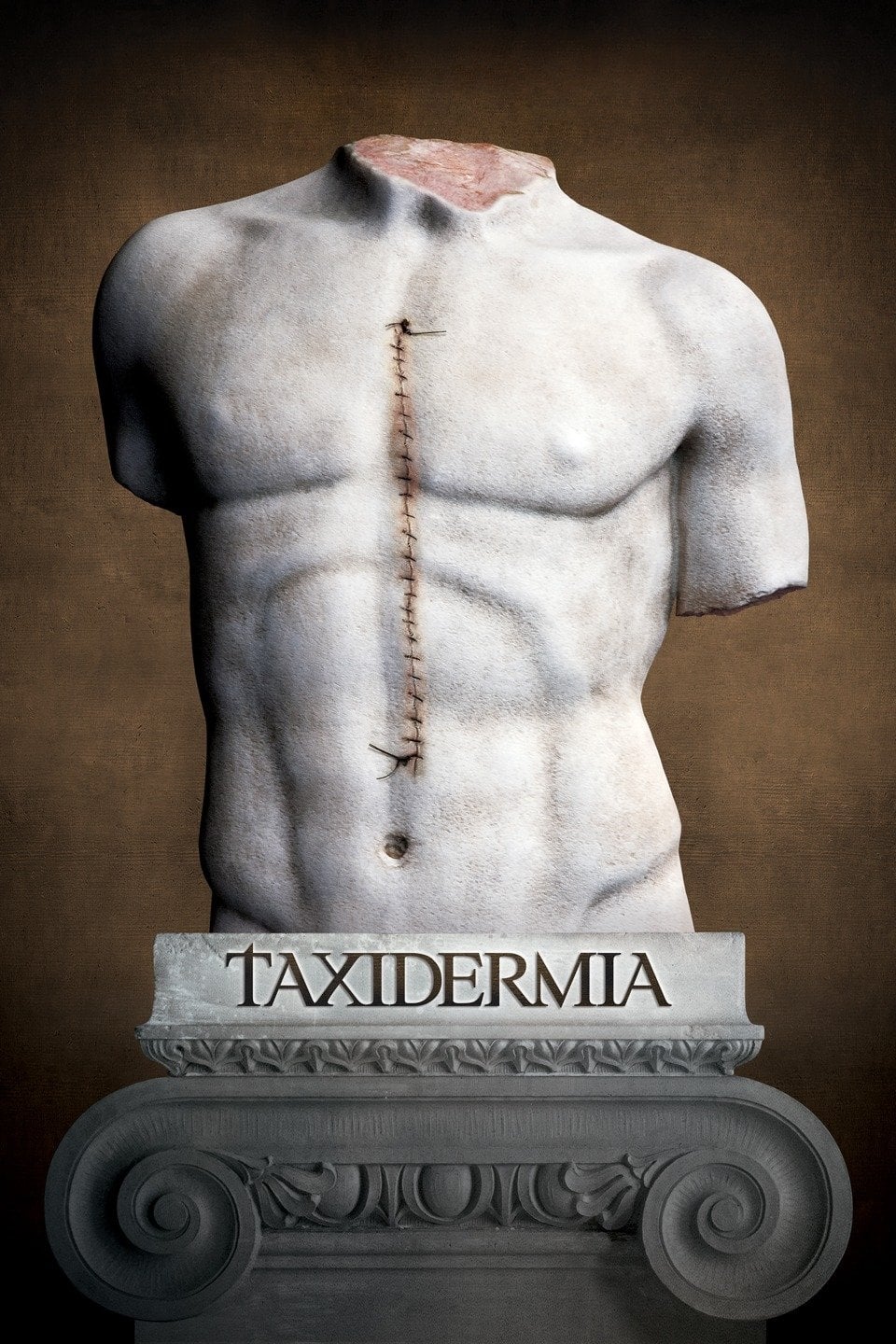
Set over three generations and beginning with a sexually frustrated orderly during WWII who relieves his tensions in the most outlandish, gross ways. The result of his liaison is a glutton who grows up to be a champion speed eater. He produces a child who becomes obsessed with taxidermy.
An experimental short film that follows a man who arrives home alone during the holidays after a long day of work. Finding himself consumed by his loneliness he looks for a way to escape.
A comic study of 20th-century history, reconstructing the life of writer, creator and professional prisoner Tulse Luper. Born in 1911 Newport and last heard of in 1989, Luper’s life is pieced together from the evidence found in 92 suitcases scattered across the globe. In the first of three parts, we follow Luper through three distinct episodes: as a child during the First World War; as an explorer in Mormon Utah; and as a writer in Belgium during the rise of fascism.
After finding out that her husband, Rudi, has a fatal illness, Trudi Angermeier arranges a trip to Berlin so they can see their children. Of course, the kids don't know the real reason they're visiting -- and the catch is, neither does Rudi...