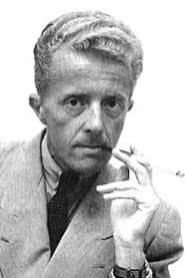
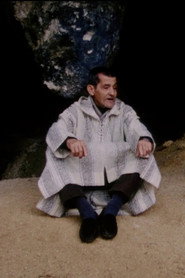
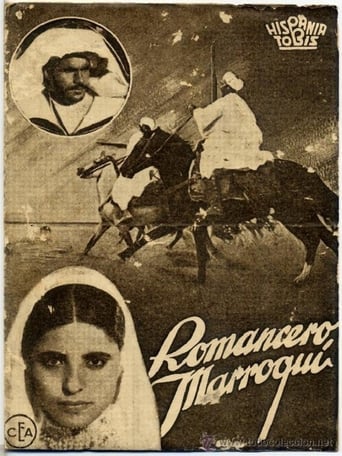
Made in the sunset years of Paul Bowles’ life, the film sees the eccentric author and composer reminisce on how he ended up in Morocco.
Social & External
Self
Seven strangers are interviewed to talk about the relationship they have with their mother.
A scientific expedition travels to an alternative Earth in hope of finding a new home for humanity, which has destroyed its own planet. But is it even possible to escape old patterns?
In her attempt to escape her past, Huiju relocated to the UK over 11 months ago. However, even after moving to a new country, she found that her nightmares from Korea continued to haunt her. Determined to move forward, she made the decision to confront her memories head-on in a very contemporary way, using dating apps to push the boundaries she had set due to her sexual trauma.
A young woman of the Tarahumara, well-known for their extraordinary long distance running abilities, wins ultramarathons seemingly out of nowhere despite running in sandals.
The T.N.P., the Théâtre National Populaire, an important experimental theater directed by Jean Vilar. Franju combines sequences from theatrical performances with documentary images, creating links and confrontations between theater and the real world.
Denis Lavant reads long passages from Luis Buñuel's semi-autobiographical "My Last Sigh". From this text, without film excerpts, Laurence Garret travels in the footsteps of Buñuel, from Calanda to Zaragoza, Madrid to Toledo, Spain to Mexico.
“An Untitled Film” by George Alshevskij-Jones is a short documentary/visual essay about the struggles of moving to seek a better future in a different country. The research for the film was done by observing and talking to people who have left their home country. It doesn’t matter what country a person has left and in which country he has found himself, the general experiences and emotions stay the same. The most important message that I want the film to convey is that everything is possible and home is not a place on a map, but a place in the soul of each person that I spoke to. The unconventional way of showing many people as one is not just a way of making the film more convenient to create, but a way to fit a much information into one consistent image, that the audience is more likely to understand and perceive as the author intended it. My own experience blended in with the experiences of others.
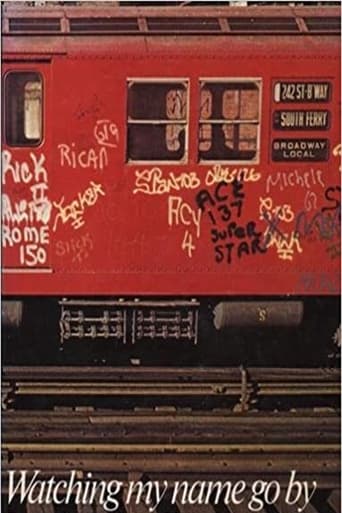
Watching My Name Go By is a 1976 BBC documentary on the birth of graffiti in New York City, and the fight to both prevent it, and expand it's artistic value. In 'Watching my name go by' kids in New York have a unique kind of occupation - sitting on the subway stations ' watching my name go by'. Eleven to 17-year olds compete to see how many times they can 'get their names up ' in a colorful way - a kind of graffiti cult game which has its own rules and regulations. It's illegal and dangerous-some New Yorkers think it's a kind of ' art others think it's disgusting.
Stop for Bud is Jørgen Leth's first film and the first in his long collaboration with Ole John. […] they wanted to "blow up cinematic conventions and invent cinematic language from scratch". The jazz pianist Bud Powell moves around Copenhagen -- through King's Garden, along the quay at Kalkbrænderihavnen, across a waste dump. […] Bud is alone, accompanied only by his music. […] Image and sound are two different things -- that's Leth's and John's principle. Dexter Gordon, the narrator, tells stories about Powell's famous left hand. In an obituary for Powell, dated 3 August 1966, Leth wrote: "He quite willingly, or better still, unresistingly, mechanically, let himself be directed. The film attempts to depict his strange duality about his surroundings. His touch on the keys was like he was burning his fingers -- that's what it looked like, and that's how it sounded. But outside his playing, and often right in the middle of it, too, he was simply gone, not there."
Artistic director of the National Theater Eric de Vroedt writes and directs a performance about his own mother Winnie, who passed away in 2020. This piece, titled The Century of My Mother, is a family story about the migration from the Dutch East Indies to the Netherlands. It is De Vroedt's way of examining the relationship with his mother and not having to say goodbye to her yet: 'I can let her live on stage, but when the curtain falls, when the play is completely finished, then she is really dead'.
Made in Miami is the story of Camila's journey from arriving in Miami from Cuba as a kid to finding her voice and releasing her debut album. The film explores how generations of strong women have shaped the Cabello family and inspired Camila to become the artist she is today.
In a conservative Armenian family a 16 years old Karine dreams to become a veterinarian, but her family, especially her father, who is a well-known dog-fighter, is against it. They say it’s not a proper job for women. Karine needs to choose: to follow her dreams or to listen to her patriarchal family.
"What could be more unsettling than a man close to death whose profound arrogance drives him relentlessly to hang onto both his power and his writing, to the bitter end?" In the twilight of his second seven-year term, François Mitterrand was alone. Ravaged by illness and abandoned by a large majority of the Socialist Party, who would not forgive him for the disastrous outcome of the March 1993 elections, the Head of State was preparing to tackle a second round of cohabitation with the right wing. However a series of unexpected tragedies and revelations would arise, casting a shadow over the end of his reign…
Robert Kongaika runs from his family to join the military and becomes the first Tongan US Air Force Colonel. This is the true story of the island traditions, faith, and family that made him into the father he is today.
The first of two documentaries about Ingmar Bergman produced to mark his 70th birthday. Includes behind the scenes "home movies" from Bergman's personal archive, interviews with Bergman recorded over his 40 years in the film industry and passages from his autobiography read by Max von Sydow and Bergman himself.