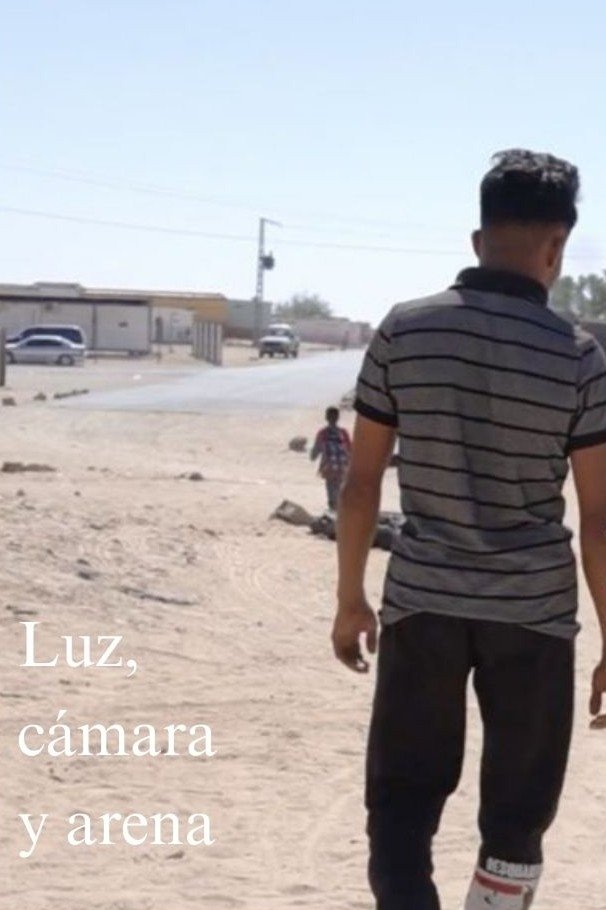
A short film that portrays the lives of two students from the Abidin Kaid Saleh Film School, located in the Sahrawi refugee camps
Social & External
A portrait of the diverse opinions of Chicagoans as they reflect on the general state of affairs in America, the war in Vietnam, social and racial conflict, freedom and personal liberty, happiness, and social justice. Ratamata was made by future Tom Palazzolo collaborator Kreines when he was 16 years old, and was an award winner at the Young Chicago Filmmakers Festival.

Jérôme was sexually abused as a child by a priest. In a deeply personal film, he tries to search for clues in his memories and come to terms with the complicity of his former social environment.
Documentary on gymnasiums in Philadelphia, Pa. specializing in training kids to box. By learning boxing and competing in tournaments, kids are helped in staying out of trouble
This film documents the youth groups personalities, interests and what they like to do for fun. It also highlights important and relevant issues facing young travellers and their peers in East Cork and Cork City. A film the by the Connect Youth Project. Directed and filmed by the members of the Connect Youth Project in East Cork.
The moving story of Carlo Acutis, a young British-Italian amateur computer programmer who died in 2006, aged 15, as a result of leukemia. However, even though he is no longer here, to this day Carlo continues to be a great symbol of strength among young people. The documentary brings together a series of reports from people who entrusted themselves to the intercession of the boy, beatified by the Catholic Church in 2020, and had their lives transformed.
A unique visual interpretation of Tyler, the Creator's latest album, Chromakopia.
A family with five children flees the war raging in their home village on the Russian border. They end up in Mshanets, a farming village on the other side of the country, remote and unknown. Here the family starts building a new home. At the same time, two documentary makers come to the village, looking for a story. In the Lymar family they find the ideal characters for their film. But one day, when the renovation of their house is almost finished, the family disappears. The filmmakers go in search of their characters and along the way they try to find an answer to the question: what does a person need to feel at home?
Young people discuss life problems such as moving into their first apartment, but also how to shape their own future.
Amid December’s festive glow, refugees remain hidden in forests along the Poland-Belarus border. This powerful documentary gives voice to their silent cries.
Refuge(e) traces the incredible journey of two refugees, Alpha and Zeferino. Each fled violent threats to their lives in their home countries and presented themselves at the US border asking for political asylum, only to be incarcerated in a for-profit prison for months on end without having committed any crime. Thousands more like them can't tell their stories.
In the Gaza refugee camp of Jerash, Palestinians face the critical issue of lacking identification documents. This situation undermines their rights and hinders access to essential services and opportunities.
The Nomad Garden is an ode to the impossible. A young Sahrawi refugee shows how he grows organic vegetables and herbs in one of the most inhospitable places on Earth, overcoming challenges like the lack of water, extreme temperatures and a barren soil.
On Our Doorstep delves deep into an aspect of the refugee crisis that rarely reached the press. With NGOs being blocked by red tape and the absence of any positive action by French or British authorities, the film is a behind-the-scenes look at the unprecedented grassroots movement that rose to aid the refugees in Calais, and the community that sprang up there, before it was forcefully demolished. This is the story of what happens when young and inexperienced citizens are forced to devise systems and structures to support 10,000 refugees; and are left unguided to face the moral and emotional conflicts, blurred lines and frequent grey areas of giving aid to vulnerable people. People who do not want to be there. It questions whether the aims of the volunteers were met, and whether these aims ultimately served the refugees' needs.
A Foot in the Door tells the story of Kindergarten to College (K2C), the first universal children’s savings account program in the United States. Launched by the City and County of San Francisco, the program automatically provides a college savings account to children when they start kindergarten.
An epic exploration of the Czechoslovak New Wave cinema of the 1960s and 70s, structured around a series of conversations with one of its most acclaimed exponents - Closely Observed Trains director Jiří Menzel.
'Migrating Fears' is a docu-drama on the sentiments around migration, both from the side of the refugees and asylum-seekers as well as from the perspective of these segments of society that appear hesitant towards migration. Trying to understand 'migrating fears', the film follows Solon Solomon, a law professor, in his London quests and interactions with refugees, politicians and psychologists, as he comes to see the fear in the refugees' eyes and the worries of the locals, ultimately creating dialogues between the two groups.
After crossing 11 countries irregularly to seek asylum in Canada, Peggy, Simon and their three children are waiting for the hearing that will determine whether they get refugee status or not. Having fled political repression in the Democratic Republic of the Congo, the family tries to rebuild a peaceful life in Montreal, in spite of the constant threat of deportation. Between ghosts from the past, hopes for the future, a complex legal maze and seemingly endless trial, the film delves into the struggle of the Nkunga Mbala family to remain in Canada. Offering unprecedented access to their hearing before the Immigration and Refugee Board, the film unveils the opaque process of claiming asylum in Canada.
Having suffered incest from her father from the age of eight to the age of twelve, at forty-five, Beatrice filmed, with two cameras, a long meeting with her mother to try, with the viewer, to understand their story.