Social & External
His signature roles were the edgy North German characters: Jan Fedder was one of the most popular actors in the North. He was one of the most popular actors, a real guy with rough edges and a lot of heart: Jan Fedder. He was already on stage as a child and had his first acting lessons at the age of 13. He knew early on what he wanted: to become an actor. Antje Althoff's film traces his life and career, showing his incorrigible nature, an endearing symbiosis of a big mouth and a similarly big heart.
Sean Penn is almost a living legend. His filmography paints a picture of an 'other America': the lower class, the oppressed and the outsiders. Whether as an actor or director, he turns all the great myths upside down.
Elijah Jamal Balbed grew up in Washington DC in the midst of one of its most difficult eras, as its identity was being tested. As the city changed around him, his budding career as a musician exposed him to the people and music providing a voice and an outlet to the people of DC. Now tasked with preserving and sharing that tradition, Balbed reflects on balancing that responsibility with creating a musical identity of his own.
The story of Tasmanian-born actor Errol Flynn whose short & flamboyant life, full of scandals, adventures, loves and excess was largely played out in front of the camera - either making movies or filling the newsreels and gossip magazines. Tragically he was dead from the effects of drugs and alcohol by the time he was only 50 & the myths live on. But there is another side of Flynn that is less well known - his ambitions to be a serious writer and newspaper correspondent, his documentary films and his interest in the Spanish Civil War and Castro's Cuba
In a quiet village in southern China, Fang Xiuying is sixty-seven years old. Having suffered from Alzheimer's for several years, with advanced symptoms and ineffective treatment, she was sent back home. Now, bedridden, she is surrounded by her relatives and neighbors, as they witness and accompany her through her last days.

Achour is thirty. Night and day, he walks. Rebellious soul, he crisscrosses Alger and its neighborhoods, stays at friends' houses and often leaves the city to meet the nearby montain in Kabylia, his alter-ego. In this environment, marked by war and terrorism, his resistance continues, mobile and ascending. Algerian hardcore-punk musician, Achour once screamed his anger against the country's regime and sang "Anarchytecture". But the movement died down, friends went their separate ways. His Facebook wall became his notebook, his window open to the world. It represents a scream aimed towards the echo of the mountains, between virtual wall, infinite facades of large complexes and the strata of mineral cliffs. A scream comes back at us.
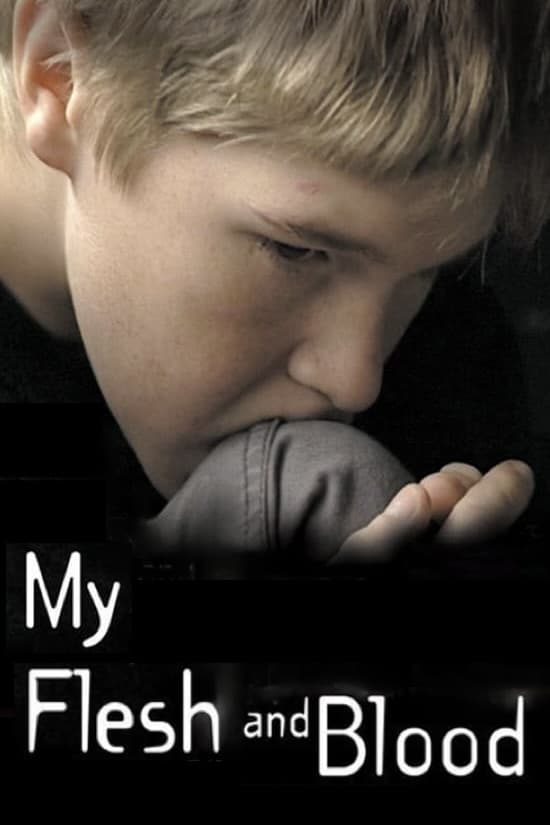
My Flesh and Blood is a 2003 documentary film by Jonathan Karsh chronicling a year in the life of the Tom family. The Tom family is notable as the mother, Susan, adopted eleven children, most of whom had serious disabilities or diseases. The film itself is notable for handling the sensitive subject matter in an unsentimental way that is more uplifting than one might expect.
Hollywood is a hot spot for celebrities, and tour guide Scott Michaels (E!'s "20 Most Horrifying Hollywood Murders," FindADeath.com) knows their, well, haunts. DEARLY DEPARTED is an all-access tour of the "backlots" of L.A. - locations where the most infamous murders, suicides and bizarre crimes involving A-listers have taken place. The Viper Room, the site where "The Black Dahlia" was discovered, and dozens more legendary spots are explored in this funny and equally shocking ride into L.A.'s seedy underground.
Like a visual elegy, My Memory Is Full of Ghosts explores a reality caught between past, present and future in Homs, Syria. Behind the self-portrait of an exsanguinated population in search of normality emerge memories of the city, haunted by destruction, disfigurement and loss. A deeply moving film, a painful echo of the absurdity of war and the strength of human beings.
A group of artists settle in a swamp on the banks of the Indre River. Meanwhile, a voice describes a utopian world.
In 1609, Henry IV sent Inquisition judge Pierre de Lancre to the French Basque Country to investigate witchcraft. In the trials, 80 people were sentenced to death at the stake. Between the 15th and 17th centuries, a total of between 40,000 and 60,000 people fell victim to such waves of persecution in Europe. How can this phenomenon be explained?
The viewpoints of women from a country that no longer exists preserved on low-band U-matic tape. GDR-FRG. Courageous, self-confident and emancipated: female industry workers talk about gaining autonomy.
Four experts in different areas such as religion, philosophy and thanatology, share their wisdom when it comes to death.
Following the death of her brother, filmmaker Robie Flores returns to her hometown Eagle Pass on the Texas/Mexico border, wanting to turn back time. She collides with unruly experiences of adolescence – quinceañeras, Rio Grande river excursions, teen makeovers and beyond – that invite her to soak up the details of the home her brother adored and she ignored. What emerges is a playful dance between a personal and collective coming-of-age portrait of kids on the border and Robie herself as she rediscovers the possibilities of joy in the aftermath of grief.
It is a fetish, a mantra, a secret religion to modern man: work. In times of the financial crisis and massive job reductions, this documentary movie questions work as our 'hallow' sense in life in a way that both humors and pains us.
The oldest Quebecois Benedictine convent open its gates to a documentary filmmaker for the first time. Observed up close, life behind its walls is busier than one would expect. About twenty cloistered nuns, most of them over 70, share their daily life with diligence and humor. A contemplative portrait of a community of sisterhood and solidarity emerges, punctuated by prayer, work and games evenings.
Filmmaker Froukje van Wengerden’s 86-year-old grandmother shares a powerful memory from 1944, when she was just 14. As her story unfolds, we see a group of contemporary 14-year-old girls. Their procession of portraits permits the spectator to see simultaneously forward and back, into the future and towards the past. A miraculous testimonial that uses eye contact to focus the viewer inward and evoke unexpected emotions.