Social & External

Unknown Role
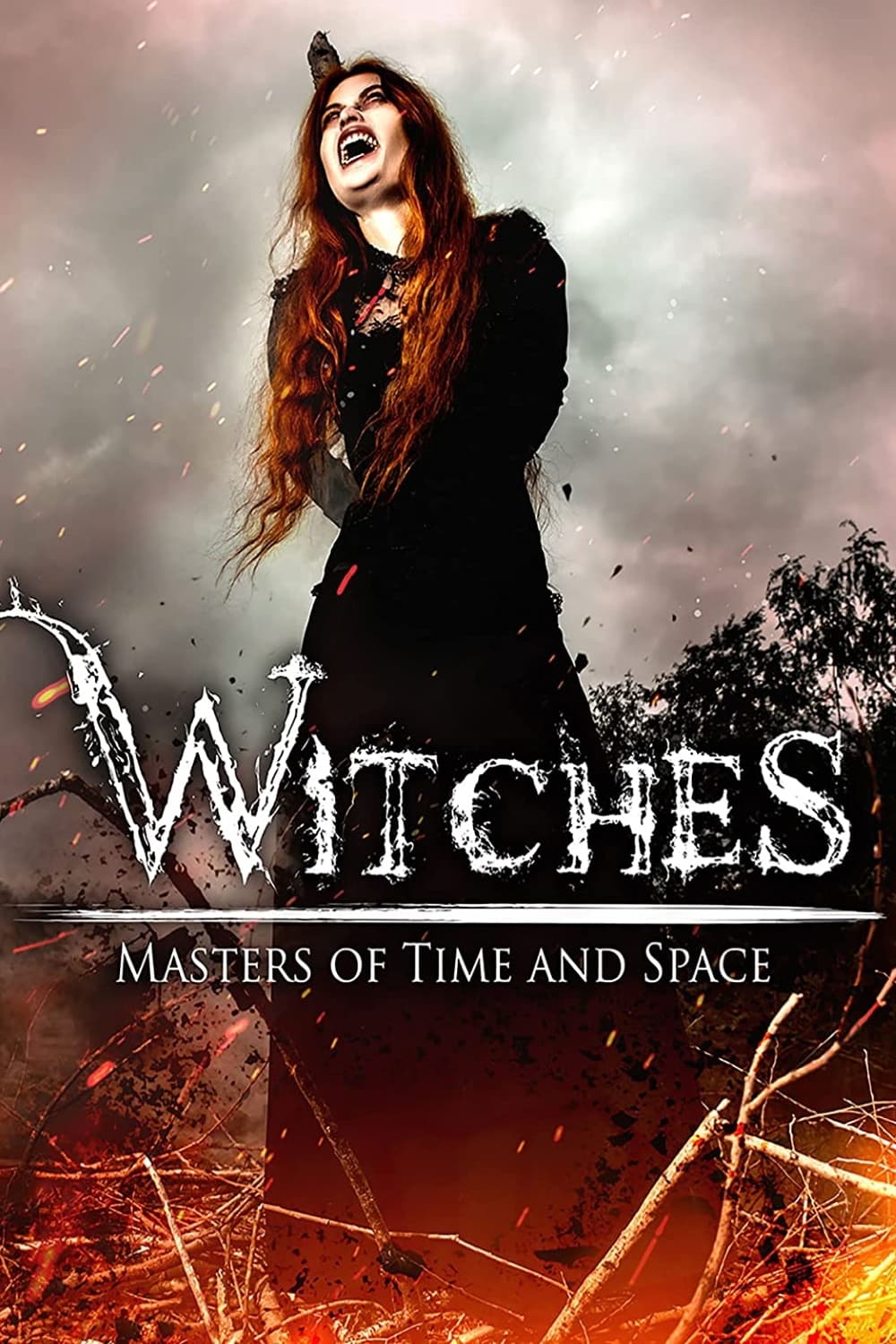
In 1609, Henry IV sent Inquisition judge Pierre de Lancre to the French Basque Country to investigate witchcraft. In the trials, 80 people were sentenced to death at the stake. Between the 15th and 17th centuries, a total of between 40,000 and 60,000 people fell victim to such waves of persecution in Europe. How can this phenomenon be explained?
This short documentary depicts the search, discovery and authentication of the only known Norse settlement in North America - Vinland the Good. Mentioned in Icelandic manuscripts and speculated about for over two centuries, Vinland is known as "the place where the wild grapes grow" and was thought to be on the eastern coast between Virginia and Newfoundland. In 1960 a curious group of house mounds was uncovered at l'Anse aux Meadows in northern Newfoundland by Drs. Helge Ingstad and Anne Stine Ingstad of Norway. Added to the United Nations World Heritage List, l'Anse aux Meadows is considered one of the most important archaeological sites in the world.
The Last Jews of Baghdad takes a historical and personal look at the persecution, torture, escape and exodus of over 160,000 Iraqi- Jews between the years 1940 through 2003. Hear from the survivors the real reasons why they left their beloved homeland of over 2500 years and if they will ever return.


Amidst a mostly Catholic community, a small tiny Anglican church offers more to the community of Placentia than people may think, and holds many connections and history to the rest of the world.
Packed with drama, high emotions and cliff-hanger moments, Australia Says Yes is the intimate and personal history of struggle and perseverance that propelled Australia to say Yes to marriage equality. The film shows how a group of determined individuals fought tirelessly against unjust laws that treated LGBTIQ people as second-class citizens, creating a movement that saw them go from criminals to legally equal over the course of five decades.
Hirayama Jirou has lost his mother in the Great Kanto Earthquake and now runs a soba stall with his father. He decides to join the crew of the famous ocean liner Hikawa Maru and finds work cooking in the ship's galley. Through his eyes, the film explores the ship's 85-year history.
“Shellmound” is the story of how one location was transformed from a sacred center of pre-historic cultures to a commercial mecca for modern people. What began as a Native American burial ground three thousand years ago, was transformed first into an amusement park, and later an industrial age paint factory. Now, the tainted ancient soil sits beneath the glittering lights of Banana Republic, Victoria’s Secret, and the AMC movie theaters. “Shellmound” examines the decisions made during the recent toxic cleanup, excavation, and construction of the Bay Street mall through the eyes of the city of Emeryville, the developer, the archaeologists, and the native Californians who worked on the site.
In 1900, the eyes of the whole world are on Paris. The World's Fair welcomed 50 million amazed visitors, and the city celebrated itself in a glamorous era. This period went down in history as the "Belle Époque." Elaborately restored and colorized historical photographs bring to life the exciting life in Paris between the end of the 19th century and the beginning of World War I in 1914. Bicycles, cars, airplanes, moving pictures, newly founded film studios, revolutionary composers and painters, avant-garde ballet performances, fashion houses, summer resorts on the Atlantic coast – life was intoxicating. People celebrate in the variety shows, cabarets, and revue theaters of Paris. Moulin Rouge, Folies Bergères, Bal Tabarin—in Paris, the nights are long and life is too short to sleep through. It is a dance on the volcano, given the political developments in the world.
The Pittsburgh History Series is an ongoing series of hour-long documentaries that highlight various parts of our city's history. Since 1988, these documentaries have captivated local audiences by mixing memories, old films, [mementos], home movies, snapshots and new interviews.
A documentary that traces the life and times of Bhagat Singh, a committed Marxist who most ably exemplified the spirit of revolutionary resistance against British imperialism in undivided India.
A biopic of Napoleon Bonaparte, tracing the Corsican's career from his schooldays (where a snowball fight is staged like a military campaign) to his flight from Corsica, through the French Revolution (where a real storm is intercut with a political storm) and the Terror, culminating in his triumphant invasion of Italy in 1797.
An extraordinary look at the life of Uri Geller, the man famous for bending spoons and reading minds, told through exclusive interviews with the man himself.
The film is dedicated to the upcoming 150th anniversary of the birth of Kazakh writer and public figure Akhmet Baitursynov next year. Filming began in Almaty in November.
The film covers the heroic defence of the Brest Fortress, which was attacked during the first strike of German invaders on June 22 1941. The story describes the events of the first days of the defence, including the three main resistance zones, headed by the regiment commander, Pyotr Mikhailovich Gavrilov, the commissar Efim Moiseevich Fomin and the head of the 9th frontier outpost, Andrey Mitrofanovich Kizhevatov. Many years later veteran Alexander Akimov again recalls the memories of the time, when he, then a 15 year old Sasha Akimov was deeply in love with the beautiful Anya and suddenly found himself in the middle of the bloody events of war.
An insight into the life and works of Michel Foucault and how his work on Knowledge and Power still has an impact on daily life. This is applied practically to the real world of SOAS University and the online world of Social Media. Presented by Merle Tschirschnitz, Kiran Thomas and Adam Brocklesby
Explore the tragic truth about the massacre at the 1972 Olympic Games in Germany. Through interviews with key people such as the families of slain Olympians, German investigators and an anonymous perpetrator.
A meticulous chronicle of the evolution of the Algerian national movement from 1939 until the outbreak of the revolution on November 1, 1954, the film unequivocally demonstrates that the "Algerian War" is not an accident of history, but a slow process of suffering and warlike revolts, uninterrupted, from the start of colonization in 1830, until this "Red All Saints' Day" of November 1, 1954. At its center, Ahmed gradually awakens to political awareness against colonization, under the gaze of his son, a symbol of the new Algeria, and that of Miloud, half-mad haranguer, half-prophet, incarnation of Popular memory of the revolt, the liberation of Algeria and its people.
The Hopperstad stave church is a marvelous, iconic architectural statement from the fjords of Norway. Replicating the "stavkirke's" spiritual power and beauty became a quest for G.D. "Guy" Paulson of Fargo, ND. His Hopperstad Stave Church Replica is a jewel for the city of Moorhead, MN. Paulson's dream captured the imaginations of the experts, craftsmen, artists, and volunteers who helped him. It is a tribute to those who have gone before and an inspiration to those yet to come.