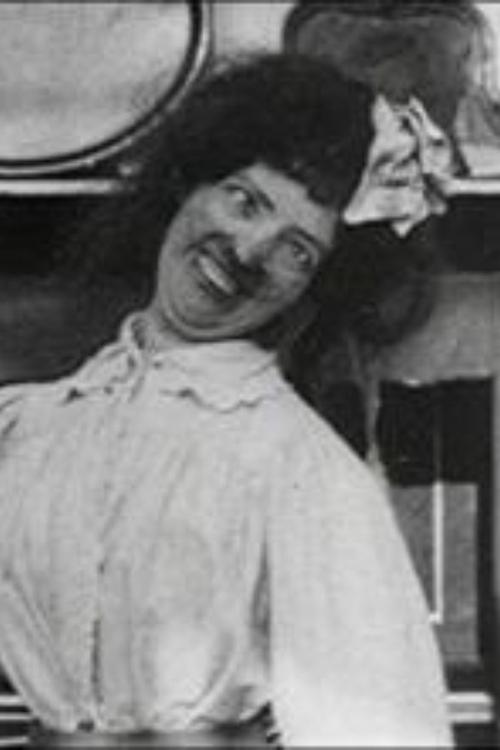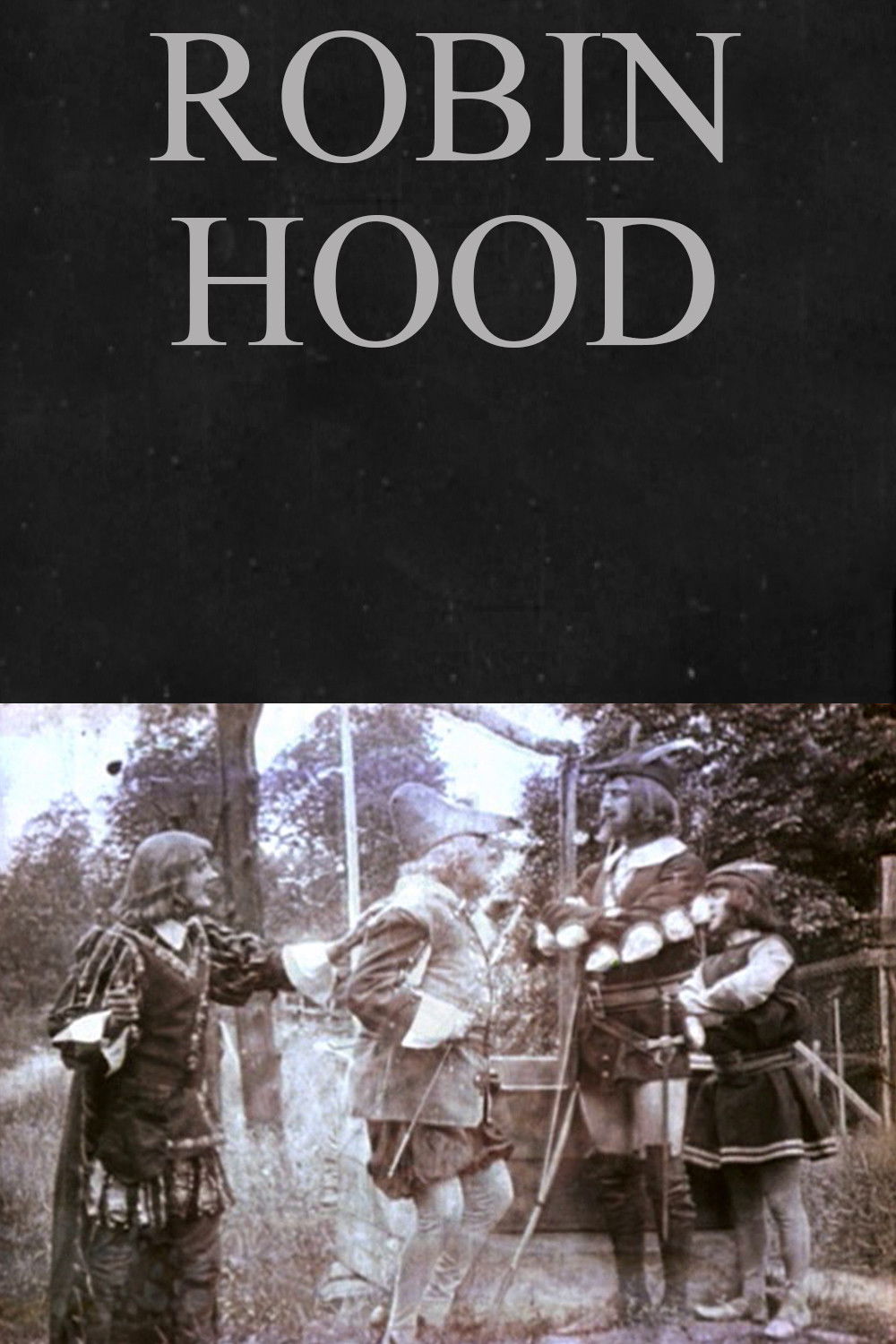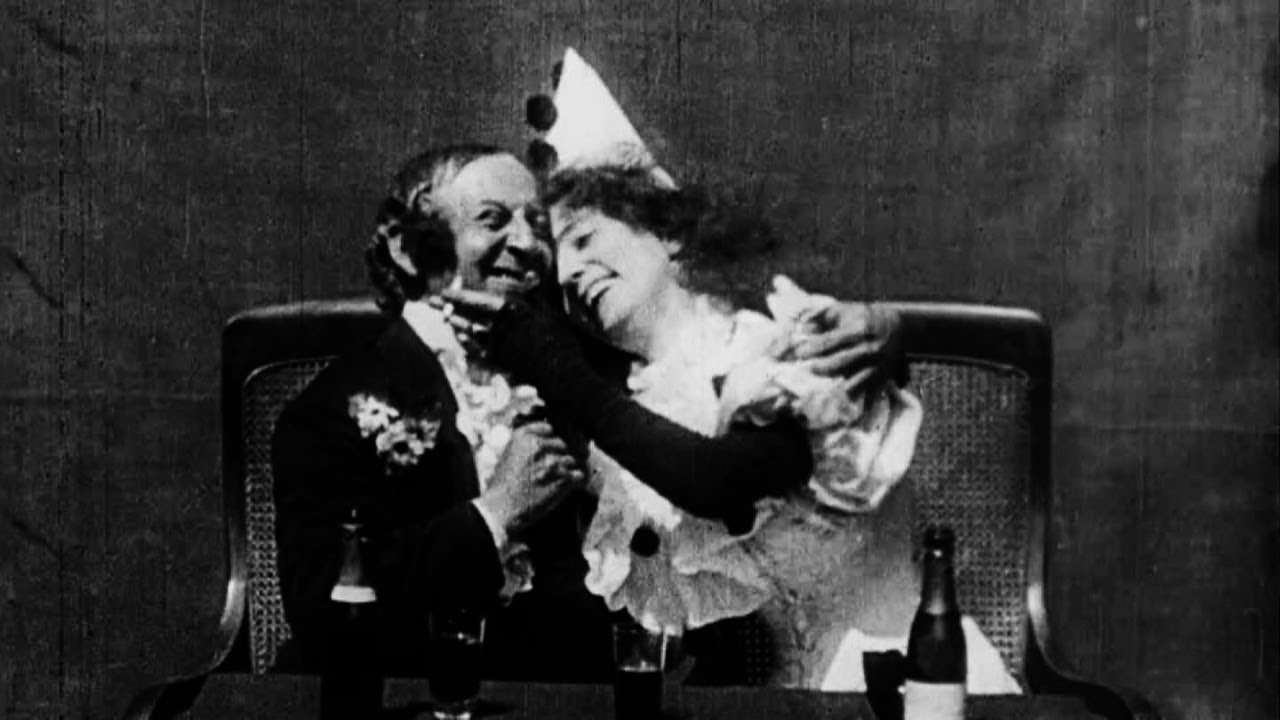
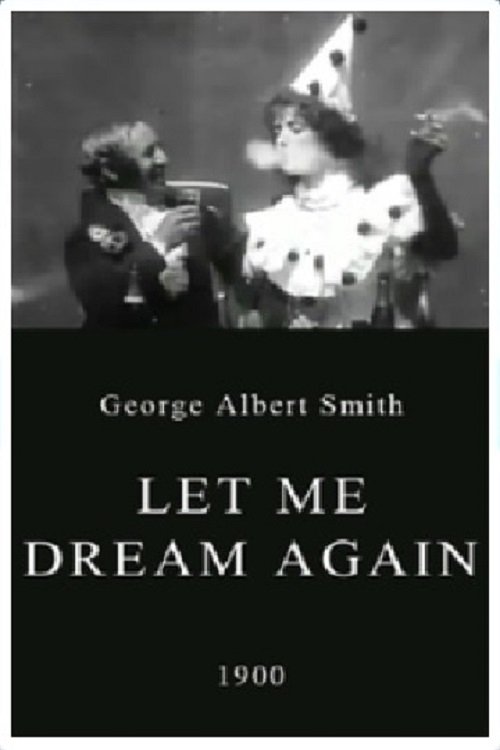
Possibly the first film to utilize the technique of focus pulling. A man kisses a beautiful and lively woman, then the image blurs and dissolves into a clear image of the man waking up to his nagging wife.

Social & External
Young woman
Man
Juma is a poor fisherman who loves telling tales. Amina is the girl who loves to hear his stories. They long to be together, but Amina's father, Ali, wants a better life for her. Ali thinks that he has found this in Yustus, a rich but self-serving young suitor.Juma must put everything on the line to save their love, but he must sacrifice more than he bargained for in order to succeed.
Middle-class suburbanites Larry and Kitty grow bored with their lives and respective marriages. Although each always found the other's manner grating, they fall in love when thrown together--without their spouses--on vacation. On returning home they try to break things off, only to grow closer. A holiday together will finally settle whether they should end their marriages.
Although Gainsbourg and Birkin had appeared in a string of films since their magnetic collision in Pierre Grimblat’s Slogan, Melody was a bit of diversion from their collaborations since it’s a series of interwoven videos inspired by the Gainsbourgalbum. For '71 it’s a novel concept to bring visual life to an LP, but even more surprising are the short film’s amazing visuals that director Averty crafted using a wealth of video filters, overlays, camera movements and chroma key effects. Averty applies these in tandem with the increasing tone of Gainsbourg’s songs, which more or less chronicle an older man's affair with a young girl. Each song is comprised of steady, sometimes brooding poetic delivery, with refrains timed to the phrase repeats of each song, while Alan Parker’s buzzing guitar accompanies and wiggles around Gainsbourg’s resonant voice. The bass is fat and groovy, the drums easy but steady, and the periodic use of strings or rich vibrato makes this short a sultry little gem.
Mickey walks into the tavern where Minnie is dancing, and begins to dance and play piano himself. Pegleg Pete comes in and treats Minnie badly. Mickey tries to defend her, but Pete steals her away. Mickey, riding Horace Horsecollar, gives chase. He manages to throw Pete off a cliff.
Buster Keaton gets involved in a series of misunderstandings involving a horse and cart. Eventually he infuriates every cop in the city when he accidentally interrupts a police parade.
Gösta Berling is a young and attractive minister. Because of his alcoholism and his daring sermons, he is finally defrocked. He becomes a tutor of countess Marta's stepdaughter and they fall in love. But the countess has a plan of her own.
In order to impress the father of a girl he is keen on, a young man goes to the city in search of work. In his letters home he writes of his various jobs which her imagination expands into much nobler ones than those that he is actually attempting.
Roscoe's wife, tired of his endless drunkenness, reads of an operation that cures alcoholism and has him admitted to No Hope Sanitarium to get the surgery. Roscoe, wanting out, eventually disguises himself as a nurse to effect his escape.
A down on his luck young man makes several attempts at committing suicide but fails them too. He then finds himself becoming more confident through a series of petty adventures, to such an extent that this becomes his undoing.
Al and Roscoe, employees at a gas station, are rivals for Alice. When Buster delivers a wedding gown for Alice and begins modeling it, he is mistaken for Alice and is kidnapped by Al.
Buster and a woman are mistakenly married and her initially unfriendly family begins to treat him nicely when they come to believe he has a large inheritance awaiting him.
When Zhang Hui is told by long-time best friend Xiao Gong that he has a new girlfriend, she is determined to learn new tricks to gain him back. Based on the novel written by Luo Fuman, Everyone Loves Tender Women.
Oswald's country is at war, like many other volunters he joins the army and finds himself soon in the trenches. A short battle leaves him wounded, but at least in the field hospital where his girlfriend is working.
Jerry runs into a dog pound (and right on top of a napping Spike) to escape a rather mangy-looking Tom. To avoid being ripped to shreds, Tom borrows the head of a nearby dog statue. This easily fools the dogs, but not Jerry, and Tom keeps losing his newfound head...
Tom ties up Spike and sneaks into the courtyard of the glamorous Toodles Galore with his bass, hoping to woo her with his song, much to the annoyance of a sleeping Jerry.
Jerry crashes a vase onto Tom's head, which gets Mammy to throw Tom out. Jerry at first revels in his freedom, but soon tires of this, and, under a flag of truce, hatches a plan with Tom.
A library assistant plods through an ordinary life in LA until a chance meeting opens his eyes to the power of creativity and ultimately, love. When this new life and love begin to fall apart, he discovers he has a lot to give. This short film proves that ordinary is no place to be.
Roscoe and Buster give a bullying Strongman the what-for, but after the performance troupe quits it's up to Fatty and Buster to keep the show going.
Two gentlemen battle for the "prize". Things escalate quickly...
Following the defeat of Majin Buu, Son Goku and friends travel to Mr. Satan's newly-opened hotel for an all-you-can-eat banquet, when they are paid a visit by Vegeta's younger brother Tarble. They are informed by Tarble that the terrible brother duo of Abo and Cado have terrorized his planet and are on their way to Earth.
An elderly gentleman in a silk hat sits on a stool in front of a store on the main street of town. He has a telescope that focuses on the ankle of a young woman who is a short distance away. Her husband catches the gent looking. What will the two men do now?
The Flying Train depicts a ride on a suspended railway. The footage is almost as impressive as the feat of engineering it captures. For many years our curators believed our Mutoscope rolls were slightly shrunken 70mm film, but they were actually shot on Biograph’s proprietary 68mm stock. Formats like Biograph’s 68mm and Fox’s 70mm Grandeur are of particular interest to researchers visiting the Film Study Center because the large image area affords stunning visual clarity and quality, especially compared to the more standard 35mm or 16mm stocks.
Early Balkan footage.
First film produced by Laugh-O-Gram Studio, as part of demo reel. This film is not really animated, it just consists of Walt drawing a single frame. Part of the Newman Laugh-O-Grams Series.
An early trick film where a car explodes and body parts fall from the sky. A policeman witnesses and attempts to piece the remains back together.
A man, objecting to being filmed, comes closer and closer to the camera lens until his mouth is all we see. Then he opens wide and swallows camera and cinematographer. He steps back, chews, and grins.
Aymeric runs into Florence, a former coworker, one evening in Saint-Claude in the Haut-Jura. She is six months pregnant and single. When she gives birth to Jim, Aymeric is there. They spend happy years together until Christophe, Jim's biological father, shows up... It could be the start of a melodrama, it's also the start of an odyssey into fatherhood.
Upon waking from the dream of a theater peopled entirely by numerous Buster Keatons, a lowly stage hand causes havoc everywhere he works.
An animated road-movie set across the vast and barren landscape of Australia's Nullarbor Plain.
Will Lockhart arrives in Coronado, an isolated town in New Mexico, in search of someone who sells rifles to the Apache tribe, finding himself unwillingly drawn into the convoluted life of a local ranching family whose members seem to have a lot to hide.
A conflicted youth confesses to crimes he didn't commit while a man and woman aroused by death become obsessed with each other.
Four stowaways get mixed up with gangsters while running riot on an ocean liner.
Set during the early part of his reign, Ivan faces betrayal from the aristocracy and even his closest friends as he seeks to unite the Russian people. Sergei Eisenstein's final film, this is the first part of a three-part biopic of Tsar Ivan IV of Russia, which was never completed due to the producer's dissatisfaction with Eisenstein's attempts to use forbidden experimental filming techniques and excessive cost overruns. The second part was completed but not released for a decade after Eisenstein's death and a change of heart in the USSR government toward his work; the third part was only in its earliest stage of filming when shooting was stopped altogether.
After a military plane crashes outside of a small American town, its cargo — a genetically engineered, sixty-foot-long python — begins stalking and killing the locals.
Following a misunderstanding about Yogi Bear’s whereabouts, Cindy Bear ends up in captivity at a Missouri circus. It’s now up to Yogi and his friend, Boo-Boo, to save her.
A troubled man starts working at a retirement home and realizes its residents and caretakers harbor sinister secrets. As he investigates the building and its forbidden fourth floor, he starts to uncover connections to his own past and upbringing as a foster child.
Pasquale takes all of his 12 children and runs away from Monza, looking for a house of a wealthy and generous awning. Having met on the way impoverished peasant, Pasquale takes him also, having granted the rank of "Half-Monk" and thus having gained rustic, but a reliable friend.
Beniamino and his family have lived inside a school since the end of the war. After five years they have to move, but in Rome it's not easy to find an apartment.
This is the second part of a projected three-part epic biopic of Russian Czar Ivan Grozny, undertaken by Soviet film-maker Sergei Eisenstein at the behest of Josef Stalin. Production of the epic was stopped before the third part could be filmed, due to producer dissatisfaction with Eisenstein's introducing forbidden experimental filming techniques into the material, more evident in this part than the first part. As it was, this second part was banned from showings until after the deaths of both Eisenstein and Stalin, and a change of attitude by the subsequent heads of the Soviet government. In this part, as Ivan the Terrible attempts to consolidate his power by establishing a personal army, his political rivals, the Russian boyars, plot to assassinate him.