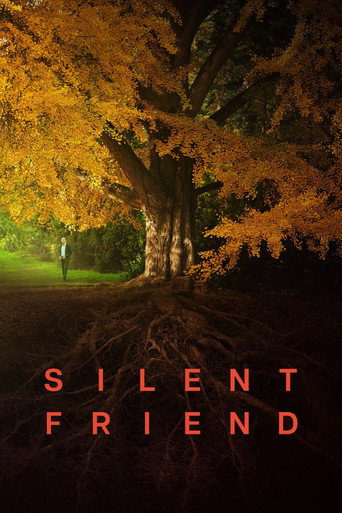
At the center are takes which do not change - a tree in a field in Vermont, U.S.A. Since the film was shot over a period of fifty days, the single frame shots create a storm of pictures.
Social & External
When Millie discovers she's the last virgin in LA, things get out of hand.
Once a potter made a pot that could laugh. Whoever takes it in their hands immediately starts laughing.
A soldier served a long time service. He took as a reward an old drum and went where his eyes were looking. He walked for a long time, and went to the hut, and in it the small girl was crying, because the fierce witch has destroyed her parents.
The cartoon based on the works of Alexander Pushkin was created on the basis of drawings from the exhibition "Pushkin through the eyes of children".
Two coral harvesters brothers are about to finish their working day, when the elder one discovers a mysterious underwater cave.
Jonas Mekas zoomed in from a completely different angle for his Time & Fortune Vietnam Newsreel. This fake interview with ‘Lapland’s Minister of Foreign Affairs’ brings an outsider’s perspective to bear on the US war, and discusses with ironic perplexity if it might not be possible to kill off the Viet Cong more cheaply. For, whilst white students in the US primarily took issue with the war in South-eastern Asia, African-Americans remained predominantly concerned with their own situation. For them, daily discrimination at home and the Vietnam War were simply two faces of the same racist coin
A guy falls in love with a girl who walks by his home, and decides to express his love on Valentines Day.
A married woman falls in love with a 19-year-old girl, and she has to make a choice between her family and the one who might be the love of her life.
Eva is a little girl who lives with her uncaring aunts and mean cousin Berit. Eva's mother is in the hospital and might not make it, and her aunts aren't making it easy for her. A story about how a little girl fights injustice in her own special way.
A young girl transforming between different personalities during a 20-year period. The video is made with 187 morphed passport photographs taken 1981-2001.
In the near future the federal government issues a law limiting births to one child per family because of overpopulation.
An unsuspecting user is sent through a turbulent series of splash portals when his government-enforced dating app malfunctions in the bathtub. Storm is set in the near future, where everyone has to live by the government’s Federal Relationship Compatibility Act – a policy which ensures that citizens are matched with only completely compatible individuals. If an individual cannot find a match which satisfies the government’s strict algorithm, they will be sentenced to a life alone in a permanent facility.
An older "local" man, begins as he is sitting around at a convenience store in Bangor, Maine with a group of his friends during a heavy snowstorm. A young boy runs in, deathly afraid.
A rookie filmmaker on a TV production set tries to survive a constraining environment where people don't respect her boundaries. During the wrap party, she begins to process what she experienced.
Fallen Art presents the story of General A, a self-proclaimed artist. His art, however, consists of a deranged method of stop motion photography, where the individual frames of the movie are created by photographs made by Dr. Johann Friedrich, depicting the bodies of dead soldiers, pushed down by Sergeant Al from a giant springboard onto a slab of concrete.
A brief visualisation of NASA’s historic spacecrafts Mariner, Pioneer, Voyager, and Dawn, exploring the solar system, culminating in the New Horizons mission.
Following the events of “Guardians of the Galaxy Vol. 1,” Baby Groot is finally ready to try taking his first steps out of his pot—only to learn you have to walk before you can run.
Groot discovers a miniature civilization that believes the seemingly enormous tree toddler is the hero they’ve been waiting for.
Groot investigates a spooky noise that’s been haunting the Quadrant, which leads to an intense dance off.
Short film to a song of love lost and rediscovered, a woman sees and undergoes surreal transformations. Her lover's face melts off, she dons a dress from the shadow of a bell and becomes a dandelion, ants crawl out of a hand and become Frenchmen riding bicycles. Not to mention the turtles with faces on their backs that collide to form a ballerina, or the bizarre baseball game.
The O'Neills lived happily in their house in the Australian countryside. That was until one day fate struck blindly, taking the life of Peter, the father, leaving his grief-stricken wife Dawn alone with their four children. Among them, eight-year-old Simone denies this reality. She is persuaded that her father still lives in the giant fig tree growing near their house and speaks to her through its leaves. But the tree becomes more and more invasive and threatens the house. It must be felled. Of course, Simone won't allow it.
Carefully picked scenes of nature and civilization are viewed at high speed using time-lapse cinematography in an effort to demonstrate the history of various regions.
With input from actor and writer Jan Hlobil, director and cinematographer Rene Smaal presents a film in the true surrealist tradition, in the sense that only 'found' elements were used, and that it defies interpretation based on ordinary cause-and-effect time sequence.
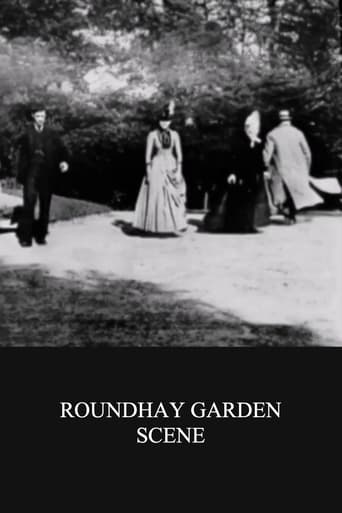
The earliest surviving motion-picture film, and believed to be one of the very first moving images ever created, was shot by Louis Aimé Augustin Le Prince using the LPCCP Type-1 MkII single-lens camera. It was taken on paper-based photographic film in the garden of Oakwood Grange, the Whitley family house in Roundhay, Leeds, West Riding of Yorkshire (UK), on 14 October 1888. The film shows Adolphe Le Prince (Le Prince’s son), Mrs. Sarah Whitley (Le Prince’s mother-in-law), Joseph Whitley, and Miss Harriet Hartley walking around in circles, laughing to themselves, and staying within the area framed by the camera. Roundhay Garden Scene is often associated with a recording speed of around 12 frames per second and runs for about 2 to 3 seconds.
Two farmhands compete for the love of the farmer's daughter.
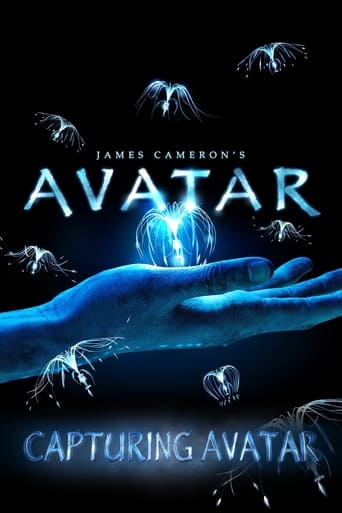
Capturing Avatar is a feature length behind-the-scenes documentary about the making of Avatar. It uses footage from the film's development, as well as stock footage from as far back as the production of Titanic in 1995. Also included are numerous interviews with cast, artists, and other crew members. The documentary was released as a bonus feature on the extended collector's edition of Avatar.
Stan and Ollie play door-to-door Christmas tree salesmen in California. They end up getting into an escalating feud with grumpy would-be customer James Finlayson, with his home and their car being destroyed in the melee.
This is the first movie version of the famous story. Alice dozes in a garden, awakened by a dithering white rabbit in waistcoat with pocket watch. She follows him down a hole and finds herself in a hall of many doors.
As his life comes to its end, famous Hollywood director Orson Welles puts it all on the line at the chance for renewed success with the film The Other Side of the Wind.
A man trying to get home to his dog becomes stuck in a time loop that forces him to relive a deadly run-in with a cop.
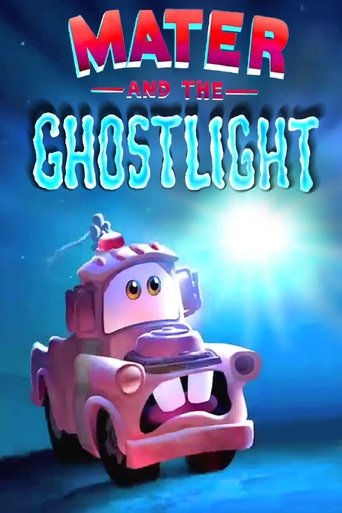
Mater, the rusty but trusty tow truck from Cars, spends a day in Radiator Springs playing scary pranks on his fellow townsfolk. That night at Flo's V8 Café, the Sheriff tells the story of the legend of the Ghostlight, and as everyone races home Mater is left alone primed for a good old-fashioned scare.
A young golfer is mugged by an escaped convict and finds himself in a prison where he foils a jailbreak.
A compilation of over 30 years of private home movie footage shot by Lithuanian-American avant-garde director Jonas Mekas, assembled by Mekas "purely by chance", without concern for chronological order.
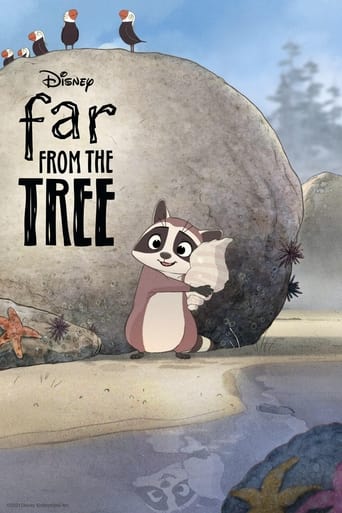
On an idyllic beach in the Pacific Northwest, curiosity gets the better of a young raccoon whose frustrated parent attempts to keep them both safe.
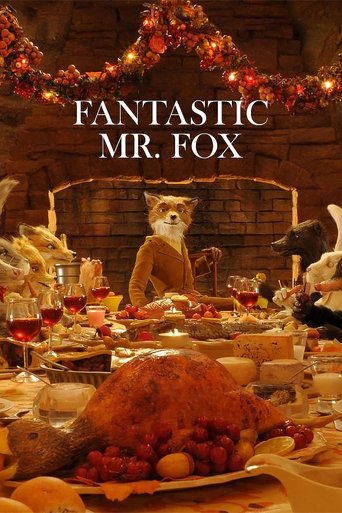
The Fantastic Mr. Fox, bored with his current life, plans a heist against the three local farmers. The farmers, tired of sharing their chickens with the sly fox, seek revenge against him and his family.
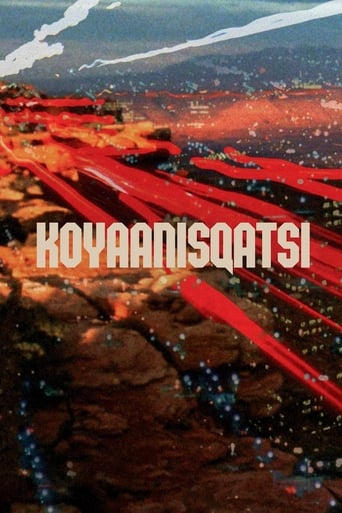
Takes us to locations all around the US and shows us the heavy toll that modern technology is having on humans and the earth. The visual tone poem contains neither dialogue nor a vocalized narration: its tone is set by the juxtaposition of images and the exceptional music by Philip Glass.
Peter is a slight lad, solitary, locked out of the woods by his protective grandfather, his only friend a duck. In town, he's bullied. When a wolf menaces the duck - as well as grandfather's fat cat and an ill-flying bird that Peter has befriended - Peter bravely tries to tree the wolf. Grandfather, the townspeople, and the hunters who have antagonized Peter figure in the dénouement.
William K.L. Dickson plays the violin while two men dance. This is the oldest surviving sound film where sound is recorded on the phonograph.
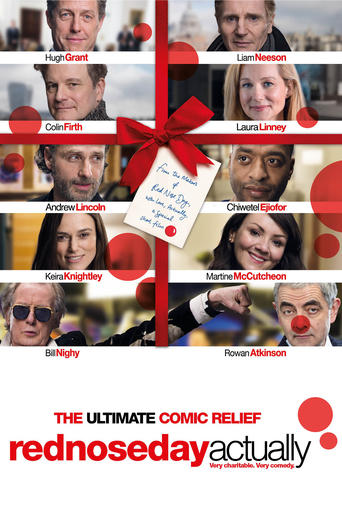
Fourteen years after the events of the original film, a series of encounters between people in Britain reminds us that in these different times Love, actually exists.