This film is a factual and chronological account of the events preceding the atomic bombing of Hiroshima during World War II and the significant effect of the atomic bomb on peacetime projects and events of the atomic age.
Social & External
The American Southwest holds a dark legacy as the place where nuclear weapons were invented and built. Navajo people have long held this place sacred, and continue to fight for a future that transcends historical trauma. This is their story.
Drawing upon eye-witness accounts from survivors and participants in the bombing of Hiroshima, this programme shows how both Japan and the United States are still facing enormous problems in coming to terms with the legacy of that fateful August day.
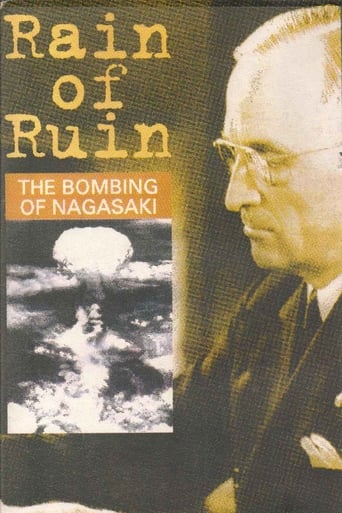
Scholars and eyewitnesses provide a picture of the 75 hours between the atomic bombings of Hiroshima and Nagasaki and document the contradictions, interrelationships, and ambiguities of politics and military strategy in time of war.
Since the collapse of the Soviet Union, the threat of a nuclear war between the USA and Russia has diminished, but the threat posed by nuclear weapons and materials on both sides has increased. As nuclear weapons age, they become unstable and begin to behave in unpredictable ways. This film is the first to go behind the scenes in Arzamas-16 - the Russian nuclear city so secret that it has never appeared on any map - and the American nuclear weapons laboratory at Los Alamos, New Mexico, to see Russian and American bomb designers working together to reduce the risk. Exclusive archive material.
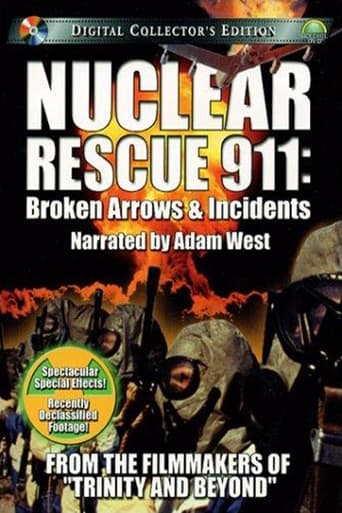
Since 1950, there have been 32 nuclear weapon accidents, known as "Broken Arrows." A Broken Arrow is defined as an unexpected event involving nuclear weapons that result in the accidental launching, firing, detonating, theft or loss of the weapon. To date, six nuclear weapons have been lost and never recovered.Now, recently declassified documents reveal the history and secrecy surrounding the events known as "Broken Arrows". There have been 32 nuclear weapon accidents since 1950. Six of these nuclear weapons have been lost and never recovered. What does this say about our defense system? What does this mean to our threatened environment? What do we do to rectify these monumental "mistakes"? Using spectacular special effects, newly uncovered and recently declassified footage, filmmaker Peter Kuran explores the accidents, incidents and exercises in the secret world of nuclear weapons.
Peter Ustinov hosts this haunting 1980 documentary exploring the world's nuclear weaponry and the fragile system that deters either side from initiating the first nuclear strike. Although the world's political climate has mellowed since the Cold War era, Nuclear Nightmares takes the viewer back in time to gain a perspective of what it was like to live under a very real nuclear threat.
When the Cold War ended, worry about nuclear weapons receded. But has the nuclear threat really diminished? Join Bud Ryan on a personal and global journey to discover what the bomber can learn from the bombed, and what our prospects look like for finally living in a nuclear-free world. Features interviews with bomb survivors from Hiroshima and Nagasaki, former U.S. Secretary of State George Shultz, authors Gar Alperovitz and Jonathan Schell, and many more.
Twenty-two prominent American women discuss their activism for nuclear disarmament and their motivations in seeking the end of the arms race.
This documentary examines unidentified aerial phenomenon. With testimony from high-ranking government officials and NASA Astronauts, Senator Harry Reid says it "makes the incredible credible."
Based on testimony by Ethel’s brother, David Greenglass, the Rosenbergs are arrested by the FBI. The couple is accused of passing secret information about the atomic bomb to the USSR. Though the Rosenbergs maintain their innocence from the start, the media and public opinion seem to have condemned them from day one. The trial does nothing to change this and ends in a death sentence. On Friday June 19, 1953, Julius and Ethel Rosenberg are executed in the electric chair. Julius first, then Ethel. 30 years later, the truth finally comes out. Declassified FBI archives reveal that Ethel was not guilty of being a spy; she was merely married to one. Julius did indeed commit espionage for the Soviet Union, though primarily as a recruiter, nothing at all like the fictional James Bond. This documentary, made entirely of archival footage and animated illustrations, offers a tale of espionage as well as a complex family tragedy.
J. Robert Oppenheimer and other key figures involved in the decision to drop the first atomic bomb discuss their motivations in this NBC News documentary. Originally produced and televised in 1965, two decades after the bombings of Hiroshima and Nagasaki, it was re-released in 2023 with an epilogue by Michael Beschloss, NBC News Presidential Historian.
We've all heard of the atomic bomb, but in the late 1950s, an idea was conceived of a bomb which would maximize damage to people, but minimize damage to buildings and vital infrastructure: perfect for an occupying army. This is the story of a man and his bomb: a melding of world events and scientific discovery inspire the neutron bomb, one of the most hated nuclear weapons ever invented.
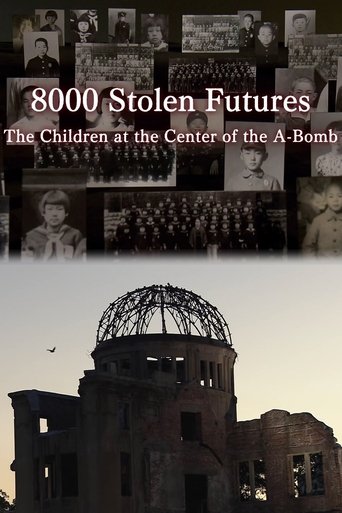
On August 6, 1945, the first-ever nuclear bomb deployed in war was dropped on the city of Hiroshima Prefecture, leaving an estimated 140,000 dead in its wake by the end of that year. Among the victims, one particular age group stands out for the sheer number of fatalities sustained: 12 and 13 year-olds, children of first year junior high school age. We investigate the tragedy of this lost generation, piecing together surviving records and speaking with survivors, for whom the memories of children robbed of their futures that day are still burned deep in their memories, nearly eight decades on.
The A-Bomb, the H-Bomb, Cold War, Kennedy, Khrushchev, Yeltsin, Reagan...Who said that the world was a safe place?
Hidden in the heart of Russia, there is a Soviet-era city where thousands of people live and work behind barbed-wire fences monitored by armed guards. It is Ozyorsk (Ozersk), located in the Chelyabinsk Oblast, one of the most polluted places on the planet and home to the largest stockpiles of nuclear material. Its code name: City 40.
The Man Who Saved the World is a feature documentary film about Stanislav Petrov, a former lieutenant colonel of the Soviet Air Defence Forces.
Film revealing how political ambition fuelled the Windscale fire of 1957 and then dictated that the heroes of Windscale be made the scapegoats.
Blowing Up Paradise uses color archival footage to chronicle France's explosion of various nuclear devices, in violation of the international test ban treaty, from the first test in 1966 to the last in 1995. Interviews with former and current French government officials, scientists, and nuclear advisors.