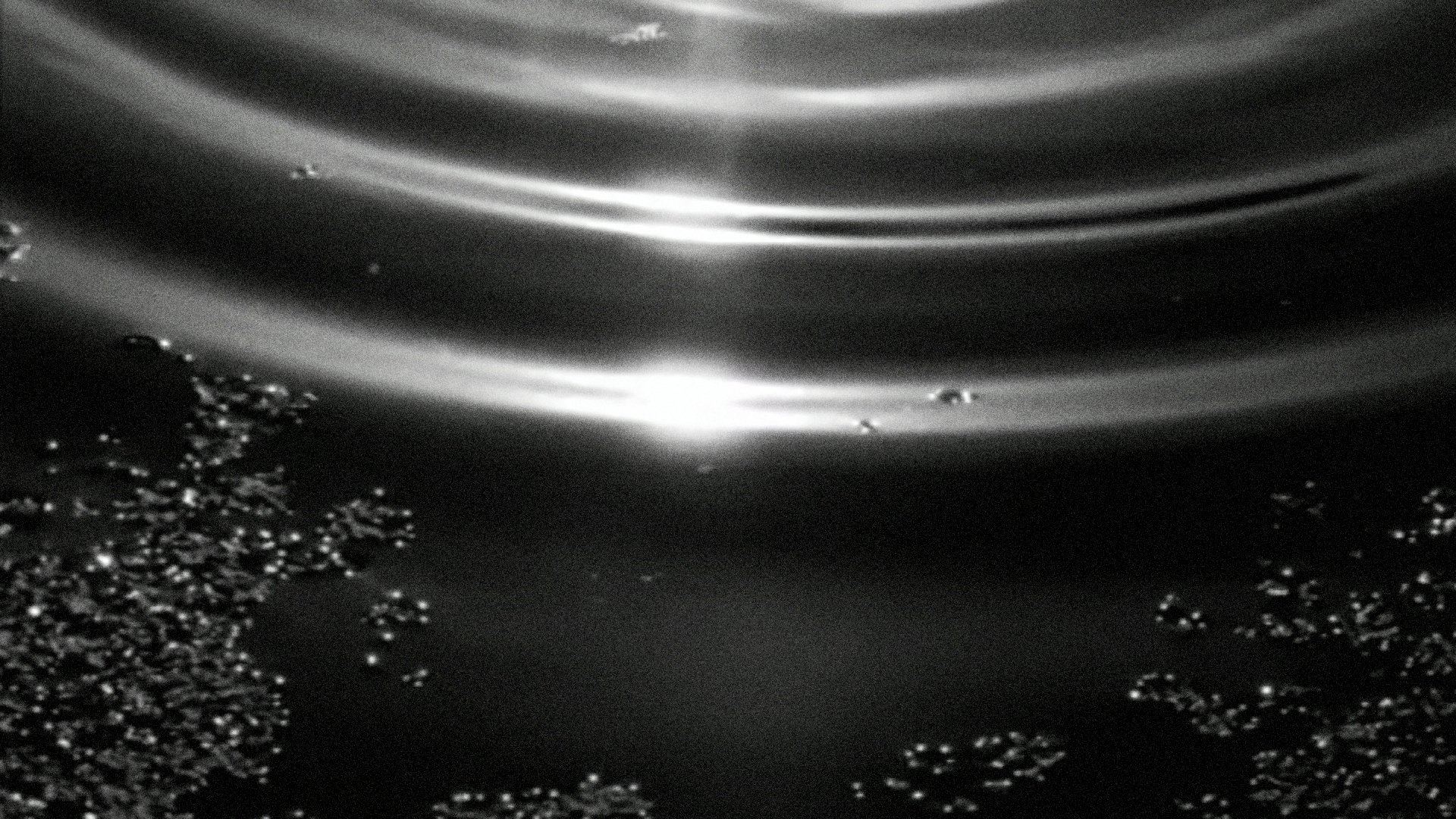
"All things flow."
In 1952, Haanstra made Panta Rhei , another view of Holland through the eyes of a painter and filmmaker. Its poetic images of water, skies and clouds reflect Haanstra's own moods.
Social & External
A day in the city of Berlin, which experienced an industrial boom in the 1920s, and still provides an insight into the living and working conditions at that time. Germany had just recovered a little from the worst consequences of the First World War, the great economic crisis was still a few years away and Hitler was not yet an issue at the time.
A new exploration of familiar places located in the region of Rhône and Isère throught an reinvention of digital nuances, a study of perceptions and fluidity around the nature of motion in landscapes and human interactions.
"Ryuta is 5 years old. Even though he is my son, I sometimes wonder what this small person is to me. Even though I see his joys and sadnesses and know the feel of his warmth on my skin when I hold him, there are moments when my feelings for him become vague and blank." - Takashi Ito
This short documentary, shot in the glass factories of Leerdam and Schiedam, demonstrates how glass blowers do their work. But thanks to the superbly edited ballet of working hands and the sequence of mechanical motions of the engines, is it especially a cinematic tour de force. That the industry can’t do without man’s involvement is shown in the scene where we hear the voice of Haanstra himself counting the bottles on the conveyor belt, until one bottle breaks…
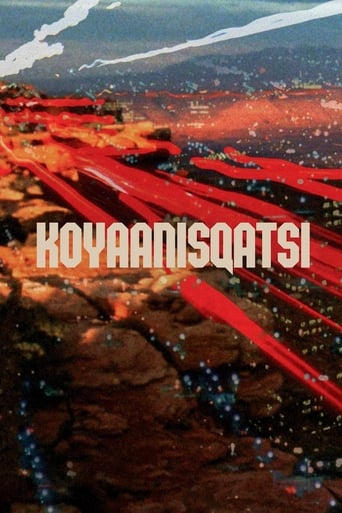
Takes us to locations all around the US and shows us the heavy toll that modern technology is having on humans and the earth. The visual tone poem contains neither dialogue nor a vocalized narration: its tone is set by the juxtaposition of images and the exceptional music by Philip Glass.
Luis Bunuel, the father of cinematic Surrealism, made his film debut with 'Un Chien Andalou' in 1929 working closely with Salvador Dali. Considered one of the finest and controversial filmmakers with, 'L’Age d’Or' (1930), attacking the church and the middle classes. He won many awards including Best Director at Cannes for 'Los Olvidados' (1950), and the coveted Palme d’Or for 'Viridiana' (1961), which had been banned in his native Spain. His career moved to France with 'The Diary of a Chambermaid' with major stars such as Jeanne Moreau and Catherine Deneuve.
"This film explores how freedom of speech — including dissent — is afforded to all Americans, and shows freedom of expression in art, music, dance, architecture, and science. The film also emphasizes the importance of the individual’s contribution to the whole of society and demonstrates how a productive and creative society is formed by the open and respectful exchange of ideas. The film was written, produced, and directed by William Greaves" (National Archives).
A short film following Anthony, a young child from the small, rural town of San Antonio de los Baños, Cuba. We see him in different moments of his daily life as he interacts with different forms of environmental, familial, and social influences. While Anthony displays contradictory traits of creativity, destruction, rigidity, and tenderness as he interacts with his external and internal worlds, we see a story built from the the multidimensionality of Anthony's layered personality as a young man.
Twenty images of a camera running next to a chemical platform and capturing abstract light throught improvised gestures and asymmetrical motion
In Manhattan's Central Park, a film crew directed by William Greaves is shooting a screen test with various pairs of actors. It's a confrontation between a couple: he demands to know what's wrong, she challenges his sexual orientation. Cameras shoot the exchange, and another camera records Greaves and his crew. Sometimes we watch the crew discussing this scene, its language, and the process of making a movie. Is there such a thing as natural language? Are all things related to sex? The camera records distractions - a woman rides horseback past them; a garrulous homeless vet who sleeps in the park chats them up. What's the nature of making a movie?
Thanks to his myriad film roles, Lon Chaney is known as “the man of a thousand faces,” and you could say that the early horror era never beheld a figure more intriguing. Yet because of his numerous transformations, his face never became as iconic as that of, say, Boris Karloff. Accompanied by a soundtrack from Bernhard Lang, this “re-imagination of shots” taken from Chaney´s forty-six surviving films offers a beguiling excursion into the history of film. The director reveals surprising associations, while highlighting the enduring magic of works which are now more or less forgotten.
An experiment with three dimensions in a moment of clarity: the focus of the camera's lens towards the present, the speed of the train and the material world distorted by the movements of the train.
WINHANGANHA (Wiradjuri language: Remember, know, think) - is a lyrical journey of archival footage and sound, poetry and original composition. It is an examination of how archives and the legacies of collection affect First Nations people and wider Australia, told through the lens of acclaimed Wiradjuri artist, Jazz Money.
An eight-hour contemplative epic, entirely starring sheep.
Short documentary directed by Jean Vigo about the French swimmer Jean Taris. The film is notable for the many innovative techniques that Vigo uses, including close ups and freeze frames of the swimmer's body.
Fifteen images of a camera running in a park and in obscurity searching the space of light through distorsion and the sensory of rapid motion.
"The Boy Of The Fish" follows Noon, a young boy living in a Syrian refugee camp, who finds solace and a sense of freedom in a whale-shaped doll he names "Bahr." Set against the challenging realities of camp life, Noon’s journey is both a story of resilience and a testament to the boundless imagination of childhood. Through vivid symbolism and a unique soundscape, the film explores themes of loss, hope, and the longing for freedom amidst confinement. Shot entirely on an iPhone due to restrictions in the conflict zone, the film combines raw authenticity with poetic depth to capture the emotional landscape of a young soul navigating adversity.
2012: Time For Change is a documentary feature that presents ways to transform our unsustainable society into a regenerative planetary culture. This can be achieved through a personal and global change of consciousness and the systemic implementation of ecological design.
Director Lam Can-Zhao leads a small film crew as they shoot a film about a stray dog in the streets of Guangzhou, leading viewers into an unpredictable, peculiar and incredible journey.
Women find empowerment behind the red nose and makeup, revealing the playful and subversive spirit of female clowning. Through poetic and intimate performances, the clowns share stories that go beyond laughter, exploring their role as manipulators of energy and expression.
A visual montage portrait of our contemporary world dominated by globalized technology and violence.
A documentary on the expletive's origin, why it offends some people so deeply, and what can be gained from its use.
An exploration of technologically developing nations and the effect the transition to Western-style modernization has had on them.
In the Realms of the Unreal is a documentary about the reclusive Chicago-based artist Henry Darger. Henry Darger was so reclusive that when he died his neighbors were surprised to find a 15,145-page manuscript along with hundreds of paintings depicting The Story of the Vivian Girls, in What is Known as the Realms of the Unreal, of the Glodeco-Angelinnian War Storm, Cased by the Child Slave Rebellion.
A compilation of over 30 years of private home movie footage shot by Lithuanian-American avant-garde director Jonas Mekas, assembled by Mekas "purely by chance", without concern for chronological order.
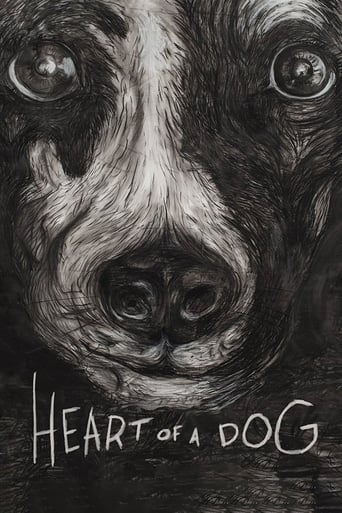
Lyrical and powerfully personal essay film that reflects on the deaths of her husband Lou Reed, her mother, her beloved dog, and such diverse subjects as family memories, surveillance, and Buddhist teachings.
If you ever find yourself traveling down Interstate 49 through Missouri, try not to blink—you may miss Rich Hill, population 1,396. Rich Hill is easy to overlook, but its inhabitants are as woven into the fabric of America as those living in any small town in the country. This movie intimately chronicles the turbulent lives of three boys living in said Midwestern town and the fragile family bonds that sustain them.
Amber Heard and Nicole Kidman discuss their characters Mera and Atlanna.
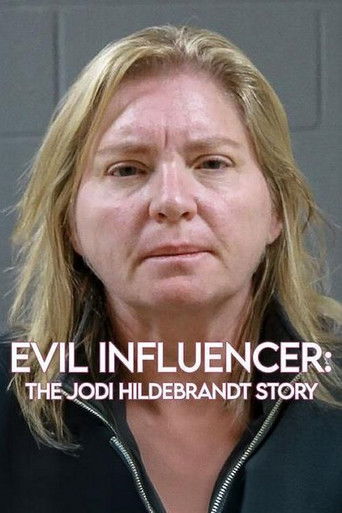
Unravel the case of Utah therapist Jodi Hildebrandt, whose child abuse arrest with parenting YouTuber Ruby Franke exposed a twisted tale of manipulation.
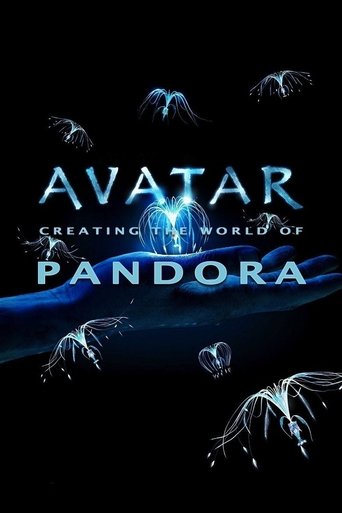
The Making-of James Cameron's Avatar. It shows interesting parts of the work on the set.
A documentary focused on plastic pollution in the world's oceans.
A candid look at rehearsal footage in support of a focus on pre-viz.
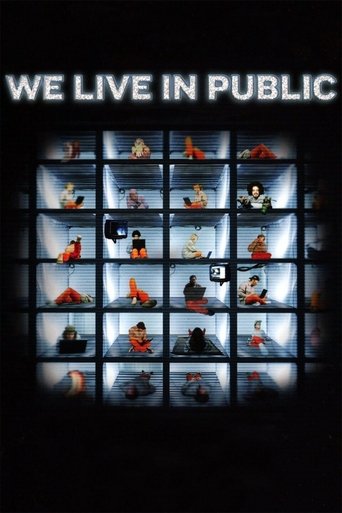
In 1999, Internet entrepreneur Josh Harris recruits dozens of young men and women who agree to live in underground apartments for weeks at a time while their every movement is broadcast online. Soon, Harris and his girlfriend embark on their own subterranean adventure, with cameras streaming live footage of their meals, arguments, bedroom activities, and bathroom habits. This documentary explores the role of technology in our lives, as it charts the fragile nature of dot-com economy.
A documentary on seniors at a high school in a small Indiana town and their various cliques.
Artists in LA discover the work of forgotten Polish sculptor Stanislav Szukalski, a mad genius whose true story unfolds chapter by astounding chapter.
Alexander McQueen's rags-to-riches story is a modern-day fairy tale, laced with the gothic. Mirroring the savage beauty, boldness and vivacity of his design, this documentary is an intimate revelation of McQueen's own world, both tortured and inspired, which celebrates a radical and mesmerizing genius of profound influence.
After years in the limelight, Selena Gomez achieves unimaginable stardom. But just as she reaches a new peak, an unexpected turn pulls her into darkness. This uniquely raw and intimate documentary spans her six-year journey into a new light.
A detailing of the rise to prominence and global sporting superstardom of six supremely talented young Manchester United football players (David Beckham, Nicky Butt, Ryan Giggs, Paul Scholes, Phil and Gary Neville). The film covers the period 1992-1999, culminating in Manchester United's European Cup triumph.
Using the book 'Fragments', which collects Marilyn Monroe's poems, notes and letters, and with participation from the Arthur Miller and Truman Capote estates who have contributed more material, each of the actresses will embody the legend at various stages in her life.