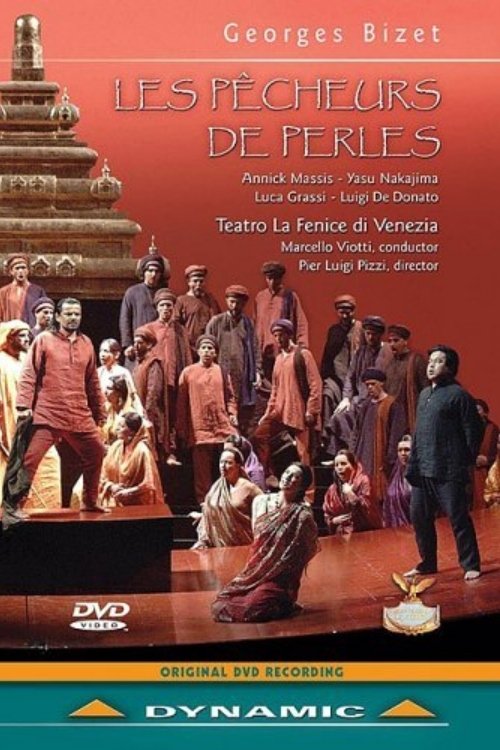
A village hires a priestess to pray for the safety of their pearl fishermen, but long lost love gets in the way.
Social & External
The people behind it
Annick Massis
Léïla
Yasu Nakajima
Nadir
Luca Grassi
Zurga
Luigi De Donato
Nourabad
Gheorghe Iancu
Dancer
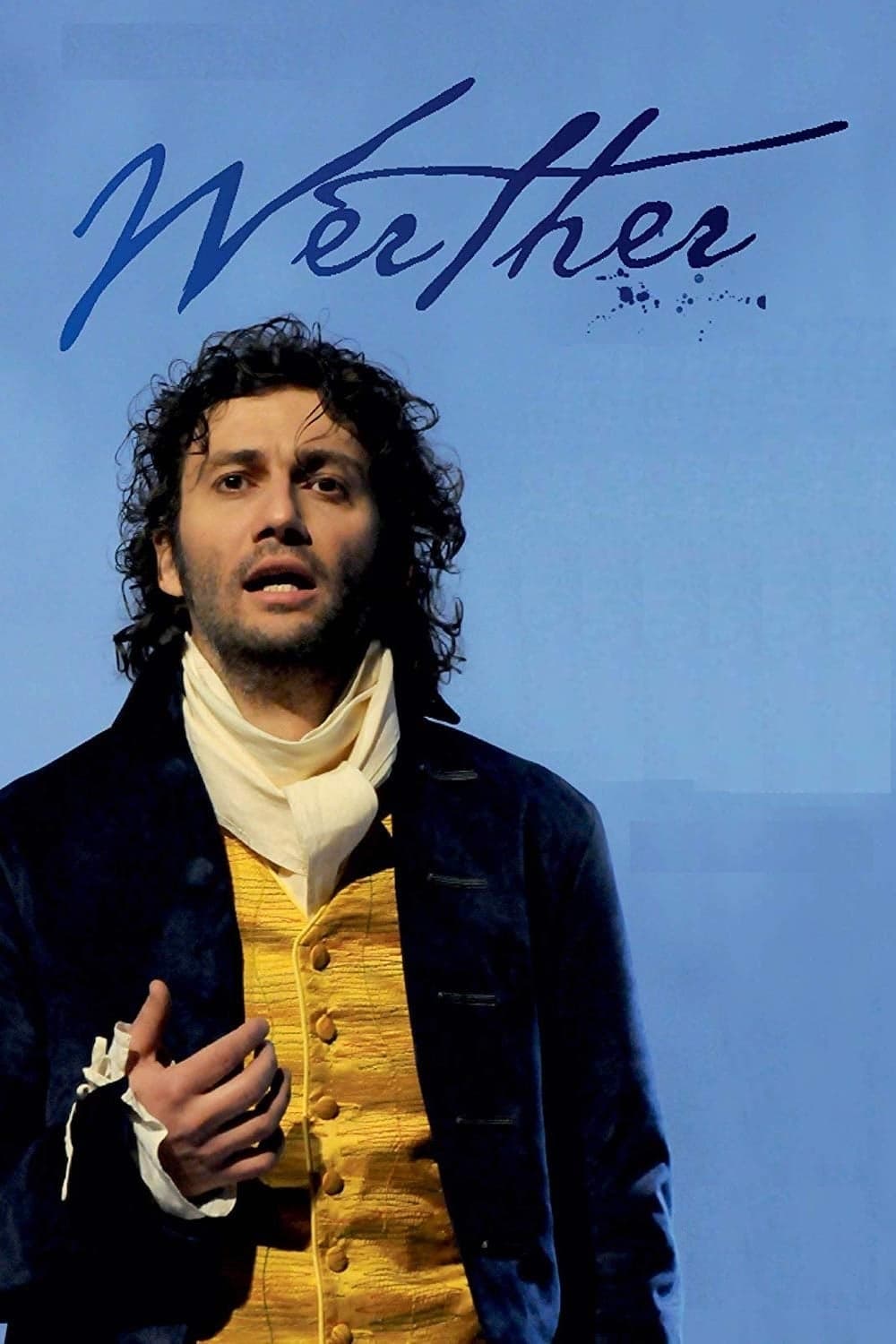
Werther loves Charlotte, but she promised her mother on her deathbed that she would marry Albert. After the marriage Charlotte suggests that Werther should travel - but not forget her. In addition to the singing and orchestral accompaniment, the entire cast acts very convincingly. And, there's no backstage mugging, entrances and spoken nonsense to spoil the experience of the drama.
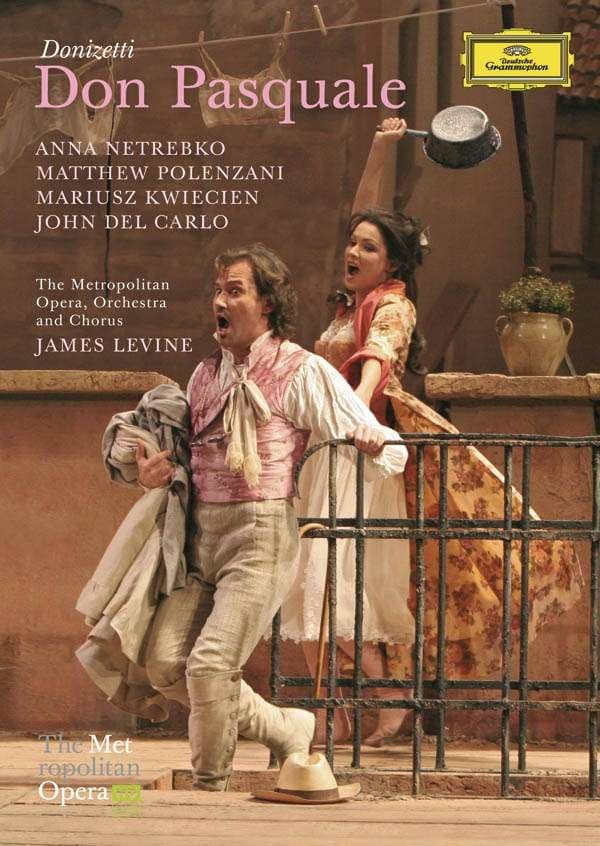
Donizetti’s timeless comedy shines in Otto Schenk’s enchanting production, conducted by James Levine and featuring a remarkable cast. The incomparable Anna Netrebko is Norina, the young widow beloved by Ernesto (a suave Matthew Polenzani), who is about to be disinherited by his miserly uncle, Don Pasquale (John Del Carlo). It takes the clever scheming of Dr. Malatesta (Mariusz Kwiecien) to set things right and to teach the old curmudgeon a lesson—fits of temper, mistaken identities, and all kinds of comic confusion included.
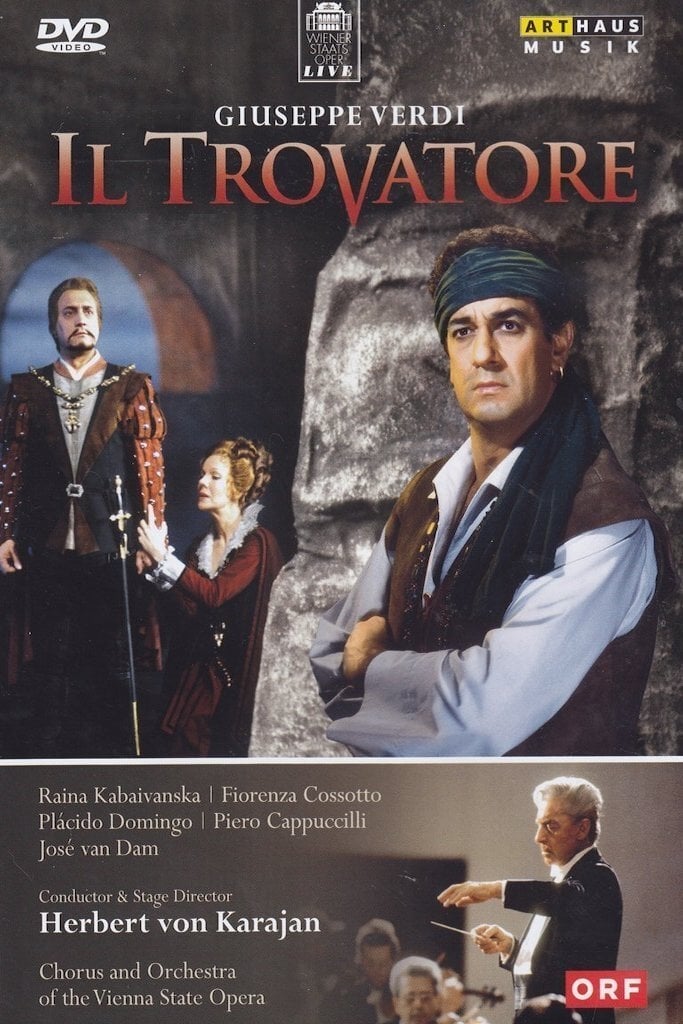
The gypsy Azucena (Fiorenza Cossotto) takes revenge for her mother who was accused of putting a curse on one of the old Count di Luna's two sons: she decides to abduct the younger child and throw it in the flames. But when she is about to carry out this fatal act, the gypsy sacrifices her own child and keeps the old Count’s son, whom she names Manrico (IL TROVATORE, Plácido Domingo). Later, as adults, the troubadour Manrico and the Count di Luna’s elder son (Piero Cappucilli) do not know each other, but become rivals for the beautiful Leonora (Raina Kabaivanska). Manrico succeeds in winning the young woman’s heart, and she sacrifices herself for him, deceiving the Count’s son. Mad with jealousy, the latter orders the execution of the troubadour in front of his mother. Azucena reveals to him that Manrico was his brother. This legendary performance of Giuseppe Verdi's most successful opera was recorded at the Vienna State Opera under the baton of Herbert von Karajan.
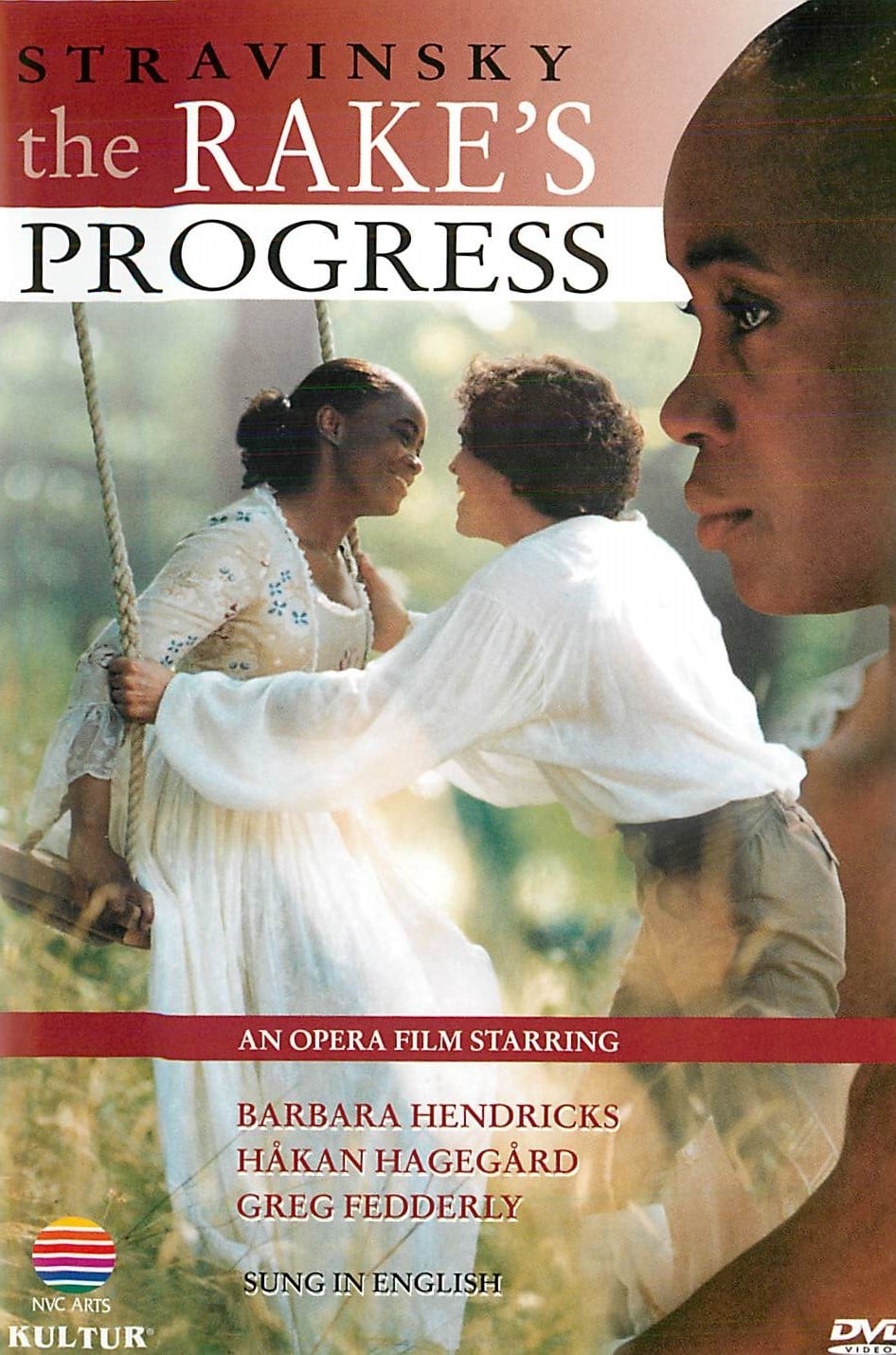
This lavish, cinematic realisation of Stravinsky's neo-classic masterpiece, performed in English, is filmed both in studio and on location. The imaginative richness in the music is complemented by costumes and sets which are, by turn, exquisitely garish and darkly grotesque to intoxicating effect.
IL CAMPANELLO DI NOTTE, Farce in one act by Gaetano Donizetti, is set in Naples. Don Annibale Pistacchio, an old apothecary, have just married the young Serafina. Enrico, former lover of Serafina, interrupts constantly the wedding night showing on several disguises and calling at Pistacchio's drugstore by ringing the night bell, asking the unfortunate groom a preposterous list of prescriptions.
Part folklore, part opera-ballet, this féerie presents local pagan traditions on the day of the summer solstice and historical events from Cossack times to the more recent 2014 Ukrainian Revolution of Dignity.
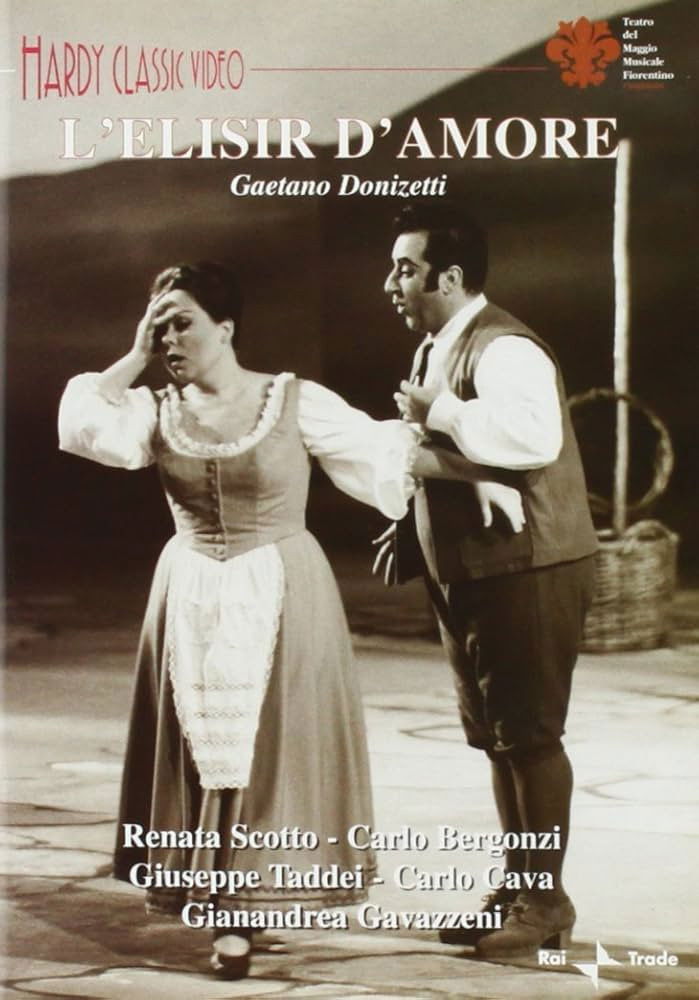
Released in 1967, the famous black-and-white film adaptation of Donizetti's opera, starring tenor Carlo Bergonzi and soprano Renata Scotto, alongside Giuseppe Taddei, is known for its charming performances and popular recordings. The film and associated recordings captured leading Italian singers in their prime, showcasing Donizetti's beloved work, famous for the tenor aria "Una furtiva lagrima". L'Elisir d'amore saw various productions and releases in 1967, including a RAI TV film in Italy, performances at Glyndebourne starting June 17, San Francisco Opera in October, and a World Record Club vinyl release in the UK, indicating it was a popular year for Donizetti's opera across different media
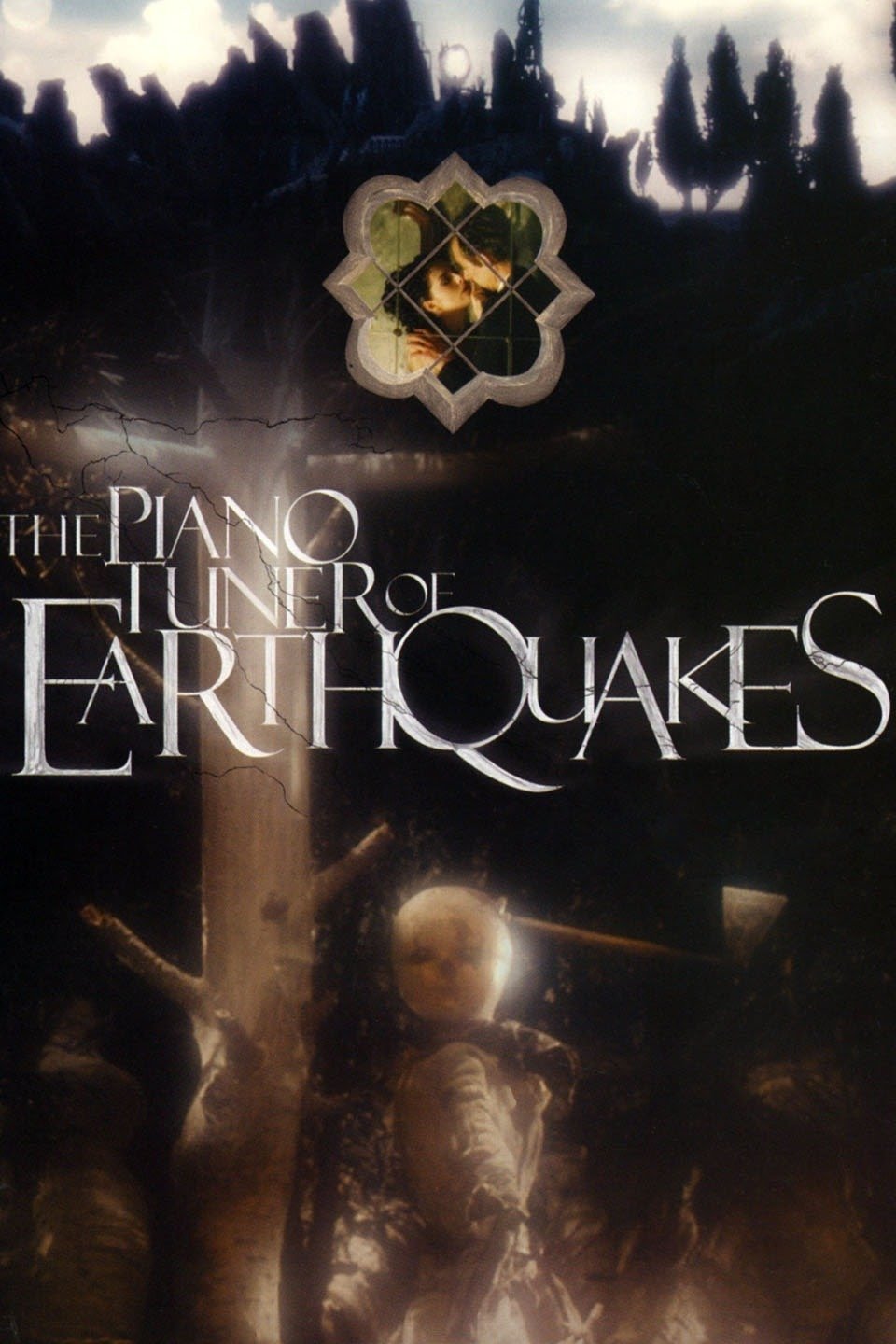
Dark fairytale about a demonic doctor who abducts a beautiful opera singer with designs on transforming her into a mechanical nightingale.
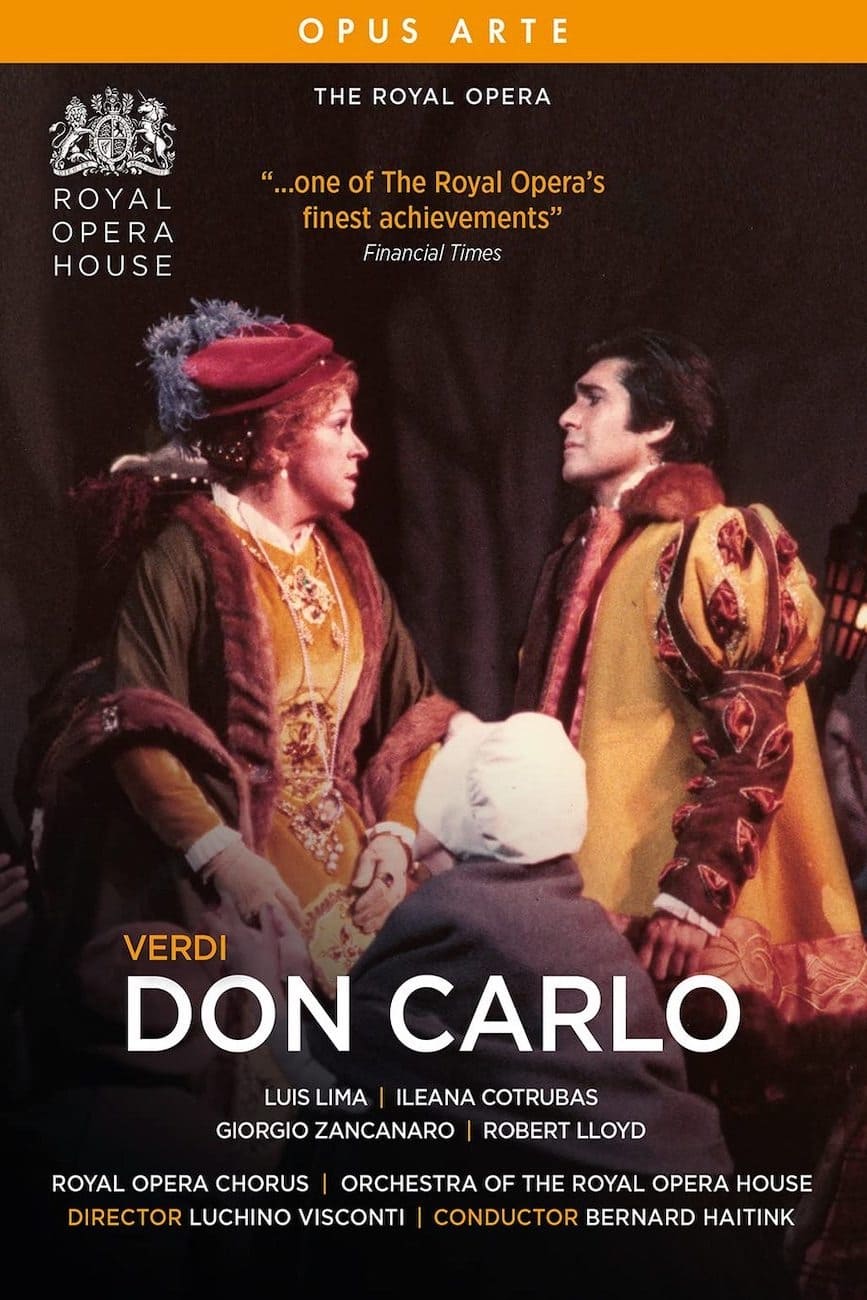
A 1985 performance of Luchino Visconti's 1958 staging for the Royal Opera House, Covent Garden. Bernard Haitink memorably directs a superb cast that includes Ileana Cotrubas at the height of her powers and Luis Lima, unequalled in his tortured introspection, in the title role. (5-act version, sung in Italian)
A melancholy poet reflects on three women he loved and lost in the past: a mechanical performing doll, a Venetian courtesan, and the consumptive daughter of a celebrated composer.
This epic opera follows Virgil, beginning as the Greeks appear to have ceded the field after ten years of the Trojan War. Cassandra tries to warn of the terrible fate to come, but fate is set and Troy falls. The first two acts cover this tragic end, then the flight of survivors to Carthage and events at Carthage continue in acts 3 - 5, culminating in the further voyage for Italy and Rome. This is Virgil's classic epic, in operatic form, in about a three and a half hour performance from French Opera.
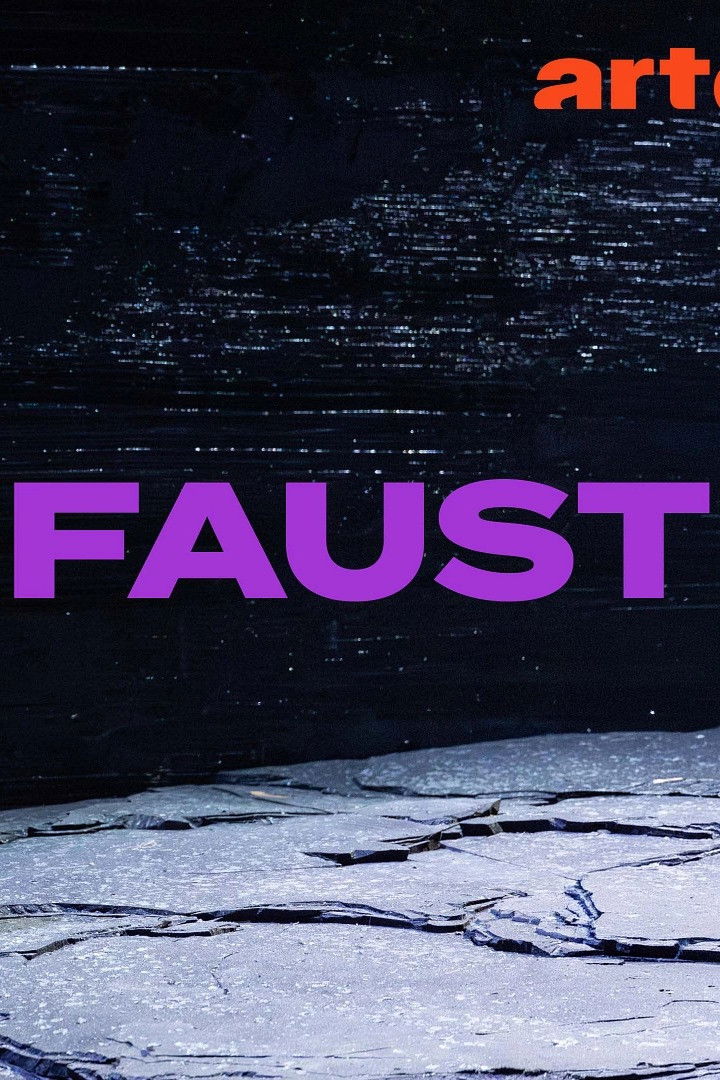
Gounod's Faust at the Bavarian State Opera: Jonathan Tetelman plays Faust, the scholar who makes a pact with Mephistopheles (Kyle Ketelsen) before seducing Marguerite (Olga Kulchynska). The unfortunate woman descends into madness but ultimately achieves redemption. Lotte de Beer directs this production, which marks Nathalie Stutzmann's debut in Munich as conductor.
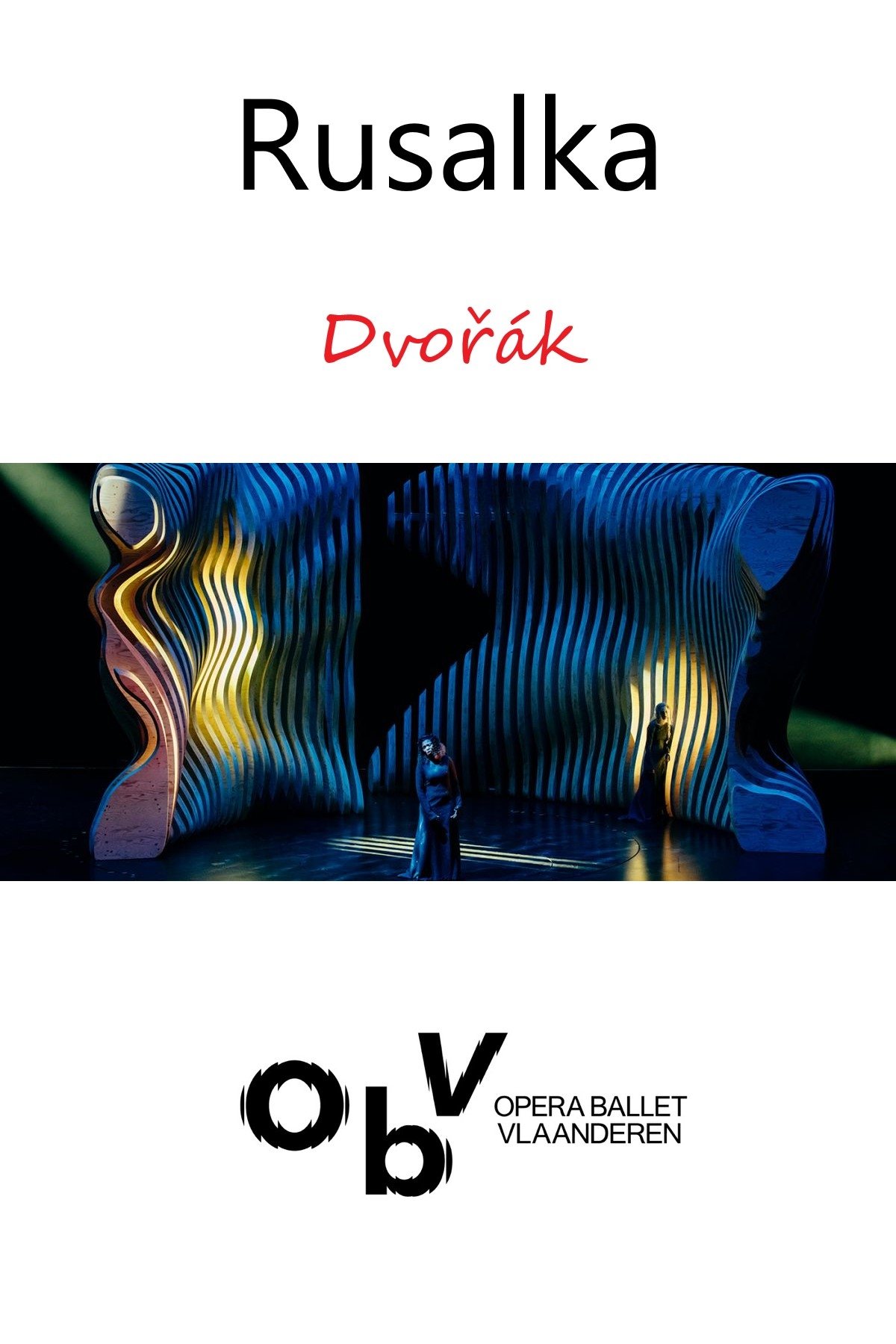
More than anything in the world, Rusalka, a mysterious and elusive water nymph, yearns to become human to win the heart of a young prince. But this metamorphosis comes at a price: she will lose her voice and be damned forever should their love story fail. Rusalka, a lyrical fairy tale inspired by The Little Mermaid and Undine, is Dvořák’s penultimate work and one of his greatest successes. In Opera Ballet Vlaanderen’s production, Norwegian director and choreographer Alan Lucien Øyen adds a new dimension to this masterpiece of the Czech repertoire by representing the main characters on stage twice: by a singer and a dancer. This doubling reinforces the opera’s deeply dreamlike nature. The impressive South African soprano Pumeza Matshikiza embodies the character of Rusalka, while the Lithuanian conductor Giedré Šlekytė leads the orchestra with brio and intensity.
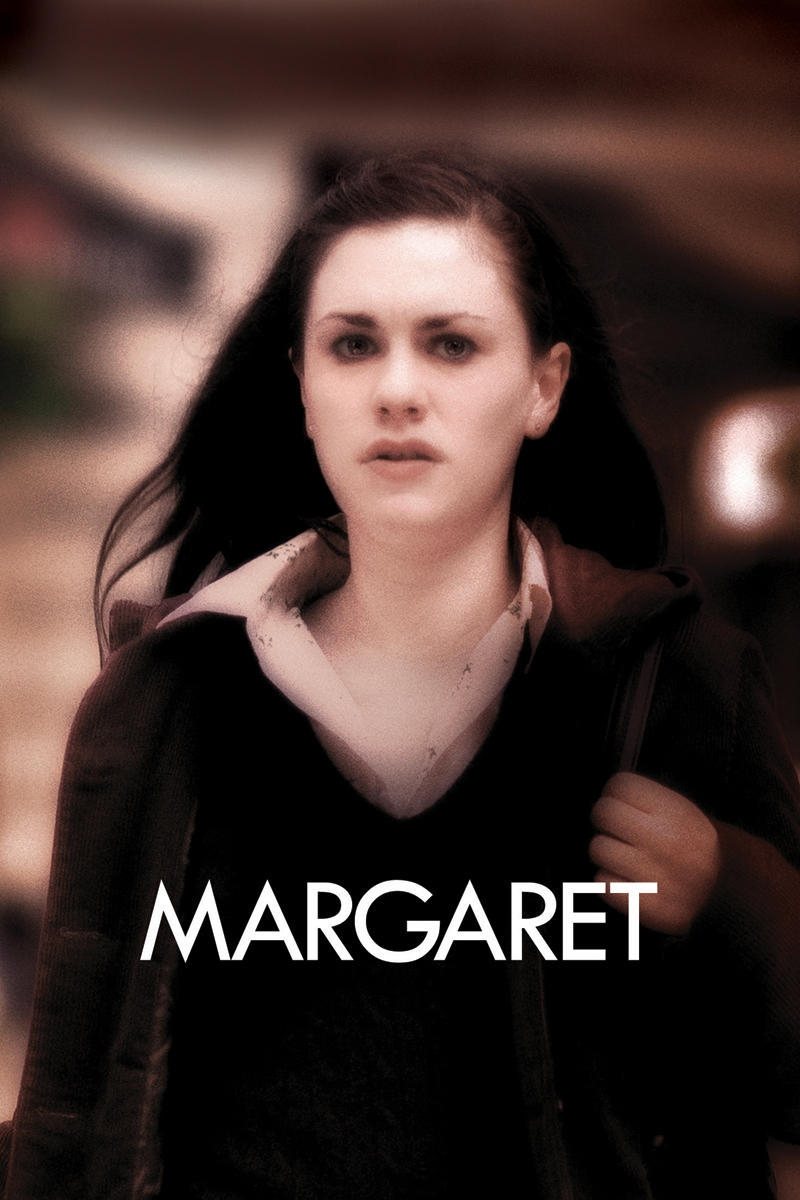
17-year-old Lisa feels certain that she inadvertently played a role in causing a traffic accident that claimed a woman's life. In her attempts to set things right, she meets with opposition at every step. Torn apart with frustration, she begins emotionally brutalizing her family, her friends, her teachers, and, most of all, herself. She has been confronted quite unexpectedly with a basic truth: that her youthful ideals are on a collision course with the realities and compromises of the adult world.
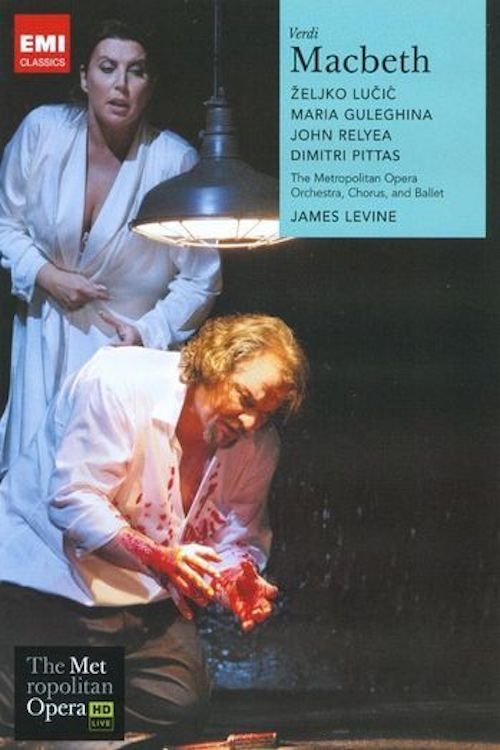
Verdi’s admiration for Shakespeare led to such masterpieces as Othello and Falstaff, and if the earlier Macbeth isn’t on their exalted level it’s still a powerfully dramatic opera that hews closely to the original’s story line. The MET’s production retains the dark aura of the opera while updating it to a vaguely post-modern context. So the witches are bag ladies in various stages of decrepitude, with children in tow. The Banquet Scene features lowered chandeliers, a plethora of chairs, and a slew of extras dressed in tuxedos and party gowns. Macbeth sports a leather coat, the soldiers are in drab brown uniforms and seem to have fingers on their triggers even when they’re supposed to be in non-threatening situations. Director Adrian Noble also has Lady Macbeth do an inordinate amount of writhing around and singing from a lying-down position, adding to the feeling that a less interventionist directorial hand might have generated more impact.
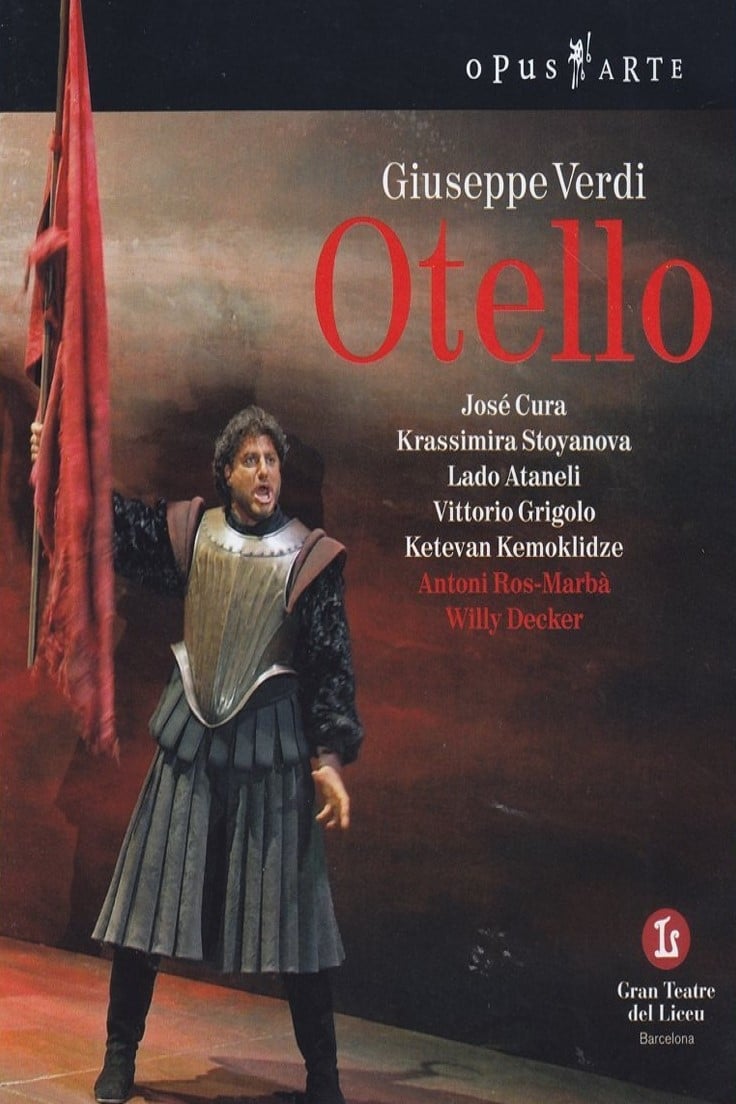
José Cura sings and acts here with an inwardness and intensity which make a profound impression. So does Krassimira Stoyanova as Desdemona, not in the first flush of youth, but heartfelt and direct; while Lado Ataneli's Jago is a brilliantly understated study in jovial malevolence. With strong conducting from Antoni Ros-Marbà, the whole cast collaborate to give us the truth of this desperately upsetting work, as no other DVD and few live performances I've seen of it ever have.
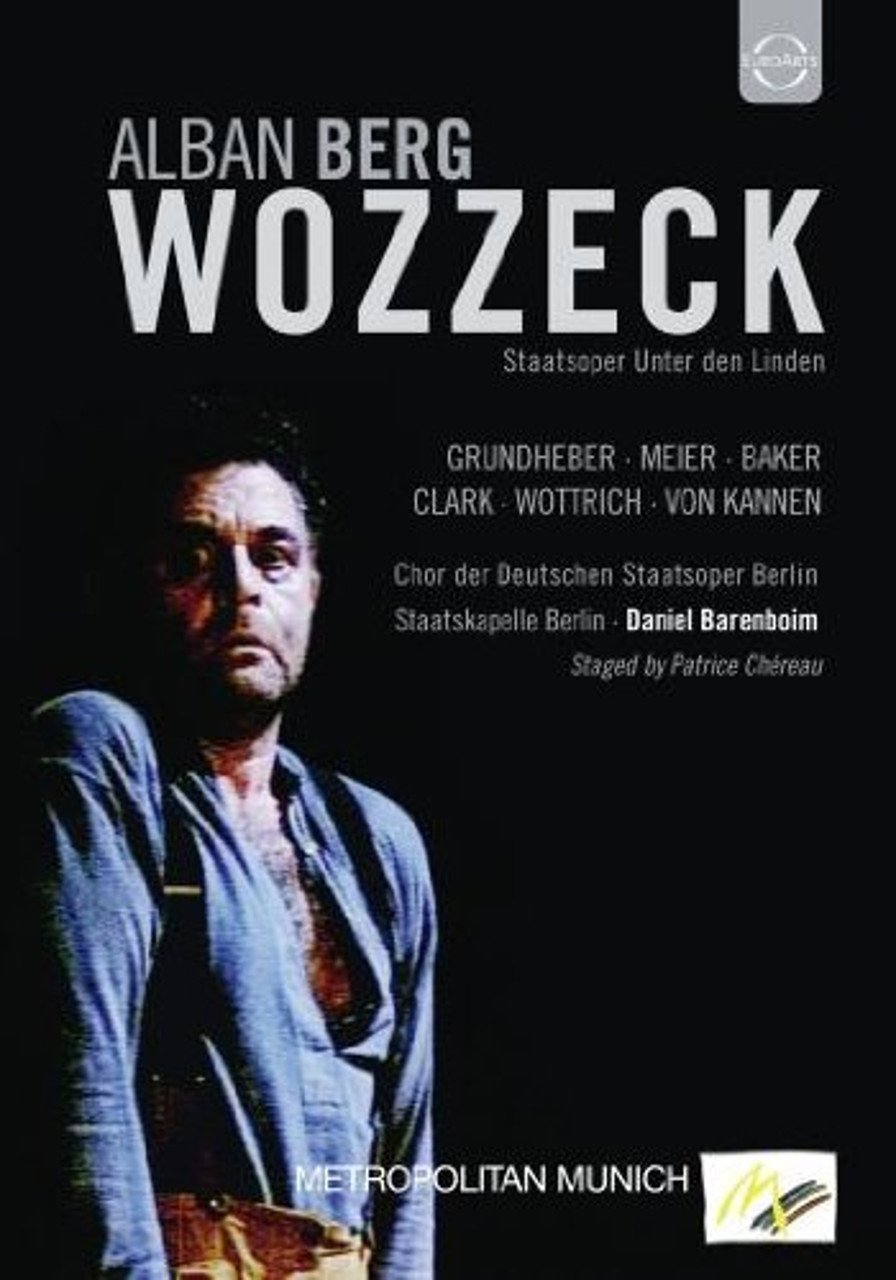
Franz Woyzeck, a lowly soldier stationed in a mid-nineteenth century provincial German town, is the father of an illegitimate child by his mistress Marie.
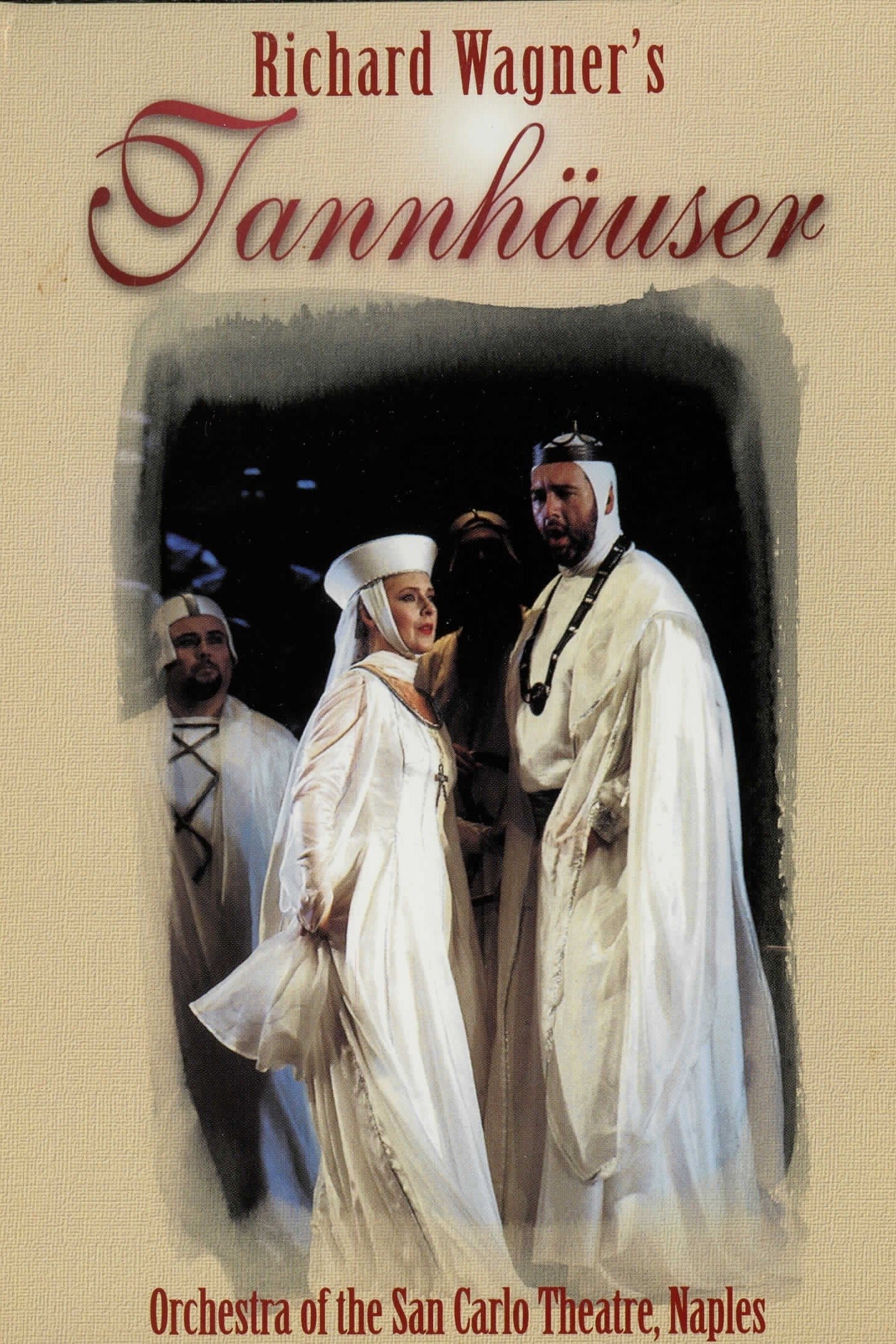
A romantic opera in three acts with music and libretto by Richard Wagner, performed by the Orchestra of the Teatro di San Carlo. The original title, Tannhauser und der Sangerkrieg auf Wartburg, reveals the real nature of the opera, born by a fusion of two traditional sagas and dedicated to the dualism of spirituality and sensuality and the possibility of redemption through love. Composed between 1843 and 1845, Tannhauser has a tormented musical theme, made up of constant variations. It debuted in Dresden in 1845 when Wagner was just over 30.
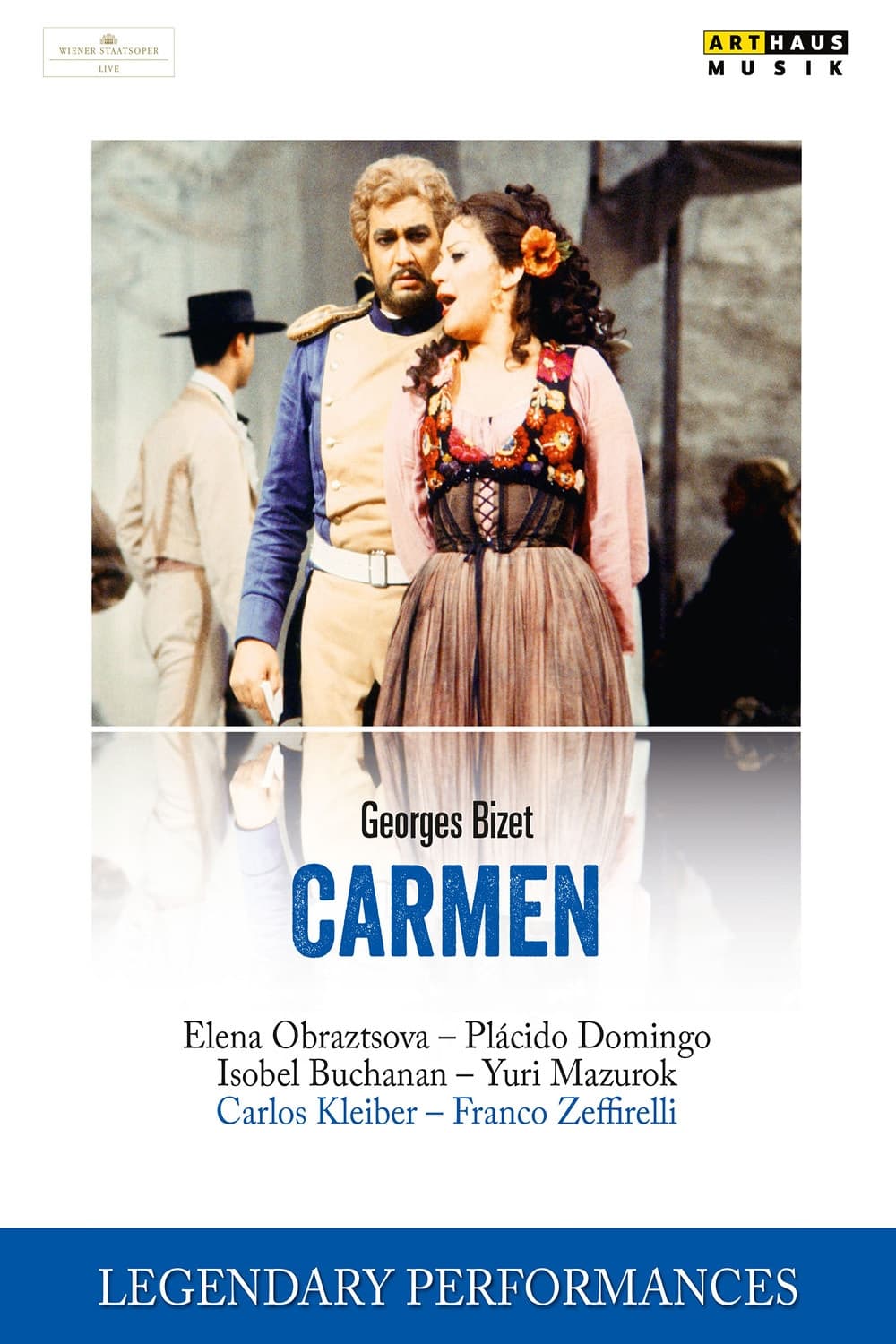
CARMEN is the classic tale of forbidden passion between a young man and a spoken-for woman, Carmen. From ORF and TDK Music, this release features a live performance of Georges Bizet's 19th century operatic masterwork Carmen. Directed by Academy Award-nominated filmmaker Franco Zeffirelli, the production was shot on December 9, 1978, at the Wiener Straatsoper. Starring Elena Obraztsova in the titular role, the orchestra is conducted by Carlos Kleiber.
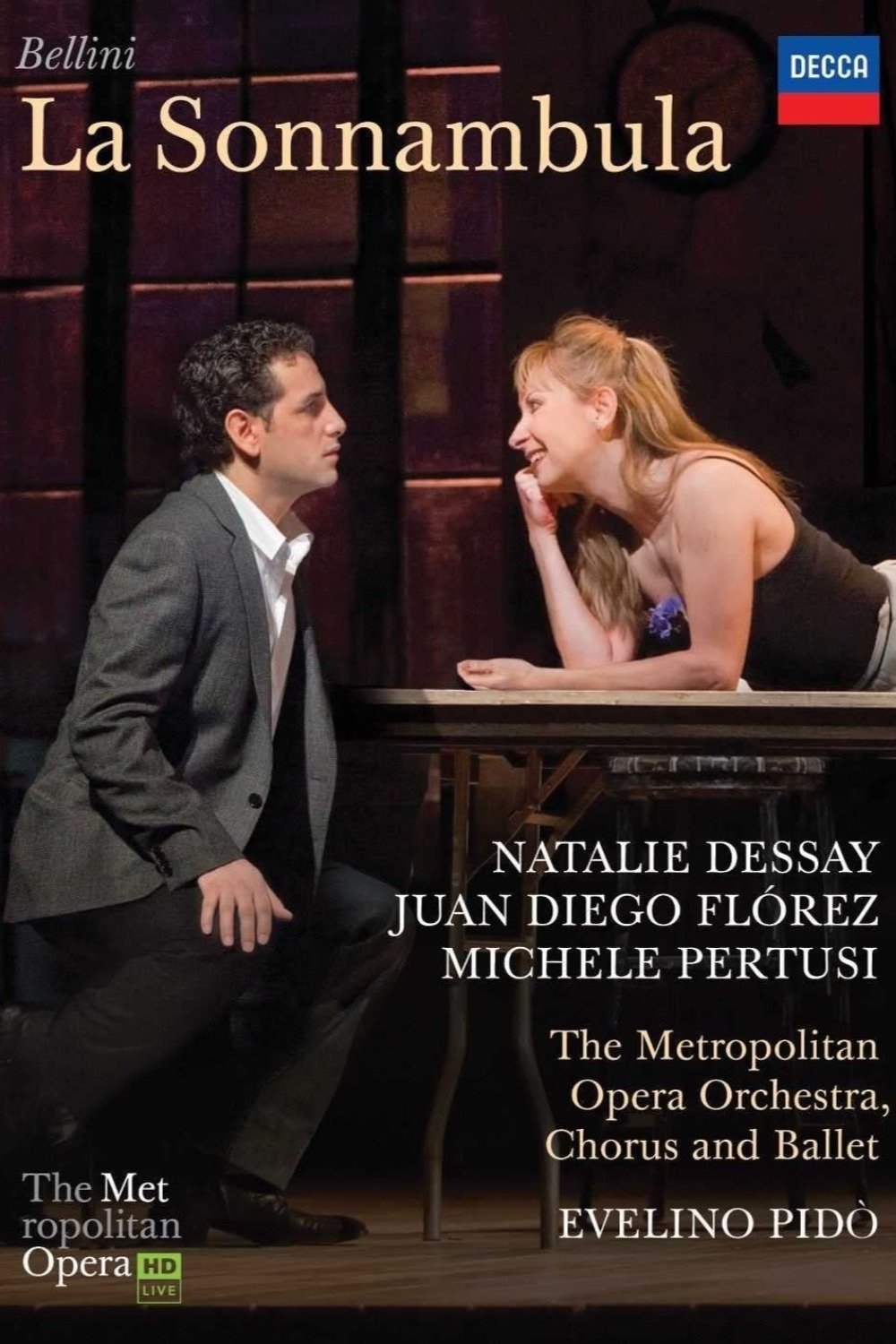
Just as a young woman is about to marry her sweetheart, she is discovered—by the entire village, to say nothing of her fiancé—asleep in the bedroom of a stranger. It takes the young man two acts to figure out that sleepwalking is to blame, and everything ends happily. Natalie Dessay as Amina and Juan Diego Flórez as Elvino deliver bel canto magic and vocal fireworks in Mary Zimmerman’s 2009 production. The Tony award-winning director transfers Bellini’s bucolic tale to a rehearsal room in contemporary New York, where an opera company rehearses La Sonnambula—and where the singers are truly in love with each other.
A drama set in the American South, where a precocious, troubled girl finds a safe haven in the music and movement of Elvis Presley.
A talented young singer and aspiring songwriter’s Christian faith and family ties are tested when she defies her worship-pastor father and pursues pop-music stardom in GRACE UNPLUGGED, a moving and inspiring new film that explores the true meaning of success.
Djam, a young Greek woman, is sent to Istanbul by her uncle Kakourgos, a former sailor with a passion for Rebetiko, to find a rare part that will repair their boat. In Istanbul, she encounters Avril, a nineteen-year-old French girl, alone and without any money, who came to Turkey as a voluntary worker with refugees. Djam, generous, cheeky, unpredictable, and free-spirited, takes Avril under her wing on the way to Mytilene. A journey filled with encounters, music, sharing, and hope.
A down-on-his-luck coach is hired to prepare a team of the best American dancers for an international tournament that attracts all the best crews from around the world, but the Americans haven't won in fifteen years.
Ghost is an ideological musician and leader of a jazz band who would rather play his blues in the park to the birds than compromise himself. His peripatetic performances lead him to cross paths with a singer, while his masculinity is thrown into question following a violent brawl.
An actress will play Barbara, the French singer. The shoot will soon start. The actress works on her character, her voice, the songs, scores, the gestures, knitting, scenes she has to learn, things are going okay, there's progress, development, she is even overwhelmed. The film director also works, through his encounters, through archives, music, he let's himself be submerged, overwhelmed like the actress, by the actress.
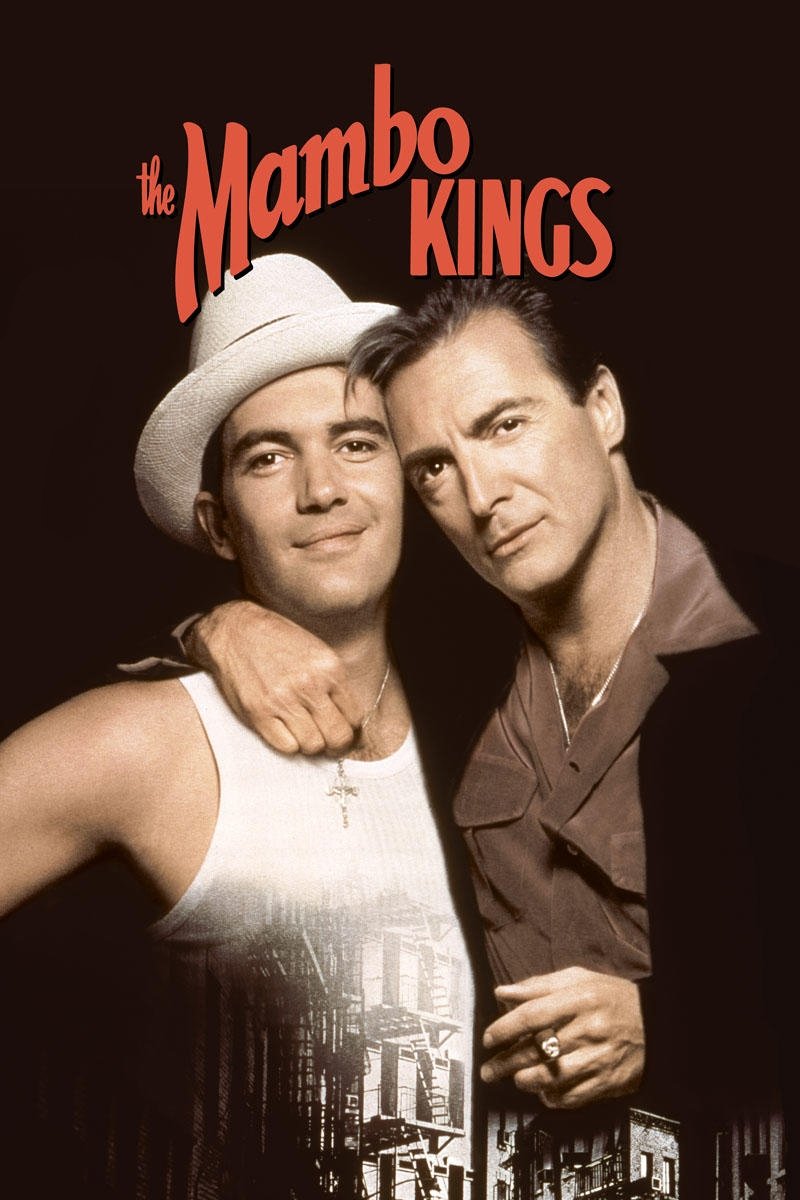
The Mambo Kings tells the story of César and Nestor Castillo, brothers and aspiring musicians who flee from Cuba to America in search of the American Dream.
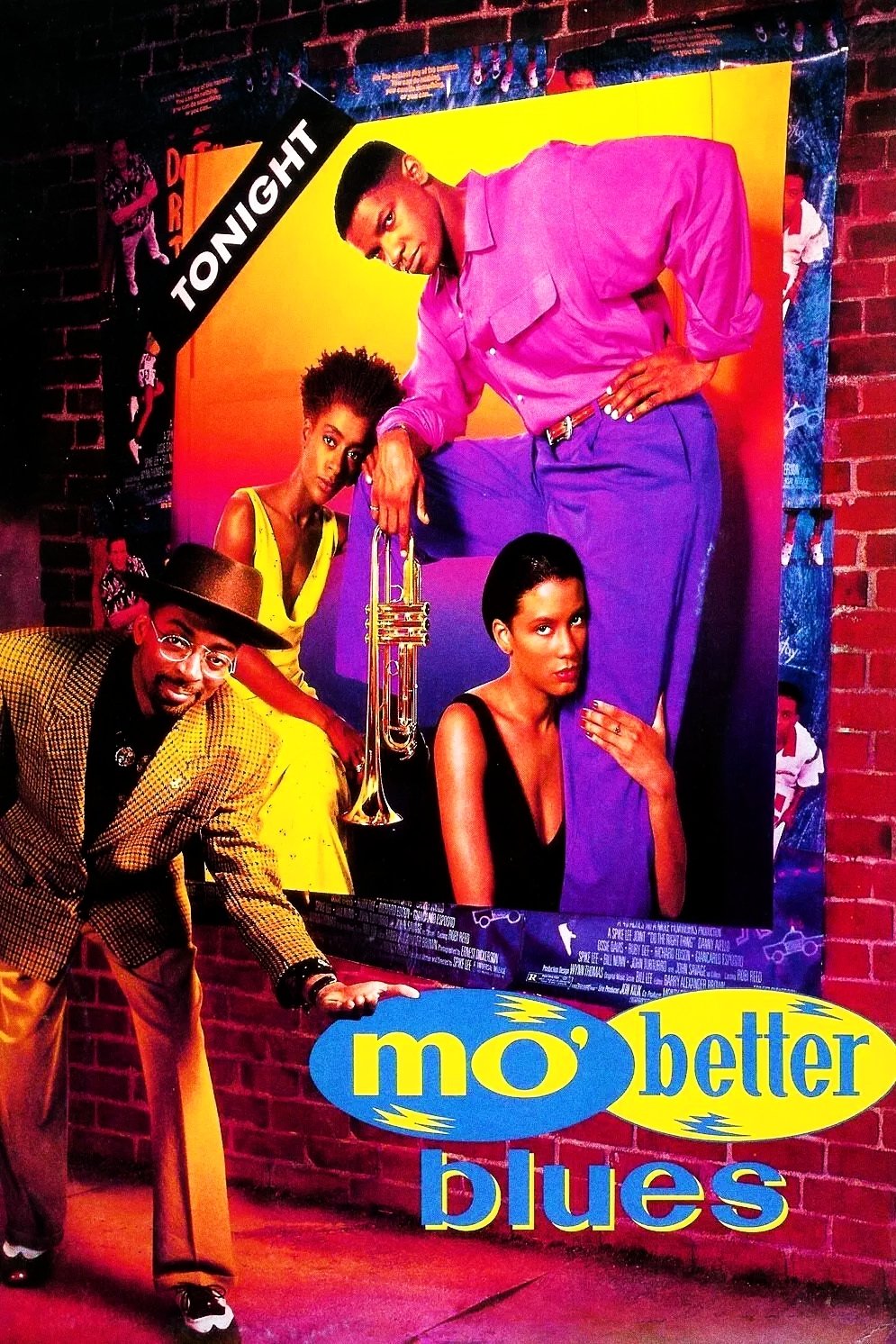
Talented but self-centered trumpeter Bleek Gilliam is obsessed with his music and indecisiveness about his girlfriends Indigo and Clarke. But when he is forced to come to the aid of his manager and childhood friend, Bleek finds his world more fragile than he ever imagined.
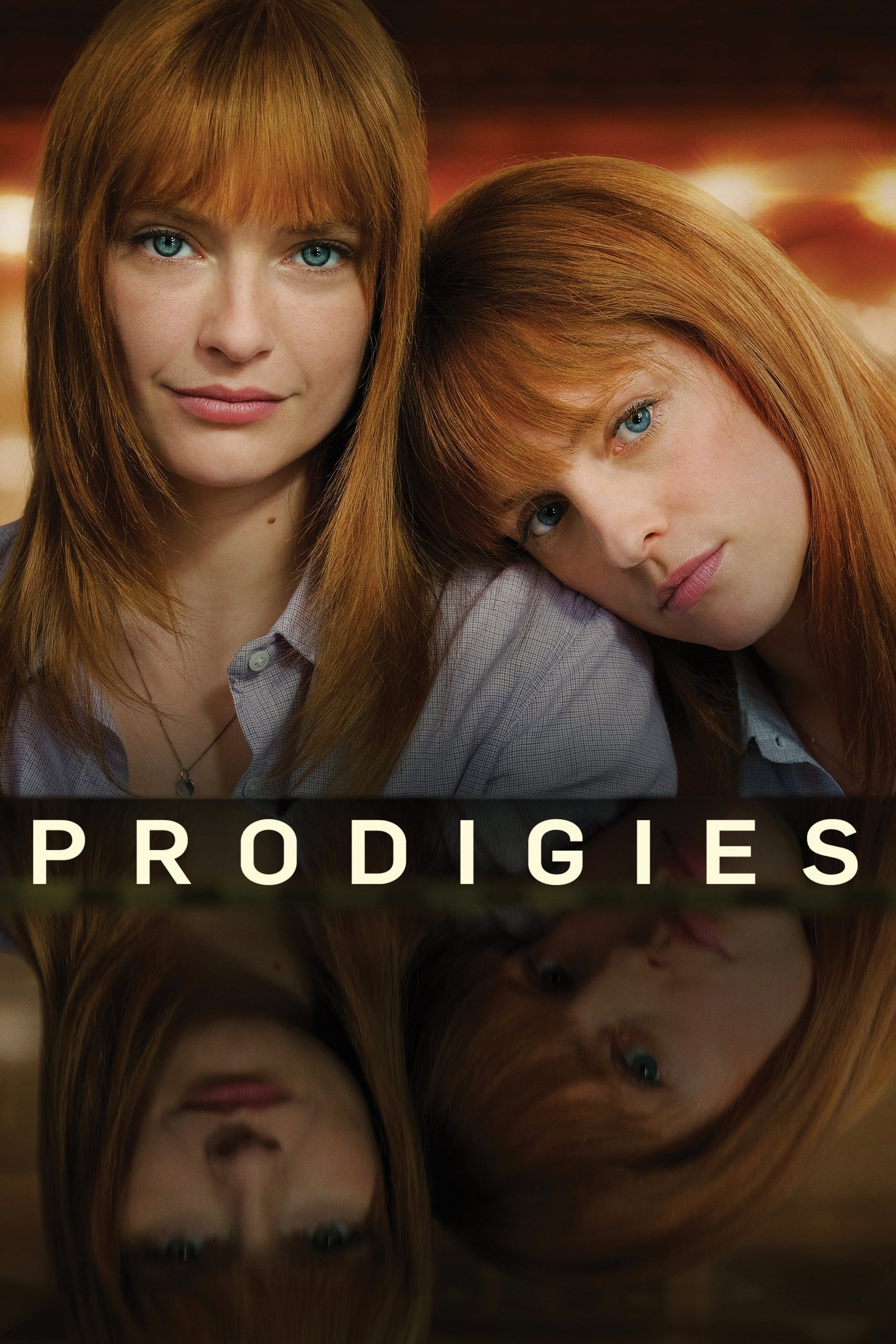
Claire and Jeanne are twin sisters, united by the same passion: the piano. Coached by their father like athletes, they join the prestigious Karlsruhe Conservatory. They are now competing to be soloists and training for a concert that will make or break their careers. But Claire and then Jeanne discover they are suffering from a serious illness and are slowly losing the use of their hands. With the support of their family and their undying love of music, they will find a unique way to change their fate. An inspiring and moving tale, based on a true story.
Aspiring small-town musician Chito is determined to make it big. When a clip of him performing one of his songs goes viral, he seizes the opportunity and pushes to carve out a place for himself in the new wave of Mexican-American music... and ultimately gets caught in a game more dangerous than anticipated.
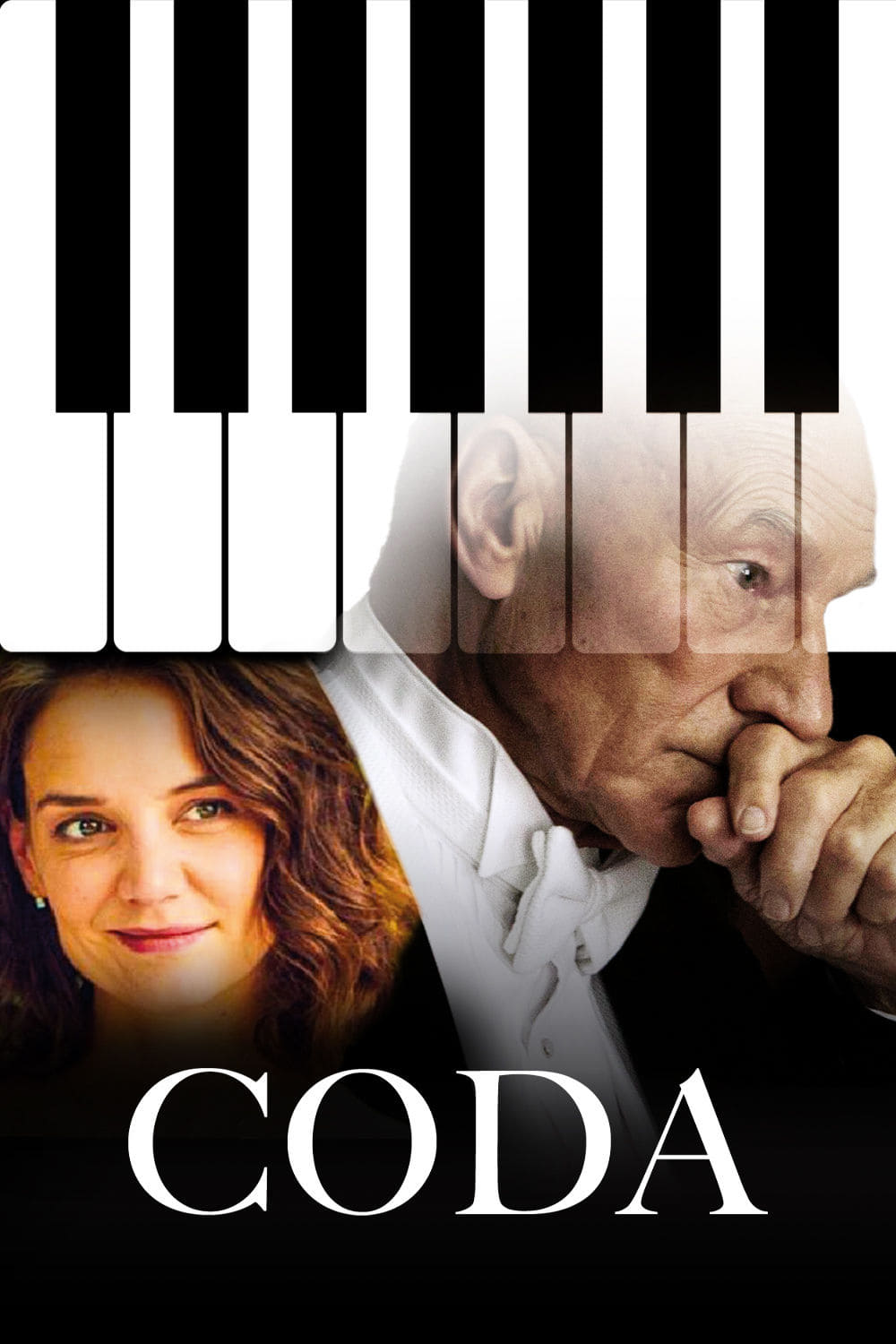
A famous pianist at the twilight of his career meets a free-spirited music critic who soon becomes his rock as his mental state deteriorates.
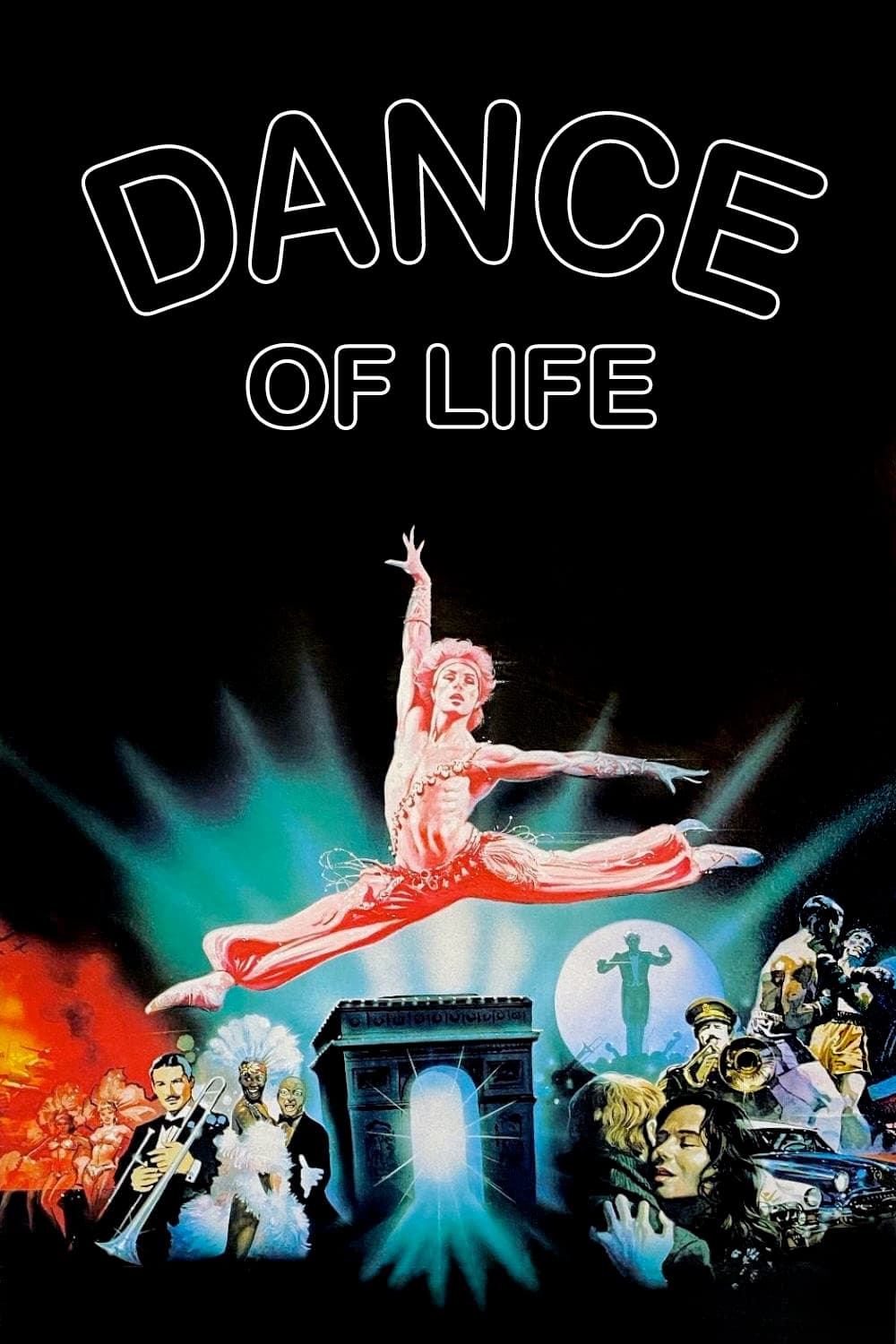
The film follows four families, with different nationalities (French, German, Russian and American) but with the same passion for music, from the 1930s to the 1960s. The various story lines cross each other time and again in different places and times, with their own theme scores that evolve as time passes. The main event in the film is the Second World War, which throws the stories of the four musical families together and mixes their fates. Although all characters are fictional, many of them are loosely based on historical musical icons (Édith Piaf, Josephine Baker, Herbert von Karajan, Glenn Miller, Rudolf Nureyev, etc.) The Boléro dance sequence at the end brings all the threads together.
Street dancer Skyler comes out of the shadow of her trained dancer sister, Tosha, & joins a dance competition with the Honey dance studio; the prize is a college scholarship.
Inspired by true and harrowing events, an ordinary man finds his world suddenly torn apart as devastating wildfires rip through the surrounding countryside. With precious moments ticking by, he must flee with his son and pregnant wife if they have any hope of surviving the rapid forces of mother nature.
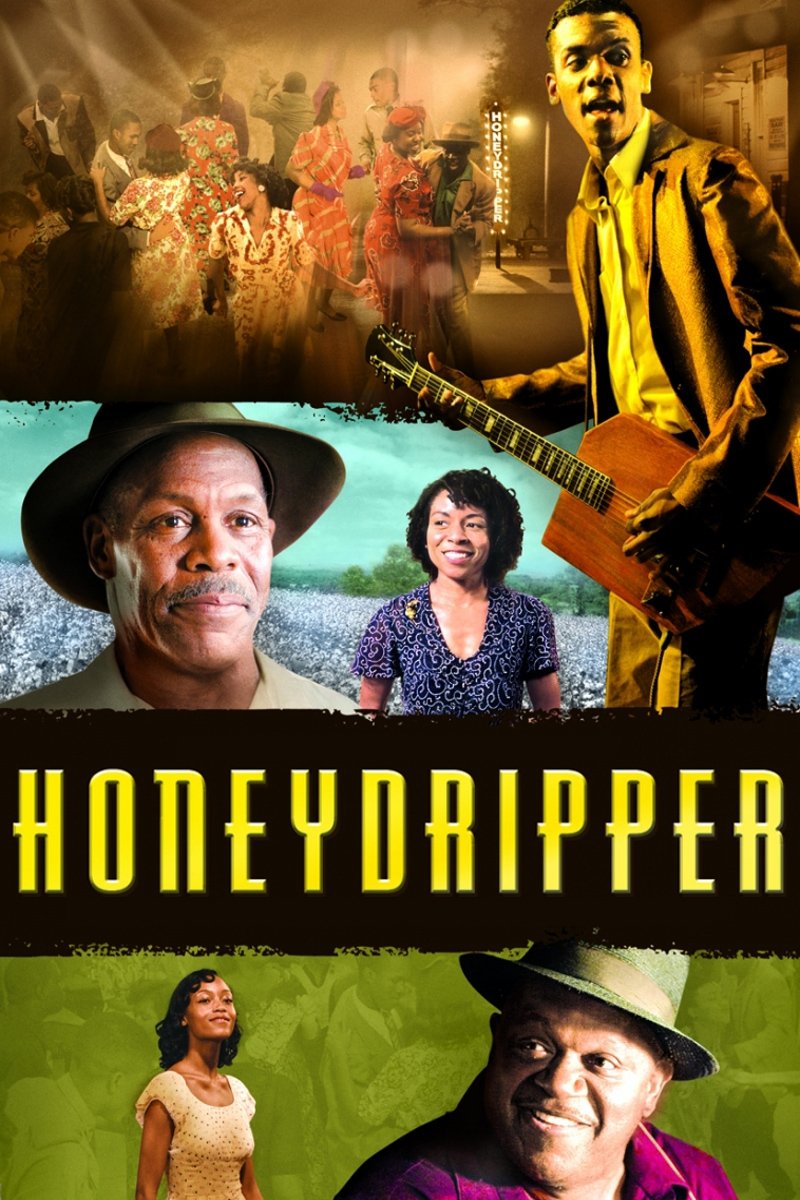
In 1950s Alabama, the owner of the Honeydripper juke joint finds his business dropping off and against his better judgment, hires a young electric guitarist in a last ditch effort to draw crowds during harvest time.
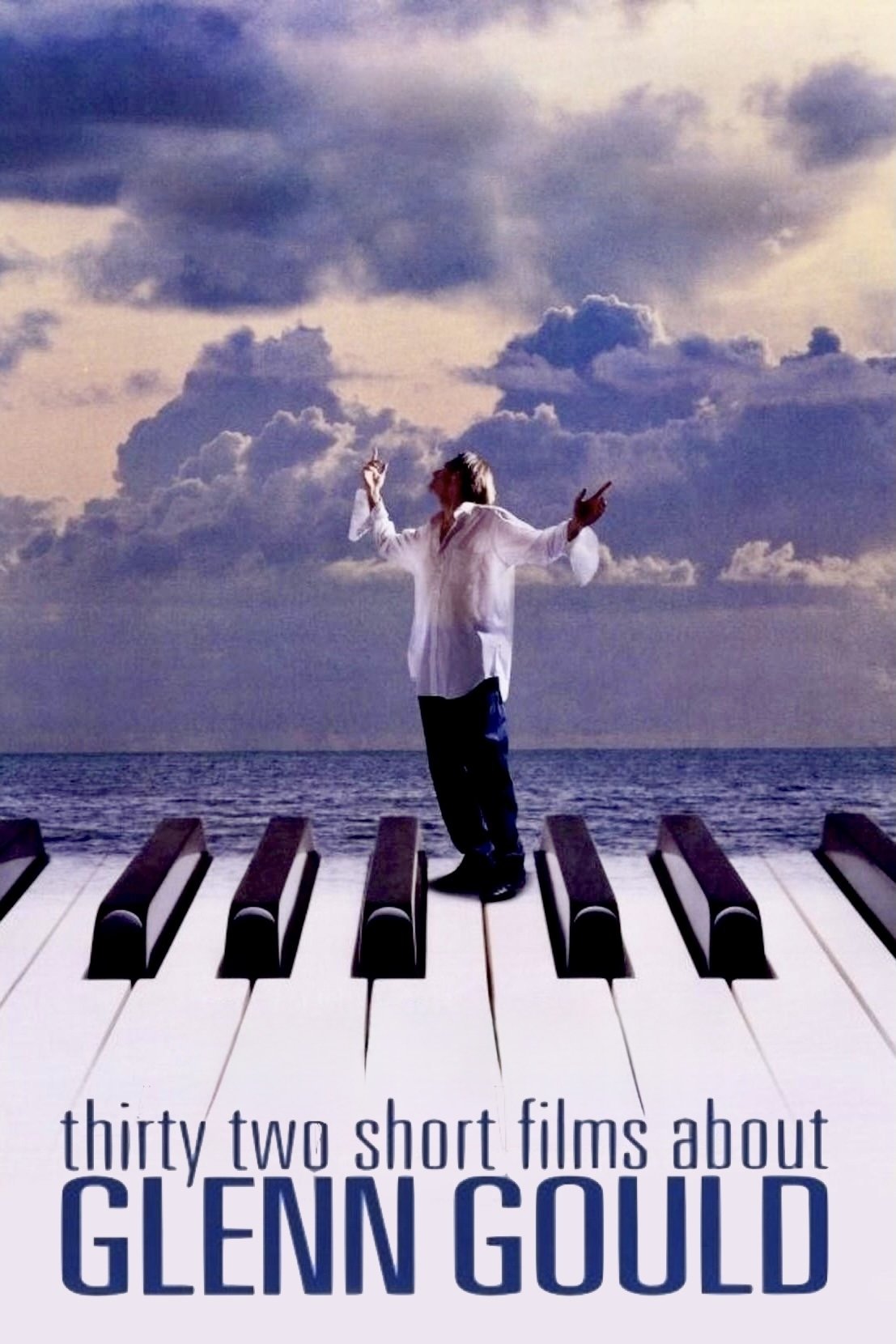
A collection of vignettes highlighting different aspects of the life, work, and character of the acclaimed Canadian classical pianist.
Roméo and Juliette are two young actors. They fall in love at first sight, move in together and make a baby. A love story and the founding of a home like millions of others. Except that their little boy, Adam, behaves abnormally. The young parents try hard to persuade themselves that everything is okay but, with the passing of time, they cannot delude themselves anymore: their son has a problem. From now on, war is declared. A war against illness. A war against Death. A war against despair.
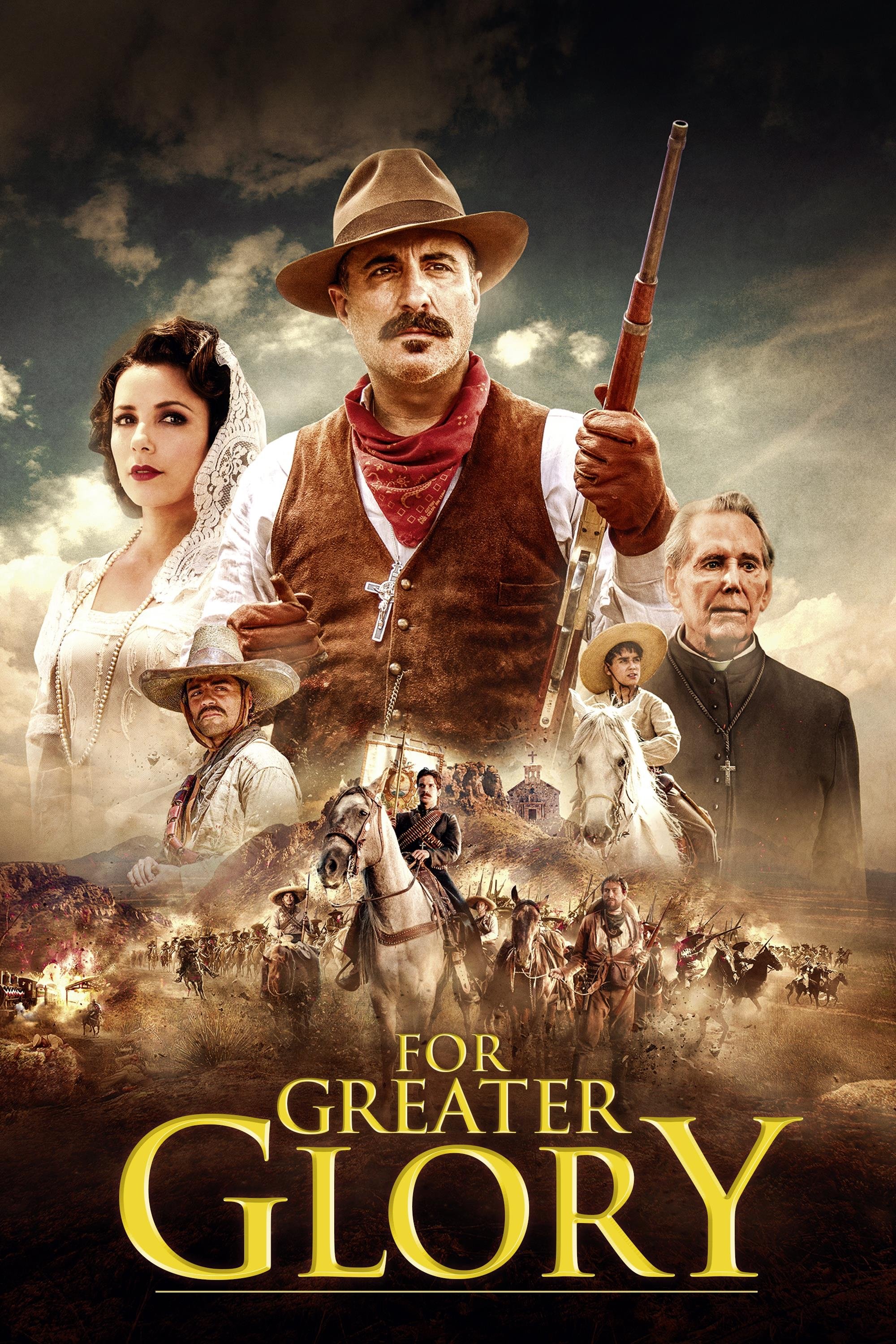
A chronicle of the Cristeros War (1926-1929), which was touched off by a rebellion against the Mexican government's attempt to secularize the country.
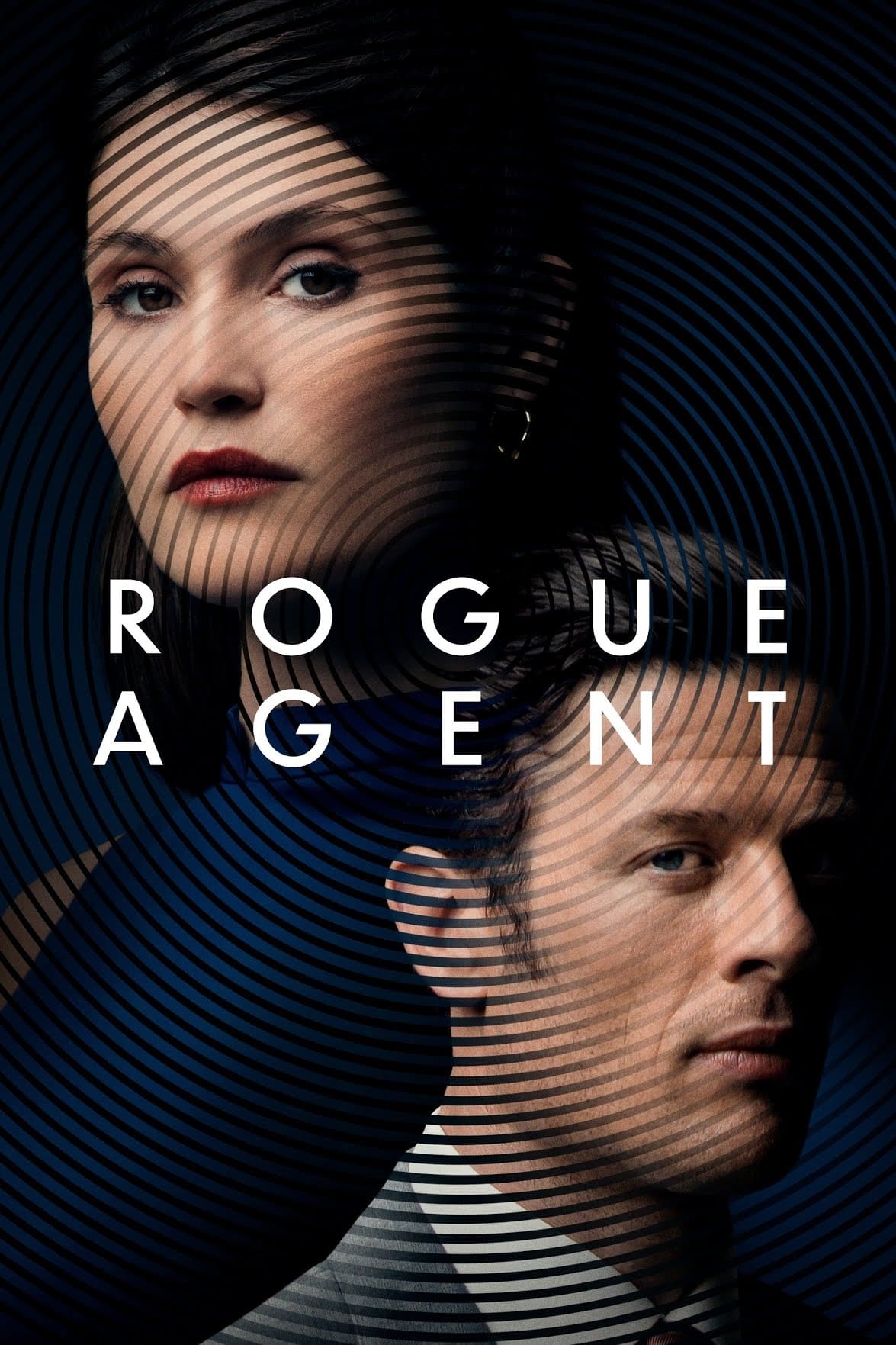
Conman Robert Freegard poses as an undercover MI5 agent and kidnaps countless victims amidst a high-stakes manhunt, until the woman who fell for him brings him to justice.
A shy teenager living on the Isle of Wight dreams of pop stardom. With the help of an unlikely mentor, she enters a singing competition that will test her integrity, talent, and ambition.