Social & External
The people behind it
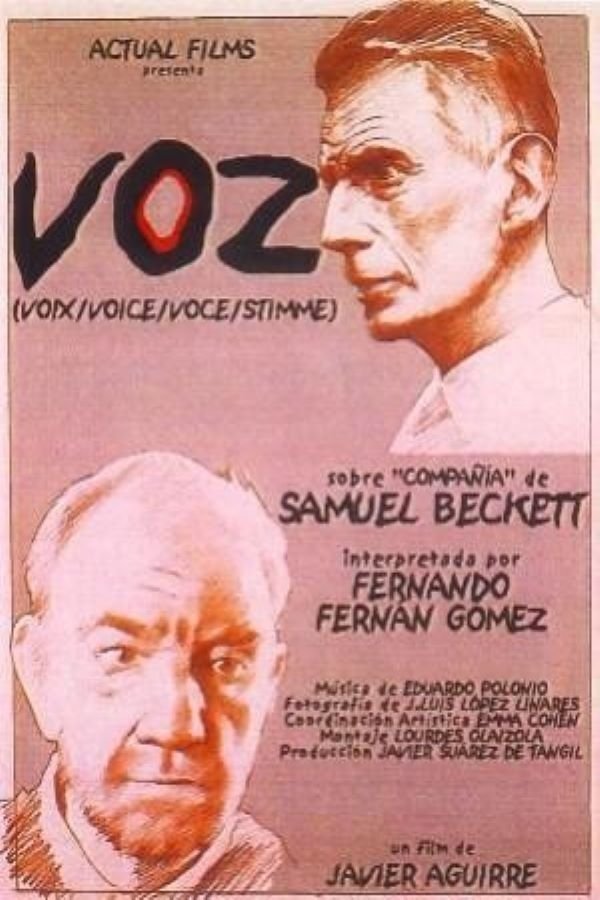
Fernando Fernán Gómez
At 7 p.m. he had an appointment...an important appointment.
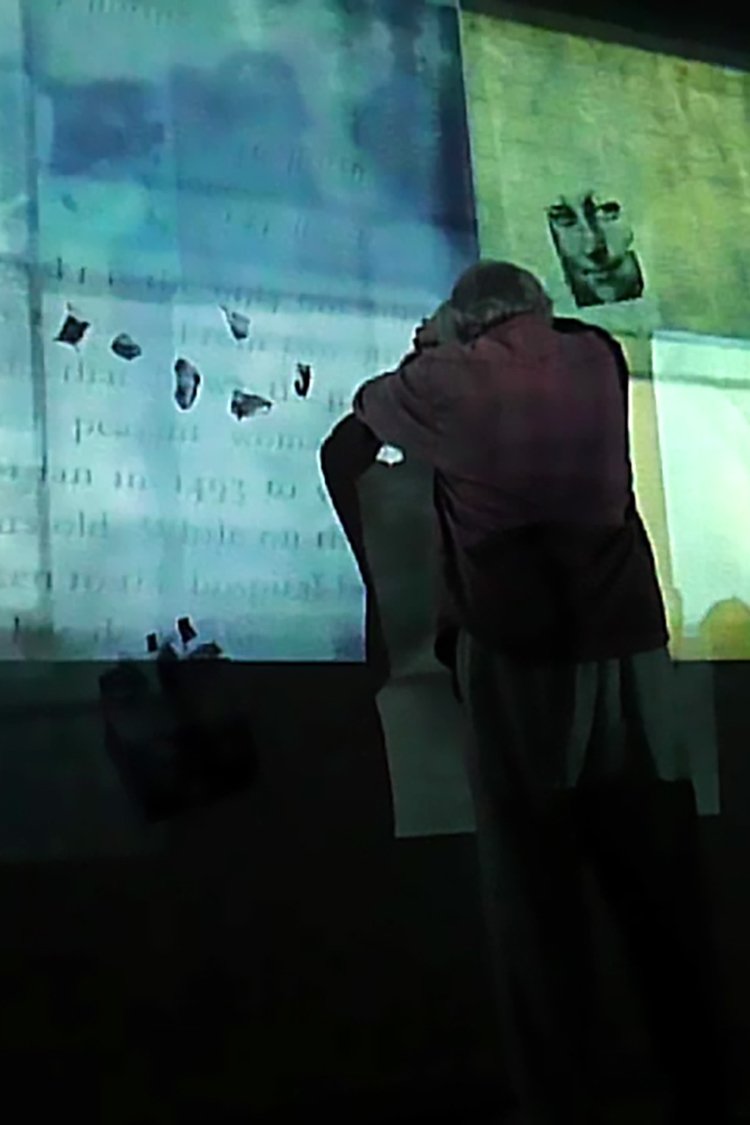
"This installation or performance work puts my own earlier film of the Mona Lisa (1973) through another stage of transformation – my own irretrievable self of some 34 years ago is now also part of the subject I first saw the ‘actual’ ‘Mona Lisa’ when I was about thirteen. Of course I had seen dozens of reproductions in books and postcards by then and the popular mythology of the enigmatic smile was already well engrained in my mind. My strongest impression, as I recall, was how small and unsurprising it was – a heavily protected cultural icon – no longer really a picture – and I was much more excited by the painting of the distant landscape than by the face. My own ‘version’ of ‘la Giaconda’ was never an homage, nor like Marcel Duchamp’s ‘L.H.O.O.Q’, an attack on its cultural power. Instead it came from a fascination with change and transformation – maybe also with arbitrary appropriation." Malcolm Le Grice
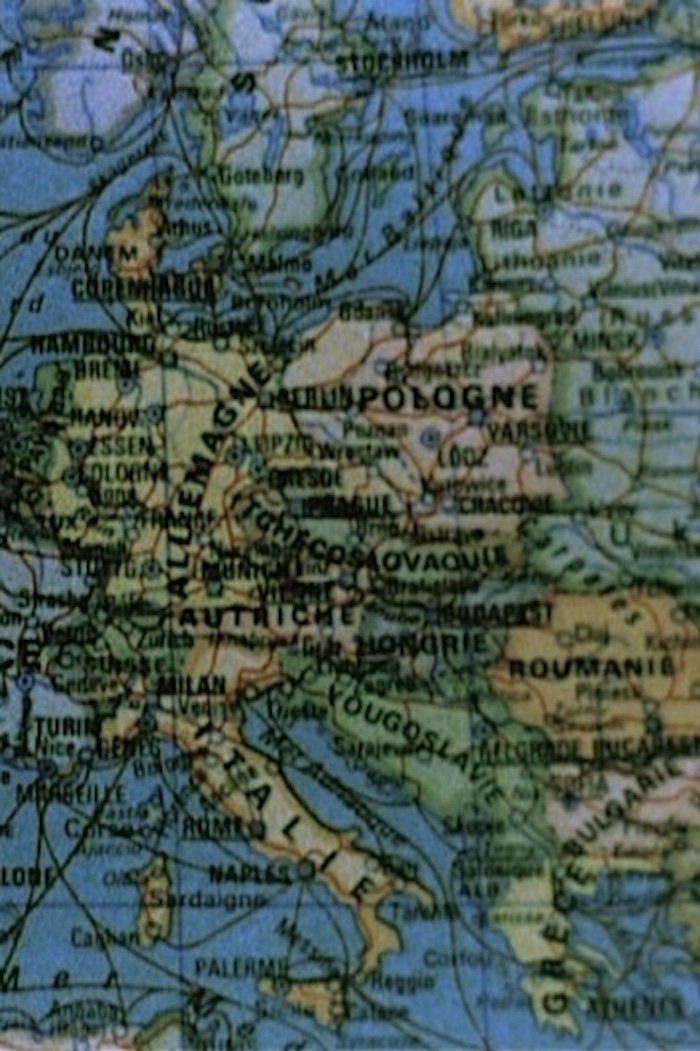
The film purports to be the second version of a (fictional) film made by Baudelaire in 1850 in memory of his (actual) voyage across the Pacific. It was shot using a world map mounted on black board, filmed in its entirety and in extreme close-up.
Mick Glasheen, an architect and pioneer of early cinema and experimental film, created work that was heavily influenced by media theorists. His video Teleologic Telecast from Spaceship Earth: On Board with Buckminster Fuller, 1970, is a re-mixed recording of a Buckminster Fuller’s lecture given at UNSW, presenting Fuller’s ideas on science, metaphysics and the universe, merged with just as radical techniques of moving image production, creating a multi-layered expression of image, voice, and sound.
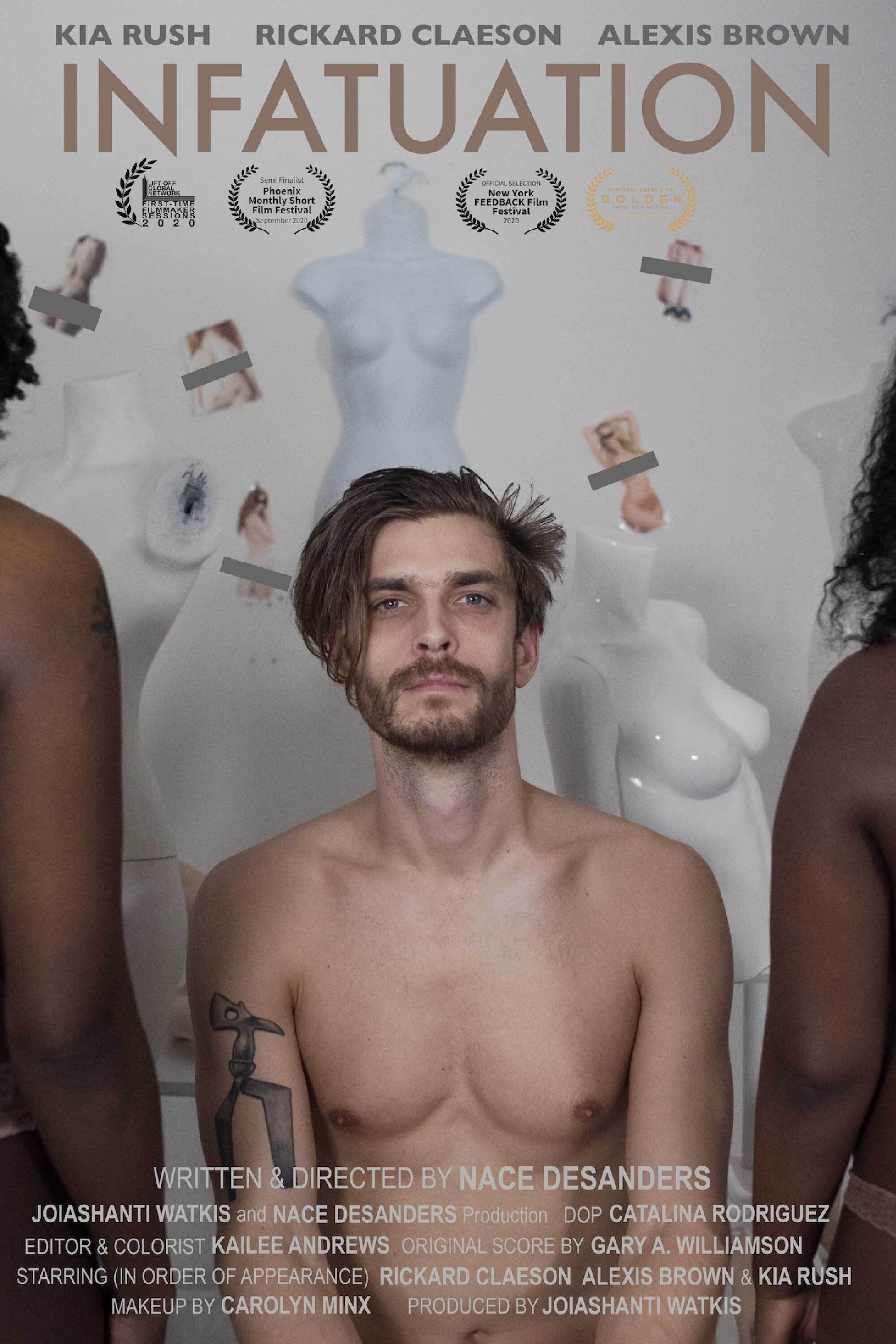
A male artist indulges in his love of the female form. That love is tainted when the female subjects make a choice to admire their own beauty. A short that loudly echoes society's treatment of black beauty. Infatuation is an experimental short film lasting just over four minutes.
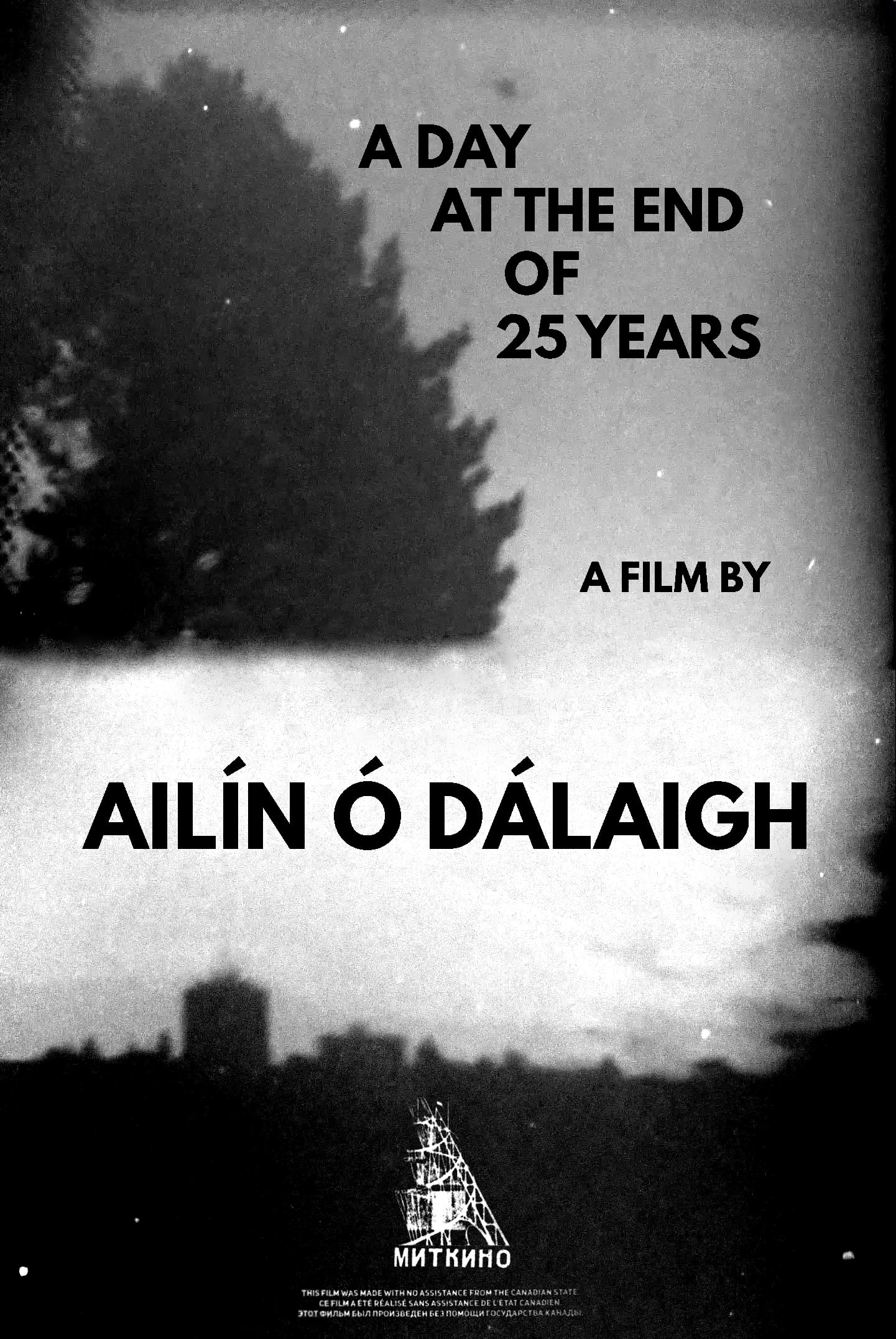
An experimental short film shot on Soviet Sveta 8mm film stock expired in 1984. It documents the 25th birthday of the filmmaker.
An experimental movie based on a poem of the French writer and director Jean Cocteau about a servant who fantasises about killing the lady of the house.
Scientists demonstrate the wonders of magnified objects.
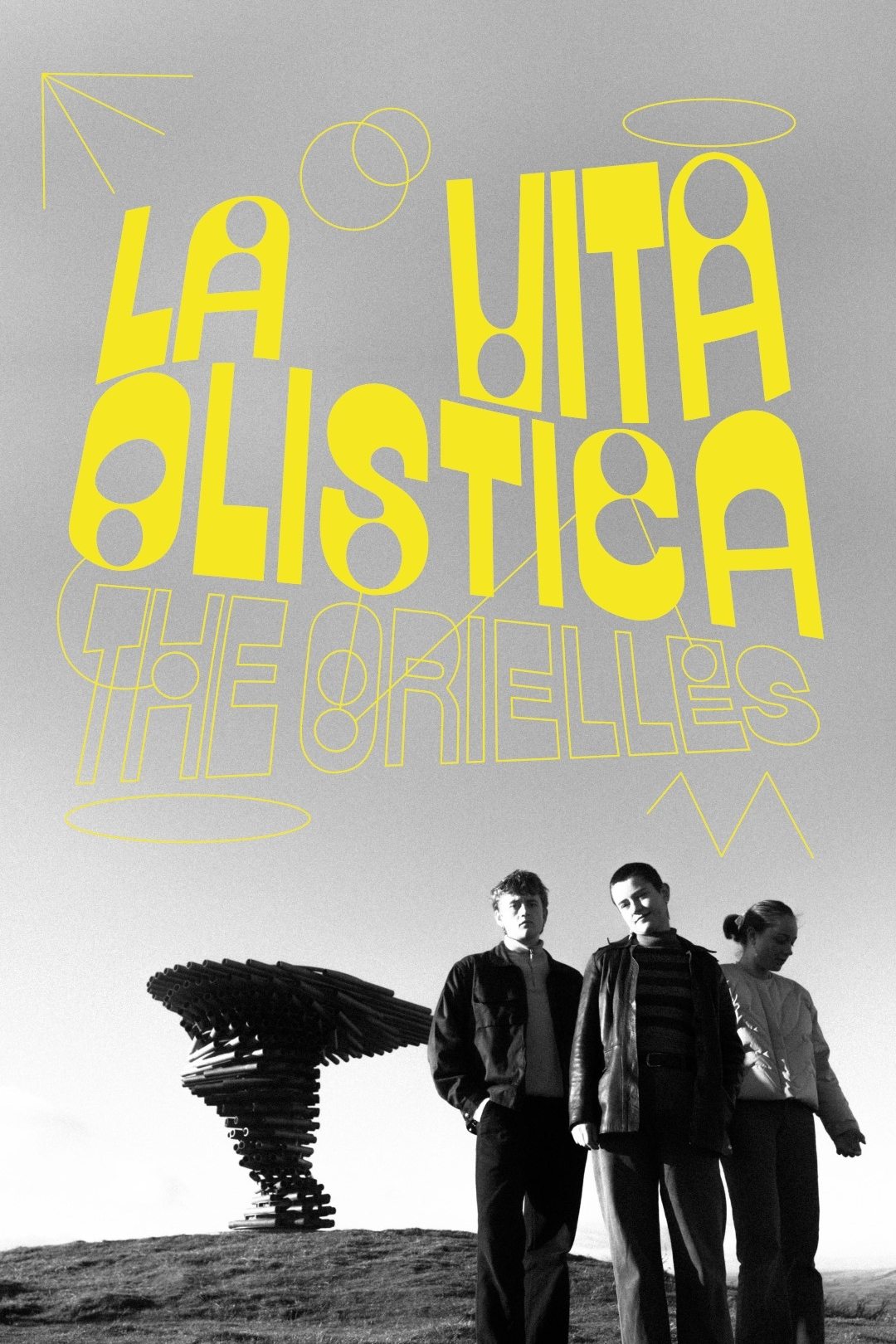
Gaining ideology from their last album Disco Volodar, the short film uses the core theme of space. The short film is filmed at Unit 3 Regents Trading Estate, the usual area for Sounds From The Other City. Using the philosophy of avante garde pioneer Maya Deren ‘one must at least begin with the body feeling’, the films opening is of the four piece standing atop of the hill in the Pendle countryside. This quickly melts into a warped reality and lands you into the POV of a camera and trapped in a liminal space where you see a band in session.
Experimental feature about two young men trying to make a film.
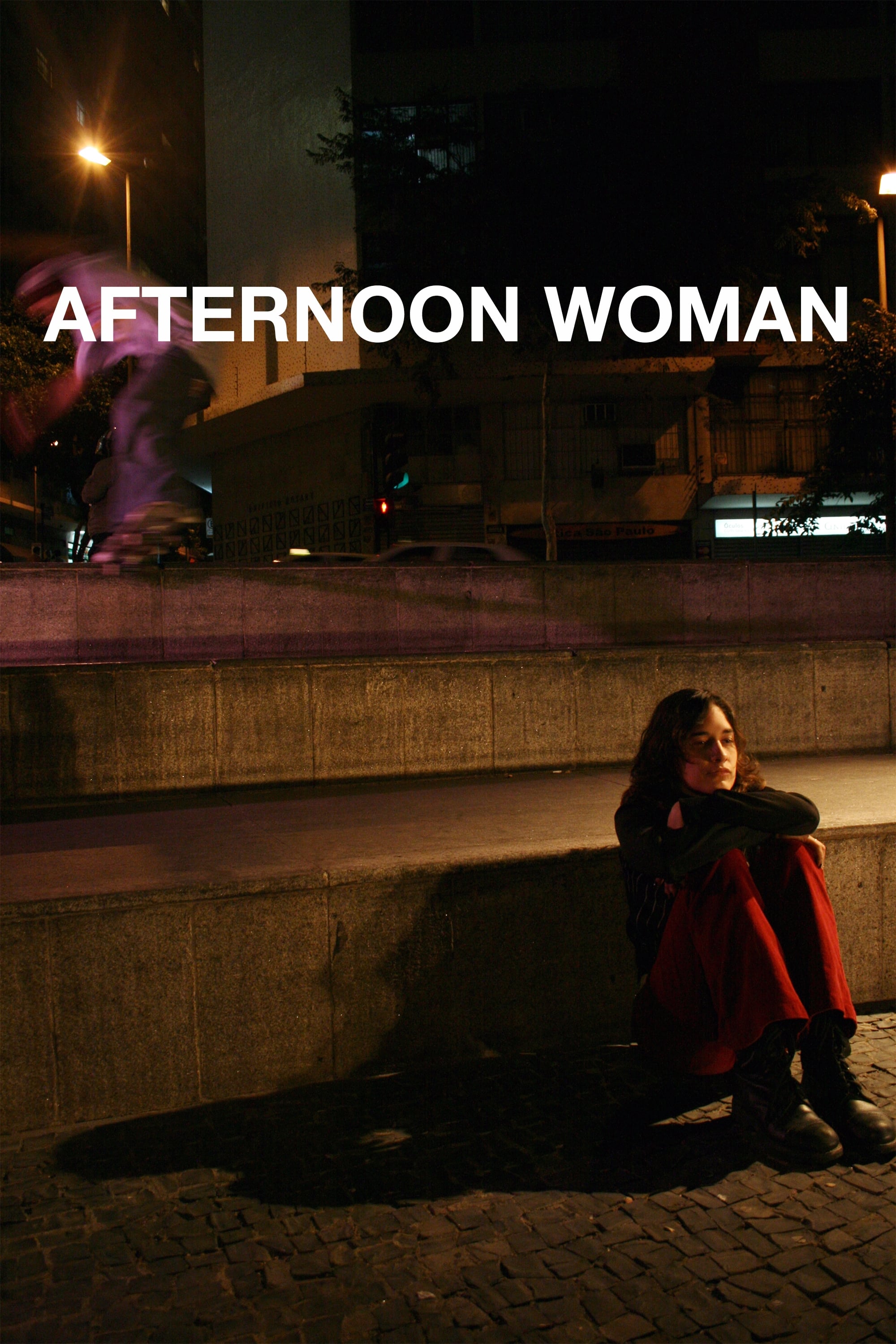
The daily lives of three young women that live together in a big city in Brazil and go through crucial moments in their lives.
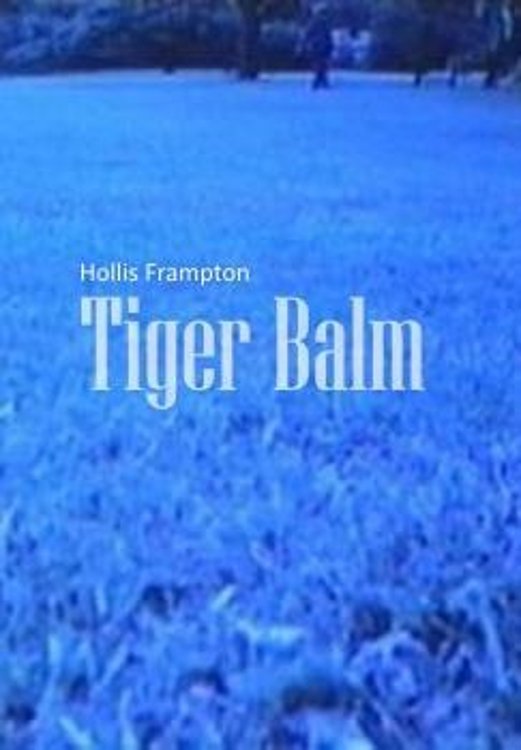
"After two years of massive didacticism in black-and-white [Hapax Legomena (1971-72)], I am surprised by Tiger Balm, lyrical, in color, a celebration of generative humors and principles, in homage to the green of England, the light of my dooryard… and consecutive matters." - HF
An analysis of film’s persistent relationship to sexuality, mediated by allusions to early cinema’s flicker, and other aggressive qualities of the cinematic apparatus.
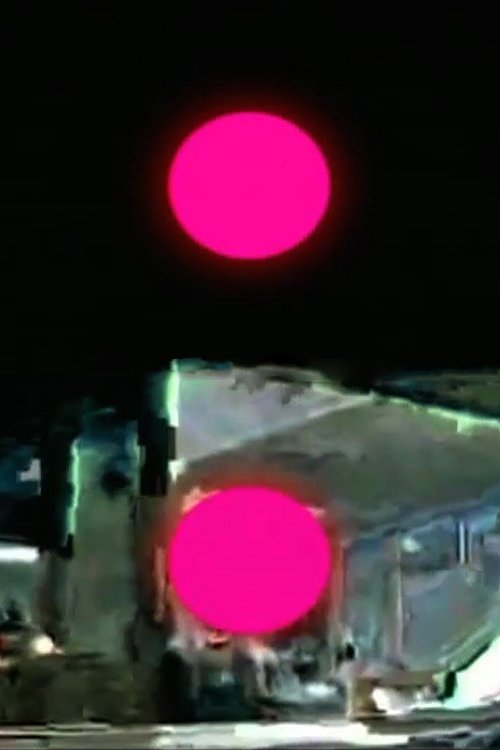
In Untitled (Pink Dot), Murata transforms footage from the Sylvester Stallone film First Blood (1982) into a morass of seething electronic abstraction. Subjected to Murata's meticulous digital reprocessing, the action scenes decompose and are subsumed into an almost palpable, cascading digital sludge, presided over by a hypnotically pulsating pink dot.
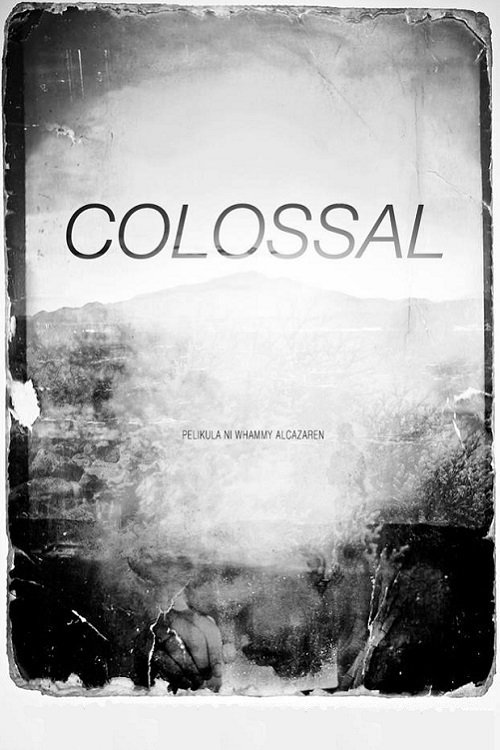
Colossal explores the complexities of grief and the process of grieving as understood through the myth of a Man as he ventures through shifting landscapes ruminating.
Rapidly changing images of natural objects, scenery, animals, plants, and people flicker, flash, tumble, and cascade across the screen.
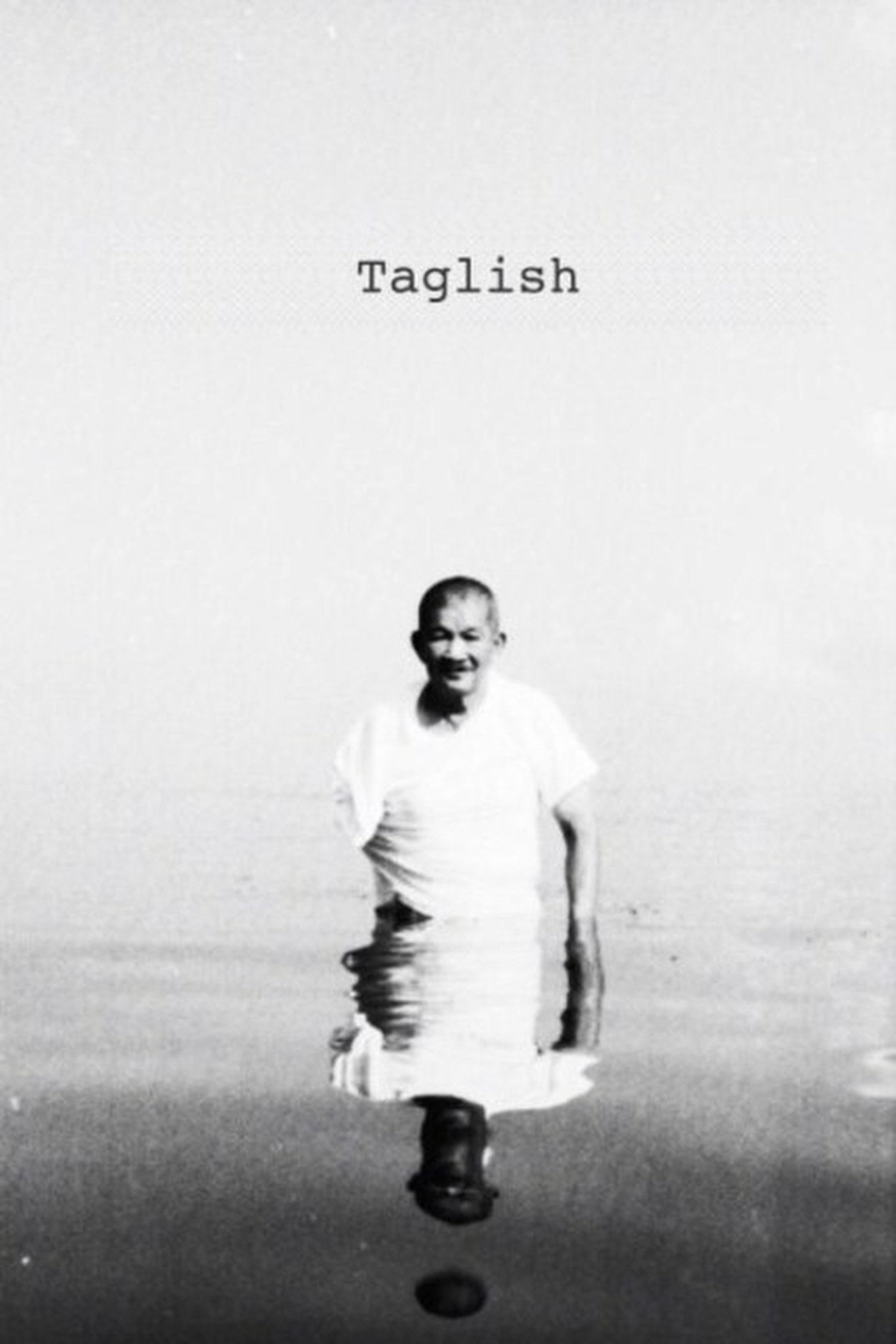
At first, there was Tagalog, Gym Lumbera’s short and, to his mind, unfinished narrative about the infidelity that comes between a husband and wife in their twilight years, shot on film and reflecting his own real-life infidelity.. And then there was a storm, a real storm and not a metaphorical one, that flooded his house and submerged, and subsequently damaged, the only copy of Tagalog. This damaged version, entitled English, became the missing piece that completed the film. The new work is named after Taglish, the bastard hybrid, some say corruption, of Tagalog and English, and has become a meditation on love and language and the ways in which we betray and destroy them.
Basically an artist is also a terrorist, the protagonist thinks in an unguarded moment. And if he is a terrorist after all, then he might just as well be one. Not an instant product, but an experimental feature in which diary material is brought together to form an intriguing puzzle.
Sarah is a debt collector who lives among the inhabitants of the village of Guimbal on the island of Panay. She wants to find the young man who appeared to her in a dream and goes to the island of Negros. Here, as she interacts with the inhabitants, Sarah continues her search, gathering memories of life and war, dreams, myths, legends, songs and stories that she takes part in and at times revolve around her. She is the daughter of an ancient mermaid, a revolutionary, a primordial element, a virgin who was kidnapped and hidden away from the sunlight. “The film is a retelling of fragments of the American occupation. Dialogue, shot in the Hiligaynon language, is not translated but used as a tonal guide and a tool for narration. Using unscripted scenes shot where the main character was asked to merely interact with the villagers, I discard dialogue and draw meaning from peoples’ faces, voices, and actions, weaving an entirely different story through the use of subtitles and inter-titles.”
"Mapang-akit" is an offshoot of a documentary project made with an Icelandic filmmaker and uses the outtakes from the Hudas Hudas festival in Antique, where a community bonds over a large effigy of Judas Iscariot during Holy Week. Amidst it is a found story of a man who returns home to his death after pursuing a woman in a neighboring village.
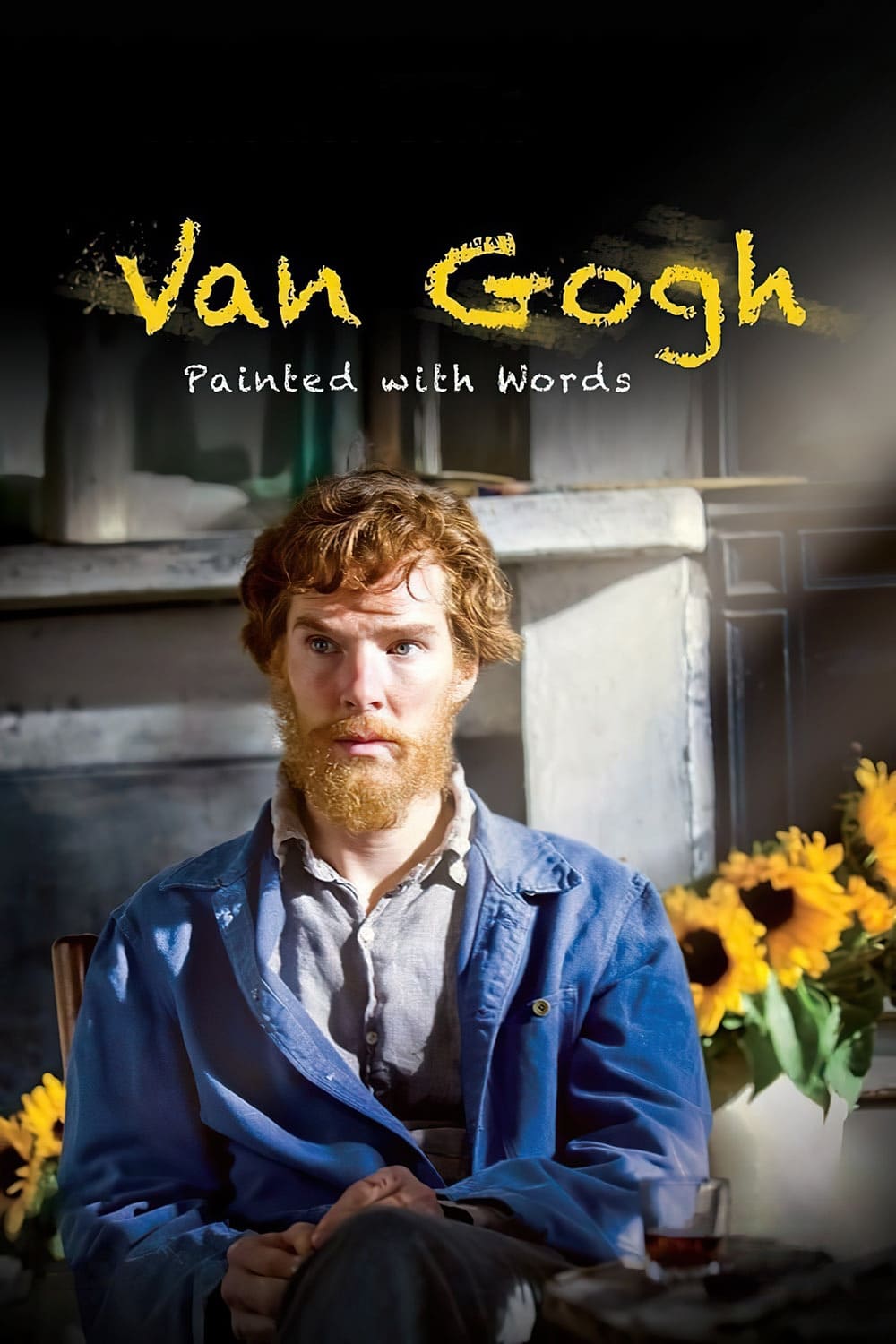
A drama-documentary presented by Alan Yentob, with Benedict Cumberbatch in the lead role. Every word spoken by the actors in this film is sourced from the letters that Van Gogh sent to his younger brother Theo, and of those around him. What emerges is a complex portrait of a sophisticated, civilised and yet tormented man.
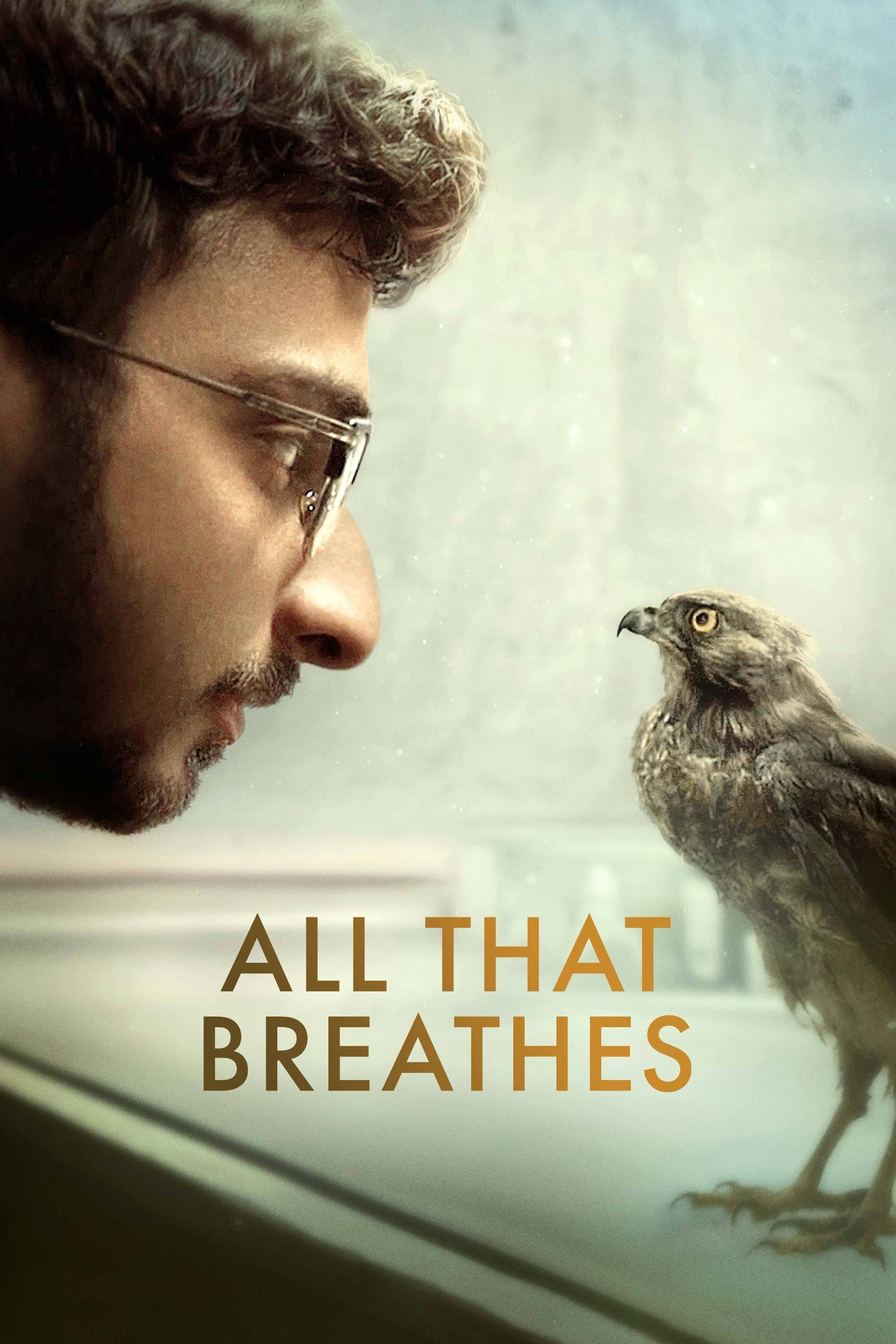
Against the darkening backdrop of New Delhi's apocalyptic air and escalating violence, two brothers devote their lives to protecting one casualty of the turbulent times: the bird known as the black kite.
This autobiography of Hector Delgado runs from his childhood to become one of the greatest exponents of the urban genre, but the results of that life did not please him and led him to try to take his life .After being victim of a firefight at a service station in Aguada, a city hall in Puerto Rico, he stopped earning at least two hundred American dollars for presentation and being "devout of Jesus"
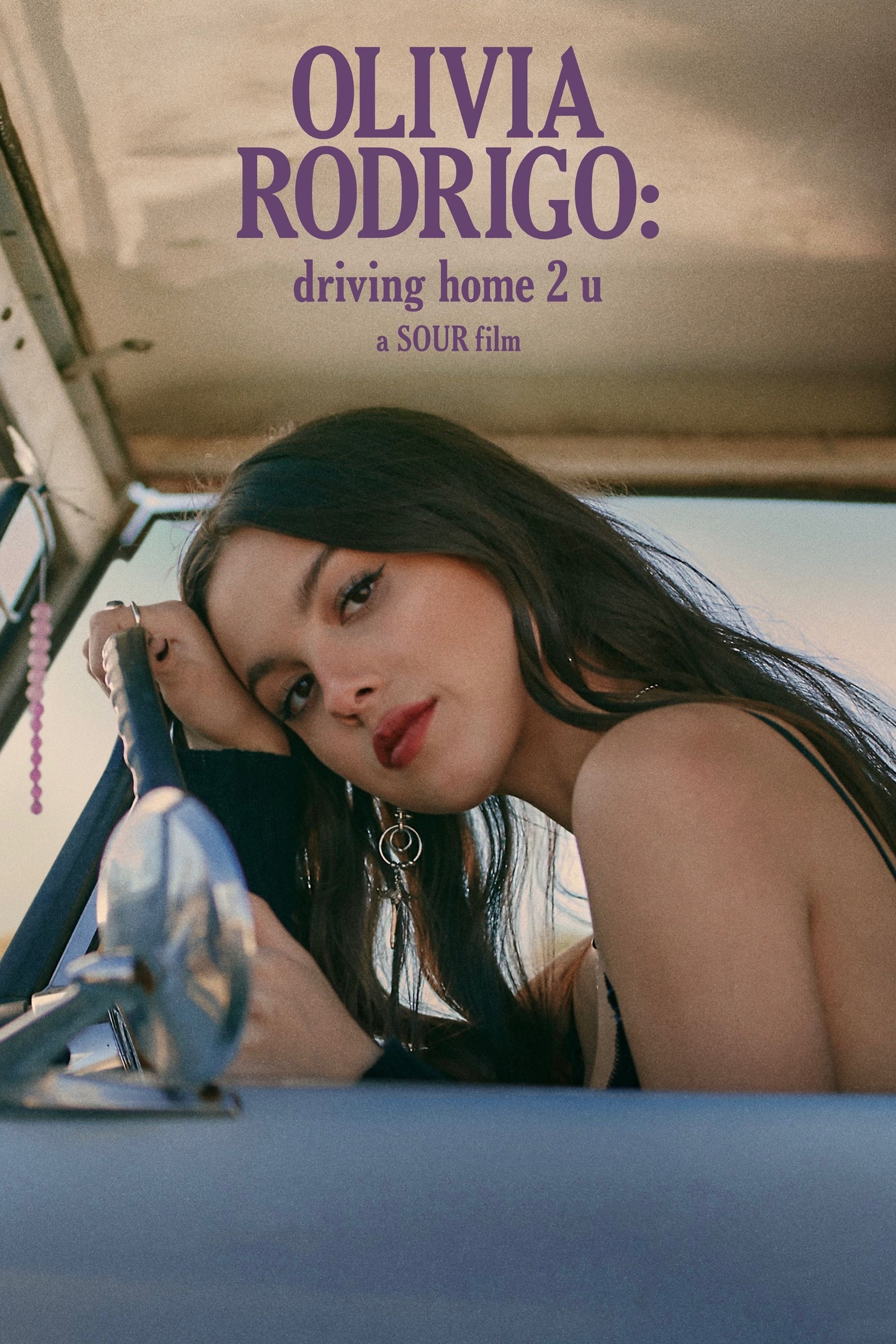
Grammy® winner singer-songwriter Olivia Rodrigo takes a familiar road trip from Salt Lake City, where she began writing her debut album “SOUR,” to Los Angeles. Along the way, Rodrigo recounts the memories of writing and creating her record-breaking debut album and shares her feelings as a young woman navigating a specific time in her life. Through new live arrangements of her songs, intimate interviews and never-before-seen footage from the making of the album, audiences will follow Olivia along on a cinematic journey exploring the story of “SOUR.”
A documentary chronicling Queen and Lambert's incredible journey since they first shared the stage together on "American Idol" in 2009.
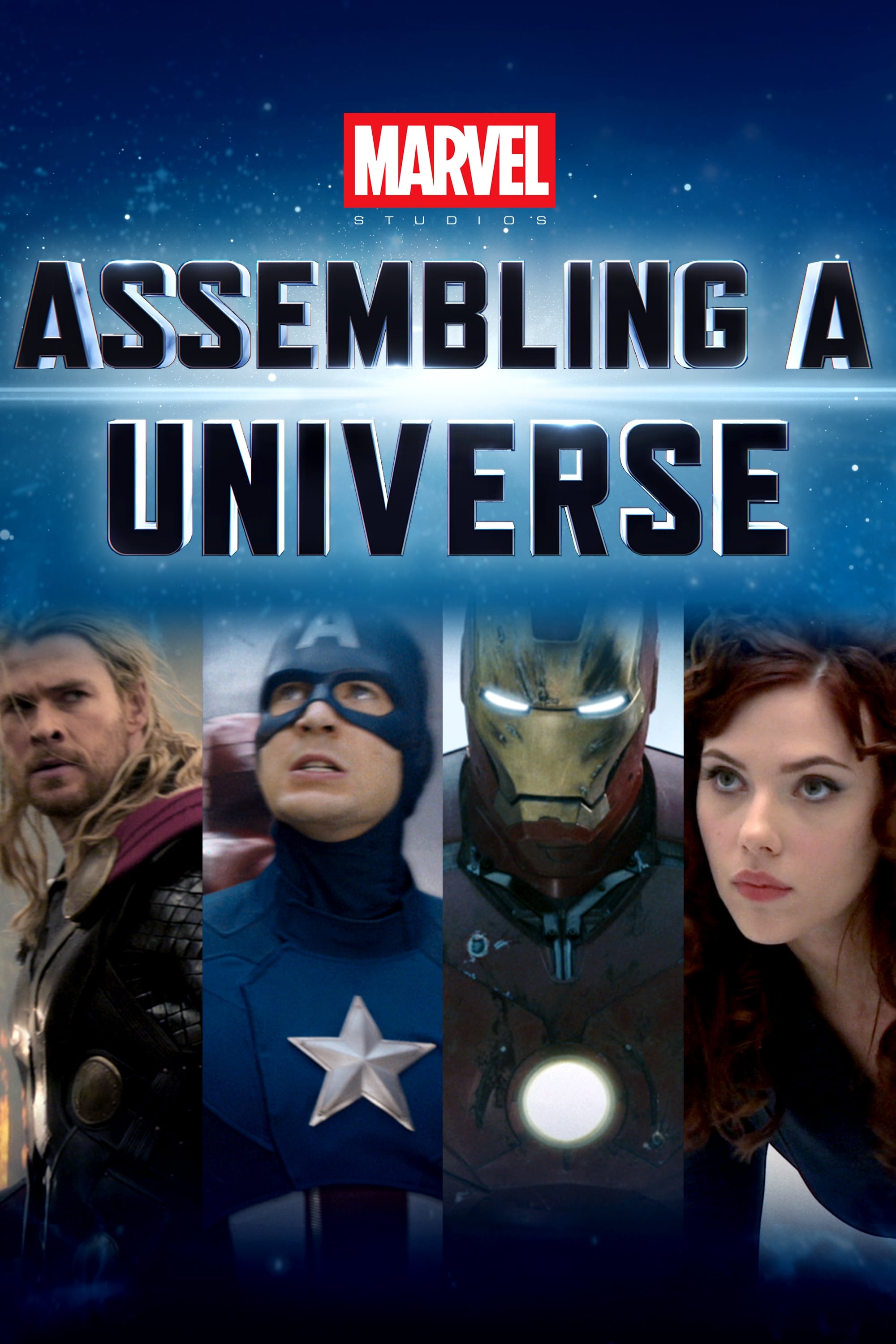
A look at the story behind Marvel Studios and the Marvel Cinematic Universe, featuring interviews and behind-the-scenes footage from all of the Marvel films, the Marvel One-Shots and "Marvel's Agents of S.H.I.E.L.D."!
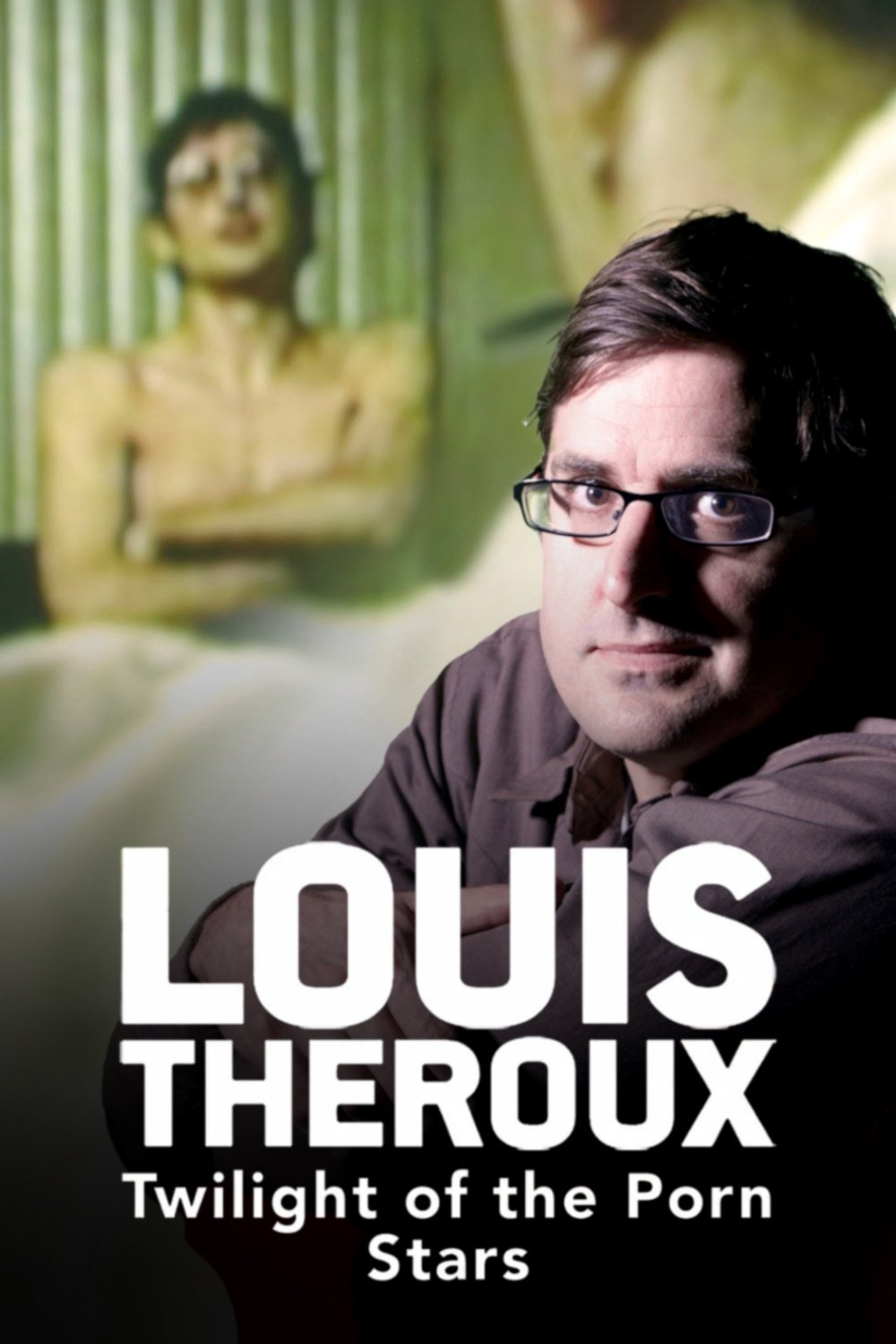
In 1997, Louis Theroux made a documentary about the world of male porn performers in Los Angeles. 15 years later, he returns to find a business struggling with the deluge of free porn on the internet. Louis revisits some of the original programme's contributors as well as meeting the latest crop of porn performers dreaming of porn stardom.
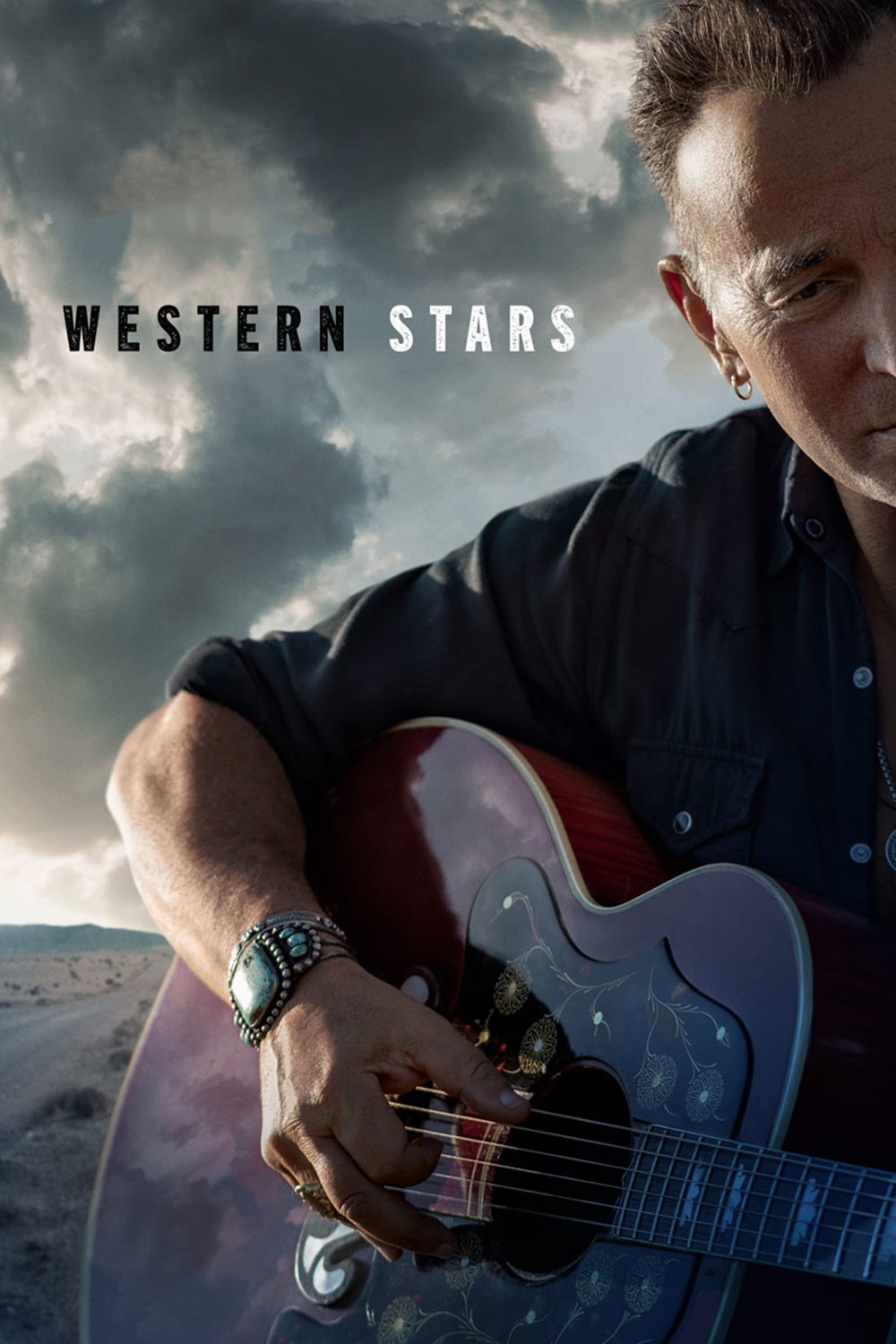
The incomparable Bruce Springsteen performs his critically acclaimed latest album and muses on life, rock, and the American dream, in this intimate and personal concert film co-directed by Thom Zimny and Springsteen himself.
Alexander McQueen's rags-to-riches story is a modern-day fairy tale, laced with the gothic. Mirroring the savage beauty, boldness and vivacity of his design, this documentary is an intimate revelation of McQueen's own world, both tortured and inspired, which celebrates a radical and mesmerizing genius of profound influence.
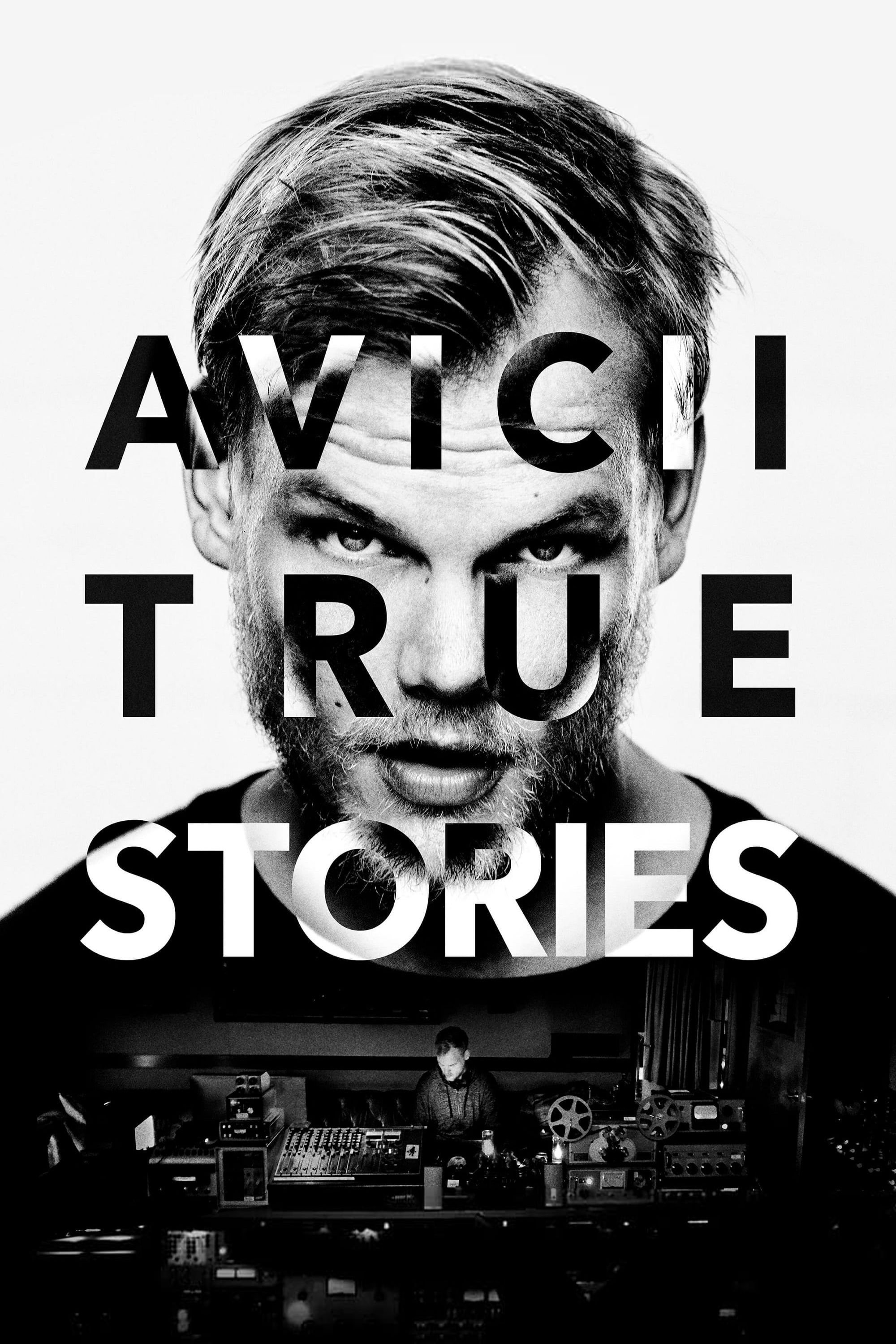
Documentary about the arena-packing Swedish DJ, chronicling his explosive rise to fame and surprising decision to retire from live performances in 2016.
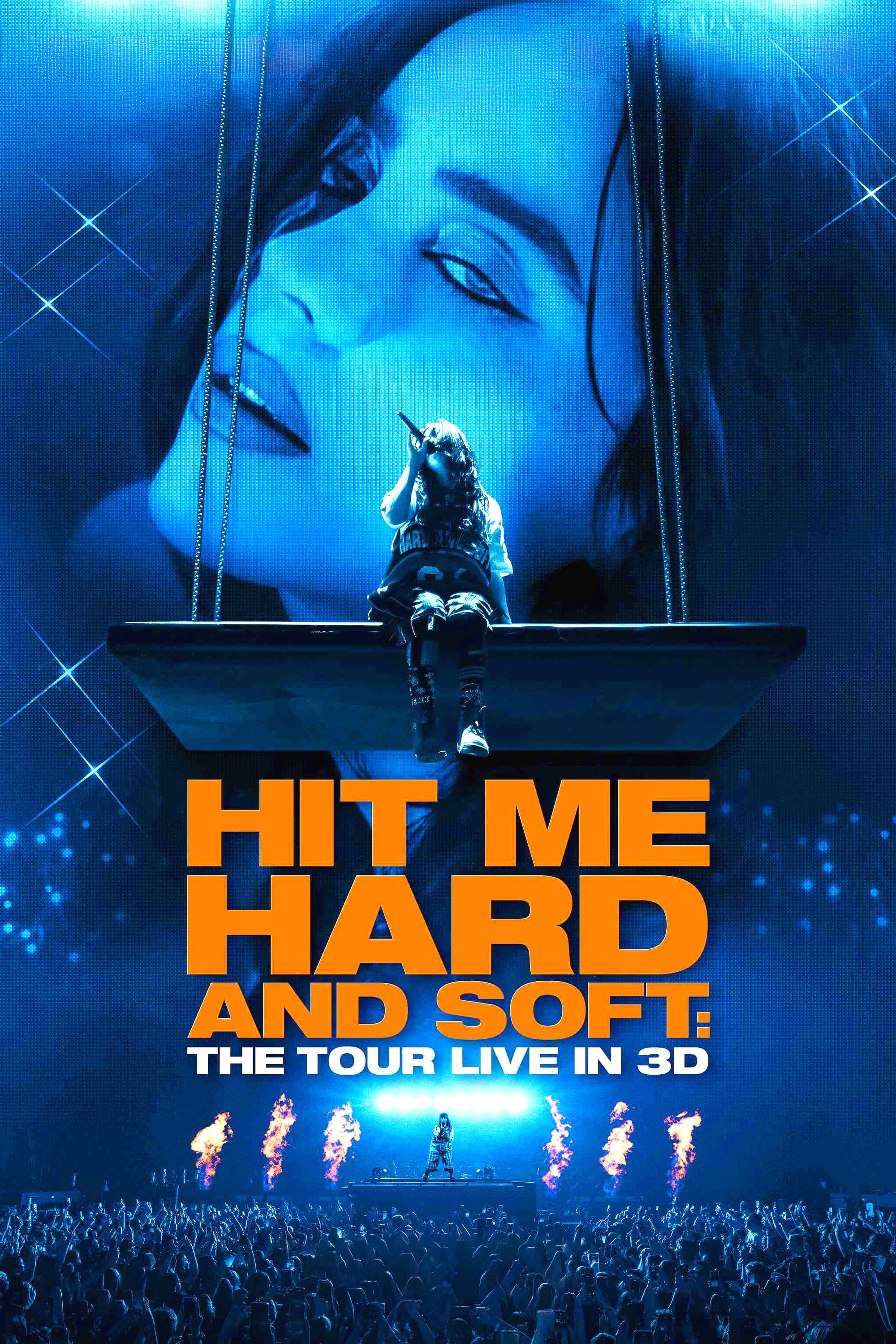
Captured during Billie Eilish's sold-out world tour, a concert experience from one of the most celebrated and successful artists of her generation, presented in immersive 3D.
The Up in Smoke Tour is a West Coast hip hop tour in 2000 featuring artists Ice Cube, Eminem, Proof, Snoop Dogg, Dr. Dre, Nate Dogg, Kurupt, D12, MC Ren, Westside Connection, Mel-Man, Tha Eastsidaz, Doggy's Angels, Devin The Dude, Warren G, TQ, Truth Hurts and Xzibit.
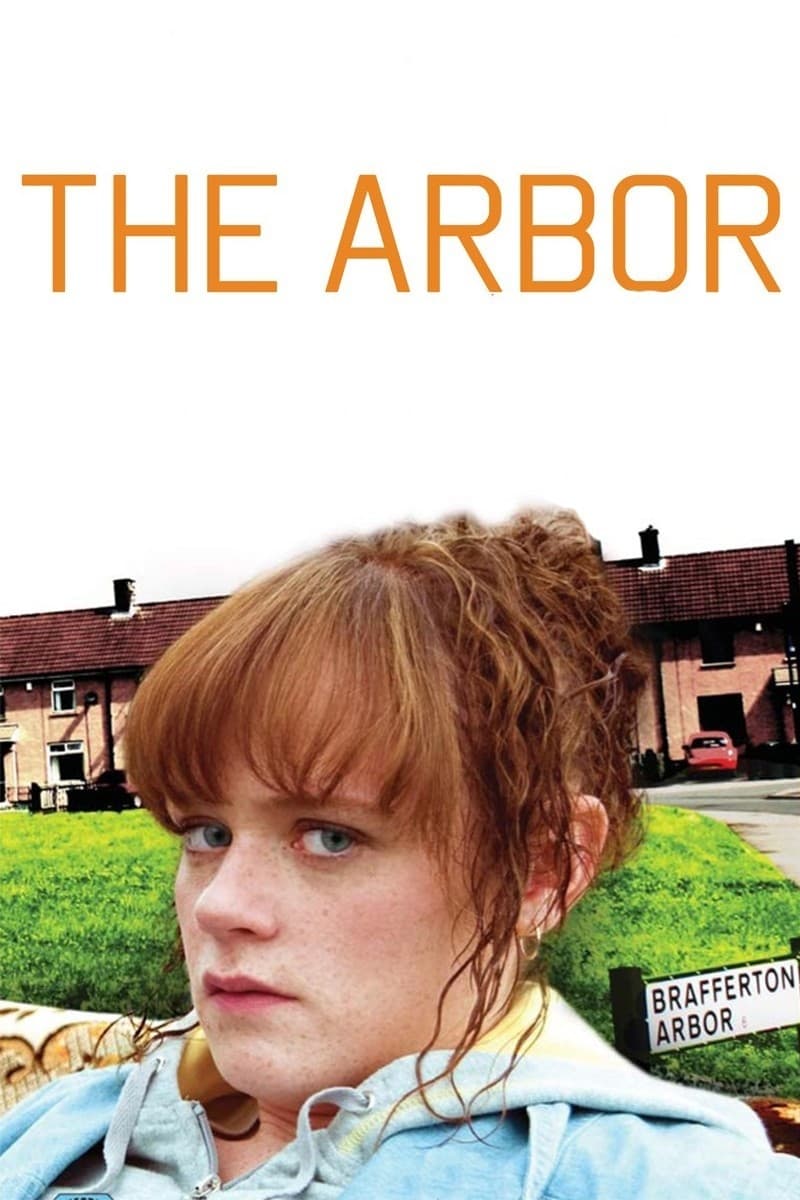
The lives of the late Bradford playwright Andrea Dunbar and Lorraine, one of her daughters, and the community of Bradford, in the 30 years since the 18-year-old Andrea penned a play about growing up in the community titled "The Arbor".
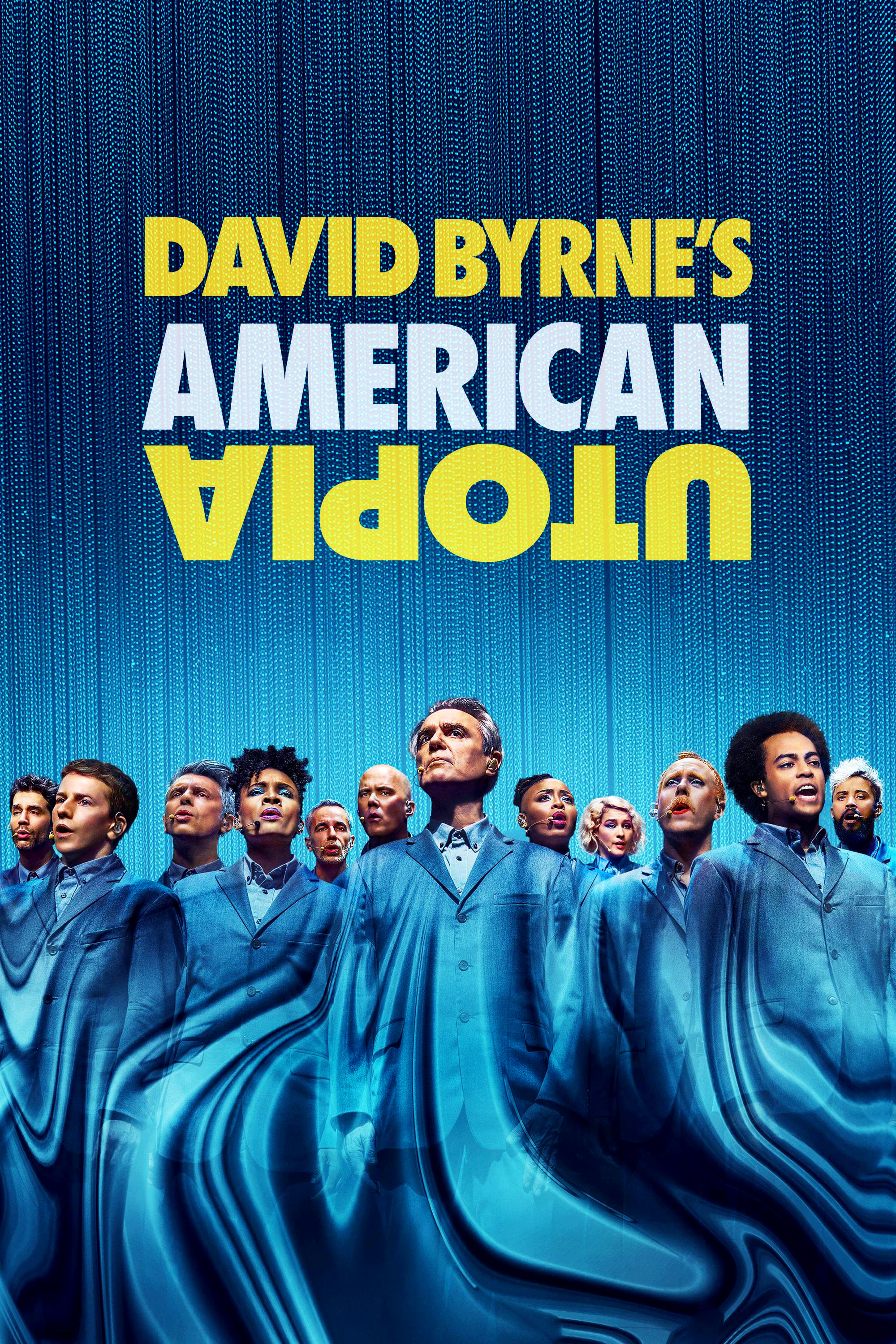
A filmed version of David Byrne's Broadway show, a unifying musical celebration that inspires audiences to connect to each other and to the global community.
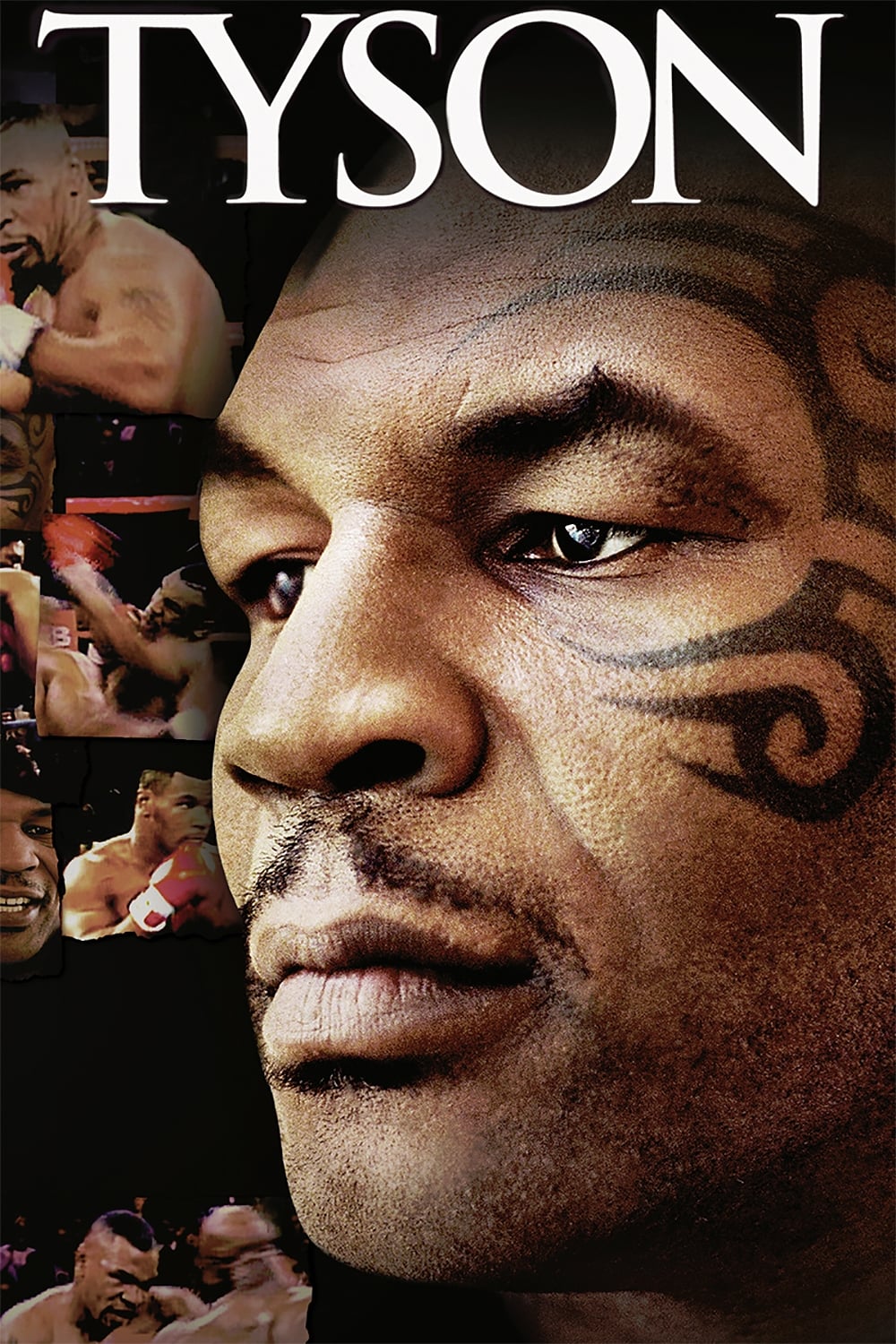
Director James Toback takes an unflinching, uncompromising look at the life of Mike Tyson--almost solely from the perspective of the man himself. TYSON alternates between the controversial boxer addressing the camera and shots of the champion's fights to create an arresting picture of the man.
Lupita Nyong'o narrates a documentary about Peanuts and its creator, Charles M. Schulz. Famous fans—including Drew Barrymore, Kevin Smith, and Al Roker—share its influence on them, and a new animated story finds Charlie Brown on a quest.
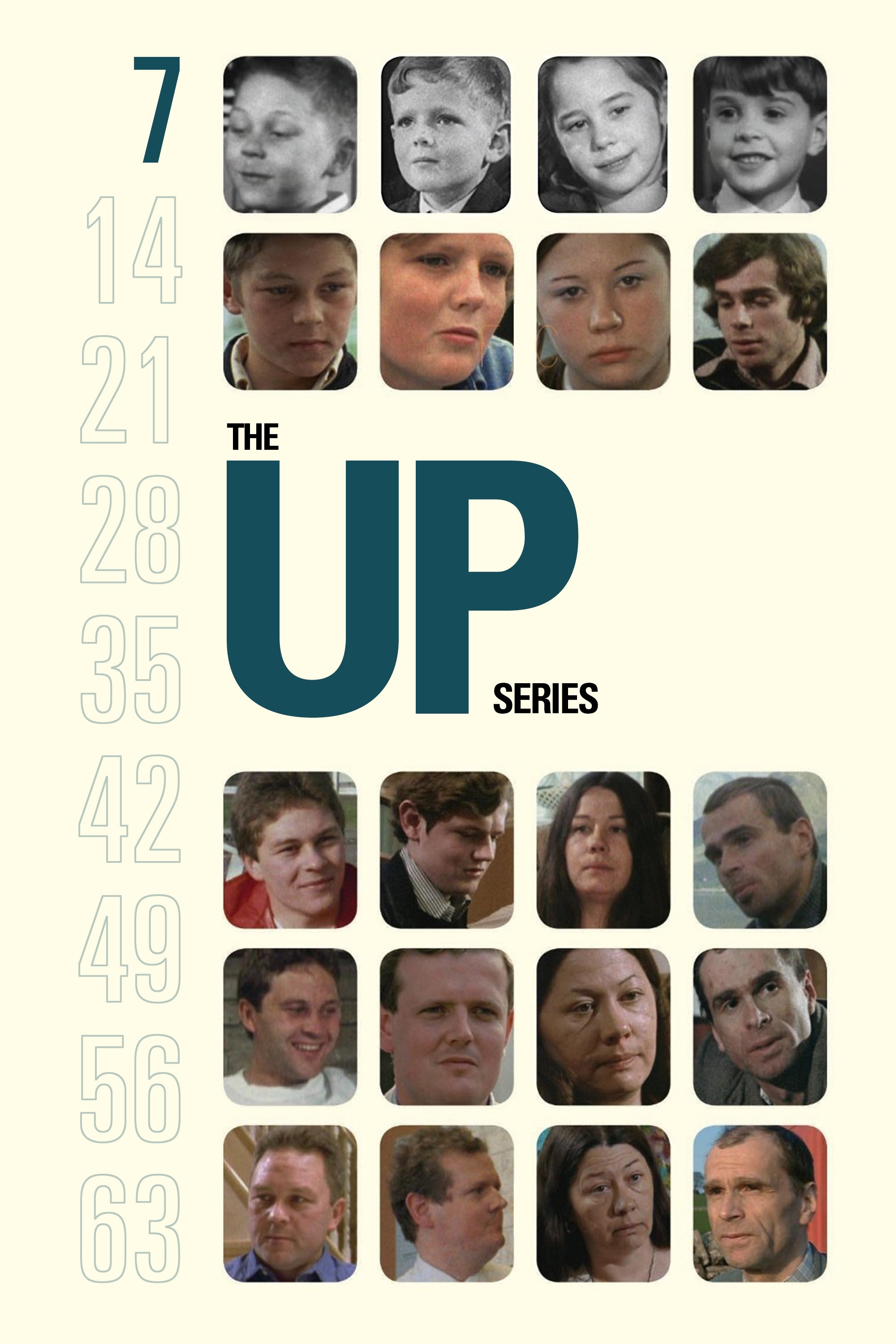
A group of British children aged 7 from widely ranging backgrounds are interviewed about a range of subjects. The filmmakers plan to re-interview them at 7 year intervals to track how their lives and attitudes change as they age.
An inside look at one of the most anticipated movie sequels ever with James Cameron and cast.
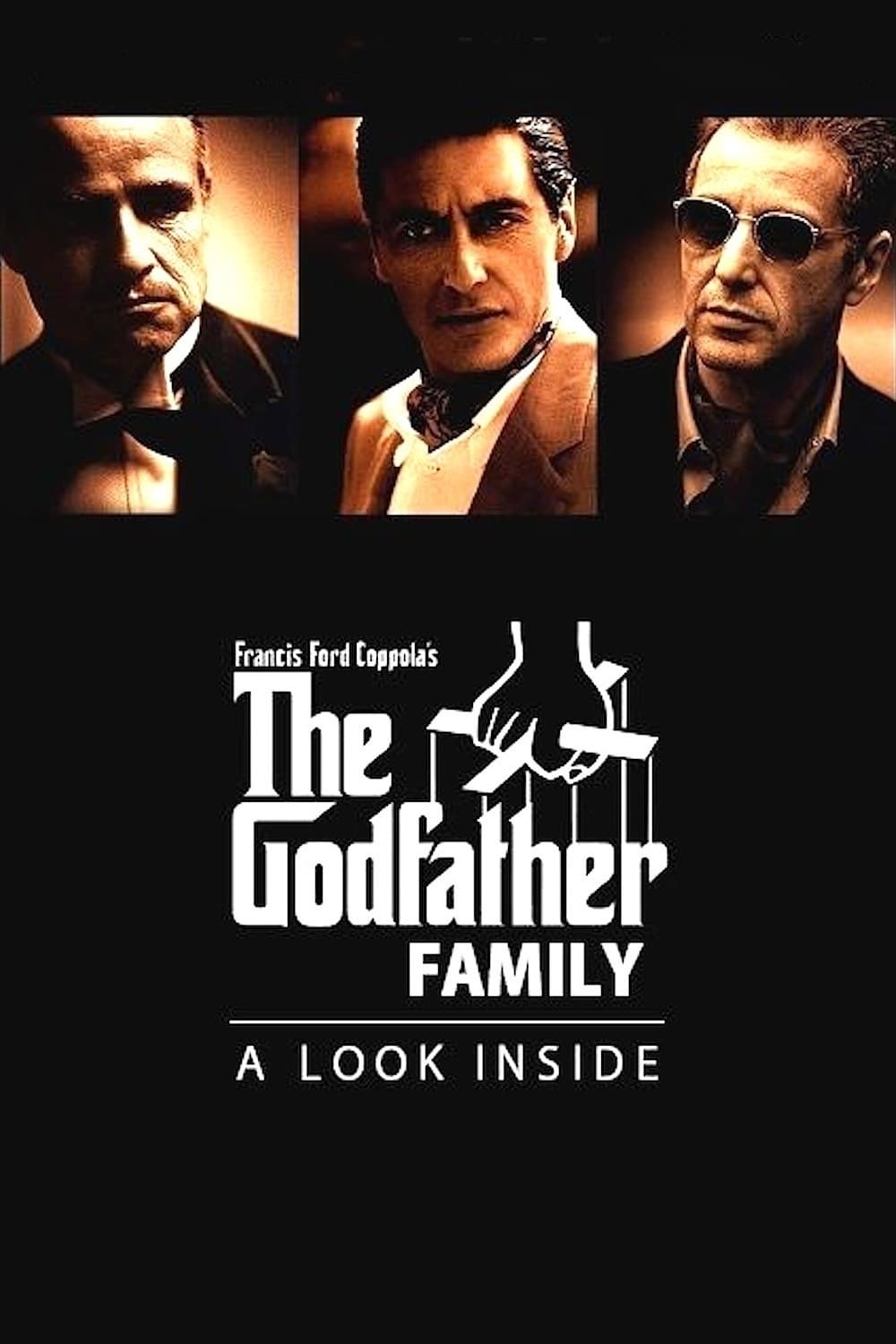
A documentary on the making of the three Godfather films, with interviews and recollections from the film makers and cast. This feature also includes the original screen tests of some of the actors for "The Godfather" film, and some candid moments on the set of "The Godfather: Part III."
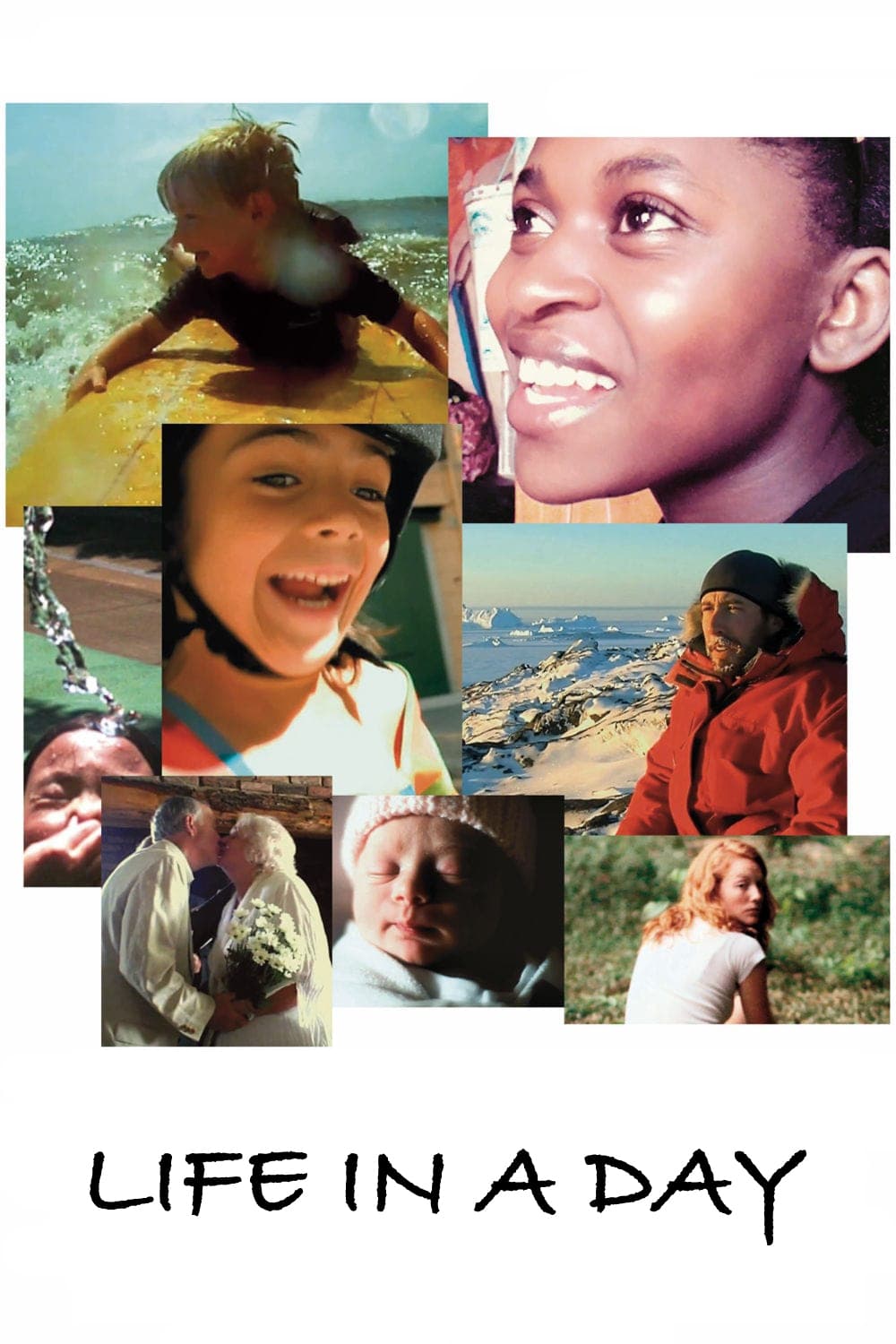
A documentary shot by filmmakers all over the world that serves as a time capsule to show future generations what it was like to be alive on the 24th of July, 2010.