"The 3rd Cinerama!"
Seven Wonders of the World is a 1956 film in Cinerama. Lowell Thomas searches the world for natural and man made wonders and invites the audience to try to update the ancient Greek list of "Seven Wonders of the World."
Social & External
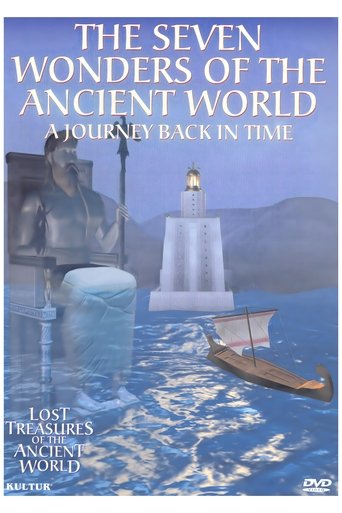
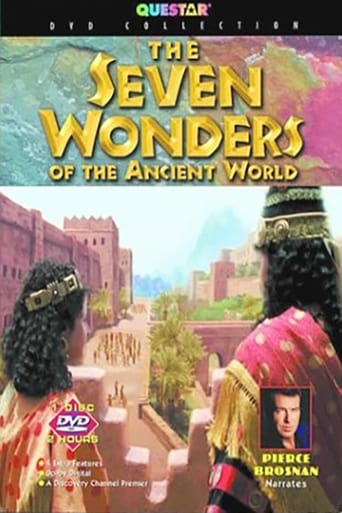
This program presents the stories of the works of architecture regarded by the Greeks and Romans as the most extraordinary structures of antiquity: the Hanging Gardens of Babylon, The Statute Of Zeus, the Temple of Artemis, the Mausoleum of Halicarnassus, the Pharos of Alexandria and the Pyramids of Egypt and more.
Noted scholar John Romer takes us on a tour of the seven wonders of the ancient world. This program presents the stories of the works of architecture regarded by the Greeks and Romans as the most extraordinary structures of antiquity: the Hanging Gardens of Babylon, The Statute Of Zeus, the Temple of Artemis, the Mausoleum of Halicarnassus, the Pharos of Alexandria and the Pyramids of Egypt and more.
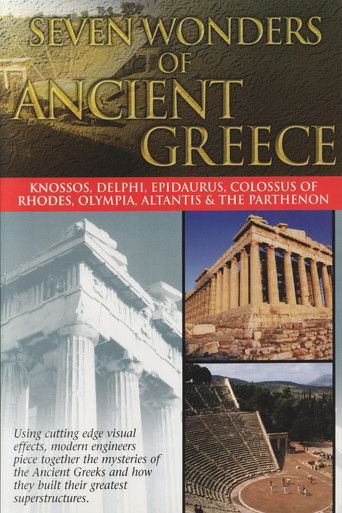
Greece, a land of breathtaking beauty and light. A land where science, art and inspiration from the gods combined to produce some of the world's greatest marvels of architecture and design. The ancient Greeks used buildings and structures to reflect the variety of life at the core of their civilisation - they built the first theatres, staged the first sports events and worshipped in some of the most spectacular temples ever built.
The Romans saw the Seven Wonders of the Ancient World as the crowning achievements of their predecessors. Through stunning on-location and re-created visuals, learn how and why they were built and how they dazzled the ancients.
Documentary discussing the seven manmade wonders listed by Philo of Byzantium 2000 years ago: the Colussus of Rhodes, the statue of Zeus at Olympus, the Mausoleum at Halicarnassus, the temple to Artemis at Ephesus, the pyramid of Giza, the Pharos of Alexandria and the Hanging Gardens of Babylon.
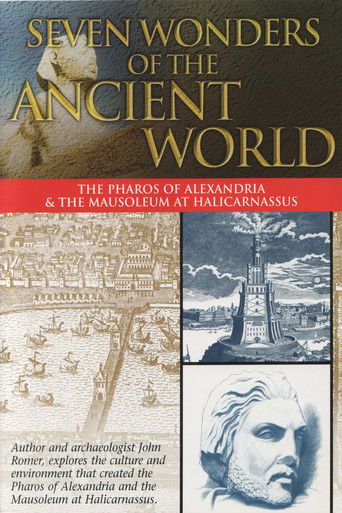
Host John Romer ventures to the sites of two ancient cities created by Alexander the Great - cities that were considered among the most beautiful and unusual the world had ever seen. We also explore the culture and environment that created several of the seven wonders. This episode examines two unparalleled testaments to the power of the era: The Pharos (Lighthouse) at Alexandria, which stood more that 300 feet, making it the tallest structure of its time, and the Mausoleum at Halicarnassus, which was considered one of the greatest tombs ever created. The Mausoleum's perimieter was not decoreated with icons of ancient gods, as was the custom of the time, but with ennobled and enlarged figures of real people. These statues are thought to have been an inspiration for the citizens - telling them they could be as great as the gods.
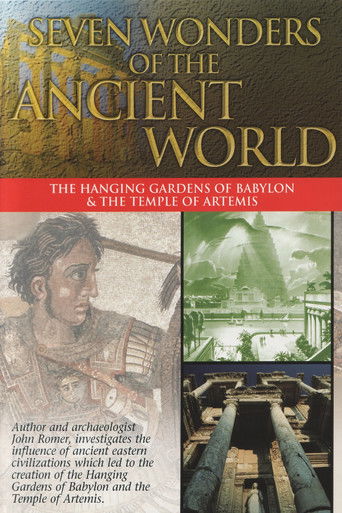
Explore with host John Romer, the influence of ancient eastern civilizations. The Hanging Gardens of Babylon, in what is now Iraq, were rumoured to be part of the palace of Nebuchadnezzar. Today, scientists believe that the exotic gardens were actually more fable than fact. The Temple of Artemis at Ephesusm in modernday Turkey, was built to honour the mother goddess. She was a powerful force for many different people - the Romans knew her as Diana, the Anatolians as Kybele - and her temple was one of the holiest shrines in Alexander the Great's world
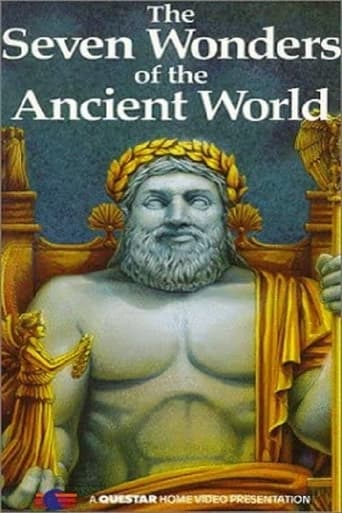
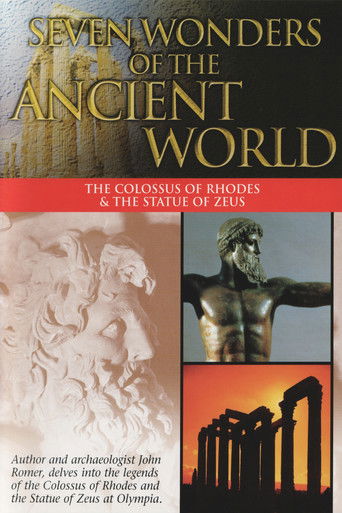
Explore the birth of the iage of "The New Man" in human hostory. Delving into the legends if the Colossus od Rhodes and the Statue of Zeus at Olympia, host John Romer demonstrates how these monuments projected a new vision of the human form into the popular consciousness. A mmoth figure of ivory and gold, the Statue of Zeus at Olympia ruled over the Olympic games. Before this venerable statue lay a huge, shallow pool of olive oil, which reflected light onto the figure. The Colossus of Rhodes was built with sheets of bronze and stood guard over the island of Rhodes. Perhaps the most astounding aspect of both monuments was that the sculptors modelled their faces in the image of man. Today, this image is mirrored in our own Statue of Liberty,
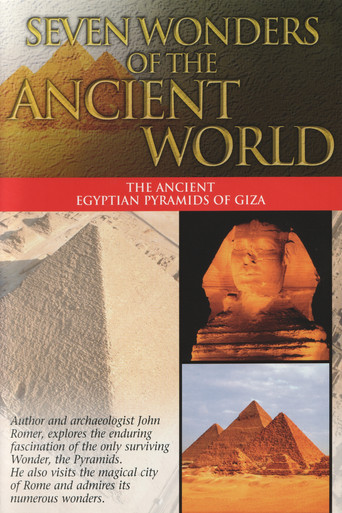
Author and archaeologist, John Romer, contemplates the mystical aspects of the Seven Wonders, exploring the enduring fascination of the only surviving Wonder, the Pyramids. John then focuses his attention on the city of Rome which had become a magical city, surrounded by a wall of iron enclosing seven hills, one for each day of the Creators rest. There were 365 squares in Rome, 365 streets, 365 palaces for the popes and each palace had 365 steps and each step was covered with bread enough to feed the world. It was a dream of poor people. imagining a legendary past. A past of endless wealth and wonder. Ghosts of Wonder demonstrates how the story of the Wonders is also the story of the modern imagination and has John Romere travelling from Australia to New York to illustrate how people are still haunted by ghosts of the ancient past.
Cameras follow Irish solo sailor Tom Dolan as he attempts to sail single-handed around the island of Ireland, which is one of the toughest feats in sailing.
Nicolas Cage dies all the way from Hollywood to Direct-To-DVD.
Working men and women leave through the main gate of the Lumière factory in Lyon, France. Filmed on 22 March 1895, it is often referred to as the first real motion picture ever made, although Louis Le Prince's 1888 Roundhay Garden Scene pre-dated it by seven years. Three separate versions of this film exist, which differ from one another in numerous ways. The first version features a carriage drawn by one horse, while in the second version the carriage is drawn by two horses, and there is no carriage at all in the third version. The clothing style is also different between the three versions, demonstrating the different seasons in which each was filmed. This film was made in the 35 mm format with an aspect ratio of 1.33:1, and at a speed of 16 frames per second. At that rate, the 17 meters of film length provided a duration of 46 seconds, holding a total of 800 frames.
It often happens that at the moment of death, transgender individuals are shorn of their identity. Their families are ashamed, the funeral takes place in secret, and on the tomb appears the name the deceased had before their transition, in one stroke nullifying the entire life path they had chosen. The same thing happened to Antonia. Her girlfriends gather to honor her memory and give her back her identity denied. In telling her story, the film’s stars, all drawn from the variegated transgender world, interweave the narrative with tales of their own lives, experiences, and memories.
Tom Angelripper narrates the struggles of the band in the mid-Nineties, his many side projects, and yet another drastic line-up overhaul.
Sequel to the "The Waterfowl People". The author interprets the kinship, linguistic and cultural relationships of the Finno-Ugric peoples. Finns, Vepsians, Votes, Setos, Erzya-Mordvinians, Mansi, Hungarians, Sami, Nganasans, and Estonians appear in the film. The film was shot in 1977 on location in northern Finland, Sapmi, Vepsia, Votia, Mordovia, Khantia-Mansia, Hungary, the Taymyr Peninsula, the Setomaa region in Estonia, and on the Estonian islands of Saaremaa and Muhu. Footage was also shot in 1970 in the Nenets Okrug. The second documentary in Lennart Meri's "Encyclopaedia Cinematographica Gentium Fenno - Ugricarum" series.
Made famous by the 1957 Hollywood movie, the bridges of the River Kwai emblematize one of the most misunderstood events in history. Contrary to the romanticized film version, the structures represent a period of terror, desperation, and death for over 16,000 POWs and 100,00 local slaves. The Thailand - Burma Railway was the vision of the Japanese Imperial Army: a 250-mile track cut through dense jungle that would connect Bangkok and Rangoon. To accomplish this nearly impossible feat, the fanatical and ruthless Japanese engineers used POWs and local slaves as manpower. Candid interviews with men who lived through the atrocity - including Dutch, Australian, British, and American POWs - illuminate the violence and horror of their three-and-a-half-year internment. From Britain's surrender of Singapore the enduring force of friendship, The True Story Of The Bridge On The River Kwai narrates a moving and unforgettable account of a period in history that must be remembered.
From hooliganism and violence through to the ecstasy and the rise of rave culture, Andy Swallow, co-founder of West Ham's ICF and later Centreforce 883, opens up about his life for the very first time.
This second entry in MGM's "Romance of Film" series documents how celluloid movie film is processed and features behind-the-scenes glimpses of current MGM productions.
An eye opening program to find out what its like to be a police officer facing the deadly force dilemma
Documentery from 1991 where The 2 Live Crew, Chuck D (Public Enemy), Too Short, Ice-T, Geto Boys, H.W.A. drop real talk on different topics.
On the eve of Earth Day, a precocious seven-year-old learns about the wonders of the planet from his parents—and a mysterious exhibit at the aptly named Museum of Everything.
Faced with a holiday cheer crisis, the North Pole knows there's only one person who can save the day: Santa's great friend Mariah Carey. The Queen of Christmas creates a fabulous and star-studded spectacular to make the whole world merry!
Nine filmmakers each profile a young girl from a different part of the world to weave a global tapestry of youth in the 21st century.
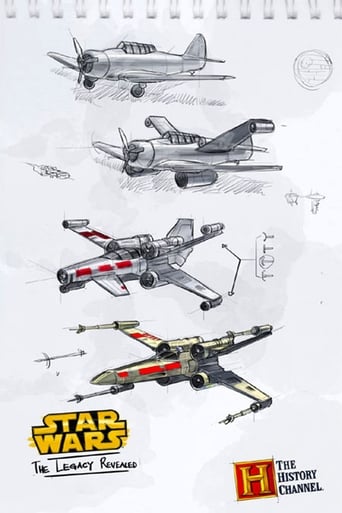
The special focuses on how Star Wars is relevant today and the history that inspired it, and also makes various connections to Greek mythology. It consists of several interviews with well-known politicians, journalists, and critics, along with historical content and clips from all six of the Star Wars movies.
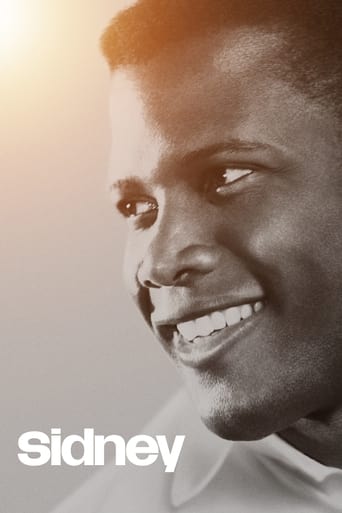
This revealing documentary honors the legendary Sidney Poitier—iconic actor, filmmaker, and civil rights activist. Featuring interviews with Denzel Washington, Spike Lee, Halle Berry, and more.
Interviews with leading authors, philosophers and scientists, with an in-depth discussion of the Law of Attraction. The audience is shown how they can learn and use 'The Secret' in their everyday lives.
A visual montage portrait of our contemporary world dominated by globalized technology and violence.
A documentary special that explores the power of identity behind the iconic superheroes we know and love today. These legendary Marvel creations and stories have not only reflected the world outside our window – they have become a reflection of our own identities and who we truly are.
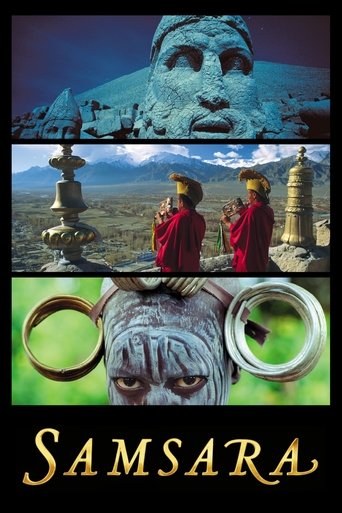
Filmed over nearly five years in twenty-five countries on five continents, and shot on seventy-millimetre film, Samsara transports us to the varied worlds of sacred grounds, disaster zones, industrial complexes, and natural wonders.
The story of the gold-plated statuette that became the film industry's most coveted prize, AND THE OSCAR GOES TO... traces the history of the Academy itself, which began in 1927 when Louis B. Mayer, then head of MGM, led other prominent members of the industry in forming this professional honorary organization. Two years later the Academy began bestowing awards, which were nicknamed "Oscar," and quickly came to represent the pinnacle of cinematic achievement.
An inside look at one of the most anticipated movie sequels ever with James Cameron and cast.
Happy is a 2011 feature documentary film directed, written, and co-produced by Roko Belic. It explores human happiness through interviews with people from all walks of life in 14 different countries, weaving in the newest findings of positive psychology. Director Roko Belic was originally inspired to create the film after producer/director Tom Shadyac (Liar, Liar, Patch Adams, Bruce Almighty) showed him an article in the New York Times entitled "A New Measure of Well Being From a Happy Little Kingdom". The article ranks the United States as the 23rd happiest country in the world. Shadyac then suggested that Belic make a documentary about happiness. Belic spent several years interviewing over 20 people, ranging from leading happiness researchers to a rickshaw driver in Kolkatta, a family living in a "co-housing community" in Denmark, a woman who was run over by a truck, a Cajun fisherman, and more.
The story lives forever in this feature-length documentary that charts the making of Star Wars: The Rise of Skywalker.
A documentary that explores the downloading revolution; the kids that created it, the bands and the businesses that were affected by it, and its impact on the world at large.
An epic cinematic and musical collaboration between SHERPA filmmaker Jennifer Peedom and the Australian Chamber Orchestra, that explores humankind's fascination with high places.
A documentary examining the decade of the 1970s as a turning point in American cinema. Some of today's best filmmakers interview the influential directors of that time.
A paralysingly beautiful documentary with a global vision—an odyssey through landscape and time—that attempts to capture the essence of life.
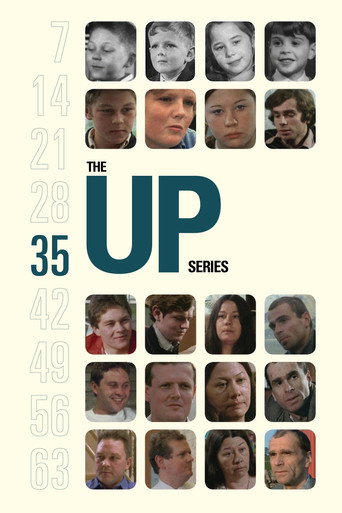
A group of British children aged 7 from widely ranging backgrounds are interviewed about a range of subjects. The filmmakers plan to re-interview them at 7 year intervals to track how their lives and attitudes change as they age.
An enchanting making-of story told through all-new in-depth interviews and cast conversations, inviting fans on a magical first-person journey through one of the most beloved film franchises of all time.
A documentary on legendary movie-poster artist Drew Struzan.