How did the economy get started? Meet Ugg, Glugg and Tugg, three enterprising cave men who accidentally invented trade, marketing and the base elements of the modern market economy. The first film in the WE THE ECONOMY series.

Social & External
Diving deep into the true causes of the Great Recession, the financial crisis of the 2010s, renowned economists, investors and business leaders explain what America is facing if we don't learn from our past mistakes. Is the economy really improving or are we just blowing up another Bubble?

A documentary examining possible historical and modern conspiracies surrounding Christianity, the 9/11 terrorist attacks, and the Federal Reserve bank.
Zeitgeist: Addendum premiered at the 5th Annual Artivist Film Festival. Director Peter Joseph stated: "The failure of our world to resolve the issues of war, poverty, and corruption, rests within a gross ignorance about what guides human behavior to begin with. It address the true source of the instability in our society, while offering the only fundamental, long-term solution."
The Real Adam Smith: A Personal Exploration by Johan Norberg, takes an intriguing, two-part look at Smith and the evolution and relevance of his ideas today, both economic and ethical. It’s difficult to imagine that a man who lived with horse drawn carriages and sailing ships would foresee our massive 21st century global market exchange, much less the relationship between markets and morality. But Adam Smith was no ordinary 18th century figure. Considered the “father of modern economics,” Smith was first and foremost a moral philosopher. The revolutionary ideas he penned in The Wealth of Nations and The Theory of Moral Sentiments, changed the world. Norberg explores Smith’s insights regarding free trade and the nature of wealth to the present, where they are thriving and driving the world’s economy.
Huntingdon Mayor Stéphane Gendron wants to encourage immigration to save his town, which has been struggling ever since large-scale factory closures some years ago. Mayor Gendron’s project is a way in to a discussion about immigration and social and economic integration.
More and more fair trade labels are entering the market and are being positively received by consumers. In 2012, around five billion euros were spent on fair trade products. But is it really always fair where it says fair? Filmmaker Donatien Lemaître visited plantations in Mexico, the Dominican Republic and Kenya. The investigative documentary reveals how international corporations try to improve their image with the help of the fair trade concept - at the expense of small producers and their employees.

The film exposes the links between Agrifood and politics. With a pool of international experts it analyses the many problems related to factory farming: water pollution, migrants exploitation, biodiversity loss and antibiotic resistance.
Ferdinand de Lesseps, known as “The Great Frenchman”, will embark in the greatest adventure of his life: To unite the Pacific and Atlantic oceans through a Canal in the Isthmus of Panama – without knowing that this will cost him his reputation, thousands of innocent lives and the biggest financial scandal of all time, up to that point: the famous “Scandal of Panama”. Today, the French capital is known as “Paname”.
The documentary shares powerful stories from across the U.S. and explores what it means to find economic security in America and the diverse paths people take to get there. While the families featured in the documentary represent different backgrounds, perspectives, and political leanings, all of them share the same dream of financial stability, as well as powerful stories of dignity, struggle, hope, and resolve.
An unsettling and eye-opening Wall Street horror story about Chinese companies, the American stock market, and the opportunistic greed behind the biggest heist you've never heard of.
A documentary about the development around Barton Springs in Austin, Texas, and nature's unexpected response to being threatened by human interference.
Mobile homes have long been an affordable option for people who struggle with the cost of other housing in the United States. But now the economy of mobile home parks is under threat as private equity firms are buying up properties and looking to squeeze more money out of mobile home owners. Filmmaker Sara Terry uses this backdrop to explore urgent class issues that resonate across America, and especially in the high-priced rental market of New York City.
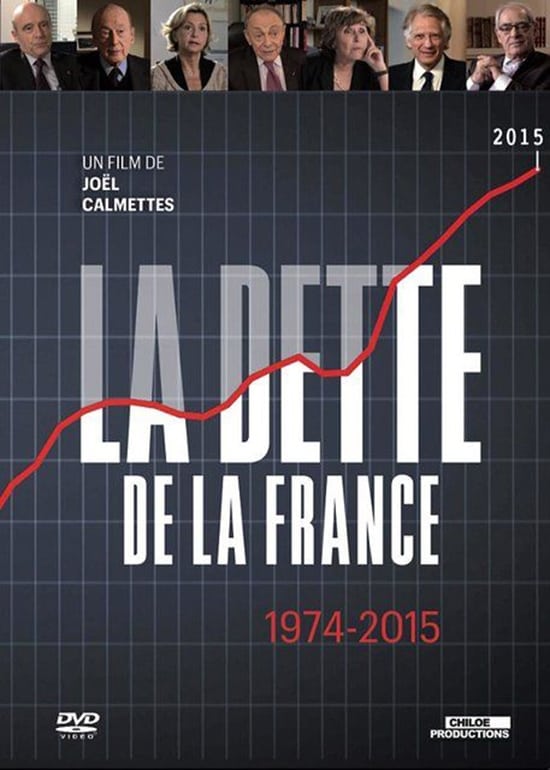
As the US debt spirals out of control, it polarizes society and threatens to disrupt traditional retirement with an impending freight train of onerous taxes and draconian austerity measures.
A historical perspective to understand Neoliberalism and to understand why this ideology today so profoundly influences the choices of our governments and our lives.
With breathtaking clarity, renowned University of Massachusetts Economics Professor Richard Wolff breaks down the root causes of today's economic crisis, showing how it was decades in the making and in fact reflects seismic failures within the structures of American-style capitalism itself. Wolff traces the source of the economic crisis to the 1970s, when wages began to stagnate and American workers were forced into a dysfunctional spiral of borrowing and debt that ultimately exploded in the mortgage meltdown. By placing the crisis within this larger historical and systemic frame, Wolff argues convincingly that the proposed government "bailouts," stimulus packages, and calls for increased market regulation will not be enough to address the real causes of the crisis, in the end suggesting that far more fundamental change will be necessary to avoid future catastrophes.
Humanity’s ascent is often measured by the speed of progress. But what if progress is actually spiraling us downwards, towards collapse? Ronald Wright, whose best-seller, “A Short History Of Progress” inspired “Surviving Progress”, shows how past civilizations were destroyed by “progress traps”—alluring technologies and belief systems that serve immediate needs, but ransom the future. As pressure on the world’s resources accelerates and financial elites bankrupt nations, can our globally-entwined civilization escape a final, catastrophic progress trap? With potent images and illuminating insights from thinkers who have probed our genes, our brains, and our social behaviour, this requiem to progress-as-usual also poses a challenge: to prove that making apes smarter isn’t an evolutionary dead-end.
The degraded socio-economic condition of Argentina leading to the December 2001 rebellions, and its consequent social chaos analyzed by focusing on real people from Buenos Aires poorest shantytowns, crumbling hospitals, and women middle class farmers fighting multi national banks that are shamelessly appropriating their farmlands. Written by Gonz30