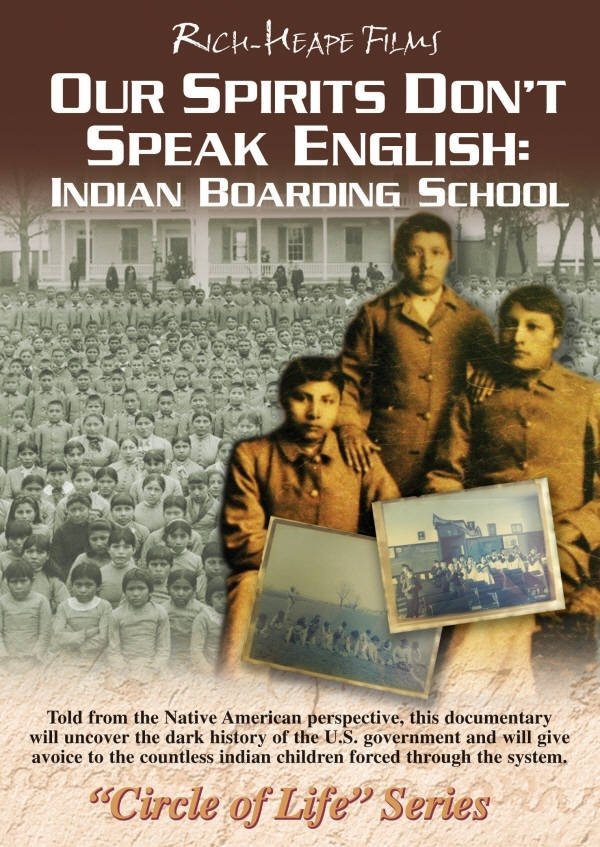
Told from the Native American perspective, this documentary will uncover the dark history of the U.S. government and will give a voice to the countless Indian children forced through the system.
Social & External
Self
Narrator (voice)
The American Southwest holds a dark legacy as the place where nuclear weapons were invented and built. Navajo people have long held this place sacred, and continue to fight for a future that transcends historical trauma. This is their story.
The story of an American hero and the Cherokee Nation's first woman Principal Chief who humbly defied all odds to give a voice to the voiceless.

Documentary film about Tony Halme, masculinity and populism. The film follows how Tony Halme created a mythical, highly masculine freestyle wrestling character, The Viking, who gained fame both in the ring and in the public eye and eventually became captivated by it. With his brash speeches, Halme fired the starting shot for the rise of the Finns Party. The voice of a forgotten section of the population, a protest against the ruling elite, were the building blocks of Halme's popularity. Halme's great popularity has served as a good example of a populist figure, admired within the deep ranks of the nation, who comes from outside the political elite and changes the direction of politics. Also, despite - or perhaps because of - his openly racist statements, he was part of changing the political climate in Finland to a more acrimonious one.
In the fifties, when the future Democratic Republic of Congo was still a Belgian colony, an entire generation of musicians fused traditional African tunes with Afro-Cuban music to create the electrifying Congolese rumba, a style that conquered the entire continent thanks to an infectious rhythm, captivating guitar sounds and smooth vocals.
Every year, around 3000 Indigenous students receive scholarships to attend some of Australia’s most prestigious boarding schools. It is an immense opportunity, setting many of the youngsters on a path to a bright future, but it also means they must leave their homes and communities. Over the course of a year, Off Country follows several such students, who, despite hailing from distinct nations and having vastly different circumstances, each share a commitment to doing themselves and their families proud – no matter the difficulties.
The astonishing, heartbreaking, inspiring, and largely-untold story of Native Americans in the United States military. Why do they do it? Why would Indian men and women put their lives on the line for the very government that took their homelands?
After the Battle of Algiers, France and its army exported, as true experts, anti-subversive methods to Latin America and the United States in the 1960s. After more than a year of investigation in Argentina , in Chile, Brazil, the United States and France, the director collected, sometimes under the cover of a hidden camera, recorded conversations, the exclusive testimonies of the main protagonists. From General Aussaresses to former Minister of the Armed Forces Pierre Messmer, including General Reynaldo Bignone (head of the military junta in Argentina from 1982 to 1984), General Albano Harguindéguy, General Manuel Contreras, and Generals John Johns and Carl Bernard, this investigation gives us a hidden reality of the country of Human Rights.
How the Monuments Came Down is a timely and searing look at the history of white supremacy and Black resistance in Richmond. The feature-length film-brought to life by history-makers, descendants, scholars, and activists-reveals how monuments to Confederate leaders stood for more than a century, and why they fell.
Three men seeking asylum in Ireland find themselves on the streets, caught between restrictive migration policies and an increasingly aggressive far-right movement. Dennis Harvey captures an explosive sequence of events on the streets of Dublin.
A film about small Ontario town's struggle to restore a desecrated African-Canadian cemetery and the resulting turmoil over it.
This film made by a Palestinian-Israeli collective shows the destruction of the occupied West Bank's Masafer Yatta by Israeli soldiers and the alliance which develops between the Palestinian activist Basel and Israeli journalist Yuval.
The last surviving Native Americans on Long Island are the focus of The Lost Spirits. The film chronicles their struggles as an indigenous people to maintain their identity amidst relentless modernization and a heartless bureaucracy.
People are interviewed in Dresden, Ontario, to sample local attitudes towards racial discrimination against black people that brought this town into the news. After a round-up of the opinions of individual citizens, white and black, commentator Gordon Burwash joins two discussion panels, presenting opposite points of view. The rights and wrongs of the quarrel are left for the audience to decide.
Examines the impact a century of struggling for survival has on a native people. It weaves the Crow tribe's turbulent past with modern-day accounts from Robert Yellow-tail, a 97-year-old Crow leader and a major reason for the tribe's survival. Poverty and isolation combine with outside pressures to undermine the tribe, but they resist defeat as "Contrary Warriors," defying the odds.
Cyclone Tracy 40 years on, exploring the myths and revealing new perspectives on one of the worst natural disasters in Australia's history.
Examines the violence and civil disobedience leading up to the hallmark decision in U.S. v. Washington, with particular reference to the Nisqually Indians of Frank's Landing in Washington.
A key overview of twentieth-century American fascism and antifascism produced in 1991 by the John Brown Anti-Klan Committee.
In 1885, German Zoo owner Carl Hagenbeck hired nine Aboriginal men from Bella Coola to perform their dances and songs for German audiences. The nine dancers spent one year in Germany performing in zoos and theatres in 22 cities. During summer 2005, the Canadian filmmaker Barbara Hager came to Germany to retrace the steps of the nine Nuxalk men on their original 13 month long tour.