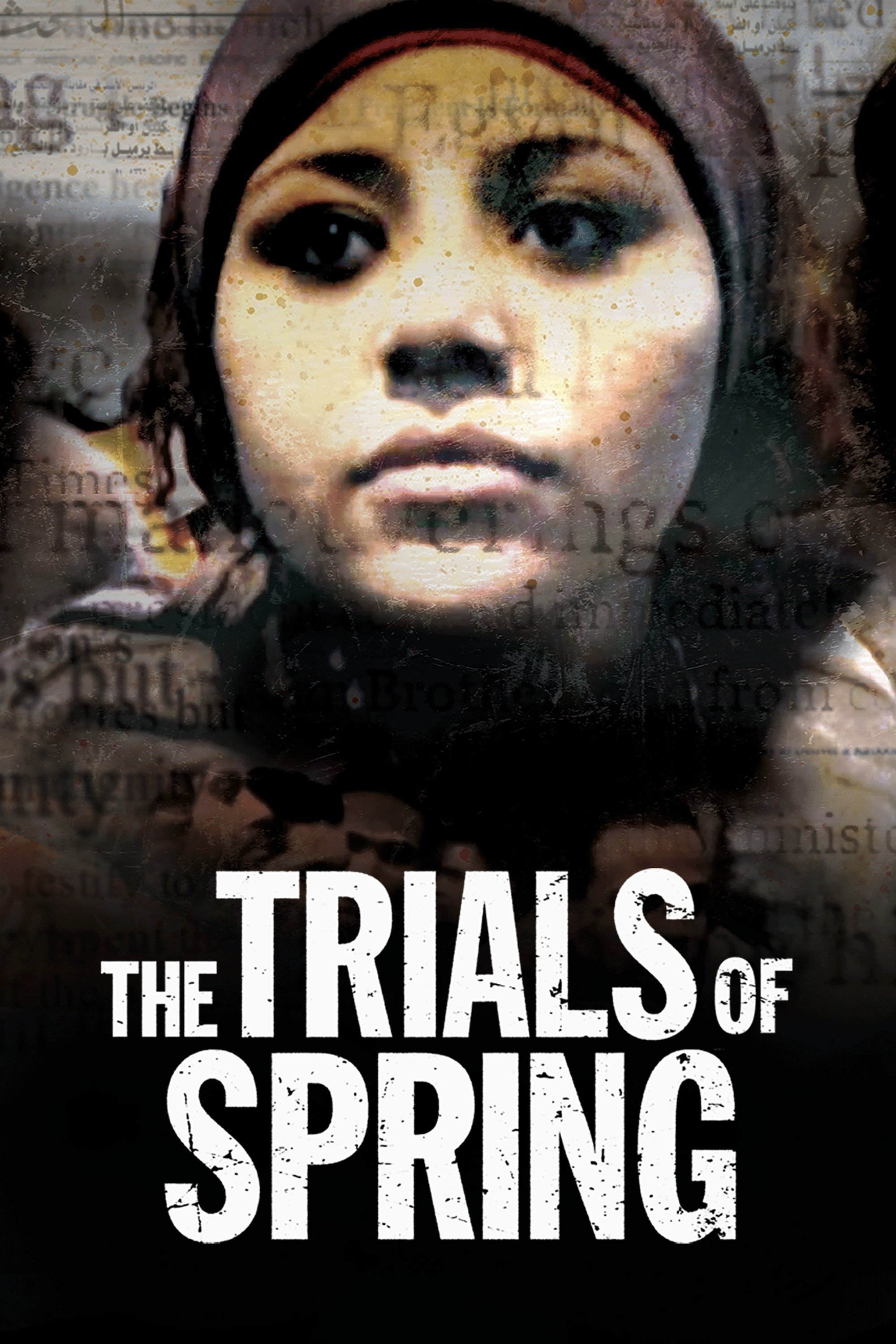
When 24-year-old Hend Nafea is arrested and tortured for demonstrating peacefully in Cairo's Tahrir Square, her pursuit of justice reflects post-revolution Egypt at an uncertain crossroads.

Social & External
The film's protagonists are the orphaned children taken into custody by the state and institutionalized at Children's House no. 6 from Bucharest. For Mészáros, the concern for the situation of children left orphaned during the Second World War is autobiographical: the director directly experienced the absence of parents in her own childhood.
Fighting to reunite with their children, 'Tough Love' chronicles the lives of two parents with cases in the United States child welfare system as they attempt to prove to the courts and the system that they deserve a second chance to be a parent and have a family.
War is Hell. Why would anyone want to spend their weekends there? Deep in the Oregon woods, the heat of a reenacted Vietnam battle sheds light on America's complicated relationship with war and its veterans.

Maria Zmarz-Koczanowicz directed this insightful TV documentary (2005) tracing the Polish filmmaker's career. Former classmates reminisce about Kieslowski's happy beginnings at the Lodz film school and how his dissatisfaction with some of his early documentaries prompted the dramatic work and stylistic experimentation that led to his monumental series of films The Decalogue (1989). Wim Wenders, Agnieszka Holland, and Juliette Binoche are among the many admirers weighing in on his hard-driving work methods and preoccupation with the ephemeral. In Polish, French, and German with subtitles.
A fast-moving and comprehensive documentation of three Survival Research Laboratories performances 1989-1990. Includes "Illusions of Shameless Abundance ...", ArtSpace Computer-Controlled Installation, "A Carnival of Misplaced Devotion ...", plus details of the 1989 bomb hoax incident.
Two Shows from Survival Research Laboratories: San Francisco, CA 1994 and Graz, Austria 1992. The Doom show was SRL's biggest show ever and the War Zone event resulted in a nation-wide defense alert in Austria.
The story of Leo Bretholz, who was born to Jewish parents in Vienna in 1921 and fled Nazi Austria in 1938 at the urging of his mother. Starting with this, the documentary depicts the community of Holocaust survivors in Baltimore, one of the largest in the United States, and creates a touching portrait of the Austrian-American and the Polish emigrant Bluma Shapiro.
The town of Picher, Oklahoma, was once home to the world's richest lead and zinc mining field. After decades of mining, towering piles of mine waste covered 25,000 acres, devastating Quapaw tribal lands and local economies. Acid mine water burned nearby Tar Creek and stained it red. Despite these environmental hazards, many people in Picher desperately wished to stay and revitalize their town.
Provocateur, artist, performer: Peter Vanessa "Troy" Davies was a chameleon. Using layers of identity at will, Davies charmed his way through a lifetime of secrets and lies, prostitution, art, HIV, abuse, incest and gender subversion, leaving a legacy of unanswered questions, influential performances and reams of enigmatic home video. Ecco Homo is a psychological detective story and a testament to a social history rarely documented on film
Chapter 15 of the series 18 decades of life in Mexico in the twentieth century. Images of the cultural, social and political life in Mexico from 1970 to 1974. During the presidential term of Luis Echeverria Alvarez fantasies of prosperous and modern country it dissolves; Mexico live in political crisis. It is a time of omnipotence, barbarism, and violence intervention: the world seeks new ways. In Mexico, it held the World Cup, unionism is strengthened and inflation responds to the continuing economic imbalances.
Chapter 16 of the series 18 decades of life in Mexico in the twentieth century. Images of the cultural, social and political life in Mexico from 1975 to 1979. Overview of the first years of the government of Jose Lopez Portillo. At the beginning of his administration, political problems make it necessary to counter the influence of Luis Echeverria. It is a time of disappearances and political killings; Birth of opposition political associations and guerrilla movements. Mexico is experiencing one of its worst economic crises.
The story of the women at the "House of Sharing" continues. Old women who share a common bond lead a peaceful life in the countryside, raising vegetables, chickens and painting pictures. They are no different from the elderly women we see every day. But they are all scarred by pain and sorrow from their collective history of being comfort women during World War 2. They became subject to prejudice in their own homeland after their return to Korea. It is painful for them to watch other peoples' children and grandchildren, and they feel rage when the Japanese government tries to cover up the unspeakable crimes they committed against them. The film asks us to remember what these women sacrificed and the shame and misery they faced even as these individuals pass away often forgotten by their own people.
Madeline Anderson’s documentary brings viewers to the front lines of the civil rights movement during the 1969 Charleston hospital workers’ strike, when 400 poorly paid Black women went on strike to demand union recognition and a wage increase, only to find themselves in confrontation with the National Guard and the state government. Anderson personally participated in the strike, along with such notable figures as Coretta Scott King, Ralph Abernathy and Andrew Young, all affiliated with Martin Luther King’s Southern Christian Leadership Conference. Anderson’s film shows the courage and resiliency of the strikers and the support they received from the local black community. It is an essential filmed record of this important moment in the history of civil and women’s rights. The film is also notable as arguably the first televised documentary on civil rights directed by a woman of color, solidifying its place in American film history.
The lives of three extraordinary African women from different social levels and origins determined to bring about radical transformations in their day to day realities: Kenyan attorney and reputed lawyer Njoki Ndung'u, Puthi Ragophala the committed school principal of a remote South African village and Zimbabwean housewife-entrepreneur, Amai Rosie.
Looking for Lowry is an entertaining documentary film about the life and work of the much loved British artist L.S. Lowry (1887 – 1976). This contemporary new film illuminates Lowry’s extraordinary vision for the first time in high definition, as we meet those who knew him and those who have been inspired in our post-industrial age by his unique observations of our country and his powerful artistic legacy. Manchester-born rock star Noel Gallagher describes how Lowry’s life chimes with his own: “…for me it’s like when did you first hear the Beatles? Lowry has always been there… I guess all the people Lowry ever met are there in his paintings…”
Choreographer Daniel Nagrin performs in a studio and in the sun.
Follows three women in an all female, predominantly Muslim unit of police officers sent to post-earthquake Haiti as UN Peacekeepers for one year. The mission challenges these women while shattering commonly held stereotypes.
Two-time Academy Award® winner Barbara Kopple shines a powerful, inspiring and entertaining spotlight on contemporary soul queen Sharon Jones. As she prepares to release her much-anticipated new album, Sharon comes face to-face with the greatest challenge of her life: a grave cancer diagnosis. Follow this tour de force over the course of an eventful and remarkable year as she struggles to hold her band The Dap-Kings together while battling her way back to the stage with the unstoppable determination of a true soul survivor
Through incisive conversations with key experts in history, archaeology, international law, political science and media, Body and Soul – The State of the Jewish Nation not only shows the undeniable historical connection between the Jewish People and the Land of Israel, but also succeeds in debunking the propaganda, myths and misinformation that have become deeply entrenched in public discourse.
A static and silent shot of a sunset off the western coast of Madagascar. Tacita Dean filmed the ‘green ray’, a legendary natural phenomenon that takes place when, in specific atmospheric circumstances, the last ray of sun passes over the horizon and becomes green.