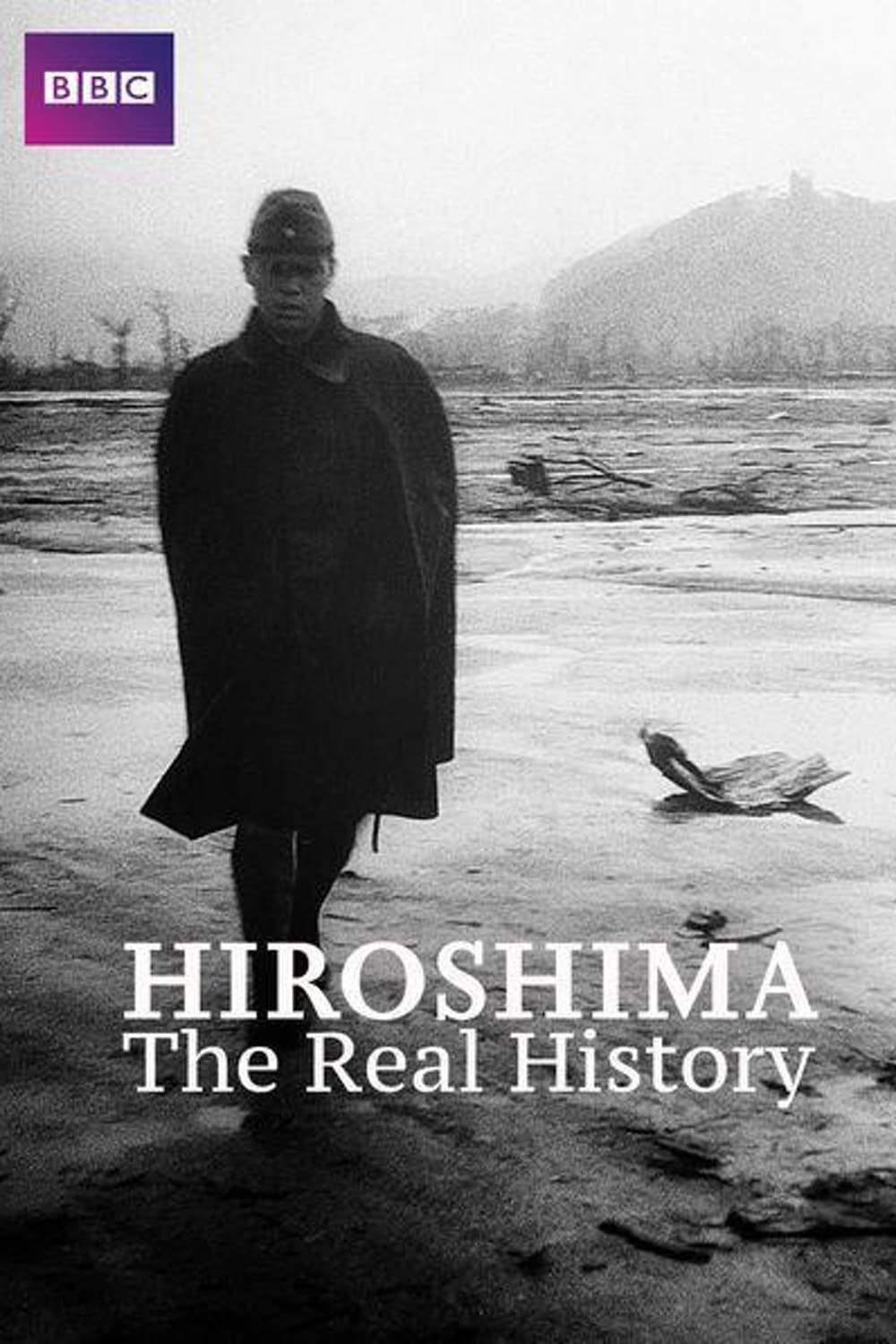
"Hiroshima: The Aftermath"
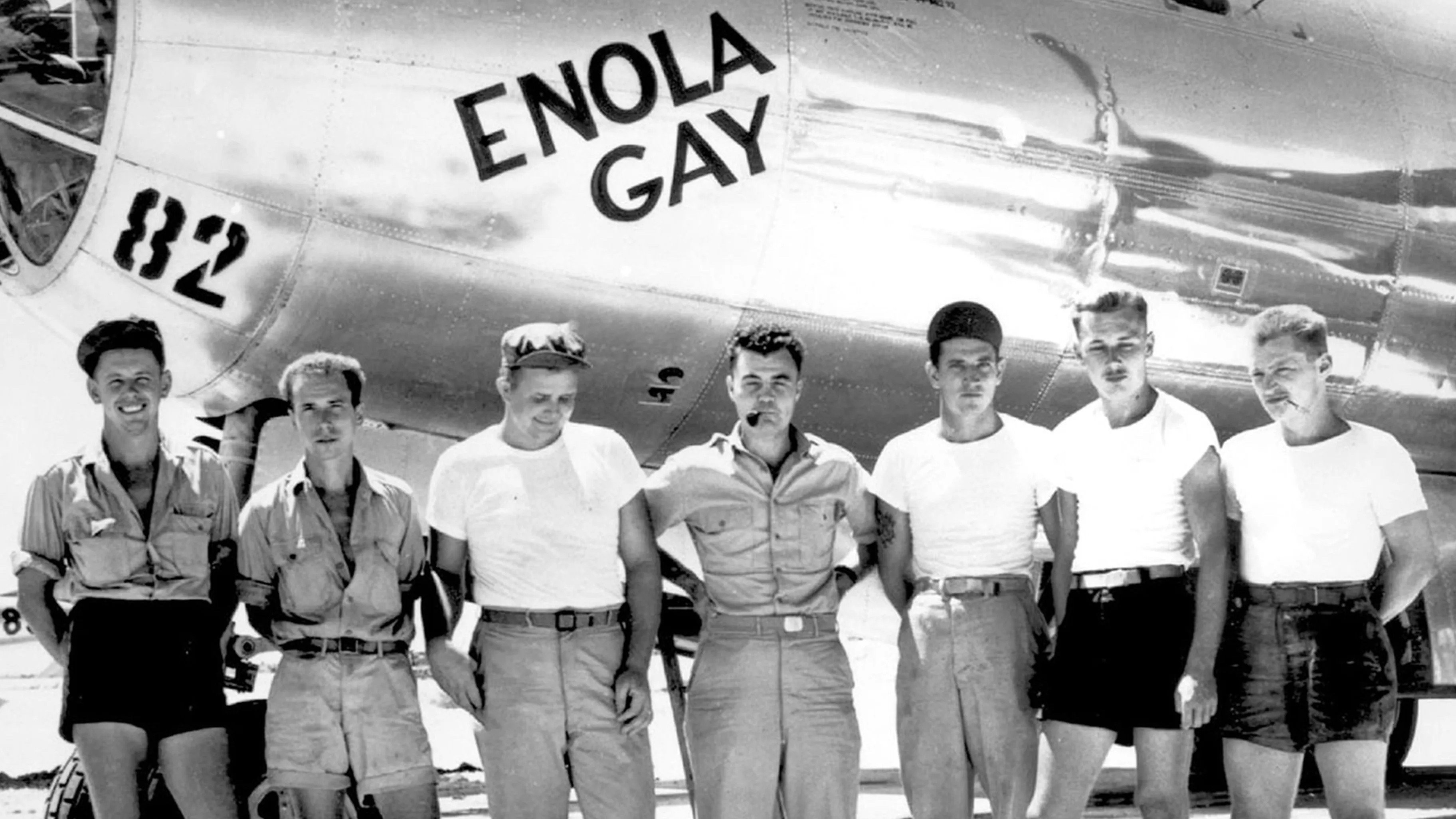
Brand new documentary marking the 70th anniversary of the Hiroshima and Nagasaki bombings which ended WWII and began the nuclear age. Features interviews with survivors from both sides.
Social & External
Narrator
To historians, physicist Lise Meitner deserves to be placed on a par with Einstein, Heisenberg and Otto Hahn. In the 1930s on the verge of World War II, she led a small group of scientists who discovered that splitting the atomic nucleus of uranium releases enormous energy. This extraordinary film tells the story of a woman who was far ahead of her time as a scientist and a pioneer of feminism.
A documentary celebrating Lee Miller, a model-turned-photographer-turned-war reporter who defied anyone who tried to pin her down, put her on a pedestal, or pigeonhole her in any way.
April 1945. In a dramatic operation the SS transports 139 special prisoners, and kin of the prisoners, into the Alps. The plan: to use the prisoners as bargaining chips in possible negotiations with the Allies. During the journey a number of prisoners plan their escape and experience six days between liberty and death, their fates in the hands of ruthless and increasingly nervous criminals. But the hostages band together and turn the tables with a clever ploy: they call in the Wehrmacht to aid them…
Spanish photographer Francesc Boix, imprisoned in the Mauthausen-Gusen concentration camp, works in the SS Photographic Service. Between 1943 and 1945, he hides, with the help of other prisoners, thousands of negatives, with the purpose of showing the freed world the atrocities committed by the Nazis, exhaustively documented. He will be a key witness during the Nuremberg Trials.
In 1940 the Channel Islands became the only part of Britain to fall under Nazi rule. Now in this film Islanders speak from the heart about one of the most extraordinary periods in our history. Reliving in their own words the horror of the first air raids, the shock of occupation and the islands' gradual five year long decent into privation and starvation before experiencing the capitulation of the German forces and the joy of liberation.
As soon as Hitler's forces occupied the Channel Islands in 1940 he ordered a series of fortifications to defend the only British territory he ever conquered. The problem was he never stopped - pouring men, concrete and weapons into the islands. By 1944 his officers talked of the Fuehrer's inselwahn - his 'island madness' and the Channel Islands had become the most fortified place on earth.
The story of the more than nine thousand Spaniards who were interned in the Nazi concentration camps, through the testimony of a group of survivors who tell what life and death were like in Mauthausen, Auschwitz, Buchenwald and Ravensbrück.
A brother's journey to unravel the truth about the mythic death and little known life of Kitty Genovese, who was reportedly murdered in front of 38 witnesses and has become the face of urban apathy.
The film is about the hot war summer of 1944. A group of several gun crews defends a tiny bridgehead on the right bank of the Dniester. The fates of the main characters: the front-line soldier-battalion commander Babin, the young lieutenant Motovilov, the nurse Rita Tamashova and the rank-and-file gunners, soldiers, among whom are brave people, faint-hearted and scoundrels, unnoticed heroes, are shown in a setting of several hours of peaceful life before another violent attack of the enemy, after which not everyone will survive...
A poignant drama about a Danish family's unbearable loss and total disintegration, but above all about the faith and hope that miraculously gives them the superhuman strength not to give up.
Lauren Southern’s distubing documentary about the violence against Boer farmers in South Africa.
A rare documentary that shows how Soviet war propaganda presented the events of the Finnish front in 1941–1944. The main emphasis is on the resolution of the war. The film contains plenty of unique footage of the final stages of the Continuation War.
Know Your Ally: Britain was a 45-minute propaganda film made in 1944. It was narrated by Walter Huston and produced by the United States War Department and Signal Corp to solidify Anglo-American solidarity within the ranks as well as counter Nazi propaganda aimed at weakening the Alliance.
"The reason why they kill people is because they do not have any education," a Sudanese boy says about the bloody conflict in his fatherland. Shortly before, we see images of a bombed school. In this film, the youngest and most innocent generation of Sudanese explains how it deals with the war that is tearing the country apart. Will the orphaned children avenge their murdered parents, or will they forgive the killers and start working on a new life? At any rate, these children's dreams for the future are anything but violent. One of them wants to learn English to be able to liberate his country, another wants to study to "be something," a third wants to become president to bring total peace, and yet another simply wants to be like her grandmother. Despite all the atrocities they have witnessed, the children mainly want to rebuild things, to put an end to the destruction.
Inya, a heroine of the Philippine resistance against the Japanese during World War II, recalls events involving her husband Edilberto and their childhood friend Ignacio, a transvestite who, masquerading as a woman also named Inya, becomes the lover of the local Japanese commander, Ichiru, and is caught between a duty to be a spy for his country and friends and his reluctant but growing love for Ichiru.
With over two hours of footage covering the band's 10 year history, "All Access" provides an insightful and entertaining glimpse into their rise to stardom. It includes never-before-seen historical footage from the band's personal archives, as well as backstage footage, live performances, and unforgettable music videos.
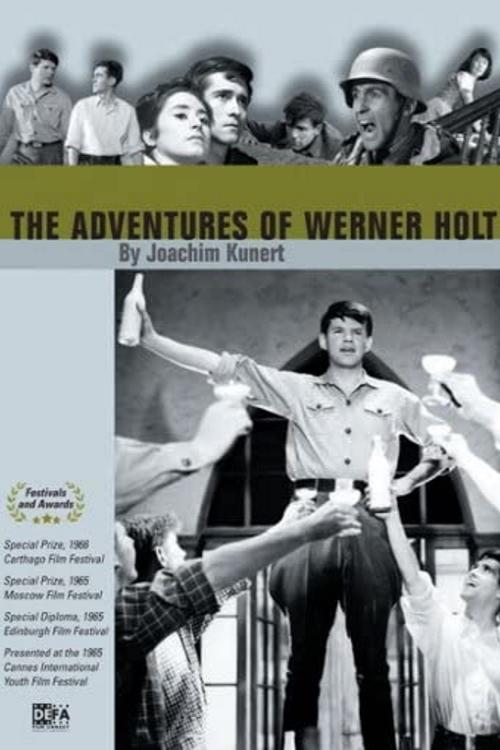
Two brothers return to their devastated home village after the end of the Second World War with nothing to their name but their army-issue machine guns. There they find a traumatised German, abandoned in retreat. Together, the three men act out a tragicomic tale.
Explore how one man's relentless drive and invention of the atomic bomb changed the nature of war forever, led to the deaths of hundreds of thousands of people and unleashed mass hysteria.
Meet the real-life airmen who inspired Masters of the Air as they share the harrowing and transformative events of the 100th Bomb Group.
What happened after Einstein fled Nazi Germany? Using archival footage and his own words, this docudrama dives into the mind of a tortured genius.
As the Japanese surrender at the end of WWII, Gen. Fellers is tasked with deciding if Emperor Hirohito will be hanged as a war criminal. Influencing his ruling is his quest to find Aya, an exchange student he met years earlier in the U.S.
With unprecedented access, this documentary follows the extraordinary journey of “Raqqa is Being Slaughtered Silently”—a group of anonymous citizen journalists who banded together after their homeland was overtaken by ISIS—as they risk their lives to stand up against one of the greatest evils in the world today.
Is American foreign policy dominated by the idea of military supremacy? Has the military become too important in American life? Jarecki's shrewd and intelligent polemic would seem to give an affirmative answer to each of these questions.
A docudrama depicting a hypothetical nuclear attack on Britain. After backing the film's development, the BBC refused to air it, publicly stating "the effect of the film has been judged by the BBC to be too horrifying for the medium of broadcasting." It debuted in theaters in 1966 and went on to great acclaim, but remained unseen on British television until 1985.
A love letter from a young mother to her daughter, the film tells the story of Waad al-Kateab’s life through five years of the uprising in Aleppo, Syria as she falls in love, gets married and gives birth to Sama, all while cataclysmic conflict rises around her. Her camera captures incredible stories of loss, laughter and survival as Waad wrestles with an impossible choice– whether or not to flee the city to protect her daughter’s life, when leaving means abandoning the struggle for freedom for which she has already sacrificed so much.
As the Russian invasion begins, a team of Ukrainian journalists trapped in the besieged city of Mariupol struggle to continue their work documenting the war's atrocities.
Amid the failing counteroffensive, a journalist follows a Ukrainian platoon on their mission to traverse one mile of heavily fortified forest and liberate a strategic village from Russian occupation. But the farther they advance through their destroyed homeland, the more they realize that this war may never end.
This revealing documentary honors the legendary Sidney Poitier—iconic actor, filmmaker, and civil rights activist. Featuring interviews with Denzel Washington, Spike Lee, Halle Berry, and more.
Korengal picks up where Restrepo left off; the same men, the same valley, the same commanders, but a very different look at the experience of war.
A fictional documentary discusses the effects the Iraq war has had on soldiers and local people through interviews with members of an American military unit, the media, and local Iraqis.
Jamie Graham, a privileged English boy, is living in Shanghai when the Japanese invade and force all foreigners into prison camps. Jamie is captured with an American sailor, who looks out for him while they are in the camp together. Even though he is separated from his parents and in a hostile environment, Jamie maintains his dignity and youthful spirit, providing a beacon of hope for the others held captive with him.
Legendary journalist Gay Talese unmasks a motel owner who spied on his guests for decades. But his bombshell story soon becomes a scandal of its own.
The true story of WWII's notorious Sobibor Nazi death camp, where a courageous inmate orchestrates and leads the escape of over 300 prisoners.
This documentary explores the mystery surrounding the death of movie icon Marilyn Monroe through previously unheard interviews with her inner circle.
When Allied forces liberated the Nazi concentration camps in 1944-45, their terrible discoveries were recorded by army and newsreel cameramen, revealing for the first time the full horror of what had happened. Making use of British, Soviet and American footage, the Ministry of Information’s Sidney Bernstein (later founder of Granada Television) aimed to create a documentary that would provide lasting, undeniable evidence of the Nazis’ unspeakable crimes. He commissioned a wealth of British talent, including editor Stewart McAllister, writer and future cabinet minister Richard Crossman – and, as treatment advisor, his friend Alfred Hitchcock. Yet, despite initial support from the British and US Governments, the film was shelved, and only now, 70 years on, has it been restored and completed by Imperial War Museums under its original title "German Concentration Camps Factual Survey".
As a young and naive recruit in Vietnam, Chris Taylor faces a moral crisis when confronted with the horrors of war and the duality of man.
Assigned to oversee the development of the atomic bomb, Gen. Leslie Groves is a stern military man determined to have the project go according to plan. He selects J. Robert Oppenheimer as the key scientist on the top-secret operation, but the two men clash fiercely on a number of issues. Despite their frequent conflicts, Groves and Oppenheimer ultimately push ahead with two bomb designs — the bigger "Fat Man" and the more streamlined "Little Boy."