A lonely young woman sings two melancholy ballads in her Manhattan high rise apartment.
Social & External
Unknown Role
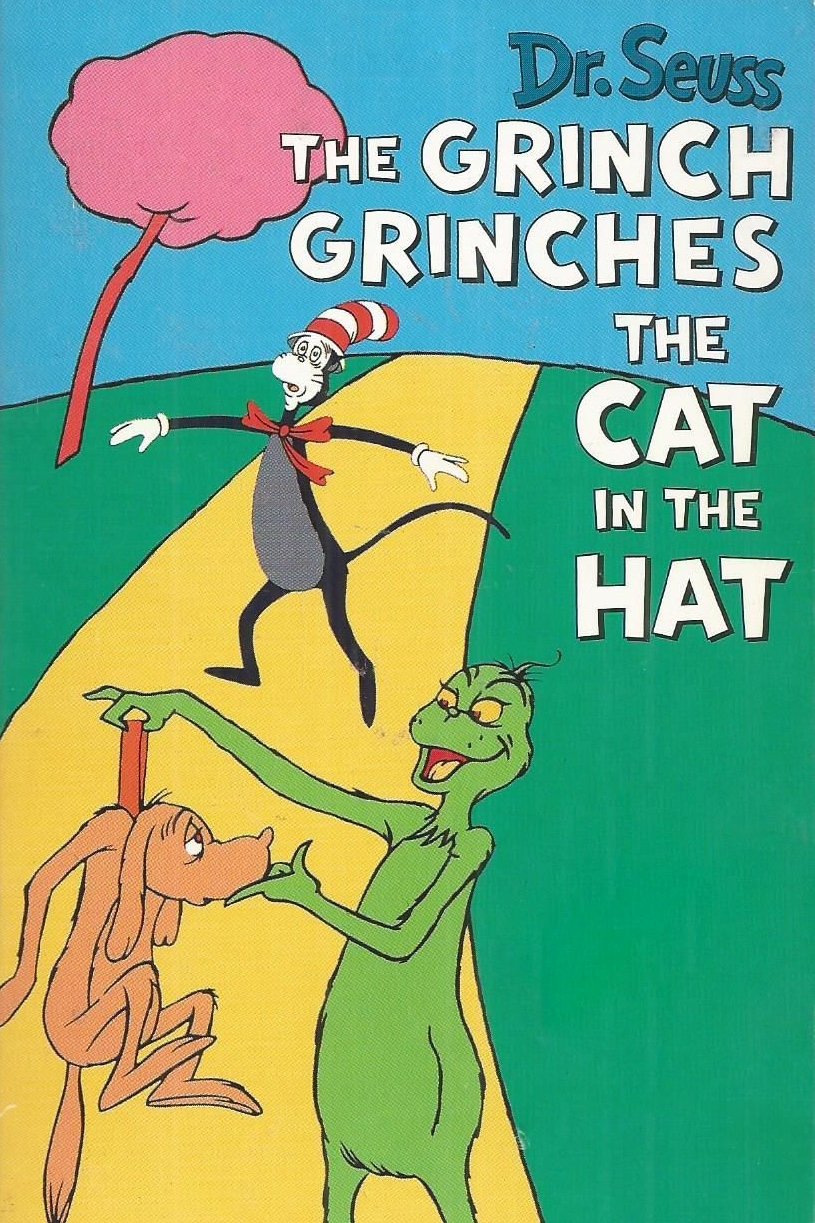
The Cat in the Hat is all set for a lovely picnic, but the evil Grinch changes his plans by inventing a contraption that captures noise and makes it sound ferocious. The Cat has to save the world from the clutches of the Grinch and the only way to do it is to reach Grinch's soft spot.
This short film documents Australian composer Richard Meale’s homage to the young French poet, Arthur Rimbaud. Meale composed a music piece for woodwind, percussion and strings which he titled “Incredible Floridas”.
A Pop Art extravaganza by Fred Mogubgub from the late-1960s, innovative in the use of the quick cut, this film is a parade of pop icons of its time. Features a pre-Playboy, pre-N. O. W. Gloria Steinem.
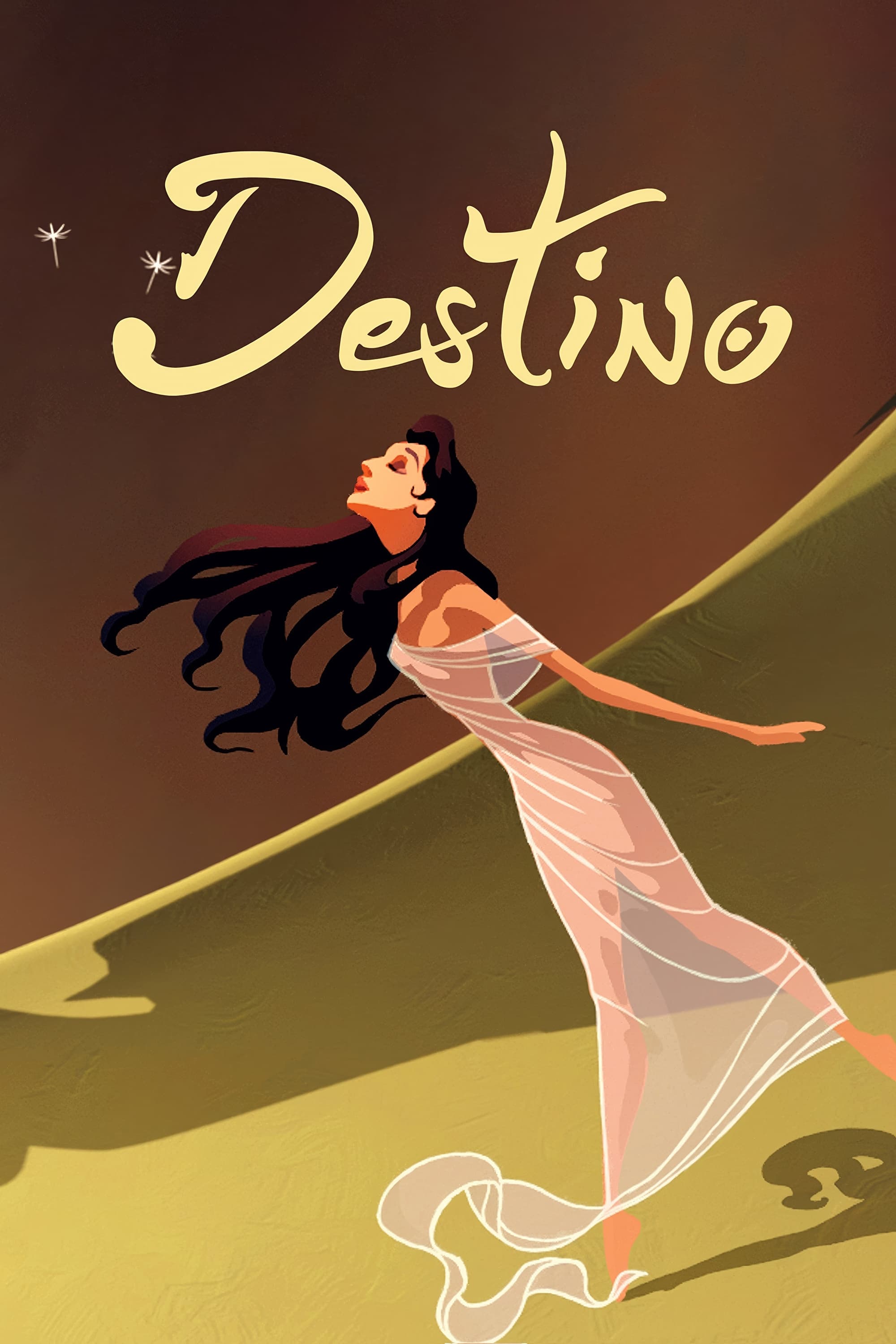
Short film to a song of love lost and rediscovered, a woman sees and undergoes surreal transformations. Her lover's face melts off, she dons a dress from the shadow of a bell and becomes a dandelion, ants crawl out of a hand and become Frenchmen riding bicycles. Not to mention the turtles with faces on their backs that collide to form a ballerina, or the bizarre baseball game.
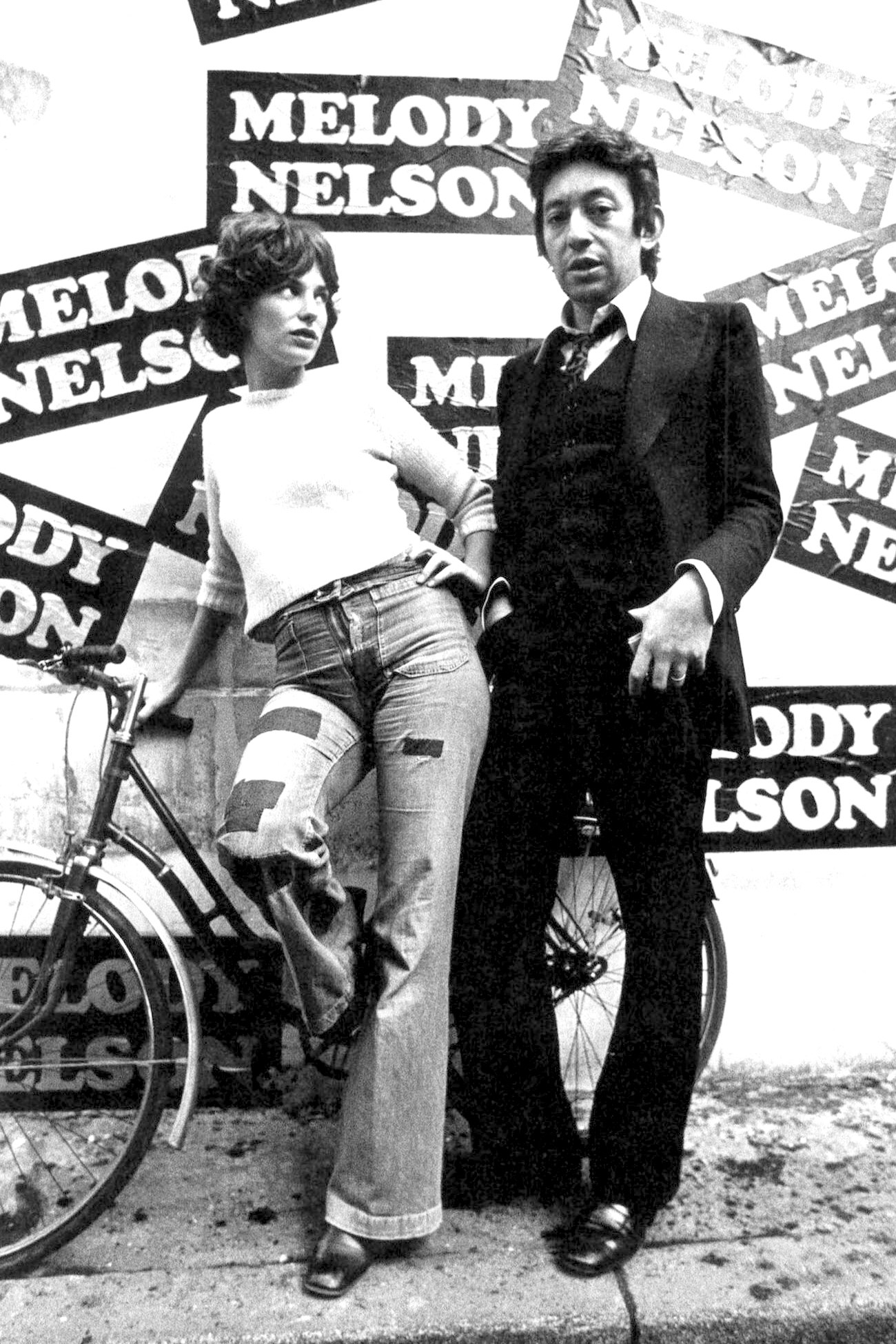
Although Gainsbourg and Birkin had appeared in a string of films since their magnetic collision in Pierre Grimblat’s Slogan, Melody was a bit of diversion from their collaborations since it’s a series of interwoven videos inspired by the Gainsbourgalbum. For '71 it’s a novel concept to bring visual life to an LP, but even more surprising are the short film’s amazing visuals that director Averty crafted using a wealth of video filters, overlays, camera movements and chroma key effects. Averty applies these in tandem with the increasing tone of Gainsbourg’s songs, which more or less chronicle an older man's affair with a young girl. Each song is comprised of steady, sometimes brooding poetic delivery, with refrains timed to the phrase repeats of each song, while Alan Parker’s buzzing guitar accompanies and wiggles around Gainsbourg’s resonant voice. The bass is fat and groovy, the drums easy but steady, and the periodic use of strings or rich vibrato makes this short a sultry little gem.
A colour anamorphic musical look at London's Heathrow airport over 24-hours in November 1971. The subject was shot entirely at Heathrow airport without recording any direct sound. LHR's many layered tracks were all compiled, recorded and laid in post-production.
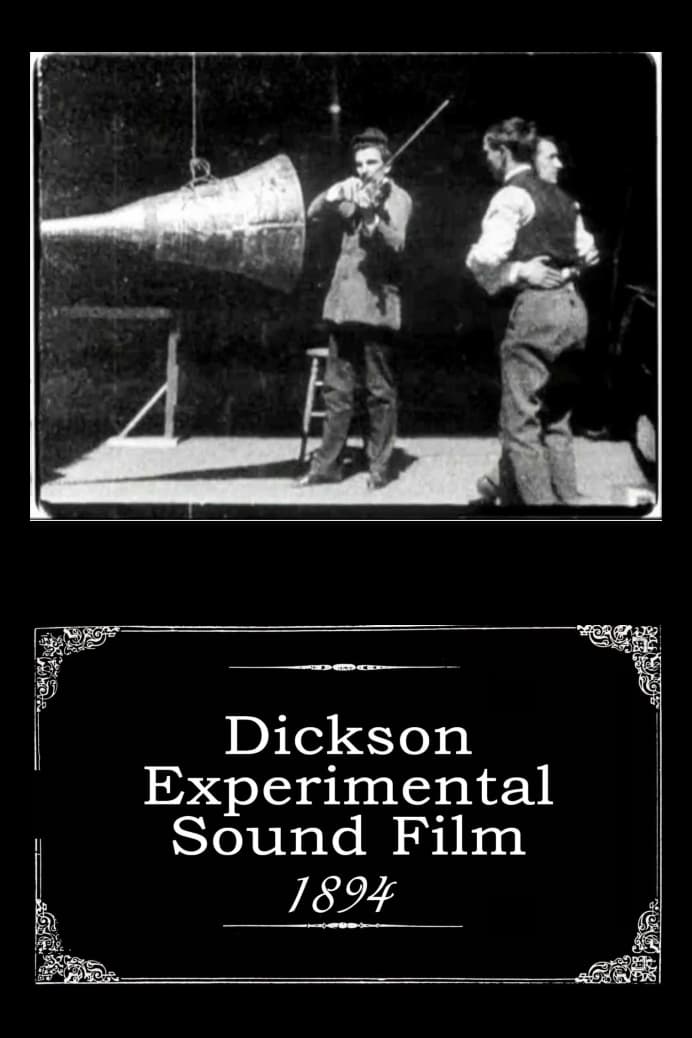
William K.L. Dickson plays the violin while two men dance. This is the oldest surviving sound film where sound is recorded on the phonograph.
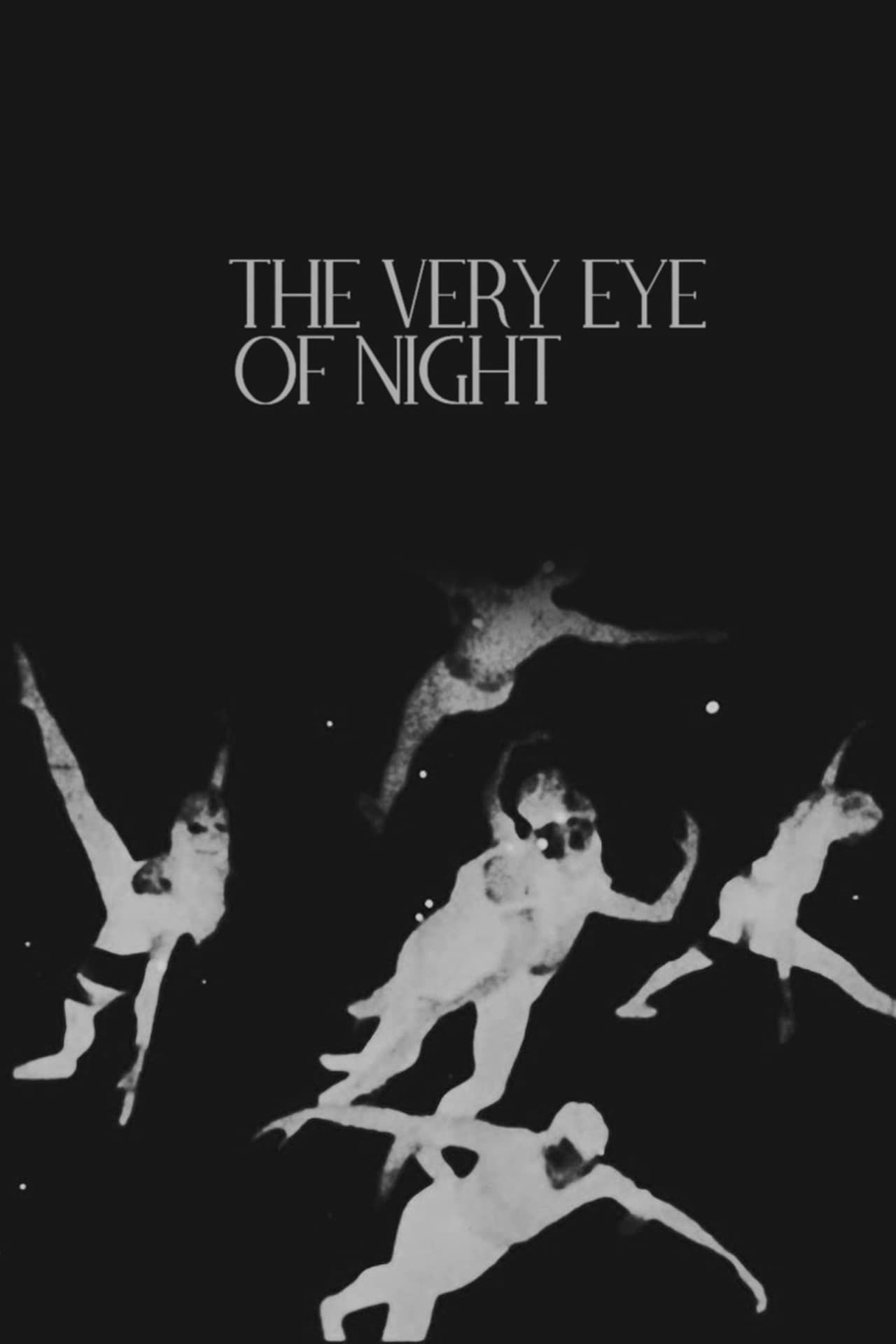
Dancers, shown in photographic negative, perform a series of ballet moves, solos, pas de deux, larger groupings. The dancers glide and rotate untroubled by gravity against a slowly changing starfield background. Their movements are accompanied by music scored for a small ensemble of woodwind and percussion.
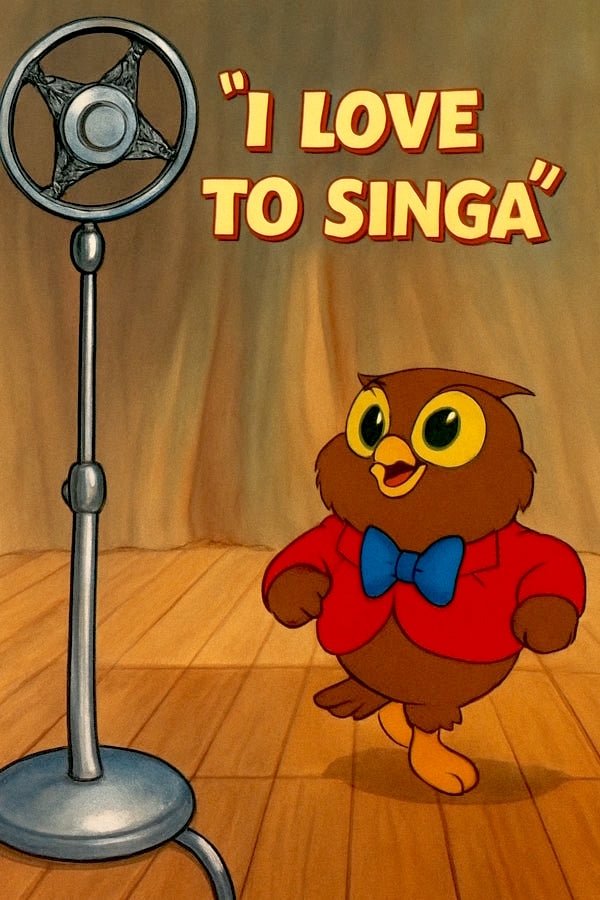
I Love to Singa depicts the story of a young owl who wants to sing jazz, instead of the classical music that his German parents wish him to perform. The plot is a lighthearted tribute to Al Jolson's film The Jazz Singer.
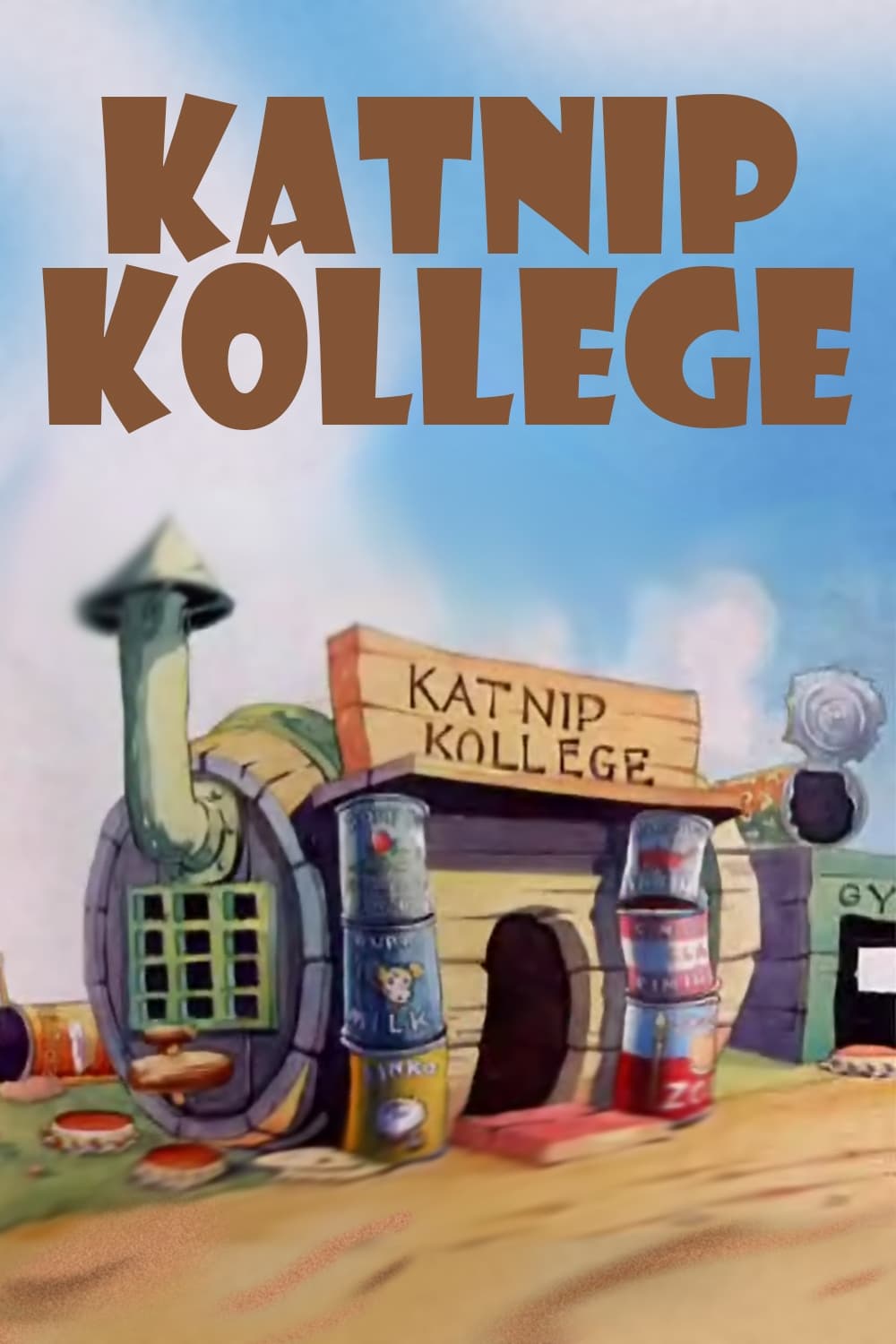
At the Katnip Kollege, we see a roomful of cats taking a course in Swingology. Everyone swings except Johnny, who can't cut it and has to sit in the dunce chair. Miss Kitty Bright tells him to look her up when he learns how to swing. Finally, listening to the pendulum clock at night, Johnny gets the beat. He rushes out to where everyone is playing and sings "Easy As Rollin' Off a Log" to Kitty Bright. She joins in; he grabs a trumpet for an instrumental break, with the complete band. They both fall off a log; she covers him with kisses.
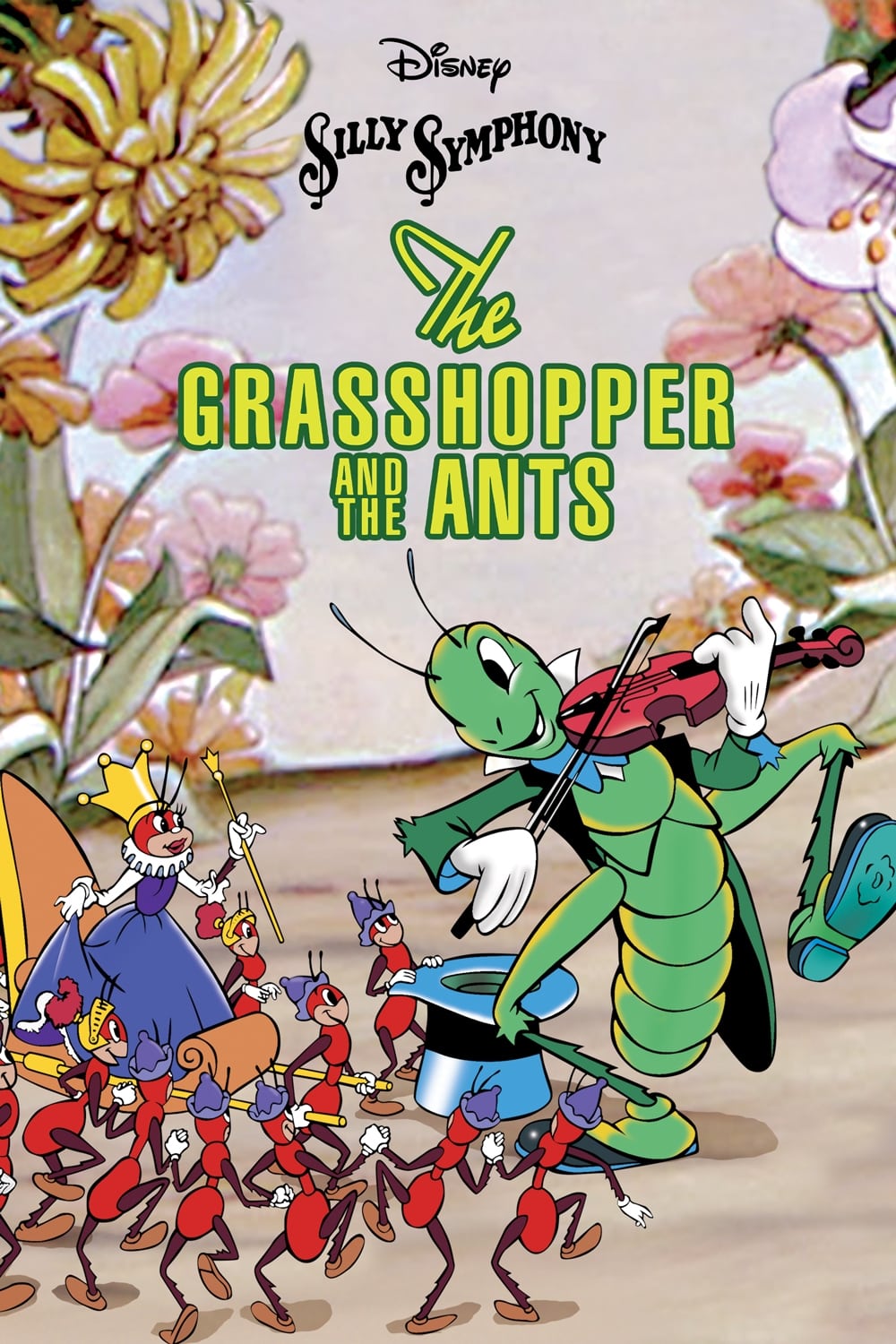
As in the classic fable, the grasshopper plays his fiddle and lives for the moment, while the industrious ants squirrel away massive amounts of food for the winter. With his song, he's able to convince at least one small ant until the queen arrives and scares him back to work. The queen warns the grasshopper of the trouble he'll be in, come winter. Winter comes, and the grasshopper, near starvation, stumbles across the ants, who are having a full-on feast in their snug little tree. They take him in and warm him up. The queen tells him only those who work can eat so he must play for them. Written by Jon Reeves
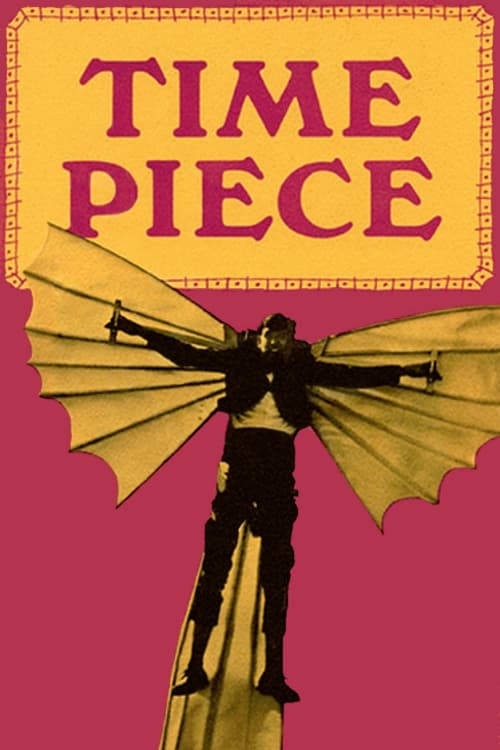
Dislocation in time, time signatures, time as a philosophical concept, and slavery to time are some of the themes touched upon in this 9-minute experimental film, which was written, directed, and produced by Jim Henson. Screened for the first time at the Museum of Modern Art in May of 1965, "Time Piece" enjoyed an eighteen-month run at one Manhattan movie theater and was nominated for an Academy Award for Outstanding Short Subject.
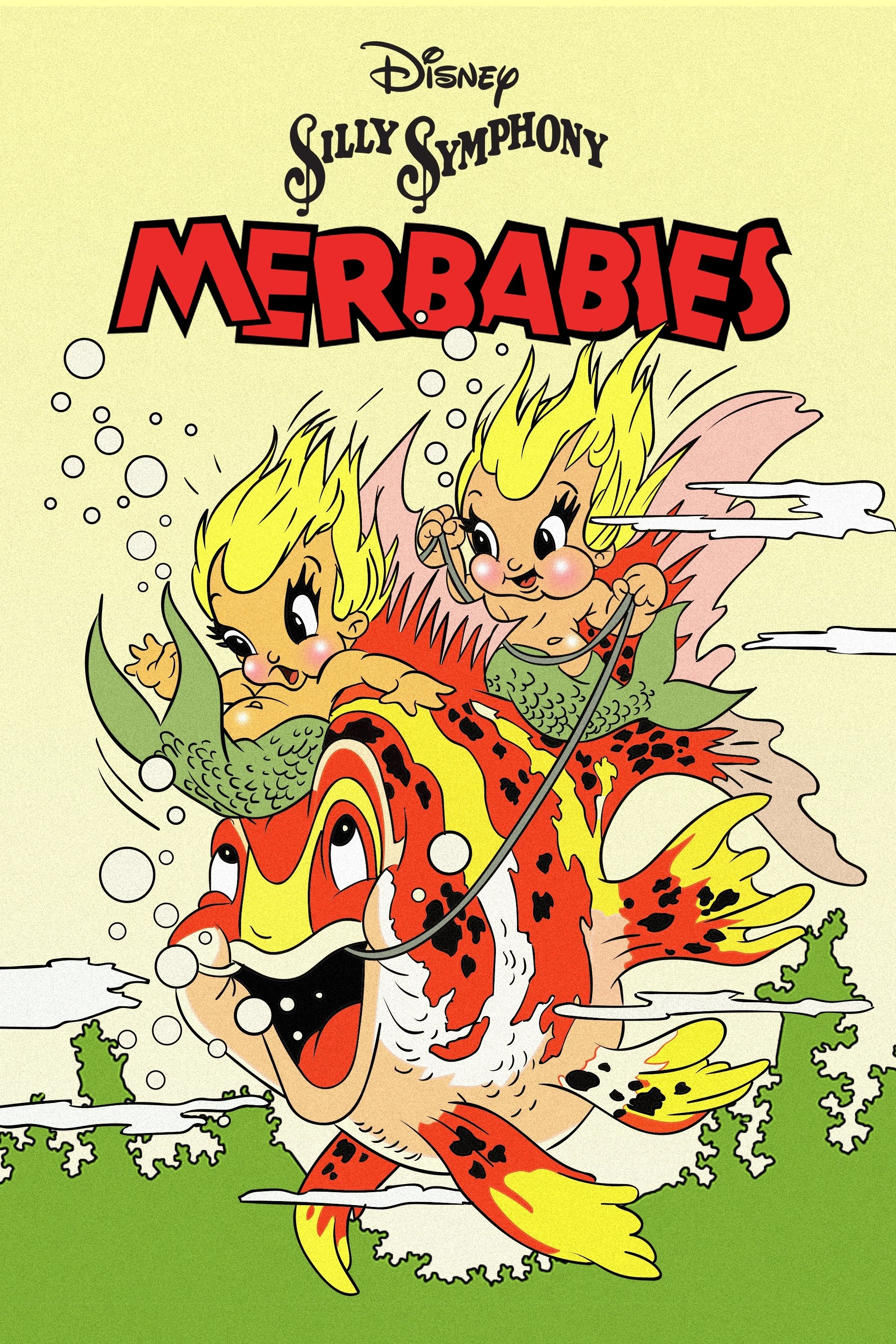
Walt Disney enlisted former colleagues Hugh Harman and Rudy Ising to help create this underwater Silly Symphony. Ocean waves form merbabies who are summoned to an aquatic circus playground on the sea floor, where they interact with a parade of seahorses, starfish and other marine life, before disappearing into the surface from which they came.
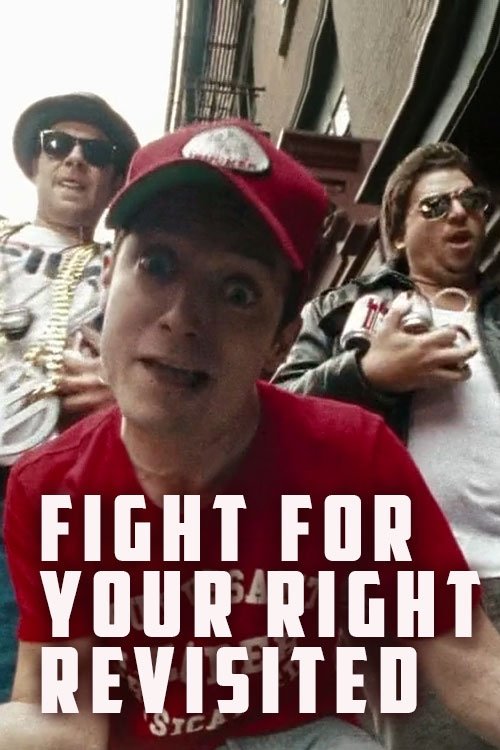
Fight for Your Right Revisited stars Danny McBride, Seth Rogen, and Elijah Wood as the "young" Beastie Boys from the past and Jack Black, John C. Reilly, and Will Ferrell as the "old" Beastie Boys from the future. The story begins where the video for "Fight for Your Right (1987)" ended. It features music from the band's album Hot Sauce Committee Part Two.
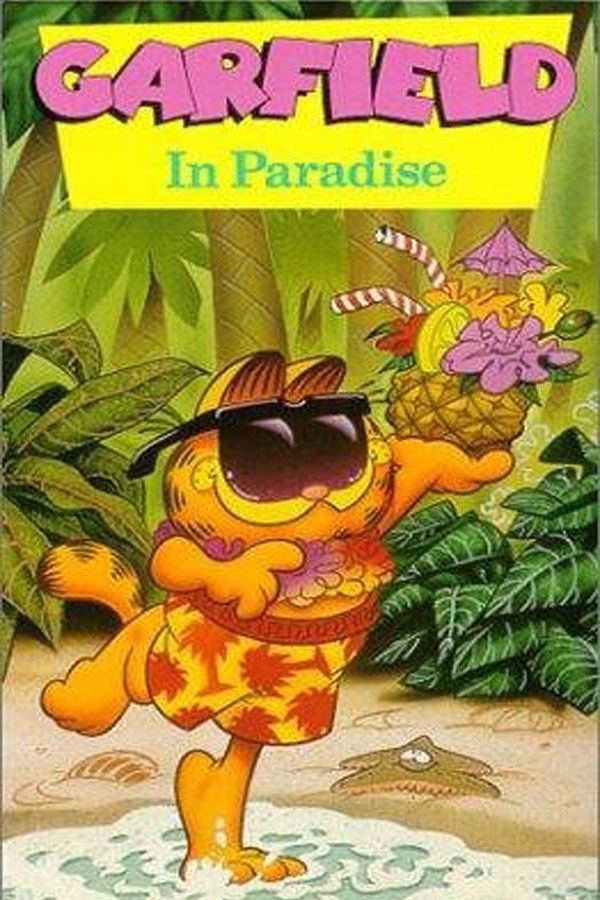
Garfield, Odie and Jon go vacationing on a tropical island along with the High Rama Lama of rock and roll, a princess and her cat - and a rumbling volcano.
Mickey guest-directs a radio orchestra. The sponsor loves the rehearsal, but come the actual performance, Goofy drops all the instruments under an elevator, so they sound like toys. The sponsor hates it, but the audience loves it anyway.
At the home of Viennese composer Johann Strauss lived Johann Mouse. Whenever the composer played his waltzes, the mouse would dance to the music, unable to control himself. One day, when Strauss was away, the house cat played his master's music. When word got out about a piano-playing cat and a dancing mouse, they were commanded to perform for the emperor.
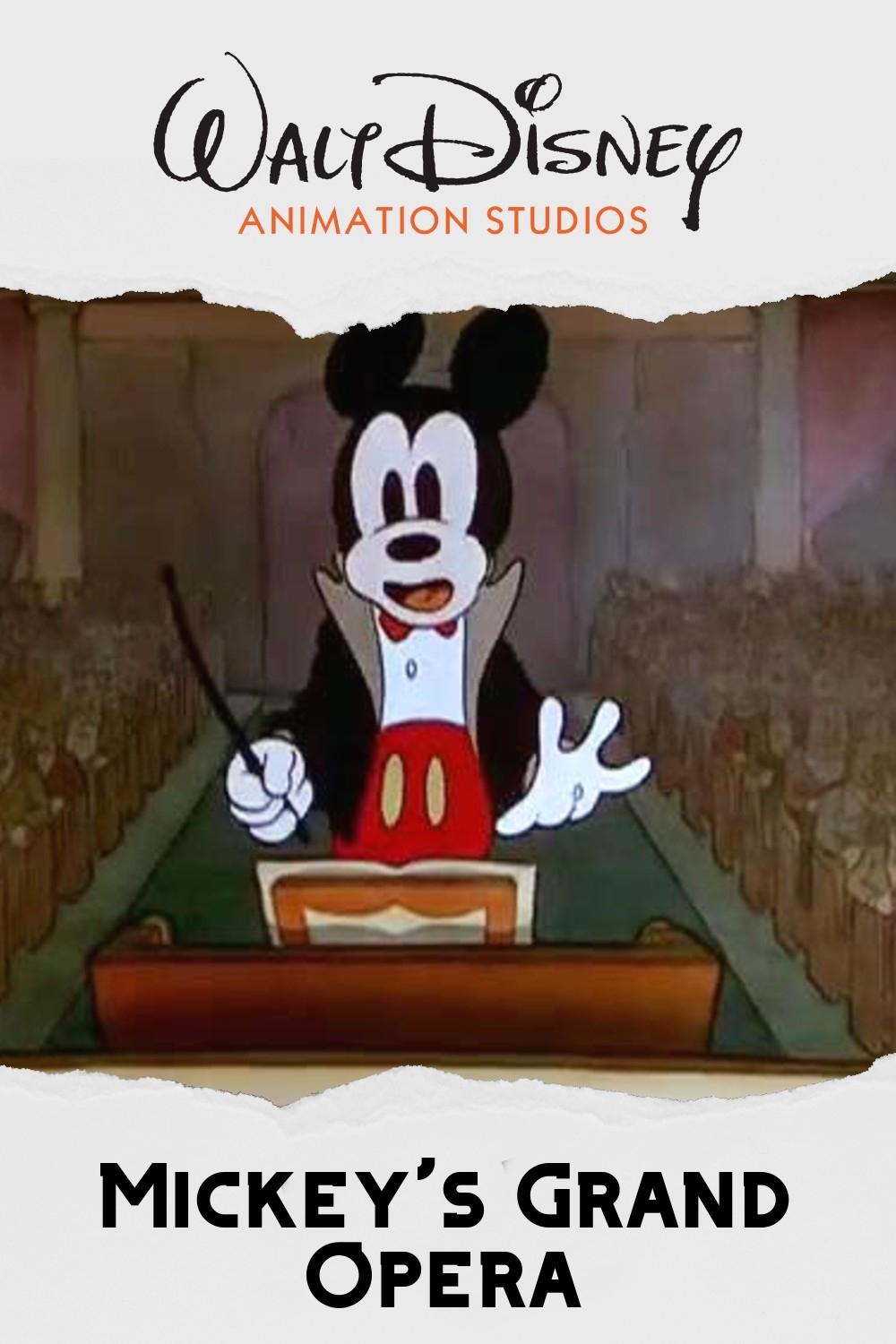
Mickey is preparing to conduct an opera when he chases Pluto away. Pluto crashes into a magician's props backstage and spars with the hat, its rabbits, and its doves. The opera begins: Clarabelle plays flute, Clara and Donald are the leads in Romeo and Juliet. Pluto follows the magic hat onstage, to Mickey's growing annoyance. The hat falls into a tuba, and soon the animals are filling the stage.
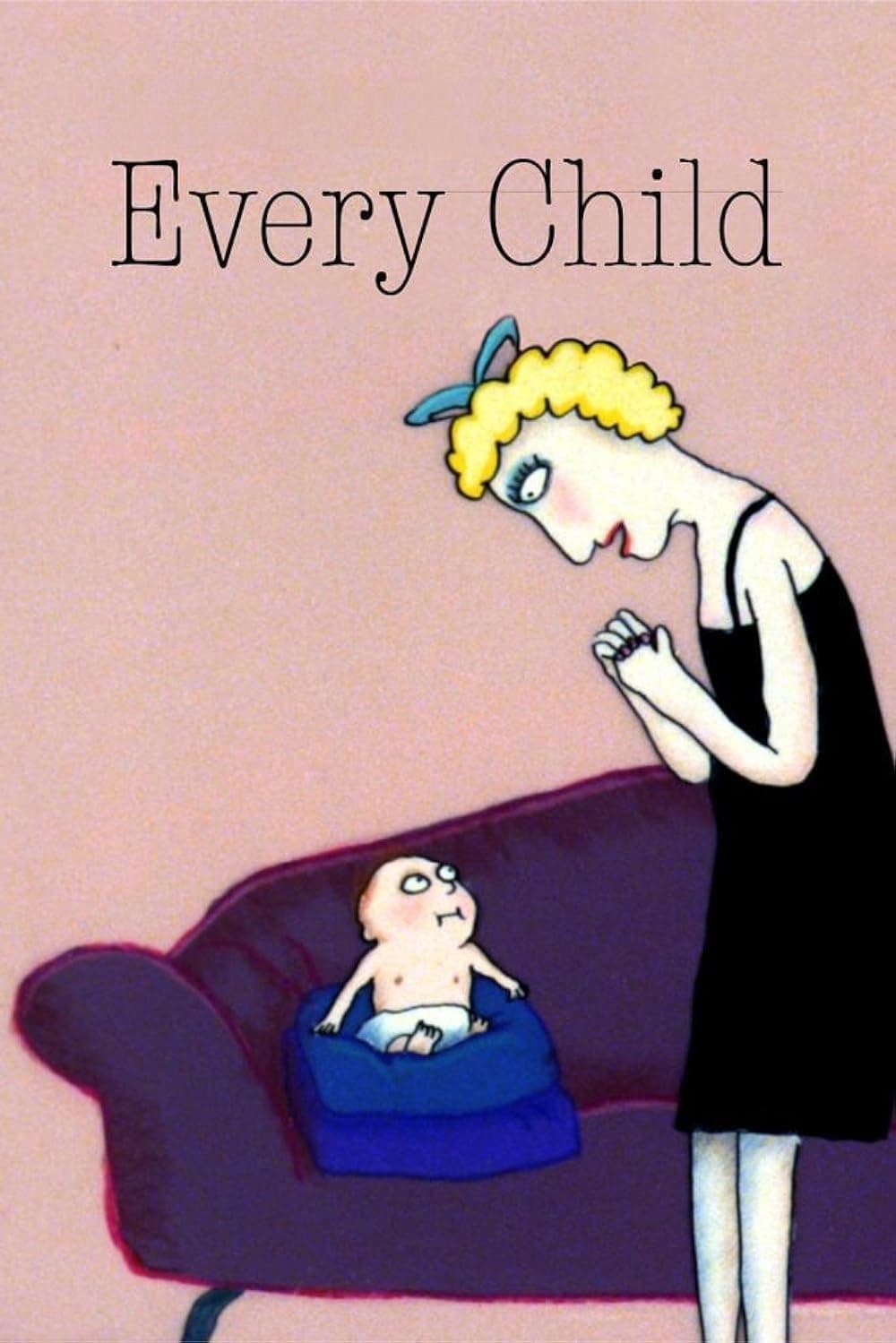
This animated short follows an unwanted baby who is passed from house to house. The film is the Canadian contribution to an hour-long feature film celebrating UNESCO's Year of the Child (1979). It illustrates one of the ten principles of the Declaration of Children's Rights: every child is entitled to a name and a nationality. The film took home an Oscar® for Best Animated Short Film.
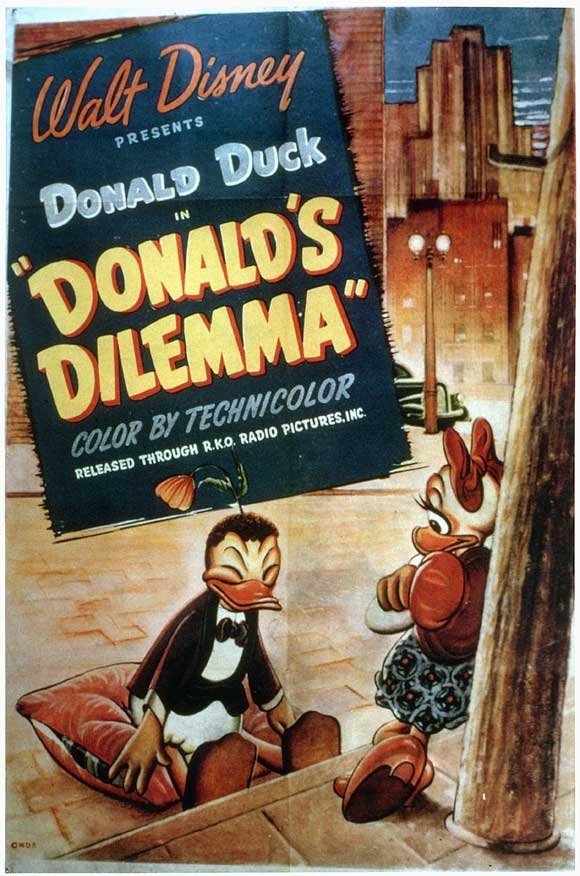
Donald and Daisy are walking when he is hit by a flowerpot. He's convinced he's a famous singer, and he croons divinely, but does not recognize Daisy. He in fact does become famous. Daisy is devastated by her inability to get over him and sees a psychiatrist. He tells her she has to choose between the world having Donald, or her getting him back. She picks herself, and drops another flowerpot, which restores him.