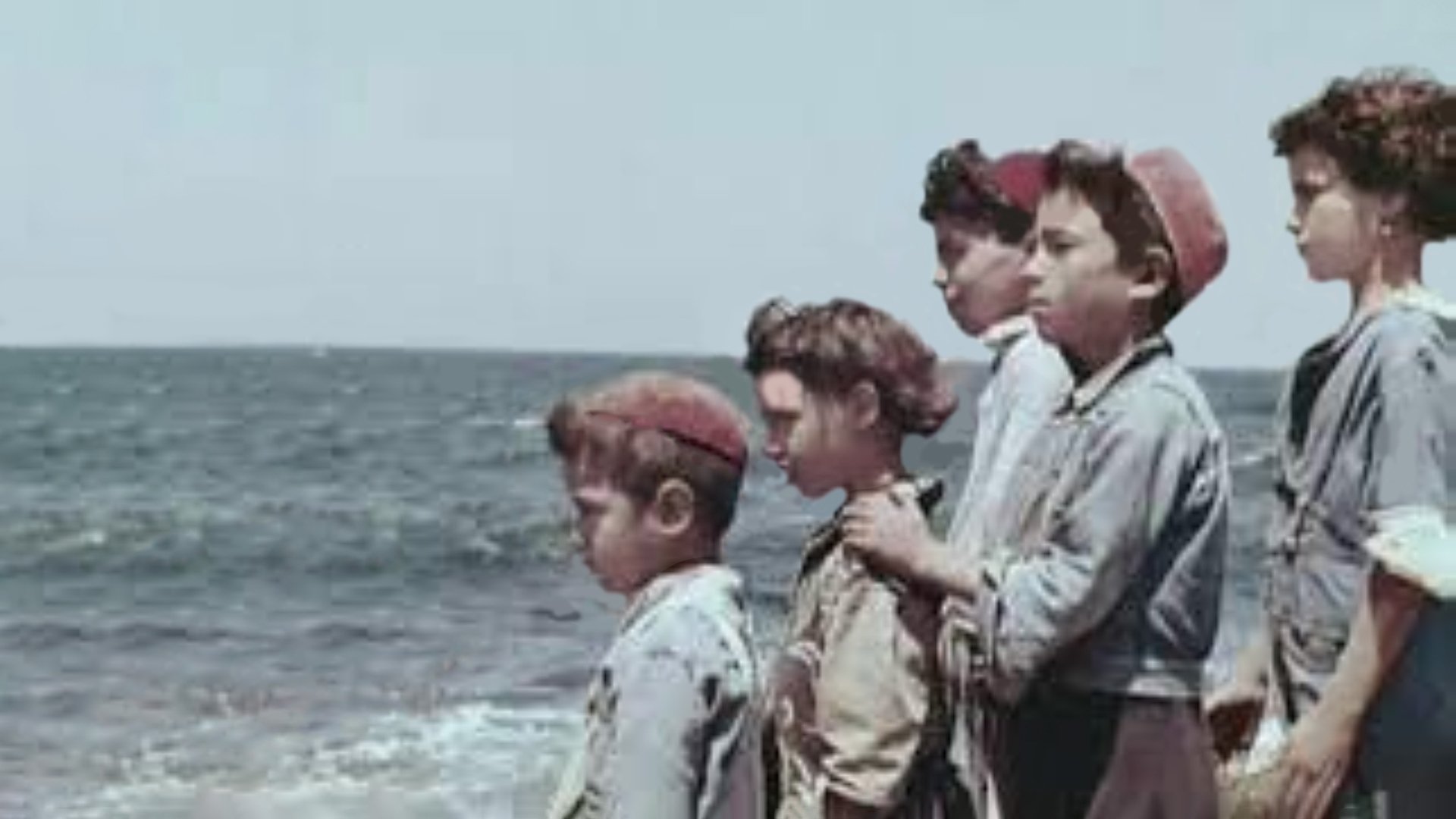
At the time of Tunisian independence, owners of large boats decide to sell, while many small fishermen soon find themselves without work. Their wives then decide to pool their gold rings to sell them and thus buy boats.
Social & External
A young woman
Commentator
The director meets Amir and Ramzi in a café in a small Tunisian town. They don't want to be seen there. They have to find a discreet place to talk. Like many other gay couples in Tunisia, Amir and Ramzi are living a nightmare since the Tunisian Revolution. With them, the director will discover the daily life of the Tunisian homosexual couples, even in the discrete parties organized in hotels of the country.
"Gerboise bleue", the first French atomic test carried out on February 13, 1960 in the Algerian Sahara, is the starting point of France's nuclear power. These are powerful radioactive aerial shots carried out in areas belonging to the French army. Underground tests will follow, even after the independence of Algeria. From 1960 to 1978, 30,000 people were exposed in the Sahara. The French army was recognized recognized nine irradiations. No complaint against the army or the Atomic Energy Commission has resulted. Three requests for a commission of inquiry were rejected by the National Defense Commission. For the first time, the last survivors bear witness to their fight for the recognition of their illnesses, and revealed to themselves in what conditions the shootings took place. The director goes to the zero point of "Gerboise Bleue", forbidden access for 47 years by the Algerian authorities
Albert Schweitzer (1875-1965), the mission doctor, theologian and philosopher who founded a hospital in the rainforests of Gabon, achieved sainthood in his lifetime, at least in the popular imagination. The critical assessment of his life and works in recent years, however, has been slightly more ambivalent. Ba Kobhio Bassek is the first director to examine this medical missionary from a purely African point-of-view.
In the heart of Gorongosa National Park, Mozambique, the waters of Lake Urema explode with the thrashing of a giant crocodile tail. Gorongosa was once known as the place where Noah left his ark: 1,500 square miles of lush floodplains in central Mozambique, packed with wild animals. All around, enormous buffalo, soaring fish eagles, and countless antelopes roam freely. But on closer look, something strange is going on. Fifteen years of civil war has taken a heavy toll and many species have been almost completely wiped out. All the usual top predators and prey are virtually missing, except for one - giant crocodiles and thousands of them. Discover what is being done to bring this African oasis back to its former glory, including perhaps the most ambitious restoration effort ever attempted, with elephants, hippos and scores of zebra, wildebeest, impala and buffalo, being relocated into the park.
The film builds up a portrait of a great Sudanese film-maker, Gadalla Gubara. At eighty-seven, he is one of the pioneers of cinema in Africa. He has recently lost his sight but still continues to film life in Sudan as no one before him. Through his oeuvre, Gadalla reveals to us a Sudan both mysterious and misunderstood. Despite censorship and lack of financial support over sixty years, he has produced cinema that is independent and unique in a country where freedom of expression is a rare luxury.
Nature documentary about a young wildebeest in the wilderness of Africa. The gnu calf strays from the herd and comes upon a lioness that kidnaps it. Instinctively, it treats the lion like its mother. And miraculously enough, the lioness does not see the calf as its prey. Like a true Survivor, the calf manages to escape from the lion's den and find its way back to its real mother.
In this revealing program, noted author and economic activist Naomi Klein offers a lecture and a candid interview in which she expounds on the ideas at the heart of her best-selling book.
This cinematic journey into the waters off East Africa chronicles the story behind artist Damien Hirst's massive exhibition of oceanic treasures.
In a neighbourhood in Bhar Lazrak, Tunis, residents live under the imminent threat of the state, which plans to demolish the area. Built spontaneously during the 2011 revolution by a group of people without state authorisation, the neighbourhood now faces an uncertain fate. One evening, mysterious lights appear in the neighbourhood, breaking the silence of the sleepers.
The adventurer, Ivan Bulík, traveled all through Africa. However, one of his dreams still eluded him: He desired to capture the life and customs of the smallest people on Earth, to find the undisturbed civilization of Pygmies.
In Africa, the giant fig tree and the tiny fig wasp differ in size a billion times over, but neither could exist without the other. Their extraordinary relationship is a marvel of co-evolution, a marriage which has lasted for millennia. It forms the basis of a complex web of dependency that supports entire ecosystems, providing food for thousands of creatures, from elephants, giraffes, and fruit bats, to forest hornbills, monkeys, insects, and fish.
1965, Bob Denard, even early in his career, Battle in Congo. It strives to make its game in the middle of a bloody civil war fueled by rivalry and ambition postcolonial of a newcomer on the African scene: General Mobutu.
Saddari is a story of A 3 Young bikers decide to hit the road to another state for adventure , Ending up embarking on a challenging bike trip across all of Sudan with less than a 100$ In their pockets combined and worn-out bicycles, Facing numerous challenges along the way.
This documentary reaches to the depth of Somali history, starting from the strong kingdoms that ruled areas far away into Africa, passing by the Portuguese raids and ending with its division into five colonies ruled by different European forces, leaving the people of the same race and language separated by geographical borders. It addresses problems of civil war, chaos, theft, and mass destruction. It also focuses on valuable attempts by national organizations to resist occupation and foster peace.
The photographic record of an African expedition led by producer-explorer Armand Denis and his (very) photogenic and camera-toting wife Michaela, who goes bird-riding at an ostrich farm. The expedition ranges from the central interior jungles and mountains to both coasts and as far south as Capetown, and ends with a gorilla hunt led by natives using 100-year-old muskets.
In the heart of the Camargue region, in the south of France, Jawad and Belka find freedom in their love of Camargue races. For these young Maghrebi men, the event is more than a simple tradition. Facing off with a bull is an opportunity to establish their place in the arena—and in French society. But at what cost?
History is Ours narrates the struggle of the workers of the Refrescos Pascual soft-drink company against its owner, Rafael Jiménez, the official trade unionism of the CTM and the labor authorities of the governments of José López Portillo and Miguel de la Madrid, between 1982 and 1985. It documents the workers' difficult struggle to take over the company, when justice, which had been elusive, finally proved them right, and opened the possibility that these brave, tenacious workers would become collective owners of the company. Today, these soft-drink fighters resist a system that hits Mexican companies in favor of the monopolistic transnationals. The film is an account of one of the most brilliant episodes of the contemporary Mexican labor movement, an example of unity and class consciousness, embodied by men and women who make their struggle a tribute to comrades Concepción Jacobo García and Alvaro Hernández García, tragically fallen at the beginning of this historic event.
Kibera is the largest slum area in Nairobi, and the largest urban slum in Africa. This documentary depicts three important problems; violence, drugs (miraa) and albinos killing.The 2009 Kenya Population and Housing Census reports Kibera's population as 170,070, contrary to previous estimates of one or two million people .Most of Kibera slum residents live in extreme poverty, earning less than $1.00 per day. Unemployment rates are high. Persons living with HIV in the slum are many, as are AIDS cases. Cases of assault and rape are common. There are few schools, and most people cannot afford education for their children. Clean water is scarce. Diseases caused by poor hygiene are prevalent.
Historical film in four scenes which retrace the returns, the progress and the outcome of the war of liberation in Algeria. The first painting, “The land was thirsty” describes aspects of injustice and colonial oppression. The second “The Paths to the Prison” recounts the sufferings of the people engaged in combat. The last two are the stories of two lives.
For many generations people in the Omo Valley (tribal southwest Ethiopia) believed some children are cursed and that these 'cursed' children bring disease, drought and death to the tribe. The curse is called 'mingi' and mingi children are killed. Lale Labuko, a young educated man from the Kara tribe was 15 years old when he saw a child in his village killed and also learned that he had 2 older sisters he never knew who had been killed. He decided one day he would stop this horrific practice. Filmed over a five year period we follow Lale's journey along with the people of his tribe as they attempt to change an ancient practice.
Buddy is a young boy on the cusp of adolescence, whose life is filled with familial love, childhood hijinks, and a blossoming romance. Yet, with his beloved hometown caught up in increasing turmoil, his family faces a momentous choice: hope the conflict will pass or leave everything they know behind for a new life.
Between light and darkness stands Olfa, a Tunisian woman and the mother of four daughters. One day, her two older daughters disappear. To fill in their absence, the filmmaker Kaouther Ben Hania invites professional actresses and invents a unique cinema experience that will lift the veil on Olfa and her daughters' life stories. An intimate journey of hope, rebellion, violence, transmission and sisterhood that will question the very foundations of our societies.
In 1863, Mississippi farmer Newt Knight serves as a medic for the Confederate Army. Opposed to slavery, Knight would rather help the wounded than fight the Union. After his nephew dies in battle, Newt returns home to Jones County to safeguard his family but is soon branded an outlaw deserter. Forced to flee, he finds refuge with a group of runaway slaves hiding out in the swamps. Forging an alliance with the slaves and other farmers, Knight leads a rebellion that would forever change history.
Resistance leader Omar Mukhtar opposes Italian colonization before World War II. The brutal guerrilla war against Italian General Rodolfo Graziani and the Fascist forces of Benito Mussolini highlights the struggle for Libyan independence and the harsh tactics utilised by the colonisers.
Young women toiling in a factory are exposed to hazardous material which takes a disastrous toll on their health.
In September 1942, the German Afrika Korps under Rommel have successfully pushed the Allies back into Egypt. A counter-attack is planned, for which the fuel dumps at Tobruk are a critical impediment. In order to aid the attack, a group of British commandos and German Jews make their way undercover through 800 miles of desert, to destroy the fuel dumps starving the Germans of fuel.
Judge Clarence Thomas' nomination to the United States' Supreme Court is called into question when former colleague, Anita Hill, testifies that he had sexually harassed her.
France. End of the 19th century. Louise Violet 40, a Parisian teacher, is sent on a mission to the French countryside. But in a place where the daily life is linked to the seasons, land and crops, she must first convince parents to send their kids to school. With the help of the mayor, she is gradually accepted by the parents and their children. But soon, her past catches up with her. Despite the obstacles she faces, Miss Violet will give her heart and soul to her belief that education is the key to freedom.
Spain in the 1930s is the place to be for a man of action like Robert Jordan. There is a civil war going on and Jordan—who has joined up on the side that appeals most to idealists of that era—has been given a high-risk assignment up in the mountains. He awaits the right time to blow up a crucial bridge in order to halt the enemy's progress.
At the beginning of the 20th century an American woman is abducted in Morocco by Berbers, and the attempts to free her range from diplomatic pressure to military intervention.
Based on true events about the foot soldiers of the early feminist movement, women who were forced underground to pursue a dangerous game of cat and mouse with an increasingly brutal State.
Eccentric British painter J.M.W. Turner lives his last 25 years with gusto and secretly becomes involved with a seaside landlady, while his faithful housekeeper bears an unrequited love for him.
Ophelia comes of age as lady-in-waiting for Queen Gertrude, and her singular spirit captures Hamlet's affections. As lust and betrayal threaten the kingdom, Ophelia finds herself trapped between true love and controlling her own destiny.
At New Mexico's Empire Zinc mine, Mexican-American workers protest the unsafe work conditions and unequal wages compared to their Anglo counterparts. Ramon Quintero helps organize the strike, but he is shown to be a hypocrite by treating his pregnant wife, Esperanza, with a similar unfairness. When an injunction stops the men from protesting, however, the gender roles are reversed, and women find themselves on the picket lines while the men stay at home.
Shirley Chisholm makes a trailblazing run for the 1972 Democratic presidential nomination after becoming the first Black woman elected to Congress.
A WWII veteran escapes his care home in Northern Ireland and embarks on an arduous but inspirational journey to France to attend the 75th anniversary of the D-Day landings, finding the courage to face the ghosts of his past.
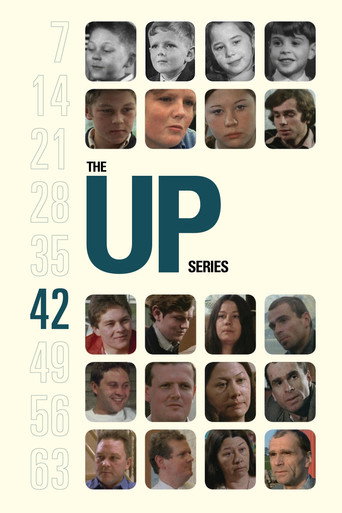
Director Michael Apted revisits the same group of British-born adults after a 7 year wait. The subjects are interviewed as to the changes that have occurred in their lives during the last seven years.
A chronicle of the Cristeros War (1926-1929), which was touched off by a rebellion against the Mexican government's attempt to secularize the country.
In the Warsaw ghetto in 1943, Jews rise against the Nazis.
Jimmy Gralton returns from New York and reopens his beloved community hall, only to meet opposition from the local parish.