Social & External
The inside story of the bitter clash between President Obama and Israeli Prime Minister Netanyahu. Amid violence in the Middle East, the film traces Netanyahu's rise to power and his high-stakes fight with the president over Iran's nuclear program.
What would your family reminiscences about dad sound like if he had been an early supporter of Hitler’s, a leader of the notorious SA and the Third Reich’s minister in charge of Slovakia, including its Final Solution? Executed as a war criminal in 1947, Hanns Ludin left behind a grieving widow and six young children, the youngest of whom became a filmmaker. It's a fascinating, maddening, sometimes even humorous look at what the director calls "a typical German story." (Film Forum)
Since nurseries were opened up to the private sector in the early 2000s, early childhood has become a lucrative business for its voracious players. As scandals involving abuse and embezzlement of public funds multiply, we investigate the excesses of deregulation, which has turned babies into cash machines.
An 18-minute panoramic film showcasing the grandeur, charm and romance of one of Europe’s most enchanting countries.
Surviving against all odds. In 1940, Benjamin Orenstein, just a teenager, was sent to his first concentration camp in Poland. It was the beginning of a journey that would mark him for life. After years of silence, he now bears witness to one of the darkest chapters in history.
"This 20 minute documentary sheds light on the worst antisemitic riot in American history, which occurred in Crown Heights, Brooklyn, in 1991. Triggered by a Hasidic man running a red light and accidentally hitting and killing a young black child, the riot led to attacks on Jews. Stores and police cars were burned and a Hasidic man was killed. David Dinkins, New York’s mayor at the time, allowed the riot to go on for three full days, while the media downplayed the antisemitism at the heart of the violence. The film’s interviews include Rev. Al Sharpton and then-Deputy Police Chief Ray Kelly as well as WSJ Opinion writer Elliot Kaufman. The current wave of antisemitism makes these events newly relevant and worthy of reconsideration" (The Wall Street Journal).
Based on testimony by Ethel’s brother, David Greenglass, the Rosenbergs are arrested by the FBI. The couple is accused of passing secret information about the atomic bomb to the USSR. Though the Rosenbergs maintain their innocence from the start, the media and public opinion seem to have condemned them from day one. The trial does nothing to change this and ends in a death sentence. On Friday June 19, 1953, Julius and Ethel Rosenberg are executed in the electric chair. Julius first, then Ethel. 30 years later, the truth finally comes out. Declassified FBI archives reveal that Ethel was not guilty of being a spy; she was merely married to one. Julius did indeed commit espionage for the Soviet Union, though primarily as a recruiter, nothing at all like the fictional James Bond. This documentary, made entirely of archival footage and animated illustrations, offers a tale of espionage as well as a complex family tragedy.
A multiscreen installation, a colorful beach bar, the statue of Saint Christopher - a postcolonial look at the edge of the harbor in Flensburg and the question of what is made visible and what is not.
The histories of queer people of color, especially from the SWANA (Southwest Asia/North Africa) region, remains generally unwritten. The lack of this critical representation has served as a guiding axis of Charachchi, a multimedia project created by queer Armenians. "Stories Untold: Meet Queer SWANA Sex Workers and Drag Performers" highlights the stories of queer SWANA sex workers and drag performers, bringing visibility to voices that have remained hidden within mainstream media, history, and cultural spaces.
The first documentary to present an unabashed critique of the impact of the Syrian government’s agricultural and land reforms, Everyday Life in a Syrian Village delivers a powerful jab at the state’s conceit of redressing social and economic inequities.
An Israeli film director interviews fellow veterans of the 1982 invasion of Lebanon to reconstruct his own memories of his term of service in that conflict.
The film follows Michael Moskowitz’s work with a New York-based therapist named Kirkland Vaughns, one of the few African-American Freudian therapists in the United States, while the director reveals her own family’s devastating trauma.
In the minds of people, Brussels is no longer a geographical location; it is now a myth-surrounded centre, where decisions are made regarding future life in Europe. The most brilliant minds from the European countries have convened in Brussels: former state leaders, highly-placed officials, advisors, translators and interpreters, as well as family members of all these people. Together, they comprise a sort of separate planet ruled by special laws and using new methods of communication; it is a place of a high concentration of power and all sorts of creature comforts. The anxiety following the 2016 attacks on Brussels has taken everyone by surprise, and the question whether to stay on Planet Brussels now comes up increasingly often. The Brexit news gave completely different kind of concussion to the commonly established center of Europe.
The Holocaust began with the indiscriminate mass shootings by the Einsatzgruppen in the bloodlands of Eastern Europe and was perfected in the gas chambers at Auschwitz. “Bullets And Blueberries” explores the motives, methods and madness of the perpetrators, using never-before-seen images captured by the killers themselves — images that fully capture the banality of evil.
As politicians debate and argue, the men, women and children at the heart of the European immigration wave have found themselves caught in the midst of a humanitarian crisis. On the frontline is the Greek island of Lesvos – the first point of entry into Europe for over half of the refugees. One week at the end of August 2015 marked a tipping point in the crisis. More refugees arrived than ever before, volunteers were inundated and local infrastructure just couldn’t cope; trains were overflowing, refugees were dying in the back of lorries and on beaches, and politicians responded by closing borders and arguing about how to stem the tide of people. Filmed over just five days, this first-hand account of that dramatic week on Lesvos is seen through the eyes of the refugees and volunteers caught in the crisis.
Twenty-five films from twenty-five European countries by twenty-five European directors.
Amos Gitai returns to the occupied territories for the first time since his 1982 documentary FIELD DIARY. WEST OF THE JORDAN RIVER describes the efforts of citizens, Israelis and Palestinians, who are trying to overcome the consequences of occupation. Gitai's film shows the human ties woven by the military, human rights activists, journalists, mourning mothers and even Jewish settlers. Faced with the failure of politics to solve the occupation issue, these men and women rise and act in the name of their civic consciousness. This human energy is a proposal for long overdue change.
Film journalist and critic Rüdiger Suchsland examines German cinema from 1933, when the Nazis came into power, until 1945, when the Third Reich collapsed. (A sequel to From Caligari to Hitler, 2015.)
Completely topless. Completely uninhibited. The craze that began in San Francisco is now exploding across the USA and Europe.
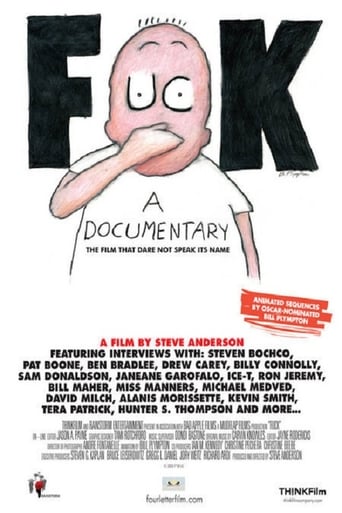
A documentary on the expletive's origin, why it offends some people so deeply, and what can be gained from its use.
JB Smoove and Martin Starr host a celebration of 20 years of "Spider-Man" movies, from the Sam Raimi trilogy to Marc Webb's movies and the trio from Jon Watts.
Ross McElwee sets out to make a documentary about the lingering effects of General Sherman's march of destruction through the South during the Civil War, but is continually sidetracked by women who come and go in his life, his recurring dreams of nuclear holocaust, and Burt Reynolds.
This character-driven film considers the evolving sex trafficking landscape as seen by the main players: the exploited, the pimps, the johns that fuel the business, and the cops who fight to stop it.
Lyrical and powerfully personal essay film that reflects on the deaths of her husband Lou Reed, her mother, her beloved dog, and such diverse subjects as family memories, surveillance, and Buddhist teachings.
SEDUCED AND ABANDONED combines acting legend Alec Baldwin with director James Toback as they lead us on a troublesome and often hilarious journey of raising financing for their next feature film. Moving from director to financier to star actor, the two players provide us with a unique look behind the curtain at the world's biggest and most glamourous film festival, shining a light on the bitter-sweet relationship filmmakers have with Cannes and the film business. Featuring insights from directors Martin Scorsese, 'Bernando Bertolucci' and Roman Polanski; actors Ryan Gosling and Jessica Chastain and a host of film distribution luminaries.
A compilation of over 30 years of private home movie footage shot by Lithuanian-American avant-garde director Jonas Mekas, assembled by Mekas "purely by chance", without concern for chronological order.
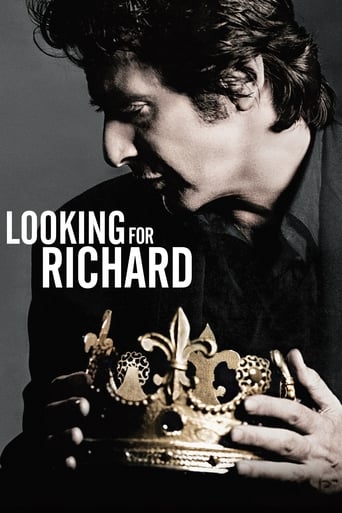
Al Pacino's deeply-felt rumination on Shakespeare's significance and relevance to the modern world through interviews and an in-depth analysis of "Richard III."
A detailing of the rise to prominence and global sporting superstardom of six supremely talented young Manchester United football players (David Beckham, Nicky Butt, Ryan Giggs, Paul Scholes, Phil and Gary Neville). The film covers the period 1992-1999, culminating in Manchester United's European Cup triumph.
A comedic, brutally honest documentary following self-destructive TV writer Dan Harmon as he takes his live podcast on a national tour.
When Allied forces liberated the Nazi concentration camps in 1944-45, their terrible discoveries were recorded by army and newsreel cameramen, revealing for the first time the full horror of what had happened. Making use of British, Soviet and American footage, the Ministry of Information’s Sidney Bernstein (later founder of Granada Television) aimed to create a documentary that would provide lasting, undeniable evidence of the Nazis’ unspeakable crimes. He commissioned a wealth of British talent, including editor Stewart McAllister, writer and future cabinet minister Richard Crossman – and, as treatment advisor, his friend Alfred Hitchcock. Yet, despite initial support from the British and US Governments, the film was shelved, and only now, 70 years on, has it been restored and completed by Imperial War Museums under its original title "German Concentration Camps Factual Survey".
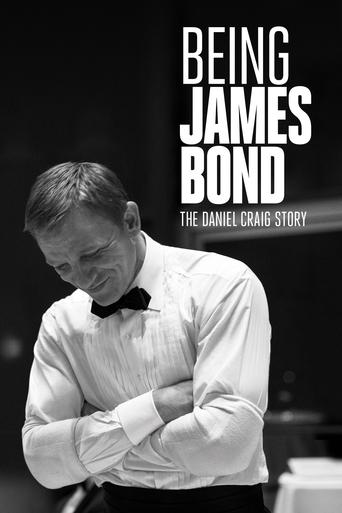
Daniel Craig candidly reflects on his 15 year adventure as James Bond. Including never-before-seen archival footage from Casino Royale to the upcoming 25th film No Time To Die, Craig shares his personal memories in conversation with 007 producers, Michael G Wilson and Barbara Broccoli.
Through deeply personal interviews with her siblings and an examination of the photographs, letters, and belongings left behind, Mariska assembles a new portrait of her mother Jayne Mansfield, an extraordinary and complex woman.
Over seven decades, actor and activist George Takei journeyed from a World War II internment camp to the helm of the Starship Enterprise, and then to the daily news feeds of five million Facebook fans. Join George and his husband, Brad, on a wacky and profound trek for life, liberty, and love.
Filmmakers discuss the legacy of Alfred Hitchcock and the book “Hitchcock/Truffaut” (“Le cinéma selon Hitchcock”), written by François Truffaut and published in 1966.
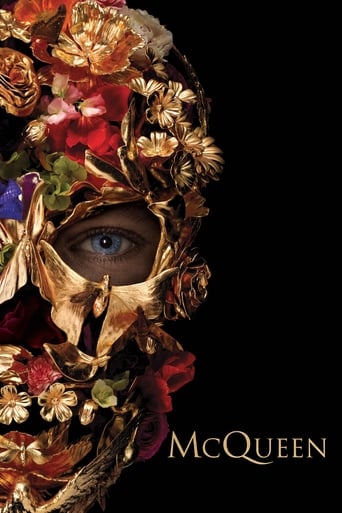
Alexander McQueen's rags-to-riches story is a modern-day fairy tale, laced with the gothic. Mirroring the savage beauty, boldness and vivacity of his design, this documentary is an intimate revelation of McQueen's own world, both tortured and inspired, which celebrates a radical and mesmerizing genius of profound influence.
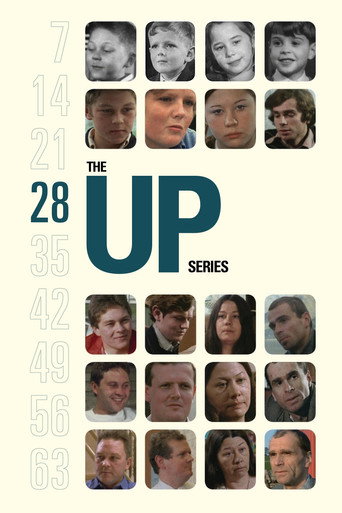
Director Michael Apted revisits the same group of British-born adults after a 7 year wait. The subjects are interviewed as to the changes that have occurred in their lives during the last seven years.
A documentary about how a dominant cultural and demographic institution both sustains their traditional activities and adapts to the digital revolution.
After a 7 year wait, director Michael Apted revisits the same group of British-born children from Seven Up! The subjects are interviewed as to the changes that have occurred in their lives during the last seven years.
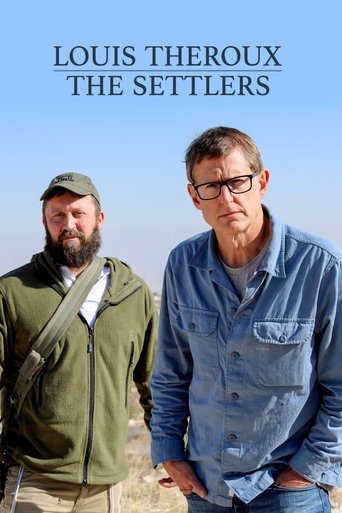
14 years after his first visit, Louis Theroux meets some of the growing community of religious-nationalist Israelis who have settled in the occupied West Bank.