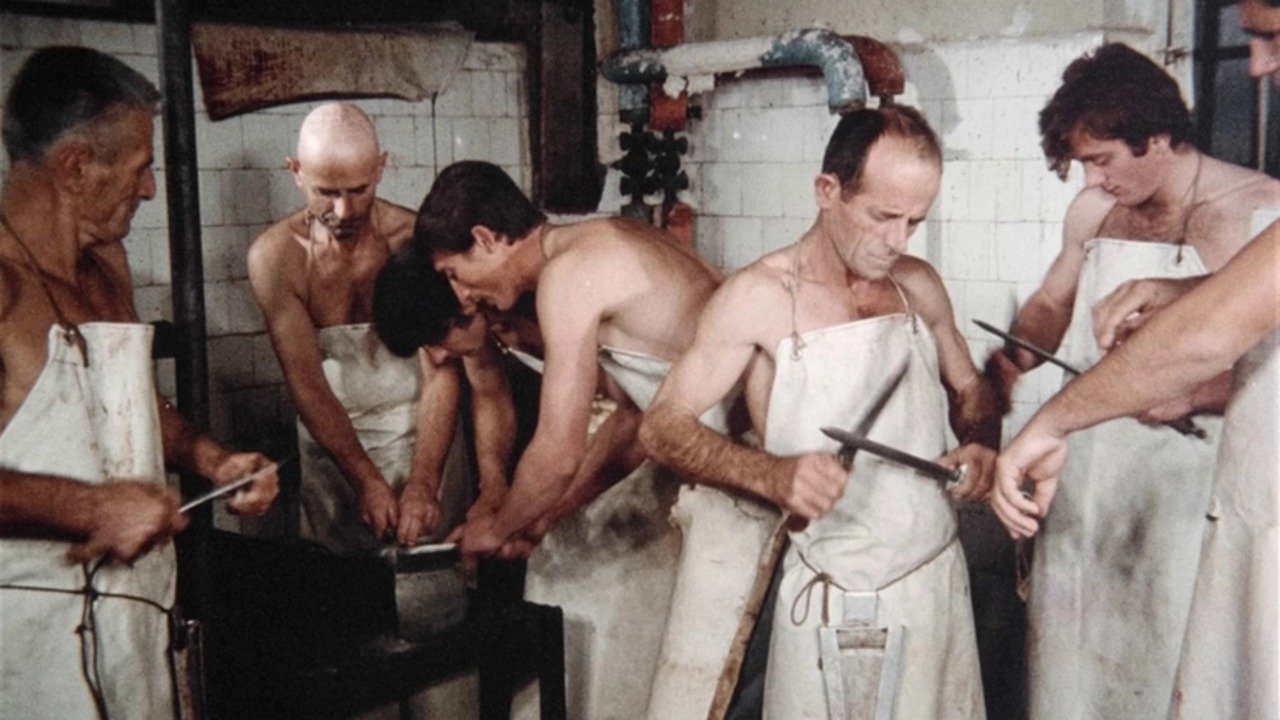
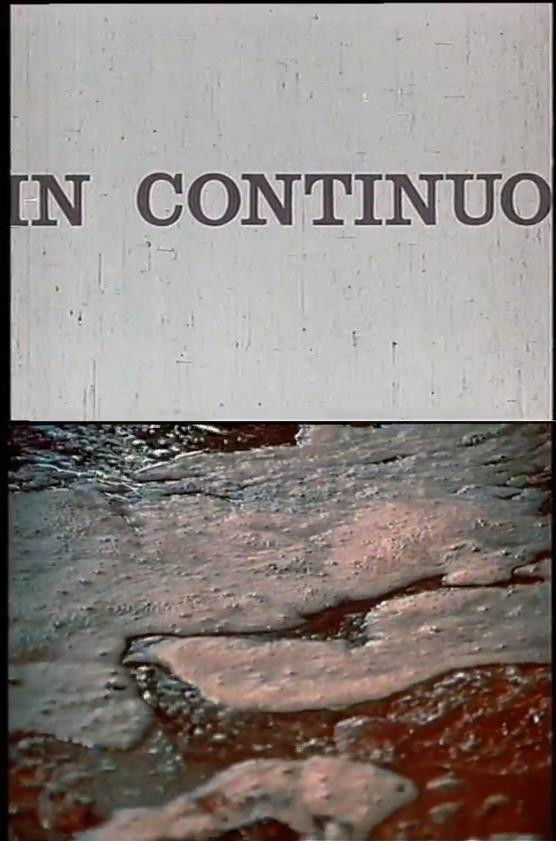
"In continuo" uses slaughterhouse imagery to present the warlike nature of man, first depicting the cleaning and mechanical preparations for the slaughterhouse and then the killing, however, the animal slaughter itself isn’t shown.
Social & External
"Visionary post-war modernist Tyeb Mehta channels the nightmares of the nation in Koodal, at once the artist’s self-described “autobiography” and a profound meditation on collage, crowd control, cinematic subjectivity and the violence buried within every glorious act of foundation." -- Sarkari Shorts
Lake gazes down at a still body of water from a birds-eye view, while a group of artists peacefully float in and out of the frame or work to stay at the surface. As they glide farther away and draw closer together, they reach out in collective queer and desirous exchanges — holding hands, drifting over and under their neighbors, making space, taking care of each other with a casual, gentle intimacy while they come together as individual parts of a whole. The video reflects on notions of togetherness and feminist theorist Silvia Federici’s call to “reconnect what capitalism has divided: our relation with nature, with others, and our bodies.”
ICE conducted the largest immigration raids in US history at slaughterhouses in 2019, arresting and deporting undocumented workers. Despite the danger to herself and her family, former slaughterhouse worker Susana returns to the scene at night to care for animals on their way to the kill floor.
With the help of more than 10,000 dedicated Zappa fans, this is the long-awaited definitive documentary project of Alex Winter documenting the life and career of enigmatic groundbreaking rock star Frank Zappa. Alex also utilizes in this picture thousands of hours of painstakingly digitized videos, photos, audio, writing, and everything in between from Zappa's private archives. These chronicles have never been brought to a public audience before, until now.
The film is a trip to the planet Muscovy - an upside-down twin city of Moscow in space. As the title of the work suggests, the journey also takes us back in time. Gliding over the surface of the planet, we look down and see historic architectural styles fly by - the exuberant Socialist Classicism, aka Stalinist Empire, the austere and brutish Soviet Modernism, and the hodgepodge of contemporary knock-offs and revivals of the styles of the past. An essential companion to this journey through time and space are Hymnic Variations on the Soviet anthem.
Shot in Florence, the film draws on Leonardo da Vinci’s notebooks and Paul Valéry’s essay on da Vinci’s creative process to explore parallels between Renaissance space and the moving image. Beavers employs rapid pans and tilts along the city’s facades, interspersed with glimpses of his own face, linking camera movement to the filmmaker’s investigative gaze. The work marks a turning point in his practice, foregrounding presence and perception as central to his method. (Note: The film was re-edited and re-released in 1999.)
The film "Nights full moon" shows the tendency of moral decay in society. The main character is torn apart by internal contradictions, leading him to the path of Evil. Bans on self-identification - philosophical, existential, sexual, and then permissiveness spawn a monster that is not aware of its true nature and genuine desires. Throughout the film-trilogy, the protagonist goes through a series of temptations that ruin his soul and lead, after all, to a madhouse. In a general sense, the film allegorically shows the tragic path of the Russian lumpen intellectual, lost between the past and the present, not finding the strength to accept and comprehend the unexpected changes that happened in our country twenty years ago. In the global sense - the tragic circle of Russian history.
Behind The Jugular is a short animated documentary, featuring an ex-abattoir worker describing his experiences within the slaughterhouse. The film gives a raw account of the restricted and often ignored industry, intended to prompt the audience to consider, and reconsider, their ethical beliefs and values, and how they implement these morals in life.
With this film-manifesto, the two artists invent what they called the Cinéma corporel (Cinema of the Body), they present themselves as a "double auteur femme" and they lay the foundations of the radical critical and esthetical positions of their work to come. Double Labyrinthe has a mirror structure based on their "mutual gaze": in the first part Katerina performs while filmed by Maria and in the second part Maria performs filmed by Katerina.
The history and art of ikebana, a centuries old Japanese art of flower arrangement and a look inside the Sogetsu School of Ikebana, where the director's father Sofu Teshigahara worked as the grand master of the school.
Concerned with processes of assembly, CHOIR brings together disparate bodies of material and archival technologies into dissonant concert. It is a work of several parts. Part one constructs an auditorium in which an action will be staged. Part two assembles the chorus to narrate the action. Part three supplies the action.
A hypnotic and slow-burning journey through the austere landscapes of the island of South Georgia and the Antarctic Peninsula. Shot on black and white super 8 film as a series of mostly static tableaux over a period of 20 days during the waning days of the Antarctic Summer, the film is a startling look at life at the edge of the world.
During WWII, the Japanese army developed experimental balloons able to cross the Pacific Ocean and reach the West Coast of North America in 3-6 days. Armed with explosives, they were given the code name fu-go, or fusen bakudan (“fire balloons,” or balloon bombs) in an attempt to instill a culture of fear like that caused by the far more deadly American firebombing of Japanese cities. The U.S. responded by enacting a censorship campaign, requesting newspapers avoid reports of fu-go landings or sightings. Living near the remains of a fu-go launch site in Fukushima Prefecture, Takeuchi mimics their flight take-off using a drone camera, and, traveling to North America, follows their arrival across the shoreline and rural landscapes, using a bat’s echolocation as narrative device to place fu-go and Fukushima as echos across history.
PBS produced documentary in two parts: the first is dedicated to saxophonist and composer John Zorn; the second is about Sonic Youth at the height of their powers in 1988.
From the first kiss to breakup, Almy and Hammer record their relationship on a reel-to-reel ¾” tape recorder and microphone.
Former European boxing champion Santiago Rojas has been completely disconnected from the world of boxing for several years. He now works at a small kiosk in the busy Barcelona Metro. Besides reading, one of his greatest curiosities is uncovering the secrets behind the popular and mysterious 'law of attraction'.
The painter Alfredo Romero locks himself in his studio-apartment in the Estación de Francia neighborhood in Mollet del Vallès (Barcelona) to create the final painting of his series Paisajes interiores (Inner Landscapes). The director of this film does the same, but to create his own work about the painter's creative process. Premiered at Documenta Madrid in 2009.
Filmed by Jonas Mekas from the 44th floor of the Time-Life Building, “Empire” explores the passage of time without the use of characters or a traditional narrative. The film, that consists of one stationary shot of the Empire State Building, was made from standard 1,200-foot rolls of 16mm film with a more than eight-hour runtime.
New York City's Monterey is a residence hotel, whose inhabitants are older and primarily live alone. The camera, usually stationery, observes the lobby. No score, the lobby is clean with granite floors, men wear hats, people enter and exit an elevator, the camera looks out from within the elevator as doors open and close. People sit alone and motionless in their apartments. There are long shots of empty halls. Paint peels. The flooring on upper levels is linoleum. Hall lights are florescent. Doors open a crack then close.
The faces of a 5:00 PM crowd descending via the Pan Am building escalators in one continuous shot. In old-fashioned black and white, these faces stare into the empty space, in the 5:00 PM tiredness and mechanical impersonality, like faces from the grave.
A glimpse into the raw and simple power of nature through encounters with farm animals: the eponymous Gunda, a mother pig; two cows, and a one-legged chicken.
Ross McElwee sets out to make a documentary about the lingering effects of General Sherman's march of destruction through the South during the Civil War, but is continually sidetracked by women who come and go in his life, his recurring dreams of nuclear holocaust, and Burt Reynolds.
Al Pacino's deeply-felt rumination on Shakespeare's significance and relevance to the modern world through interviews and an in-depth analysis of "Richard III."
Amber Heard and Nicole Kidman discuss their characters Mera and Atlanna.
A comedic, brutally honest documentary following self-destructive TV writer Dan Harmon as he takes his live podcast on a national tour.
A visual montage portrait of our contemporary world dominated by globalized technology and violence.
A heartfelt documentary focusing on the day-to-day lives of professional wrestlers, some on the rise, some on the wane, and others fighting for their lives.
A dreamlike conversation with the past and the present, reimagining Latasha Harlins' story by excavating intimate memories shared by those who loved her.
When Allied forces liberated the Nazi concentration camps in 1944-45, their terrible discoveries were recorded by army and newsreel cameramen, revealing for the first time the full horror of what had happened. Making use of British, Soviet and American footage, the Ministry of Information’s Sidney Bernstein (later founder of Granada Television) aimed to create a documentary that would provide lasting, undeniable evidence of the Nazis’ unspeakable crimes. He commissioned a wealth of British talent, including editor Stewart McAllister, writer and future cabinet minister Richard Crossman – and, as treatment advisor, his friend Alfred Hitchcock. Yet, despite initial support from the British and US Governments, the film was shelved, and only now, 70 years on, has it been restored and completed by Imperial War Museums under its original title "German Concentration Camps Factual Survey".
Lyrical and powerfully personal essay film that reflects on the deaths of her husband Lou Reed, her mother, her beloved dog, and such diverse subjects as family memories, surveillance, and Buddhist teachings.
SEDUCED AND ABANDONED combines acting legend Alec Baldwin with director James Toback as they lead us on a troublesome and often hilarious journey of raising financing for their next feature film. Moving from director to financier to star actor, the two players provide us with a unique look behind the curtain at the world's biggest and most glamourous film festival, shining a light on the bitter-sweet relationship filmmakers have with Cannes and the film business. Featuring insights from directors Martin Scorsese, 'Bernando Bertolucci' and Roman Polanski; actors Ryan Gosling and Jessica Chastain and a host of film distribution luminaries.
In the eighties comes from overseas powerful, unstoppable, the wave of hip hop. Few years later the rap music begins to take roots in Italy with the firts album in 1990. Thus began a golden age that from the undergrowth of the counterculture reaches a diverse audience, passing through the masterpiece of Sangue Misto, the evergreen Kaos and Colle Der Fomento, until the commercial success of Neffa, Frankie Hi-Nrg, Sottotono, Articolo 31 and the debut of a young Fabri Fibra. Then, suddenly, the dark at the dawn of the new millenium. Why? An epic, unique season of musical creativity narrated by its big players and accompanied by the voice of a talented and renowed freestyler grown up with those great musicians: Ensi. - Written by Bisi, Enrico
The film follows adventurer Jeff Johnson as he retraces the epic 1968 journey of his heroes Yvon Chouinard and Doug Tompkins to Patagonia.
An inside look at one of the most anticipated movie sequels ever with James Cameron and cast.
The Making-of James Cameron's Avatar. It shows interesting parts of the work on the set.
Martin Scorsese’s portrait of writer and social commentator Fran Lebowitz, celebrated for her sharp wit and observations on modern life. Filmed at New York’s Waverly Inn and intercut with archival footage and interviews, the documentary captures Lebowitz’s distinctive worldview through her spontaneous monologues and public appearances.
A detailing of the rise to prominence and global sporting superstardom of six supremely talented young Manchester United football players (David Beckham, Nicky Butt, Ryan Giggs, Paul Scholes, Phil and Gary Neville). The film covers the period 1992-1999, culminating in Manchester United's European Cup triumph.
Martin Scorsese's documentary intertwines footage from The Band's incredible farewell tour with probing backstage interviews and featured performances by Eric Clapton, Bob Dylan, Joni Mitchell, Van Morrison, and other rock legends.
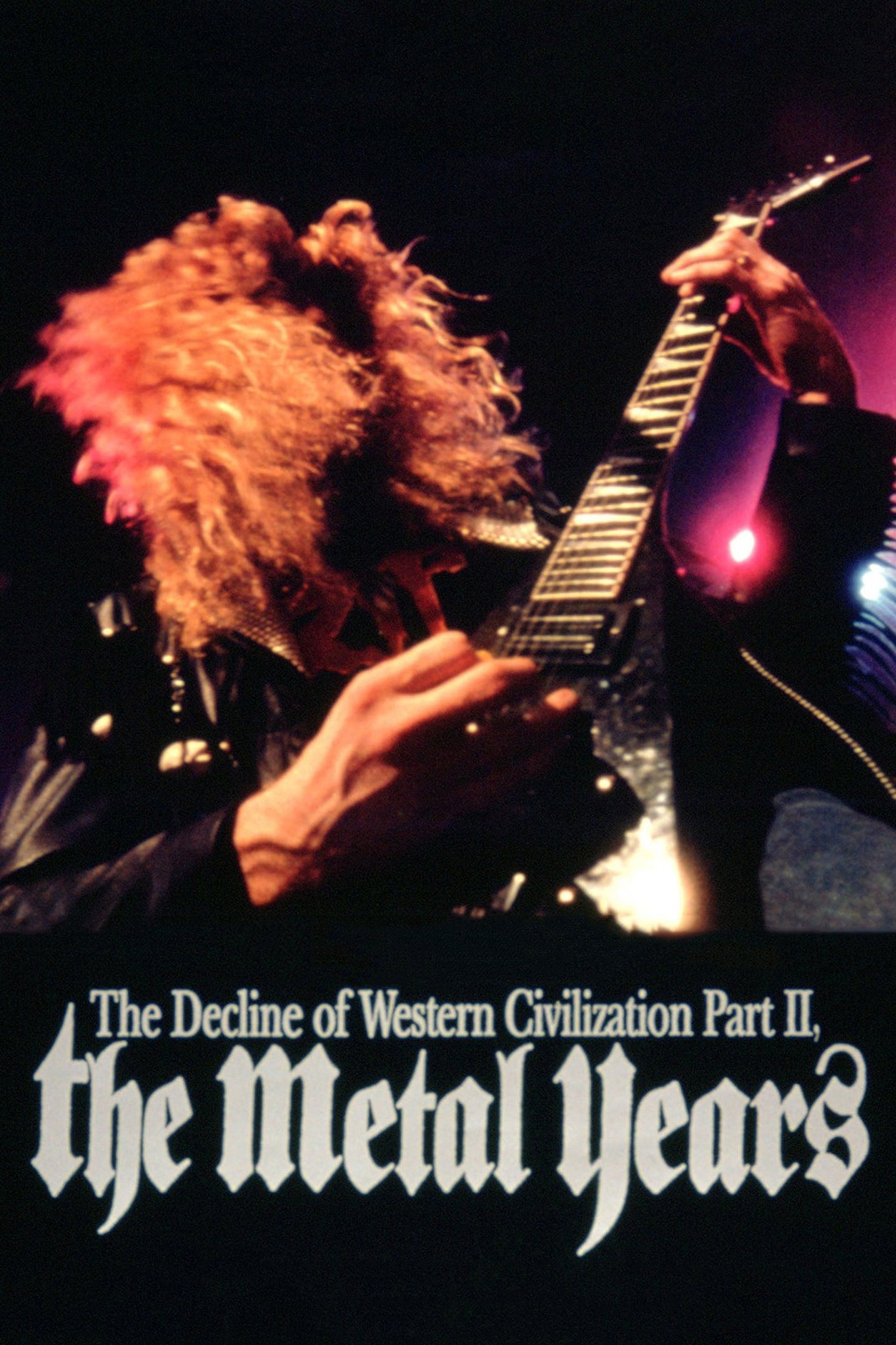
An exploration of the heavy metal scene in Los Angeles, with particular emphasis on glam metal. It features concert footage and interviews of legendary heavy metal and hard rock bands and artists such as Aerosmith, Alice Cooper, Kiss, Megadeth, Motörhead, Ozzy Osbourne and W.A.S.P..
JB Smoove and Martin Starr host a celebration of 20 years of "Spider-Man" movies, from the Sam Raimi trilogy to Marc Webb's movies and the trio from Jon Watts.