A documentary on railroads doing their daily tasks created by trhe The Milwaukee Railroad
Social & External
Narrator
Himself
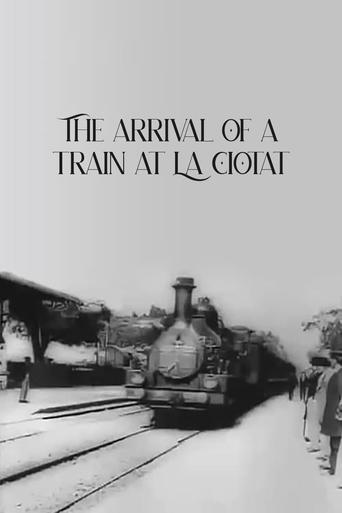
A group of people are standing along the platform of a railway station in La Ciotat, waiting for a train. One is seen coming, at some distance, and eventually stops at the platform. Doors of the railway-cars open and attendants help passengers off and on. Popular legend has it that, when this film was shown, the first-night audience fled the café in terror, fearing being run over by the "approaching" train. This legend has since been identified as promotional embellishment, though there is evidence to suggest that people were astounded at the capabilities of the Lumières' cinématographe.
A day in the city of Berlin, which experienced an industrial boom in the 1920s, and still provides an insight into the living and working conditions at that time. Germany had just recovered a little from the worst consequences of the First World War, the great economic crisis was still a few years away and Hitler was not yet an issue at the time.
A short documentary about the construction of the parisian subway in the 50s.
The story of Jerry Lee Lewis, arguably the greatest and certainly one of the wildest musicians of the 1950s. His arrogance, remarkable talent, and unconventional lifestyle often brought him into conflict with others in the industry, and even earned him the scorn and condemnation of the public.
Max Manus is a Norwegian 2008 biographic war film based on the real events of the life of resistance fighter Max Manus (1914–96), after his contribution in the Winter War against the Soviet Union. The story follows Manus through the outbreak of World War II in Norway until peacetime in 1945.
Impoverished priest Harihar Ray leaves his rural Bengal village in search of work. His wife, Sarbojaya, looks after their rebellious daughter, Durga, and young son, Apu. The children enjoy the small pleasures of their difficult life.
Take a breathtaking train a ride through Nothern Quebec and Labrador on Canada’s first First Nations-owned railway. Come for the celebration of the power of independence, the crucial importance of aboriginal owned businesses and stay for the beauty of the northern landscape.
The Channel Tunnel linking Britain with France is one of the seven wonders of the modern world but what did it take to build the longest undersea tunnel ever constructed? We hear from the men and women, who built this engineering marvel. Massive tunnel boring machines gnawed their way through rock and chalk, digging not one tunnel but three; two rail tunnels and a service tunnel. This was a project that would be privately financed; not a penny of public money would be spent on the tunnel. Business would have to put up all the money and take all the risks. This was also a project that was blighted by flood, fire, tragic loss of life and financial bust ups. Today, it stands as an engineering triumph and a testament to what can be achieved when two nations, Britain and France put aside their historic differences and work together.
The true story of how businessman Oskar Schindler saved over a thousand Jewish lives from the Nazis while they worked as slaves in his factory during World War II.
First Thursday of each month, the members of Stockholm's model railroad club meet and run their beloved trains on a schedule. The trains pass towns such as Bångfors and Farsarvet. Sometimes, a delay occurs, which then spreads throughout the network.
Documentary filmmakers offer a fascinating look at one of the most spectacular engineering feats of the 19th Century as the story of the Transcontinental Railroad comes to life in a film that's sure to appeal to historians and railroad enthusiasts alike. As legions of tireless workers toiled for six years to realize the vision of shady entrepreneurs and imaginative engineers, the remarkable railway dream slowly became a reality. But not everyone was so pleased with the remarkable achievement. Despite the devastating effect that the tremendous transportation breakthrough would have on the Native American population, the lasting impact of the Transcontinental Railroad on the politics and culture of a rapidly expanding country would forever mark it as an invaluable component of the American success story.
The Ashtabula train disaster and bridge collapse was the worst train disaster of the 19th century, claiming the lives of 97 people. The engineering and structural failures that caused the collapse of a bridge that stood for over a decade, also took down the most luxurious train of the day, “The Pacific Express #5.” The accident happened in Ashtabula, Ohio on December 29, 1876 during a raging blizzard, sending the luxury train crashing 70-feet into a river gorge and costing the lives of 97 people. The disaster shocked the nation, yet it’s a story that’s been lost in the pages of history. In a strange twist of fate and intrigue, the bridge disaster also became the backdrop to the still unsolved murder of Charles Collins, the railroad’s chief engineer. It also contributed to the eventual suicide of millionaire Amasa Stone, the president of the railroad and the designer and builder of the bridge.
Witnesses discuss the Ascq massacre by the Waffen-SS during the Second World War 80 years later.
The 28-minute presentation Bybanen i Bergen – minutt for minutt showed a trip on the Bergen Light Rail from Nesttun to Bergen, shortly after the opening of the line in June 2010.
A production from the Pennsylvania Railroad outlining the advancement of the country on the back of the locomotive.
The story of the most famous train in the world
A travelogue, this film provides a guided tour of pre-World War II Utah and of course does not pretend to cinematic greatness. Recommended viewing for those in search of introductory Utah history. Also valuable for persons seeking insight into the state as it would have looked during this time period. Especially informative for those desiring a window into the past for a view of how Utah was in the days of their pre-World War II progenitors living in the state. Those whose Utah ancestors were involved in mining, railroading, sugar beets, and other featured industries; featured towns, sights, recreational attractions, and industries may find this otherwise banal travelogue a quite valuable addition to their family history.
A film about the Southern Pacific Railroad and the men and women who keep the trains running.