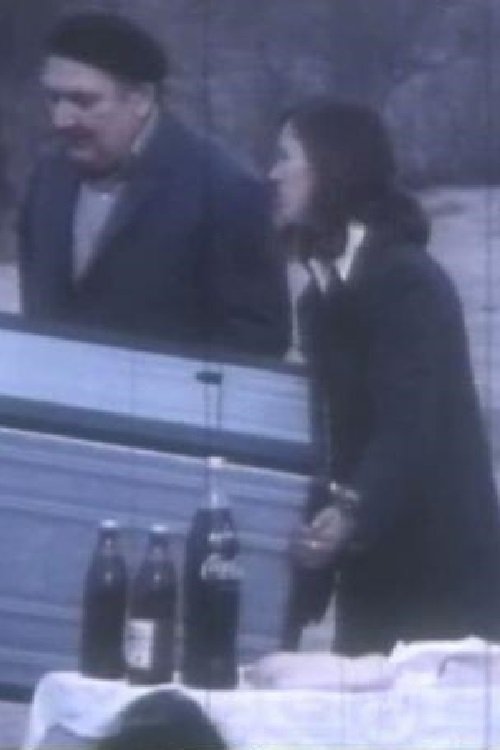
A carnival is in town. Workers start to build the stalls and tents. Players practice their act. Roma, peasants and grifters put up their own boots. After they pay taxes to local officials, they get a muddy ground for their stalls.
Social & External
This last testimony of Robert Kramer (1939-1999) is a moving documentary with the independent American film director, in which he speaks of his political activism, his way of filmmaking, his relationship with Portugal and the revolutionary movements.
A short film made for "Venezia 70 - Future Reloaded". A homage to Paulo Rocha and Kenji Mizoguchi, filming the director's two tombs, one in Tokyo and the other in Quioto.
Presents life in 18th century Spain as the painter Francisco de Goya showed it to us.
The idea for this film comes from the encounter with two African boys who live in Rome, and is based on their music. Tunisian Afif and Senegalese Aliou tell their different stories, talk about friendship, immigration, freedom and, above all, about the fundamental value of making music together.
Pereda returns with a small, mysterious and moving tribute to Chantal Akerman, conceived as a series of joyful impossible letters addressed to the great disappeared from the cinema, to answer her fictional question about renting her bright apartment in Coyoacán.
Migrant families experience violence, but they also keep beautiful memories when they arrive in new lands. Fantastic and intimate stories, recalled from childhood, travel across time and space, magically intermingling with the help of the four elements and breaking the boundaries of cinema.
A short film in which an innocent northern girl discovers her sexual identity on a trip to London, where she goes into a lesbian bar/club, and considers revealing her gayness to her mother.
Filmed to praise the work of the Spanish Ministry of Housing in solving the problem of shanty towns in Bilbao, it was made to be viewed by General Franco and not for public screening or distribution through the NO-DO newsreel. Although the short film was commissioned by the Ministry of Housing, director Jorge Grau produced a subtly critical work.
In November 1936, a few months since the beginning of the Spanish Civil War, the government of the Second Republic moves to Valencia. In this situation, several Valencian artists and intellectuals decide to build four fallas — satirical plasterboard sculptures created to be burnt — to mock fascism.
Documentary about Giger's work for the movie Alien (1979).
May 2017. As the new President of the United States takes his ease in the White House, the city of Breaux Bridge, Louisiana, is the theatre of the mythic Crawfish Festival. It's just another day, in America.
A documentary about the making of Wallace & Gromit’s Cracking Contraptions.
An exploration —manipulated and staged— of life in Las Hurdes, in the province of Cáceres, in Extremadura, Spain, as it was in 1932. Insalubrity, misery and lack of opportunities provoke the emigration of young people and the solitude of those who remain in the desolation of one of the poorest and least developed Spanish regions at that time.
The memory lives on in Yukio Saeki's memory. At 83 years old, he still hears the echo of the sea in Japan, near Hiroshima, and the atomic bomb falling from the sky.
An undocumented immigrant explores his and his family's immigration trauma while grasping hope through a voicemail.
She now lives many miles away from her mother, who is waiting to hear from her. It is a bittersweet, restless, nostalgic moment, and she remembers those vanished years.
“Entourage” star Adrian Grenier ventures to Cocos Island off the shore of Costa Rica to bring attention to the plight of endangered sharks who are being threatened by poachers and ocean pollution.
A group of people are standing along the platform of a railway station in La Ciotat, waiting for a train. One is seen coming, at some distance, and eventually stops at the platform. Doors of the railway-cars open and attendants help passengers off and on. Popular legend has it that, when this film was shown, the first-night audience fled the café in terror, fearing being run over by the "approaching" train. This legend has since been identified as promotional embellishment, though there is evidence to suggest that people were astounded at the capabilities of the Lumières' cinématographe.
Self-confident and eccentric Columbus lands on the American shore in the 20th century.