Follows amateur botanist Antonius Moscal's raft journey down the Franklin River (Tasmania, Australia).
Social & External
Himself
Narrator
Quiet towns across rural Australia are in the grip of an Ice epidemic. Major international drug cartels are working with local outlawed motorcycle gangs to push crystal meth to a captive market of children.
Documentary using archival footage, newsreels and contemporary interviews with women of the WW2 Australian Women's Land Army.
A Maasai human rights lawyer fights to stop the evictions of his people from their homelands in Tanzania. On the outskirts of Serengeti National Park in East Africa, Maasai face eviction from their land to make way for international tourism and hunting grounds. Human rights lawyer Joseph Oleshangay campaigns for his community to remain on its homeland as it has done for generations. While he represents Maasai communities in court, Joseph also remains close to his traditions among the cattle at his rural home near the Ngorongoro Crater. Risking his life to gather evidence from recently depopulated villages, Joseph battles in court where he leads the fight to resist the evictions.
When you look at a river, what do you see? Remembering Holland by Jan Wouter van Reijen carries the viewer through the basin of the River Waal, past painters, sculptors and poets. Van Reijen follows the entire course of the river, from the German border to the North Sea, and creates portraits of various artists who have taken the riverine landscape as their theme. Each and every one of them sings the river’s praises in his or her own way, from extremely realistic to abstract. At every spot along the way, and each day anew, the river landscape changes: we see the water dark and colorful, glistening in late and early light, in morning dew and by moonlight, in clouds of mist and the snows of winter. Yet the water brings more than beauty alone. The flooding of the forelands and the reinforcement of the dykes in 1995 remind us of the eternal struggle of the Dutch against the rising water. See it and be borne along on a voyage of the imagination.
In the early ‘70s, founding member of Australian surf magazine Tracks, Albert Falzon, began filming off the North Coast of New South Wales, Hawaii, and Indonesia. He set out to make a film “that was a reflection of the spirit of surfing at the time” and the end result, Morning of the Earth, proved its worth as a vital document of surf culture and a powerful nature film.
This is a film about 12-year-old girls, made by 12-year-old girls, for 12-year-old girls, or anyone that has been a 12-year-old girl, or will be a 12-year-old girl, or wishes they were a 12-year-old girl. This inquisitive cross between a documentary and a theatre piece was created by Tilda Cobham-Hervey and twelve 12-year-old girls, where real girls articulate what they hope for, what they remember and what it feels like to be twelve. Performing themselves in a filmed field guide, together these specimens investigate their own species.
The second IMAX film made, commissioned by the Ontario Government, and produced by MultiScreen Corporation, later to become IMAX corporation. North of Superior is a Northern Ontario travelogue, and was the first short feature to be shown at the newly created Ontario government theme park, Ontario Place, in it's state of the art cinema, Cinesphere, the first permanent IMAX installation.
Formed in Australia in 1973 by brothers Angus and Malcolm Young, AC/DC are considered pioneers of heavy metal. They are one of the highest grossing bands of all time. Using archive footage and interviews with Angus Young and former manager Michael Browning this fascinating programme takes you on a journey from their early days in Australia with Bon Scott to Brian Johnson joining the band and beyond.
In her second film, MY LIFE AS I LIVE IT (1993), Essie Coffey returns to her home in Dodge City where she and the A-Team are running in the shire elections. Inter-cutting between 1993 and 1978, the film presents the fascinating contrasts of a society in transition. Some of the kids we met in the earlier film now have families of their own and are involved in education, art and sports. Others are drifting, trying to cope with alcohol and depression. Most significantly, community programs offer the possibility of dignity and self-determination. In this film, Essie shows us the Community Development Employment Program (CDEP) making a real difference. Although the CDEP has now come under attack from the Federal government, MY LIFE AS I LIVE IT portrays the CDEP as providing meaningful work and services to an impoverished remote community.
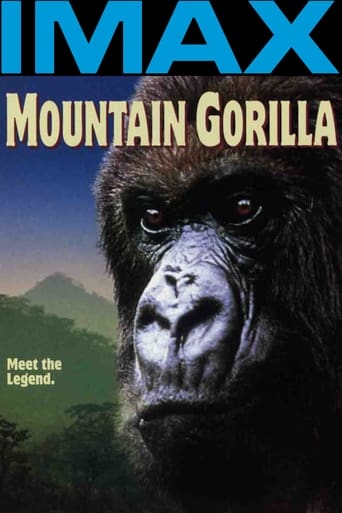
Mountain Gorilla takes us to a remote range of volcanic mountains in Africa, described by those who have been there as ""one of the most beautiful places in the world"", and home to the few hundred remaining mountain gorillas. In spending a day with a gorilla family in the mountain forest, audiences will be captivated by these intelligent and curious animals, as they eat, sleep, play and interact with each other. Although gorillas have been much-maligned in our popular culture, viewers will finally ""meet the legend"" face to face, and learn about their uncertain future.
A year in the life of troubled Australian graffiti artist Justin Hughes.
God's Girls describes life in a Sisters of Mercy convent in country New South Wales from the 1940's to present day. This courageous and clever film investigates the subtle complexities of change within a society that has been surrounded by mystery for hundreds of years. The stories from the women in the film reflect the often intricate paths of social, political and religious history, not only in Australia but also in the rest of the world.
A place of biological superlatives with a flora and fauna that have only just begun to be researched: Lord Howe Island, between Australia and New Zealand. This is the first documentary on what may be the most isolated nature reserve on the planet.
Follows Martin Strel as he attempts to cover 3,375 miles of the Amazon River in what is being billed as the world's longest swim.
Minnesota: A History of the Land vividly brings to life the epic story of the people and landscapes of Minnesota. From the retreat of the last ice sheets to the growth of today’s suburbs – the series seeks to entertain as it enriches our understanding of Minnesota’s past, present, and future. A visually stunning and groundbreaking 4-part documentary series featuring nature videography from across the state, never before seen historic images, state-of-the-art animations and historic recreations. Original soundtrack by award-winning composer, Peter Ostroushko.
The rivers of Africa bring life and abundance to their inhabitants, but they can also be the arena for some of nature's greatest challenges and dramas. Harsh seasonal cycles dictate the course of life - and death - along the rivers. Only the fittest survive crossing the crocodile-infested Mara, the extreme drought of the Luangwa Valley or any of the many other perils harbored by rivers all over the continent. With cunning and opportunistic hunters of all sizes lurking in the waters or prowling the banks, "Rivers of Danger" is a predator's world.
A short documentary on the River Ouse, following it downstream from Lewes to Newhaven, meditating on the surrounding area.
Following a year in Cadance and Amanda's gender transition, this intimate documentary charts not only their personal transformation but the building of a life and community together in regional New South Wales.
There's a mysterious predator lurking in the depths of Australia's wild Southern Ocean, a beast that savagely devoured a great white shark in front of cinematographer David Riggs 11 years ago. Riggs's obsession to find the killer leads him to an aquatic battle zone that's remained hidden until now. Here, killer whales, colossal squid and great white sharks face off in an underwater coliseum where only the fiercest creatures of the marine world survive.
50 years on, the Aboriginal Tent Embassy is the oldest continuing protest occupation site in the world. Taking a fresh lens this is a bold dive into a year of protest and revolutionary change for First Nations people.