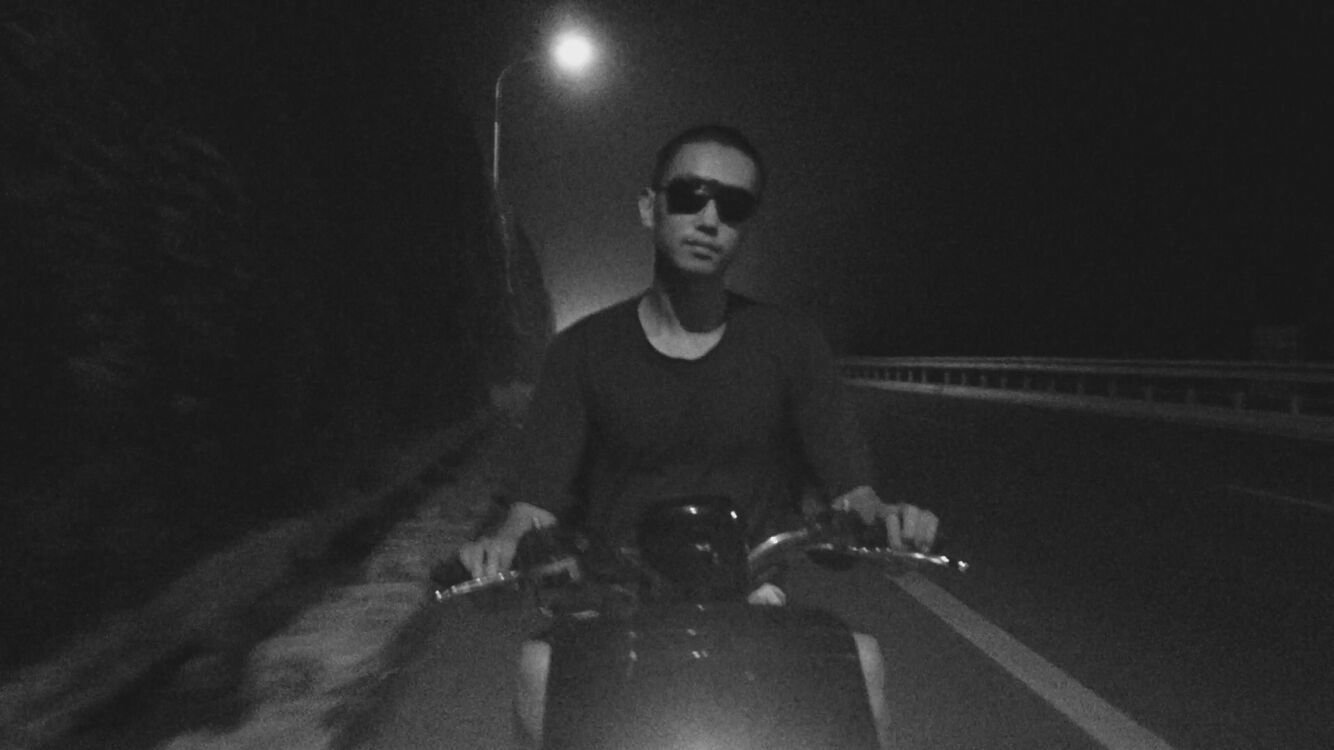
Part mournful meditation through documentary footage, part experimental narrative. This film looks at the life of the Chinese who have been displaced within their own society.
Social & External
Man
Follow the lives of the elderly survivors who were forced into sex slavery as “Comfort Women” by the Japanese during World War II. At the time of filming, only 22 of these women were still alive to tell their story. Through their own personal histories and perspectives, they tell a tale that should never be forgotten to generations unaware of the brutalization that occurred.
Filmed over three years on China’s railways, The Iron Ministry traces the vast interiors of a country on the move: flesh and metal, clangs and squeals, light and dark, and language and gesture. Scores of rail journeys come together into one, capturing the thrills and anxieties of social and technological transformation. The Iron Ministry immerses audiences in fleeting relationships and uneasy encounters between humans and machines on what will soon be the world’s largest railway network.
Gentle, easy-going Or Kia moves from the countryside to Kuala Lumpur to work for his cousin and best friend Ah Soon, a mid-level gangster and enforcer. While Or Kia works hard to put a sister through school, Ah Soon cares for an unstable girlfriend prone to mysterious disappearances. As they both sink deeper into a nocturnal world of debts, drugs, and betrayal, Or Kia's loyalties are strained when Ah Soon falls out of favor with the bosses and tries to escape the business.
Workers, peasants, soldiers, students and merchants were five groups of Chinese society in the 1950s, after the so-called elimination of the exploited class. Borrowing this concept, the umbrella is taken as the clue to rediscover changes in various social classes after the economic reform, and to analyze the social problems in China. Workers making umbrellas, merchants selling umbrellas, students looking for jobs in the rain. Umbrella is used as a metaphor that can be seen everywhere. As the raindrop, what we see is sometimes clear, sometimes untraceable.
Poet Wolf (Lang) chose to starve himself to death, in a beautiful flower blossoming Spring. This is a poetic, aesthetic and brutal film that adapted from the true stoy of Poet Wo Fu's suicide.
The Chinese police visit head-teacher Chen at home. Her daughter, a dissident filmmaker living in Hong Kong, plans yet another critical film about China's colonization of the small autonomous territory. The authorities demand that Chen travel to her daughter to stop the film project. What they do not take into account is that Chen and her daughter lost contact long ago.
The father tells his daughter Nunu a lie that there is a cow in her milk cup. She believes it and drinks up milk, but there isn't any cow. Her father tells her a variety of lies, which Nunu finds increasingly difficult to believe.
A short documentary that captures the longest total solar eclipse of the 21st century, The Yellow Bank takes you on a contemplative boat ride across the Huangpu River in Shanghai, China. Filmmaker J.P. Sniadecki, who lived and worked in Shanghai nine years earlier, uses the eclipse as a catalyst to explore the way weather, light, and sound affect the urban architectural environment during this extremely rare phenomenon.
In northeastern China the Songhua River flows west from the border of Russia to the city of Harbin, where four million people depend on it as a source of water. Songhua is a portrait of the varying people that gather where the river meets the city, and an ethnographic study of the intimate ways in which they play and work.
For Chinese parents, finding out that their kid is gay usually presents a major tragedy, with the big majority utterly unable to accept the homosexuality of their son or daughter. However, during recent years a fresh rainbow wind has been blowing over the Chinese mainland: a pioneer generation of Chinese parents has been stepping up and speaking out on their love for their gay kids. This documentary features 6 mothers from all over China, who talk openly and freely about their experiences with their homosexual children. With their love, they are giving a whole new definition to Chinese-style family bonds.
In 1946, Heidi is entrusted to a Swiss family by her father. He will never come back for her. Today, François Yang questions his mother about her past. What follows is a journey to China, a quest to reconstruct memory. Through contact with her brothers and sister, Heidi measures the extent of the drama experienced by her family that remained in China, persecuted by the Communist Party.
In China, most families have difficulties facing their lesbian, gay, bisexual and/or transgender (LGBT) children. They have to contend with common social beliefs that homosexuality is shameful, abnormal, a perverted condition caused by deviant family relationships. Many parents see their kids as their property, and fathers often assert their authority to ensure that no harm comes to the family reputation. The documentary 'Papa Rainbow' features six Chinese fathers who talk openly and freely about their experiences with their LGBT children. Speaking out against discrimination and stigma, they redefine what it means to protect a household. They fully embrace their kids for who they are, and become pioneer activists fighting for an equal and diverse society.
A soon-to-be first-time voter, the filmmaker’s thought-provoking journey into the Rust Belt and South captures four Asian American voters’ ardent first time grassroots political participation ignited by the 2016 rise of “Chinese Americans for Trump.” FIRST VOTE is a character driven cinema verité style film chronicling the democratic participation of four Asian American voters from 2016 through the 2018 midterm elections.
The C-list TV actor Jonnie Zhang decides to change career as an estate agent. While preparing for the interview, he hires a cleaner to tidy up his long non-visited mansion. A cleaner receives a task to a vacant house, and she decides to stay over night realizing that the bus service has been suspended. Out of every clue hidden in the house, she fantasizes its whole family and secrets, along with her own previous life she comes across.
An orphan mutters his personal history in The Good Place. He is getting louder and louder because he doesn’t want his history to be locked in the small dark room forever just as his body has suffered. Little Bunny is who he says the most intimate person in his life. It turns out he and Little Bunny share the same history.
"If the old doesn't go, the new never comes" recites a teenager hanging out near a demolition site in the center of Chengdu, the Sichuan capital in western China. In Demolition, filmmaker J.P. Sniadecki deconstructs the transforming cityscape by befriending the migrant laborers on the site and documenting the honest, often unobserved, human interactions, yielding a wonderfully patient and revealing portrait of work and life in the shadow of progress and economic development.
The little-known Hunan Suining County is an ordinary but full of magical places. As the theoretical point of the rocket wreckage launched by the Xichang Satellite Launch Center, it has greeted the rocket wreckage from the sky dozens of times in the past 20 years since 1990. This mysterious and dangerous “out-of-town visitor” broke the poor and peaceful life of the 160,000 locals in the jurisdiction. 2008 is China's "Olympic Year" and "Aerospace Year." The people of Suining, like the people of the whole country, are looking forward to the Olympics to pay attention to the Olympics and are proud of the growing strength of the comprehensive national strength including aerospace strength. They also have to bear the fate of falling from the sky.
Six life stories of German, Austrian and Ashkenazi Jews which intersect in exile in Shanghai. Out of narratives, photographs, documents and new images of the biggest and most contradictory metropolis of the Far East an entity develops in which the historic exile takes and turns on a completely current power and appeal.
The film is director Gao Zipeng’s first fiction film which takes three years to complete. It premieres on March 27, 2001 in UCCA and stars the poet A Jian, Xiao Zhao and the writer Gou Zi. The film is based on a true crime of disappearance. It creates an atmosphere of what Ma Zhiyuan, a celebrated poet and playwright of Yuan Dynasty, portrays in his famous poem “Autumn Thoughts”: Over old trees wreathed with rotten vines fly evening crows/ Under a small bridge near a cottage a stream flows/ On ancient road in the west wind a lean horse goes/ Westward declines the sun/ Far, far from home is the heartbroken one.
Hong Kong, at the height of the protests. A young woman visits her father, whom she has not seen for a while. Her plan is to have lunch with him before the Umbrella Movement reaches a critical juncture. Celebrated, committed filmmaker Ying Liang contributed with a beautiful moving short with an special angle asking: Where do we live, and what is citizenship?
Five years after a zombie outbreak, the men and women of R-Division hunt down and destroy the undead. When they see signs of a second outbreak, they fear humanity may not survive.
When twin girls are found dead in their family’s barn, reality star turned TV-reporter Meredith Phillips and her de-facto camera crew are dispatched to rural Wisconsin to investigate the gruesome deaths. In their relentless drive to break the story, the reporters become entangled in a deadly mystery and uncover the small town’s shocking secret. Edited together from the crew’s multiple cameras, the film documents their struggle to survive the most terrifying night of their lives and becomes the only evidence of a crime too horrific to imagine.
A plane containing a highly classified government project crashes outside of a small town in the US. Realizing the level of danger, the government tries to secretly fix the problem. As tensions grow, the situation gets out of control, and civilians from the town find themselves facing their worst nightmare: a genetically enhanced killing machine that doesn't know how to stop.
“Re-Existence” is a documentary about migration stories of individuals from the Brazilian queer community.
Features interviews with the cast and crew of Re-Animator (1985), except for the late David Gale.
Ana and Helen, two divorced women, were close friends as teenagers. Today, amidst the corona virus pandemic and in quarantine, they get in touch after 20 years via internet. Through video conference calls, memories, sensations and emotions reflourishes.
Repeatedly beat to a pulp by gamblers, cops, and gangsters, lone wolf Shoji Yamanaka finally finds a home as a Muraoka family hitman and falls in love with boss Muraoka's niece. Meanwhile, the ambitions of mad dog Katsutoshi Otomo draws our series' hero, Shozo Hirono, and the other yakuza into a new round of bloodshed.
Jimmy is the kid everybody ignores and uses. One day, he gets into a freak accident. The only way for him to survive is a brain transplant. He gets the brain of Milt Appleday, a famous cartoon creator. And when he wakes up, he can see cartoons!
Small town in Italy, end of the 19th century. Luciano, a drunk, doesn't fit in the town. Rebelion against authority and a forbidden love makes him to commit a crime accidentally. To pay for his crime, he is forced into exile on the most remote island in the world, Argentina’s Tierra del Fuego. The hunt for the shipwreck treasure hidden on the island becomes his opportunity for redemption.
After inheriting the family mortuary, a pyrophobic mortician accidentally exposes hundreds of un-cremated bodies to toxic medical waste. As the corpses re-animate, the mortician's inheritance-seeking younger brother unexpectantly shows up, stumbling upon a full zombie outbreak!
A small-town girl finally realizes her dream of becoming a famous supermodel but soon finds out that there's a price for her glamorous new life.
Friends battle former U.S. presidents when they come back from the dead as zombies on the Fourth of July.
Ermus Daglek, retired Empathtek engineer, commandeers a defunct factory where he creates androids based on persons from his past and recreates a dinner party where he lost the love of his life - until they malfunction and escape.
With the help of his girlfriend Cathy and Dr. Fong, a psychiatrist, ambitious journalist Johnny Barrett poses as a madman in order to be admitted to a mental institution where a bloody murder has been committed.
A 28-year-old single woman is pressured to marry.
During a brief summer vacation, a lonely woman recalls her first love thirteen years earlier.
009 Re:Cyborg follows a group of nine cyborgs, each of them created by a shadowy organization for use as weapons against humanity. The group turns on their creators to protect the population instead, using the powers given them to fight their creators.
Fatima, an Algerian-born woman who now lives in France with her two teenage daughters, with whom she is barely able to communicate.
"Loro", in two parts, is a period movie that chronicles, as a fiction story, events likely happened in Italy (or even made up) between 2006 and 2010. "Loro" wants to suggest in portraits and glimps, through a composite constellation of characters, a moment in history, now definitively ended, which can be described in a very summary picture of the events as amoral, decadent but extraordinarily alive. Additionally, "Loro" wishes to tell the story of some Italians, fresh and ancient people at the same time: souls from a modern imaginary Purgatory who, moved by heterogeneous intents like ambition, admiration, affection, curiosity, personal interests, establish to try and orbit around the walking Paradise that is the man named Silvio Berlusconi.
Aimless young Alexandre juggles his relationships with his girlfriend, Marie, and a casual lover named Veronika. Marie becomes increasingly jealous of Alexandre's fling with Veronika and as the trio continues their unsustainable affair, the emotional stakes get higher, leading to conflict and unhappiness.