On preserving moral principles and the importance of gaining the trust and respect of others.
Social & External
The people behind it
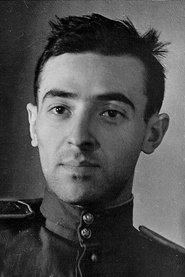
Mammad Mammadov
Adham
Hadji Ismailov
Alakbar
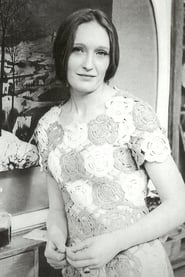
Anna Kamenkova
Aliya
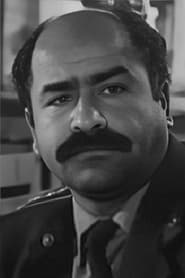
Vladimir Etush
Bayramov
Olga Barnet
Nina
Aleksandr Sharovski
Feliks
Elkhan Kuliyev
Ogtay
Tahir Yakhin
Ramiz
Khalida Guliyeva
Sona
Omur Naghiyev
Tofig
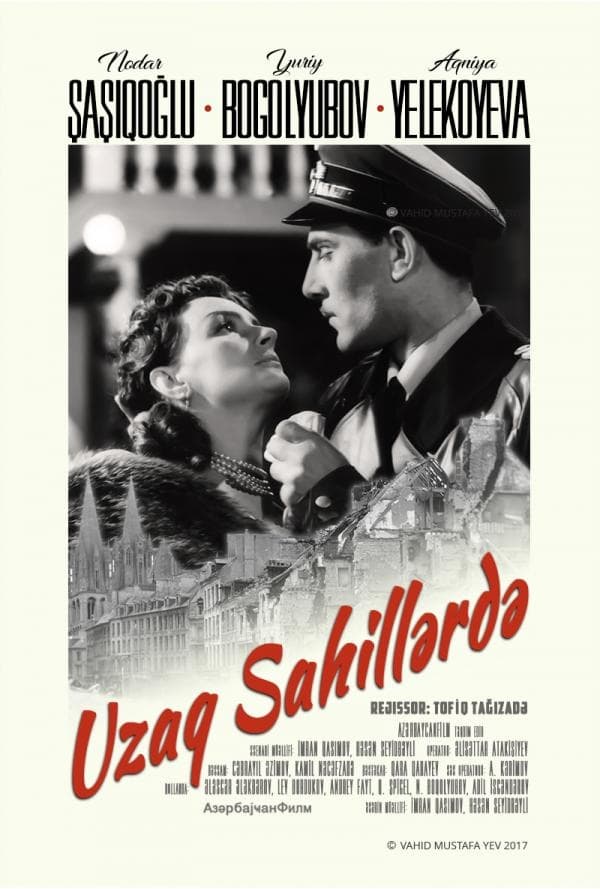
The film portrays the life of the legendary Azerbaijani guerrilla of the Second World War Mehdi Huseynzadeh, who fought the Nazi forces in the present-day Italy and Slovenia, hence the film's name On distant shores referring to the Adriatic Sea.
While looking for a job, a group of people end up in a private residence where they are forced to become dogs.
The film is about famous Chechen ballet and folk dancer Mahmud Essembayev's life.
Matteo Falcone is an Azerbaijani short drama film based on Prosper Merimée's like-named story from 1829. Matteo Falcone is a successful Corsican, who lives with his wife Giuseppa and 10-year-old son Fortunato. One day he leaves home with Giuseppa, leaving Fortunato alone.
Popularly known by the name of the main character, "Mashadi Ibad" was based on a musical comedy by composer Uzeyir Hajibeyov and written in the early 1900s. The story is based on the age old-theme of a beautiful young woman Gulnaz who falls in love with a young man Sarvar but is obliged to marry someone else.
Set in Baku at the turn of the 20th century, a young successful businessman Asgar wishes to marry. He wants his bride to be the choice of his heart, however, Azerbaijani tradition restricted him from communicating with the lady as a lover before marriage. So Asgar decides to disguise himself as a mere cloth peddler and the young woman Gulchohra falls in love with him.
This Azerbaijani romantic drama depicts the love affair between Zaur, a man from an affluent family, and Tahmina, a divorced woman doing her best to survive in a conservative society.
Psychological drama about a university dean who leads a double life.
Based on a novel by Farman Karimzade, the movie shows the life in an Azerbaijani village under the Soviet rule in 1930s. Here two former "beys" (land owners) are opposing each other. One is loyal to the ideology of the past and can't reconcile himself to the new power, to second rejects the past and accepts the power of the Bolsheviks, believing that it will establish justice.
The investigator Seyfi Ganiyev runs the case of an illegal mercery shop's head Murad Abiyev, who confessed in embezzlement of one million rubles from public funds. Abiyev is also accused of the murder of an underage girls that occurred in Riga shortly after Abiyev saw her. He denies his guilt, but does not name the perpetrators though he knows them, despite the fact that he is facing the death penalty. The investigator understands that some high-ranking officials stand behind Abiyev, but he has no proof. Ganiyev seeks to obtain from the prisoner the whole truth to bring the criminals to justice.
A young girl is trying to save an island which is endangered by nearby construction.
A journalist is investigating a group of poachers who are illegally selling the huge amounts of fish
Film exposes the corruption and the decadence of the late Soviet bureaucracy in Azerbaijan SSR through the eyes of a naive Azerbaijani adult man, Hatem.
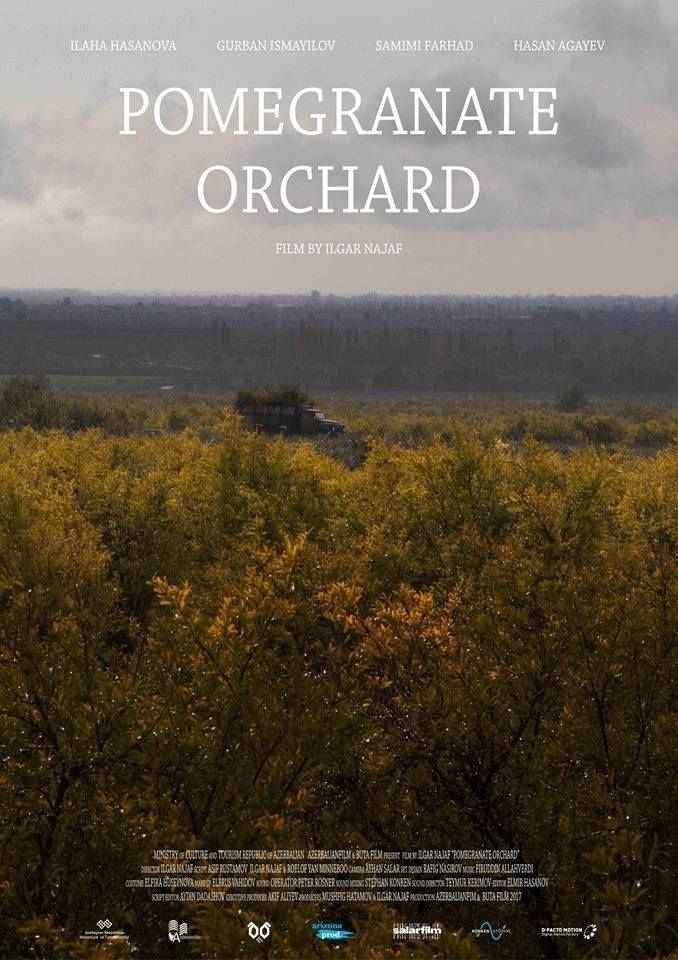
Inspired by Anton Chekhov's The Cherry Orchard, the film follows a prodigal son who returns after 12 years. His reappearance at the family home in rural Azerbaijan significantly alters their way of life.
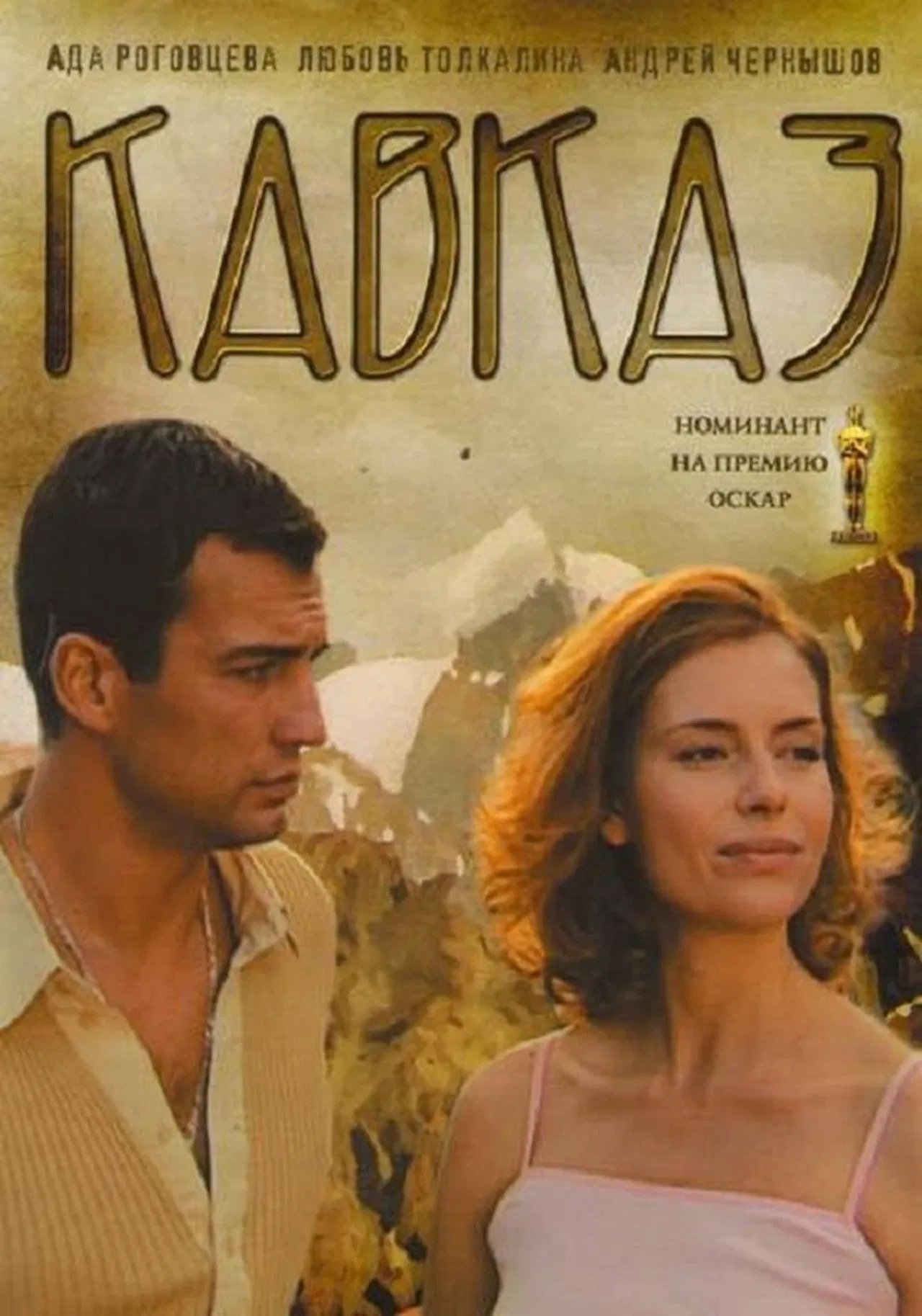
War breaks out in the Caucasus. 75-year-old Maria loses her son in the war. She and her daughter-in-law Sofia have been living in the Caucasus for 12 years. When famine strikes, they want to move to Russia. The women decide that they must go to Moscow. Maria takes her little dog and Sofia her small suitcase, gets on the train and sets off. In the next compartment, photojournalist Alexander is also traveling. Sofia and Alexander love each other. Maria realizes at one of the stations near Volgograd that she cannot live without the Caucasus. She writes a letter to Sofia and leaves the train with her dog...
The film is about Azerbaijanian and Uzbekistan's cotton-growers contest and about two young people's love.
In a Azerbaijan, in the beginning of this century, the first films made in the history of cinema are shown.The characters meet each other in a room. Three characters who will witness the linking up of their destinies through their common love for this new captivating art.
After the novel of the same name of M.Suleymanov. The film is about dramatic events between two workers.
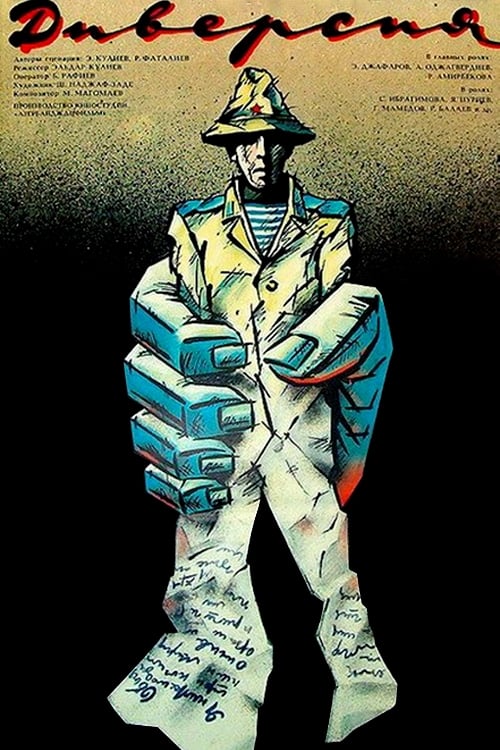
After fulfilling his duty in Afghan War, Zaur returns to his home Baku. He is trying to clarify the truth when he heard that his father was arrested.
Three friends begin a dangerous three-way relationship that spirals out of control, leading to dire consequences that haunt them ten years later.
Set in 1958, the coming of age story follows four lower middle-class Brooklyn teenagers known as The Lords of Flatbush. The Lords chase girls, steal cars, shoot pool, get into street fights, and hang out at a local malt shop.
The son of a courtesan retreats into a fantasy world after being forced to end his relationship with the older woman who educated him in the ways of love.
Anne and Bob, a well-to-do American couple, have just moved to a beautiful manor house in romantic Paris. To impress their sophisticated friends, they decide to host a lavish dinner party, but must disguise their maid as a noblewoman to even out the number of guests. When the maid runs off with a wealthy guest, Anne must chase her around Paris to thwart the joyous and unexpected love affair.
Two married couples find only trouble and heartache as their complicated lives unfold. After 40 years of marriage, Alfie leaves his wife to pursue what he thinks is happiness with a call girl. His wife, Helena, reeling from abandonment, decides to follow the advice of a psychic. Sally, the daughter of Alfie and Helena, is unhappy in her marriage and develops a crush on her boss, while her husband, Roy, falls for a woman engaged to be married.
Graced with a velvet voice, 21-year-old Violet Sanford heads to New York to pursue her dream of becoming a songwriter only to find her aspirations sidelined by the accolades and notoriety she receives at her "day" job as a barmaid at Coyote Ugly. The "Coyotes" as they are affectionately called tantalize customers and the media alike with their outrageous antics, making Coyote Ugly the watering hole for guys on the prowl.
As four friends prepare for life after high school, different challenges bring about turning points in each of their lives. The dramas unfold and resolve at their local rollerskating rink, Cascade.
Two romantic burnouts, Jane and Will, are immediately drawn to each other at a mutual friend’s wedding. After a disastrous hookup in the coatroom, the two spend the next 24 hours together, trading candid confessions of messy histories and heartbreak, on the off chance that this fling might be the real thing.
Left heartbroken after Romeo begins to pursue her cousin Juliet, Rosaline schemes to foil the famous romance and win back her guy in this comedic twist of Shakespeare's Romeo and Juliet.
Two successful women, sick and tired of dating and relationships, decide to keep two young men in their pool house for strictly sexual purposes.
An overlooked pencil-pusher catches her husband in bed with another woman, the shock of which causes him to die of a heart attack. So she buries his body and takes advantage of the growing celebrity status that comes from having a missing husband. But she quickly finds herself in over her head, dodging cops and criminals, all while trying to keep the truth from her sister, a local news anchor who’s desperate for a story.
With John's social life at a standstill and his ex-wife about to get remarried, a down on his luck divorcée finally meets the woman of his dreams, only to discover she has another man in her life - her son. Before long, the two are locked in a battle of wits for the woman they both love-and it appears only one man can be left standing when it's over.
When wry New England realtor Hildy Good rekindles a romance with her old high-school flame, Frank Getchell, it ignites long-buried emotions and family secrets that propel Hildy toward a reckoning with the one person she's been avoiding for decades: herself. Based on the best-selling novel by Ann Leary.
Two childhood friends now in their thirties must decide whether to follow their heads or their hearts once the man decides to follow his parents' advice and enter into an arranged marriage in Pakistan.
Cynthia Rand is a buttoned-up New Yorker married to a brilliant professor 25 years her senior. She begins feeling the effects of her husband’s advancing age on their relationship, just as her world is turned upside down by the arrival of sharp but chronically underachieving security guard Stan Olszewski in this smart rom-com that reunites Bacon and Sedgwick on screen for the first time in 20 years.
A failed novelist's inability to pay the bills strains relations with his wife and leads him to work at an escort service, where he becomes entwined with a wealthy woman whose husband is a successful writer.
An aspiring Hollywood actress, on a visit to a charming North England town, has a brief fling with the town undertaker, who also writes obituaries for the local paper. Returning home, where she works as a waitress at a Japanese restaurant, she tells everyone about the handsome "writer" she met on her trip. Unfortunately, he decides to follow her back to Hollywood, setting up the expected light romantic comedy with asides as the newcomer gains experience about the goings on in Hollywood.
A novelist is blinded in a car crash that killed his wife and several years later rediscovers his passion for life and writing when he embarks on an affair with the neglected wife of an indicted businessman.
In contemporary Los Angeles, two millennials navigating a social media–driven hookup culture begin a relationship that pushes both emotional and physical boundaries.
A thief on the run convinces a single father that he is his long-lost son. Complications ensue when he falls in love with his newfound "sister".