Al Levin examines the system which functions to keep the working class in the United States oppressed.
Social & External
Narrator
The National Intelligence Service (NIS) intervened with the 2012 presidential election, and the court has acquitted NIS. This documentary tracks the long process where a special team of prosecutors formed after the inauguration of PARK Geunhye administration discovering the truth under all kinds of external pressures and obstructions. This documentary also tracks the footsteps of the late LEE Namjong, who reminded us the NIS Intervention incident.
Beneath the fury of Ferguson unrest, an affable professor dedicates his life to actionable, peaceful change while attempting the grueling triple crown of ultra-marathon swimming.
Hacktivist and blockchain expert Lauri Love fights extradition in TRUST MACHINE—his computer skills a threat to the US government. Tech innovators strike a raw nerve as banks and network pundits rush to condemn volatile cryptocurrencies and their underlying blockchain technology. Why are banks terrified while UNICEF embraces it to help refugee children? Award–winning filmmaker Alex Winter reveals that proponents of blockchain—a verified digital ledger—are already using the technology to change the world; fighting income inequality, the refugee crisis and world hunger.
She is one of the last shepherdesses who still lives with her flock in the heights of the Gya-Miru valley in Ladakh. At the age of 50, Tsering is the youngest in her village to drive her 350 goats and sheep at the expense of transhumance in this region of the Himalayas, located between 4000 and 6000 meters above sea level. A harsh and precarious life, often solitary, mishandled by difficult climatic conditions and a sometimes hostile nature, which does not prevent this tiny bit of woman to sing, laugh and ... philosophize.
On Our Doorstep delves deep into an aspect of the refugee crisis that rarely reached the press. With NGOs being blocked by red tape and the absence of any positive action by French or British authorities, the film is a behind-the-scenes look at the unprecedented grassroots movement that rose to aid the refugees in Calais, and the community that sprang up there, before it was forcefully demolished. This is the story of what happens when young and inexperienced citizens are forced to devise systems and structures to support 10,000 refugees; and are left unguided to face the moral and emotional conflicts, blurred lines and frequent grey areas of giving aid to vulnerable people. People who do not want to be there. It questions whether the aims of the volunteers were met, and whether these aims ultimately served the refugees' needs.
It’s the 2014 midterms and residents of a South Florida retirement community feel the weight of democracy on their shoulders. In one of the most influential counties of America’s largest swing state, these political kingmakers trade their golf clubs for clipboards and hit the pavement to get out the vote. A GREATER SOCIETY is a feature documentary to inspire voter turnout. Inside the gates of Wynmoor Village are three miles of manicured lawns lined with palm trees, a golf course, and carefully maintained condominiums. At first glance, it’s just another retirement community where elders go to enjoy their golden years relaxing by the pool and taking ceramics classes; but look further and you’ll see that the people who live in this community share something unique: the power to have a real impact on national politics.
Zambia's copper resources have not made the country rich. Virtually all Zambia's copper mines are owned by corporations. In the last ten years, they've extracted copper worth $29 billion but Zambia is still ranked one of the twenty poorest countries in the world. So why hasn't copper wealth reduced poverty in Zambia? Once again it comes down to the issue of tax, or in Zambia's case, tax avoidance and the use of tax havens. Tax avoidance by corporations costs poor countries and estimated $160 billion a year, almost double what they receive in international aid. That's enough to save the lives of 350,000 children aged five or under every year. For every $1 given in aid to a poor country, $10 drains out. Vital money that could help a poor country pay for healthcare, schools, pensions and infrastructure. Money that would make them less reliant on aid.
On 1 January 2021, the UK's transition period with the EU ended and new rules and regulations were agreed at the last minute. This is a time for reflection on the social phenomenon that is Brexit - which has now become a British trademark world-over, alongside the Royal Family, fish and chips and Sherlock Holmes. Brexit Through The Non-Political Glass puts politicians and public sentiments to one side, and seeks the opinions of non-partisan world-class experts - the scholars and professional advisors who specialize in this very topic; no politicians and propagandists, and no social media and populism; among the experts is Vernon Bogdanor, the Oxford tutor of former British prime minister David Cameron, who was consulted before the referendum was offered to the nation; you will hear what his advice was.
It's been suggested that Americans would be better off if the United States was more like Sweden. Do the Swedes know something that we don't? Sweden: Lessons for America? A Personal Exploration by Johan Norberg delves into the economic and social landscape of the Swedish scholar's homeland. Join him to see that the lessons to be learned from Sweden may not be the ones you expect. The one-hour documentary follows Norberg on a journey through the history of Sweden's economic rise, from one of the poorest countries in the world to one of the most prosperous. The program illuminates key ideas and enterprises that sparked the reform and continue to help Sweden maintain its lofty economic position, including freedom of the press, free trade, new technology companies, crazy jobs and even an old Swedish superhero.
Following the artist Phil Collins' search for a decommissioned statue of German philosopher Friedrich Engels in eastern Ukraine, and documenting its journey and arrival to a homecoming party in Manchester.
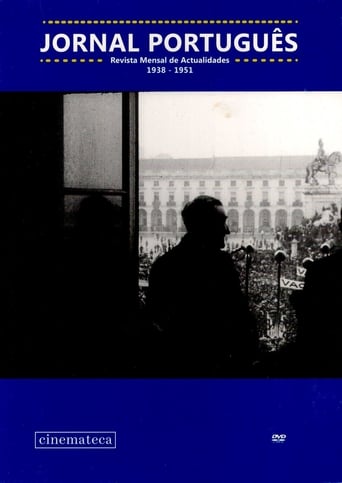
The newsreel series Jornal Português (1938-1951) was produced for the Secretariat of National Propaganda (SPN/SNI) by the "Portuguese Newsreel Society" (SPAC), under the technical supervision of António Lopes Ribeiro. It was conceived and employed as part of the propaganda machinery of Salazar's regime. Screened in cinema theatres prior to the main feature film, each issue of Jornal had approximately ten minutes in length and covered a variety of official government acts, national political news, major sports events and other assorted social and cultural affairs. Jornal Português is not only an indispensable document for the history of Estado Novo's propaganda, but also an unparalleled audiovisual archive of 1940s Portugal.
Raised in an orthodox home, Amos Dov Silver dreams of becoming Prime Minister. But when the State continues to shun him, he soon finds unexpected solace in the velvety smoke of Marijuana. Spreading his new Torah, he establishes an online community using a mobile app called "TeleGrass" that turns into the largest marketplace for drugs in Israel, raising Silver to Messiah status. Through exclusive footage of Silver, his family and his partners’ investigations, as well as secretly filmed footage of Silver in the Ukrainian prison, a polarizing portrayal of the man charged with heading a crime organization emerges. Champion of the people, or a lost soul corrupted by power?
Both cautionary tale and rallying cry, Shouting Down Midnight recounts how the Wendy Davis filibuster of 2013 galvanized a new generation of activists and reveals what is at stake for us all in the struggle for reproductive freedom.
Welcome to a never-before-seen tour of the creations by resistance artists around the world. From the streets of Moscow to the shores of Los Angeles and featuring interviews with Tom Morello, Dave Navarro, Moby, Shepard Fairey, and more, this powerful film brings a message of hope and change through radical resistance and righteous social uprising.
In the summer of 1959, as a magazine correspondent, writer and filmmaker Pier Paolo Pasolini (1922-75) traveled along the Italian coast. In 1963, he documented the sexual behavior of the Italians. In the winter of 1970-71, he witnessed the hardships of the most impoverished Italian population suffering from the boot of state power. After these three trips, he came to the conclusion that Italian society had changed drastically for the worse over the years.
Filmmaker William Klein documents the Paris student riots that occurred in May of 1968.
Professional snowboarder and mountaineer Jeremy Jones has an intimate relationship with the outdoors. It’s his escape, his identity, and his legacy. But over the course of his 45 years in the mountains, he’s seen many things change: more extreme weather, fewer snow days, and economic strain on mountain towns. Motivated by an urge to protect the places he loves, Jeremy sets out on a physical and philosophical journey to find common ground with fellow outdoor people across diverse political backgrounds. He learns their hopes and fears while walking a mile in their shoes on the mountain and in the snow. With intimacy and emotion set against breathtaking backdrops, Purple Mountains navigates America’s divide with a refreshing perspective: even though we may disagree about climate policy, our shared values can unite us
Swedish Prime Minister Olof Palme was openly shot to death on a February evening 1986 on the streets of Stockholm. In one night, the country of Sweden was transfigured. “Palme” is about his life, his time, and about the Sweden he had created. About a man who altered history.
A promotional film about the U.S. Republican party drafting volunteers on Election Day, encouraging their fellow party members to vote and helping them get to their polling place.