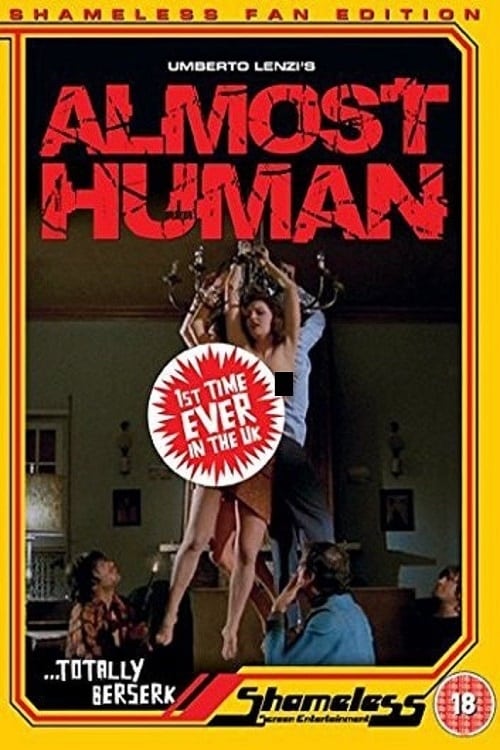
An interview of Umberto Lenzi discussing the making of his film Almost Human.
Social & External
Himself
Filmmaker Alain Resnais documents the atrocities behind the walls of Hitler's concentration camps.
A strange and mischievous documentary on an archeological site in the Qaytarieh hills in Tehran. This short narrates the story of the dead people who wished never to be found.
Working men and women leave through the main gate of the Lumière factory in Lyon, France. Filmed on 22 March 1895, it is often referred to as the first real motion picture ever made, although Louis Le Prince's 1888 Roundhay Garden Scene pre-dated it by seven years. Three separate versions of this film exist, which differ from one another in numerous ways. The first version features a carriage drawn by one horse, while in the second version the carriage is drawn by two horses, and there is no carriage at all in the third version. The clothing style is also different between the three versions, demonstrating the different seasons in which each was filmed. This film was made in the 35 mm format with an aspect ratio of 1.33:1, and at a speed of 16 frames per second. At that rate, the 17 meters of film length provided a duration of 46 seconds, holding a total of 800 frames.
This last testimony of Robert Kramer (1939-1999) is a moving documentary with the independent American film director, in which he speaks of his political activism, his way of filmmaking, his relationship with Portugal and the revolutionary movements.
The idea for this film comes from the encounter with two African boys who live in Rome, and is based on their music. Tunisian Afif and Senegalese Aliou tell their different stories, talk about friendship, immigration, freedom and, above all, about the fundamental value of making music together.
Pereda returns with a small, mysterious and moving tribute to Chantal Akerman, conceived as a series of joyful impossible letters addressed to the great disappeared from the cinema, to answer her fictional question about renting her bright apartment in Coyoacán.
For First Nations communities, the headdress bears significant meaning. It's a powerful symbol of hard-earned leadership and responsibility. As filmmaker JJ Neepin prepares to wear her grandfather's headdress for a photo shoot she reflects on lessons learned and the thoughtless ways in which the tradition has been misappropriated.
From leaving Egypt 10 years ago, to almost dying a month ago in a car accident. This film is about the journey in between and the massive role the internet played in the life of prominent Youtuber and Yes Theory co-founder Ammar Kandil.
Director Dan Farah got 34 senior members of the U.S. Government, military, and intelligence community to come on camera. He says they reveal an 80 year cover-up of the existence of non-human intelligent life and a secret war amongst major nations to reverse engineer technology of non-human origin. The film explores the profound impact the situation has on the future of humanity, while providing a look behind-the-scenes with those at the forefront of the bi-partisan disclosure effort.
Elena, a Tsotsil Mayan woman from San Andrés Larráinzar, Chiapas, is appointed Municipal Trustee by a purely male community assembly.
Behind-the-scenes documentary about the making of director Steven Spielberg's 1997 film "The Lost World."
A short film about the changing face of London Soho and the implications of gentrification on Mimi, an aging transvestite.
A program originally produced for the BBC, and aired on television several times in 1986. Originally conceived as a long-form promotional piece for «Press to Play», the BBC staffer (Richard Skinner) persuades Macca to talk about much more, including one of the more in-depth interviews about Wings. All of the interview bits were done at Abbey Road studio 2, leading to some reminiscing on Paul's part. Scattered among the interview are some nice McCartney film rarities (including rarely seen promo clips/videos, concert footage from both the 1973 and 1976 tours, and even a bit of the never released "One Hand Clapping" film).
Rudy Ray Moore tells all as only he can in this all-new retrospective legendary career. From his humble beginnings to his crowning as "King of the Party Records," Rudy Ray guides us through his struggles and triumphs in the film and music industries.
The camera slowly pans through a room as Smolders offers various observations and memories.
Documentarians Andre Heller and Othmar Schmiderer turn their camera on 81-year-old Traudl Junge, who served as Adolf Hitler's secretary from 1942 to 1945, and allow her to speak about her experiences. Junge sheds light on life in the Third Reich and the days leading up to Hitler's death in the famed bunker, where Junge recorded Hitler's last will and testament. Her gripping account is nothing short of mesmerizing.
Putito is a production with no specific genre, where reality and fiction blend through a testimony written by José Carlos Henríquez - a feminist activist and male prostitute who plays himself in the project. Available in a censored and uncensored version.