A film about the Maroons—freed or escaped slaves that created their own communities during slavery. Both stories are examples of Gerima’s driving motivation—sankofa, reclaiming the past in order to move forward.
Social & External

A documentary portrait of the city of Memleben in Saxony-Anhalt, counterpointing ancient medieval history and contemporary industrial reality.
Dan Snow, Dr Alice Roberts and Dr Albert Lin investigate a series of earth-shattering discoveries at a mighty tomb guarded by the Terracotta Warriors in China.
In 2007, the Writers Guild of America, the Screenwriters Union, hit an impasse in their contract negotiations with the Studios. At the center of the dispute was jurisdiction over the internet. Unable to make progress, the WGA called a strike which brought Hollywood to a halt for 100 days.
Tour of the White House with Mrs. John F. Kennedy was a television special featuring the First Lady of the United States, Jacqueline Kennedy on a tour of the recently renovated White House. It was broadcast on Valentine's Day, February 14, 1962, on both CBS and NBC, and broadcast four days later on ABC. The program was the first ever First Lady televised tour of the White House, and has since been considered the first prime-time documentary specifically designed to appeal to a female audience.
Police bodycam footage reveals how a long-running neighborhood dispute turned fatal in this documentary about fear, prejudice and Stand Your Ground laws.
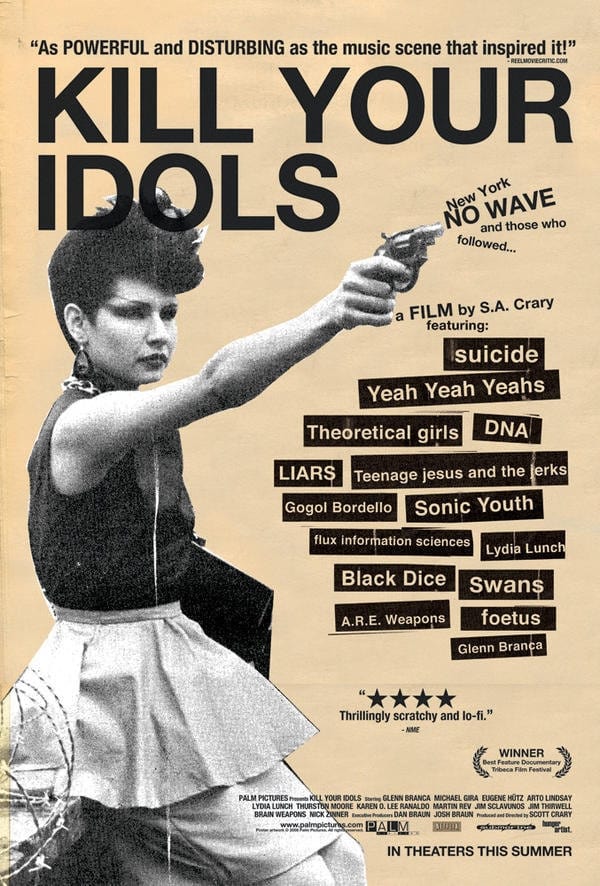
New Model Army have been one of the biggest underground music artists for over quarter of a century. To their global community of fans they mean everything. Yet mainstream success has so far eluded them. This film is the story of the band and in particular their charismatic and unconventional lead singer songwriter and founder Justin Sullivan.
Leningrad, 1970. A group of young Jewish dissidents plot to hijack an empty plane and escape the USSR. Caught by the KGB a few steps from boarding, they were sentenced to years in the gulag and two were sentenced to death; they never got on a plane. 45 years later, filmmaker Anat Zalmanson-Kuznetsov reveals the compelling story of her parents, leaders of the group, "heroes" in the West but "terrorists" in Russia, even today.
Documentary about the small city of Rheinsberg, once the summer residence of Prussian princes. Average working class people comment on the history of this special place.
On December 4, 1872, the unmanned Mary Celeste was found adrift in the Atlantic with its cargo fully intact. The mystery of this "ghost ship" remained unanswered for over 135 years. What happened to the Mary Celeste is widely regarded as the most famous mystery of the sea. Watch it unfold to its stunning conclusion, at last.
The mavericks who pioneered the modern pit stop made it a raceday staple that takes less than two seconds.
He was the most prolific within the New Portuguese Cinema generation. He would try western spaghetti, esoteric allegory, supernatural, and science-fiction. Without state subsidies, he would quit filmmaking in the 1990s. Who remembers António de Macedo?
We have volunteered for the Earth Conservation Corps to restore the Anacostia river and the Washington wasteland where we live and often meet an early violent death. We are striving to return our nation's bird,the bald eagle, to our Nation's Capitol. If the eagles survive maybe we can too. We began filming this documentary in 1992 to show people our America. "Endangered Species" is our story. - Written by Antoine Woods
This documentary explores two horrific stories. With haunting interviews with the killers, plus emotional exchanges with the daughters.

Was the Christ Story stolen from other, older religions? Theologian Dr Robert Beckford investigates remarkable parallels between the stories of Jesus, Krishna, Buddha, Mithra, and other major religious entities, and examines how these similarities impact Christianity and its message.
Dr Janina Ramirez travels across glaciers and through the lava fields of Iceland to find out about one of the most compelling of the great Viking stories - the Laxdaela Saga. This hour-long film explores how the unique literary achievements of the Saga writers were possible at a time of such immense cultural, political and religious upheaval.
RICHARD WRIGHT was an African-American author of novels, short stories and non-fiction that dealt with powerful themes and controversial topics. Much of his works concerned racial themes that helped redefine discussions of race relations in America in the mid-20th century. Born on a plantation in Mississippi, Wright was a descendent of the first slaves who arrived in Jamestown Massachusetts. This program follows his arduous path from sharecropper to literary giant. Through authors like H.L. Menken, Sinclair Lewis, Theodore Dreiser, he discovered that literature could be used as a catalyst for social change. In 1937 Wright moved to New York and his work began to garner national attention for it's political and social commentary. Much of Wright's writing focused on the African American community and experience; his novel Native Son won him a Guggenheim Fellowship and was adapted to the Broadway stage with Orson Welles directing in 1941.
In the United States, there is an active shooter incident every 12 days. In Memoriam shows the wrenching perspective of wounded survivors, grieving relatives, and heroes of the horrific attacks at the Las Vegas Route 91 Harvest Music Festival, the Sutherland Springs Baptist Church in Texas, and the Marjory Stoneman Douglas High School in Parkland, Florida.
In Uganda, AIDS-infected mothers have begun writing what they call Memory Books for their children. Aware of the illness, it is a way for the family to come to terms with the inevitable death that it faces. Hopelessness and desperation are confronted through the collaborative effort of remembering and recording, a process that inspires unexpected strength and even solace in the face of death.
More than 2.000 years ago, Narbonne in today's Département Aude was the capital of a huge Roman province in Southern Gaul - Gallia Narbonensis. It was the second most important Roman port in the western Mediterranean and the town was one of the most important commercial hubs between the colonies and the Roman Empire, thus the town could boast a size rivaling that of the city that had established it: Rome itself. Paradoxically, the town that distinguished itself for its impressive architecture, today shows no more signs of it: neither temples, arenas, nor theaters. Far less significant Roman towns like Nîmes or Arles are full of ancient sites. Narbonne today is a tranquil town in Occitania