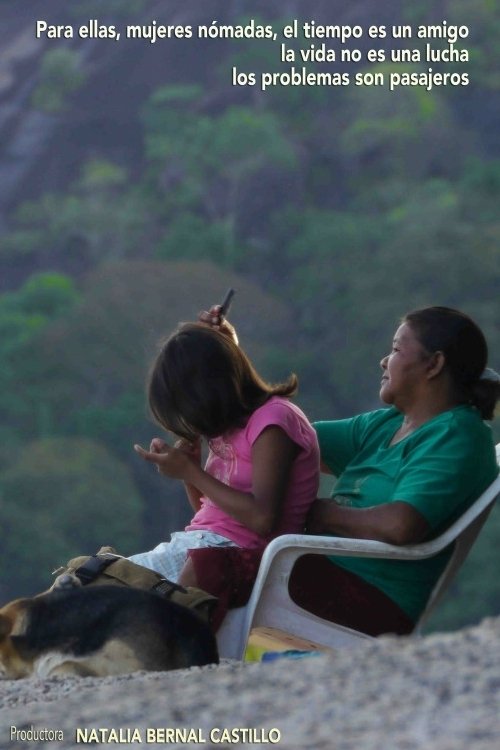
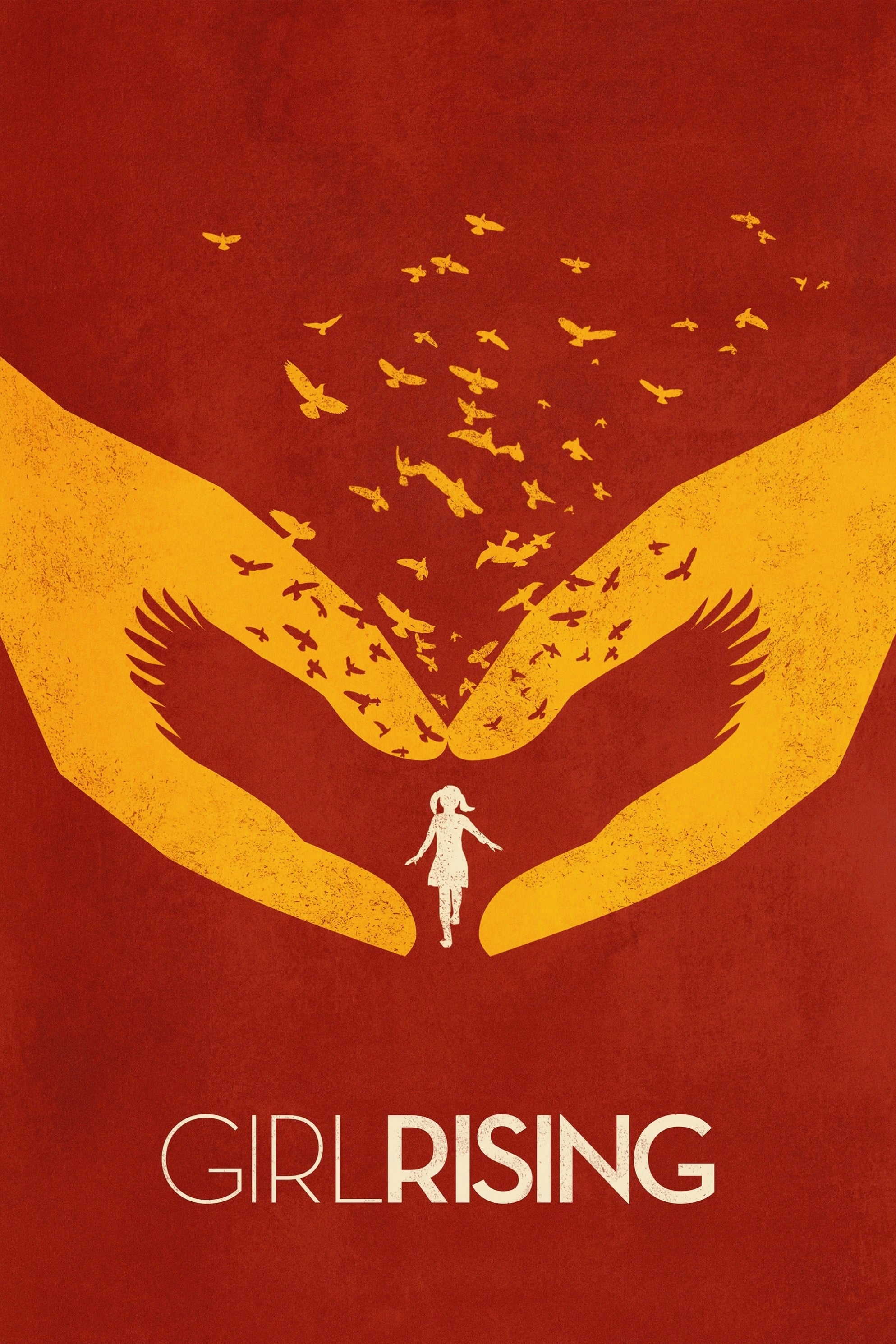
Short documentary on the Cambodian Handicraft Association which trains and supports women who have been affected by polio, landmine injuries, deafness or mental trauma.
Social & External

This film was shot during Easter 1985. It shows the preparation and staging of the Passion in the village of Norogachic, Mexico. The initiation rites of two Pascoleros, filmed for the first time, form the center of this document.
Rites of winter, rites of peyote. A creative documentary based on texts by Antonin Artaud read by Jean Rouch, and the words of the last shaman’s peyote, translated by Raymonde Carasco.
This documentary tells the untold story of the Sachsenhausen camp that between 1936 and 1945 was a Nazi concentration camp, and between 1945 and 1950 a Soviet special camp.
The life of Princess Alice of Battenberg, Queen Victoria's great-granddaughter, Prince Andrew of Greece's wife and Queen Elizabeth II's mother-in-law. Born deaf, she faced tremendous hardships but found solace in faith and charity work.
A document of the momentous culmination of a series of world tribunals held in 30 cities around the world, providing testimonials of the war crimes committed by the US and it’s allies in the war in Iraq. This culminating session was held in Istanbul in 2006.
When adults are ineffectual, children have to grow up quickly. Ola is 14 and she takes care of her dysfunctional father, autistic brother and a mother who lives apart from them and is mainly heard the phone. Most of all she wants to reunite a family that simply doesn’t work — like a defective TV set. She lives in the hope of bringing her mother back home. Her 13 year old brother Nikodem’s Holy Communion is a pretext for the family to meet up. Ola is entirely responsible for preparing the perfect family celebration. “Communion” reveals the beauty of the rejected, the strength of the weak and the need for change when change seems impossible. This crash course in growing up teaches us that failure is not final. Especially when love is in question.
The world’s most magnificent horsemen face an unsure future in one of the planet’s last great equine cultures. The Tibetan Buddhist region of Mustang in the High Himalaya is the Last Forbidden Kingdom and their unique heritage and remarkable spiritual bond with the horse is under threat. In a land where a man’s wealth can still be measured in horses, death defying races are the colorful back-drop for this story of the ascent of civilization in the high Himalaya. With lush cinematography, and insightful intervieww, the film also recounts the little known story of the CIA’s covert operations in Mustang, and features rare archival footage of the Dalai Lama’s flight on horseback over the Himalaya. The scholarly and perceptive voices of Dr. Sienna Craig - author of "Horses Like Lightning" and Mikel Dunham, author of "Buddha's Warriors" turn this lens to issues of globalization, fragile border politics and the precarious future for Mustang’s distinctive equine culture.
Fragments from movies found in an abandoned cinema in Beirut. Retrieved by Mr. Salloum. Assembled by Ms. Ahwesh.
It can be said that the history of man is the history of the horse. Nowhere is that more true than in Poland with their beloved Arabian horse. This is the strange, unexpected story of far-flung lands as disparate as Egypt and the long-suffering Slavic kingdom of Poland coming together in war and in peace and influencing one another through the living history written on the backs of centuries of horses. This breathtaking film documents the unlikely, triumphant story of Poland's entrance onto the world stage via their worldwide influence on the breeding of one animal; how a beleaguered nation rose up to become the pinnacle of Arabian horse breeding, coming full circle from desert sands to the hallowed halls of Europe.
"Of Gods and Kings" is the incredible story of the unique and ancient Skyros Horse of Greece. The film captures the spirit and beauty of this endangered horse and the passionate people working tirelessly to save them. After thousands of years, standing alongside man in battle and in the field, this rare breed is facing extinction. These noble little horses, which should be celebrated as a Greek National Treasure, are an integral part of who we are and who we become. The debt to history remains and their future hangs in the balance.
White-tiled rooms, neon lighting; on the walls black and white photographs documenting the atrocities committed by the german Wehrmacht on the Eastern Front in WW2. Against this background former soldiers talk about their experiences beyond the bounds of "normal" warfare. An uncompromising film on remembrance and oblivion.
This film profiles Canadian actor Christopher Plummer of the Shakespearean Theatre, Stratford, Ontario. As the minutes tick by, cameras register the transformation as he dons his make-up for the title role in Cyrano de Bergerac. We also see Toronto actress Kate Reid as well as actors Len Birman and Martha Henry.
Filmed with irony, the film describes brief moments in the lives of tourists, workers, and local vacationers around the construction of an artificial beach somewhere in the Caribbean.
A sister shares an apartment with her heroin-addicted brother. Over the course of twelve years, she records the constant struggle and the constant losing.
Egyptian Jeanne d’Arc’ is a creative documentary that explores issues of female emancipation in ‘post post-revolutionary’ Egypt. Beginning with the return journey to Cairo of a filmmaker long absent from her own country, the film weaves a series of intimate portraits composed of interviews, poetic voice-over and dance; exploring themes of oppression, guilt and faith with Egyptian women, many of them artists. Reflecting on Carl Theodor Dreyer’s 1928 film ‘The Passion of Joan of Arc’ – in which the female figure is martyred by the patriarchal forces surrounding her – ‘Jeanne’ is a contemporary commentary that melds documentary and dance with poetic storytelling and myth to arrive at the core of the filmmaker’s enquiries into the circumstances of women in Egypt today.
Based on footage shot in the early seventies and lost for more than thirty years, we see and hear the young Bob Marley before he was famous. The film shows us the Wailers' first rehearsal, when the idea of a Jamaican supergroup was still just a dream. Sit in as the albums of Bob Marley and the Wailers brought reggae music and Rasta consciousness to the world, starting a revolution that would change rock music and contemporary culture.
Artist Martha Rosler identifies the totalitarian implications of an argument for torture under certain circumstances, as it appears in the editorial pages of Newsweek magazine.
The story of the Northern Ireland Troubles through the unflinching testimony of two men who played key roles on opposite sides of that bloody conflict. Nearly ten years ago the two paramilitary leaders told their stories on condition that they could never be revealed while they were still alive. The stories told by the Irish Republican Army's Brendan Hughes and Ulster Volunteer Force's David Ervine tell us of the motivations of the participants, the planning of campaigns of violence, the misery of a hunger strike, the tracking and killing of informers and the duplicity that ended a conflict that had lasted too long. It is also a narrative of the fate of combatants when their wars are over.
Nearly 30 years-old, Hélène still looks like a teenager. She is the author of powerful texts with corrosive humor. It is part, as she says herself, of a "badly calibrated lot, not entering anywhere". Her telepathic poetry speaks of her world and of ours. She accompanies a director who adapts her work to the theater, she talks with a mathematician ... Yet Helene can not talk or hold a pen, she has never learned to read or write. It when she turns 20 that her mother discovers that she can communicate by arranging letters on a sheet of paper. One of the many mysteries of the one that calls herself Babouillec ...
Four strikingly different women undergo treatment at a comprehensive breast center presided over by the inimitable and searingly honest veteran surgeon Dr. Lauren Schnaper. She believes that fear, ignorance, and pink-ribbon culture are fueling an explosive rate of unnecessary mastectomies in America. Blending medical archival footage with extensive 'collateral damage' suffered by our four women - repeated loss of implants, blood infections caused by multiple surgical procedures, cosmetic nipple exchanges, reactions to cadaver's skin that is used to house breast implants - we learn that breast reconstruction post-mastectomy is no 'boob job.' As Dr. Schnaper advocates breast conservation and debunks breast cancer myths, so the myth of St. Agatha, the Sicilian martyred saint of the breast, offers a commentary on our own confused contemporary moment.