A reflection on the dictatorship of Augusto Pinochet captured in its economic and social causalities. Originally shot for a TV youth program but canceled before broadcast.
Social & External
Documentary tells the story of the Chilean football club Colo-Colo, exploring its profound impact on popular culture and the everyday lives of its fans. Throughout the film, it shows how the club has transcended sport to become a symbol of resistance, pride, and class struggle in Chile.
Images of Argentinian companies and factories in the first light of day, seen from the inside of a car, while the director reads out documents in voiceover that reveals the collusion of the same concerns in the military dictatorship’s terror.
A short documentary about the making of "The Great Dictator."
A documentary on the rise and fall of Project Cybersyn, an attempt at a computer-managed centralized economy undertaken in Chile during the presidency of Salvador Allende.
When everyone is supposed to be celebrating the arrival of a new year, the Chilean director Cristobal Valenzuela takes to the streets of Santiago to give voice to another facet, less colorful and festive, undoubtedly invisible, of this eve. Lonely pedestrians who roam the streets of the city inhabit the frame of a handheld camera that allows them to express themselves. Comments of hopelessness and tiredness, contrasting with the sky lit by fireworks, give us a glimpse to that other social image.
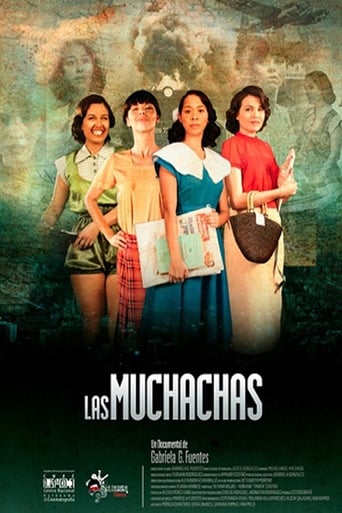
Four lucid grandmothers tell their story forgotten by history: the militancy and resistance of the young women of the leftist youth against the dictatorship of Marcos Pérez Jiménez.
Sonar Rock City: Seattle is a journey through the city that caught our attention back in 1992 thanks to the grunge movement which today no longer exists. Still today the creative spirit runs through its veins with a new music scene that captures what Seattle is in its core.
Examines the career and literary output of Pablo Neruda, who makes his home at Isla Negra on the coast of Chile. Includes views of Mr. Neruda reading many of his poems in the locales which inspired them.
Bruno Muel's documentary on the coup in Chile in 1973. Muel, who was part of the famed Medvedkine group, along with Chris Marker and Jean-Luc Godard, among others, captured one of the most powerful portraits of the early days of Dictatorship. Profound solidarity with the socialist cause, Muel and his team showed great courage to mix the official registration of images with those triumphant, clandestine, of the nascent opposition.
A documentary portrait of legendary Perfect Ten gymnast Nadia Comaneci after becoming an icon in the 1976 Olympics, during her Romanian period, and her challenging years under the dictatorship of Nicolae Ceausescu.
Filmmaker Barbet Schroeder shows the Ugandan dictator meeting his Cabinet, reviewing his troops, explaining his ideology.
It follows Chilean writer Antonio Skármeta as he celebrates the end of the autocrats. Cheerful farewell rituals accompany others facing political persecution on their way to fly home.
Who is Kim Yo-jong? In a context of maximum tensions between North Korea and the United States, Pierre Haski paints an unprecedented portrait of the little sister of Kim Jong-un, whose influence in Pyongyang is growing stronger day by day.
The lifestyle, self-styling and political opinions of Chechen dictator Ramsan Kadyrov are examined in this documentary.
"Everybody should have a home. If you punish a nation, this is so abstract, it's very mean to use your power to put another country in your control... Instead of punishment, maybe we should have love." Eliane from Chile, Milad from Iran, and Georgia from Greece, three migrants in the UK and their thoughts on love, home, family, and Shakespeare's Romeo and Juliet.
A compilation of 30 French filmmakers, Alain Resnais and Jean Luc Godard among them, who use film to make a plea on behalf of a political prisoner. Jean Luc Godard and Anne Marie Mieville's film concerns the plight of Thomas Wanggai, West Papuan activist who has since died in prison. The short films were commissioned by Amnesty International.
The real estate industry has destabilized the natural surroundings of the city of Concón, on the Chilean coast, forcing the inhabitants and landscapes of the region to find new ways to adapt and survive. “Nidal” depicts the cohabitating of species and the accelerated transformation of the landscapes due to human occupation.
The ocean contains the history of all humanity. The sea holds all the voices of the earth and those that come from outer space. Water receives impetus from the stars and transmits it to living creatures. Water, the longest border in Chile, also holds the secret of two mysterious buttons which were found on its ocean floor. Chile, with its 2,670 miles of coastline and the largest archipelago in the world, presents a supernatural landscape. In it are volcanoes, mountains and glaciers. In it are the voices of the Patagonian Indigenous people, the first English sailors and also those of its political prisoners. Some say that water has memory. This film shows that it also has a voice.
They’ve become the human face of inhuman barbarity. Leaders like Hitler, Idi Amin Dada, Stalin, Kim Jong Il, Saddam Hussein, Nicolae Ceausescu, Bokassa, Muammar Kadhafi, Khomeini, Mussolini and Franco governed their countries completely cut off from reality. These paranoid leaders were driven to abuse their power by the pathology of power itself. Dictators are driven by a relentless, thought-out determination to impose themselves as infallible, all-knowing and all-powerful beings. But they are also men ruled by their caprices, uncontrollable impulses, and reckless fits of frenzy, which paradoxically render them as human as anyone else. The abuses they committed were clearly atrocious, yet some of them were as outlandish as the characters portrayed in the film The Dictator. They sunk to depths worthy of Kafka: so incredibly absurd, they are outrageously funny.